
The way we build teams has fundamentally shifted. Remote work is no longer an experiment or a temporary response to global events. It has become the backbone of how modern businesses operate, compete, and scale in an increasingly connected world.
As companies embrace distributed workforces, a critical question keeps emerging: how do you expand operations without drowning in the overhead of traditional hiring? How do you access reliable, skilled support without navigating complex employment regulations across different countries?
This is exactly where virtual assistant platforms have become indispensable. These services connect growing businesses with talented remote professionals who handle everything from daily administrative tasks to specialized projects, making workforce expansion faster, leaner, and more cost-effective than ever before.
Ready to scale your team the smart way? Here are ten platforms leading the remote workforce revolution in 2026.

If you run a serious website, you’re undoubtedly familiar with the limits of static pages. The same headline, offer, and experience no matter who lands on the page (or why) only goes so far.
But displaying content dynamically so it’s more tailored to each user? That can boost engagement, shorten decision cycles and improve conversion rates, and strengthen SEO signals that actually matter (time on page, intent alignment, brand trust).
This said, dynamic content is not exactly a silver bullet for everyone. It works best for certain businesses and site architectures, and it needs to be done right. Because when it’s implemented poorly, it can actually create more problems, including indexing and performance issues. At its worst, it can also create an experience that feel creepy instead of helpful for the visitor.
So this isn’t a question of whether dynamic content can boost SEO and conversions. It’s a question of when it does, who it’s right for, and how to deploy it without breaking crawlability, credibility, or measurement. That’s where most teams get stuck, and exactly what this piece is here to untangle.

Your phone's gotten weirdly good at predicting what you're about to type. Your thermostat figures out when you leave for work. Even your photo app knows which pics are blurry before you do.
Every tool in your life is becoming a single, coordinated system by sharing context, predicting needs, and handling decisions in the background.
Personal technology in 2026 will have fewer handoffs, less friction, and more automation across your entire tech stack.
This article looks at how AI moved from novelty to infrastructure, what that means for the devices you already use, and how daily life changes when technology stops asking for instructions and starts acting on context.

Getting consistent results in online marketing is not about luck; it takes a solid digital marketing strategy. Any organization that is constantly looking to make improvements needs to leverage time-tested techniques. Each of these techniques naturally extends your reach and visibility.
By gaining insight into key digital practices that many digital marketing organizations use today, companies can establish an online identity that users can trust. This post examines the key elements that deliver results and help businesses ensure their performance remains consistent or improves over time.
Artificial intelligence has become a core driver of modern business transformation. Organisations across industries are looking to leverage AI to improve efficiency, enhance decision-making, and scale operations without proportionally increasing costs. However, adopting AI successfully requires more than deploying tools or experimenting with automation. AI development companies help businesses build clear strategies, implement artificial intelligence effectively, and create scalable systems that support long-term growth.

Backlinks remain one of the strongest signals search engines use to evaluate authority and relevance. However, earning links is only part of the equation. If search engines struggle to discover those links, their value is delayed or diminished. Smart website design plays a critical role in how quickly backlinks are found, crawled, and counted. By structuring your site with search engines in mind, you can help backlinks surface faster and contribute to stronger visibility.

Back in 1955, Chevrolet ads promised Americans "dream wheels," but today dozens of Chinese companies nobody heard of five years ago are flooding the market. BYD, Zeekr, Nio, Li Auto — these names meant nothing in automotive world, yet their products pack such impressive tech that consumers buy them for features, not heritage. An industry built on century-old reputations suddenly discovered that technology beats iconic logos.
Modern buyers don't limit themselves to famous brands like Mercedes, Fiat, or BMW when a Xiaomi car offers everything from pop-out door handles that appear as you approach and active aerodynamics to reduce drag (Xiaomi YU7) to insane motors (1526 hp in SU7 Ultra) and 0-60 mph in under 2 seconds, combining supercar dynamics with smart features and futuristic design. Shoppers will buy that car without paying extra for the badge, even if they only knew Xiaomi as the company making their power bank.
This article reveals how car marketing changed radically — from open marketing wars between giants to futuristic concepts that advertise themselves. We'll trace the path from retro posters to neural networks analyzing every click, examine real cases, and understand why even aviation sector started borrowing strategies from auto industry.

When someone lands on a law firm website, the intake form becomes the first moment of real trust. Visitors are often navigating stress, urgency, or uncertainty. The way a form looks, behaves, and explains itself directly influences whether they continue or leave.
Secure intake does more than protect information. It reassures visitors that the firm understands responsibility, discretion, and professionalism. Firms that treat intake as part of their marketing funnel tend to capture stronger leads while reducing long-term risk.

In the modern, busy digital world, words are not just the letters on the screen, and they are your voice in the endless clatter of the web. Web writing is not merely a skill of sentence construction but an ability to connect, engage, and inspire readers with the devices. The principles of digital communication keep changing: catchy headlines, mobile-friendly storytelling, etc.
As a content creator, marketer, or business owner, it is important to know these trends in order to be unique online. Even a News Portal Development Company relies on these evolving practices to craft engaging, reader-focused, and SEO-optimized content that stands out in the digital crowd. With the increasing smartness of the audience and the decreasing duration of attention, web writing is becoming both an art and a science.
Now, let us see how the trends of digital communication are transforming our writing, sharing, and influencing in the virtual world.

Running a small business means every marketing dollar counts. You've probably wondered whether to invest in search engine optimization (SEO) or just pay-per-click (PPC) advertising. Both can either work brilliantly or waste your money. What matters is understanding what you need right now and what'll pay off down the road.
This page covers the key differences between SEO and PPC, including their costs and returns on investment (ROIs). Whether you run a K-12 school or offer a pest control service, learn how to strike a balance between the two and make them work for your small business. Read below.
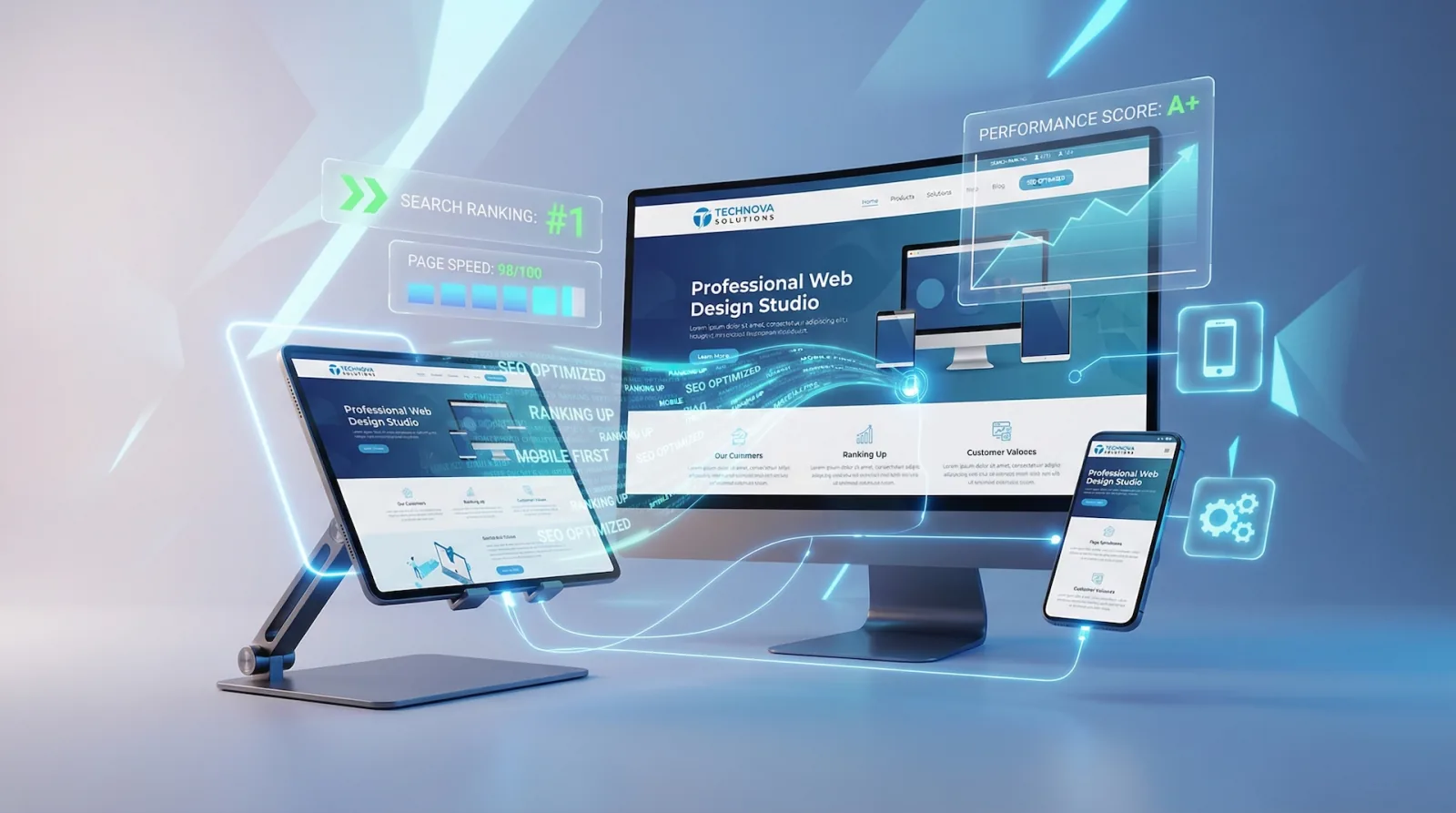
People don't use the internet the same way they used to. Nowadays, most online traffic is from mobile devices, and people expect websites to change right away based on their screens. People quickly leave any website that is hard to access, loads slowly, needs zooming, or breaks visually on smaller devices. Search engines pick up that action.
Web design that adapts to different screen sizes is no longer seen as an option but as a key element of search engine optimization strategies.
A website that changes easily on different devices gives people a better experience, keeps them interested longer, and helps search engines understand the content better. Because of this, responsive websites often have better Google rankings, more sales, and more trust.
Website design that adapts across devices isn’t just a user benefit; it also aligns with search engine algorithms, improving both trust and rankings. Search engines care about user experience, and adaptable design is an important part of that.

Innovation doesn't always mean launching something new. Often, it means seeing your existing business differently — reshaping how value is created, delivered, or captured. That kind of shift doesn’t require massive investment; it requires perspective.
When you pause to transform your business model, you're not chasing trends — you're recalibrating for survival. Maybe your product stays the same, but the way it's offered changes: subscription instead of one-time, bundled instead of single-sale, localized instead of broad. Or maybe it’s your margins, your packaging, your partners. Look at where friction lives and build from there.
This isn’t theoretical. It’s cash flow, customer clarity, and competitive pressure — real constraints that force real moves. And the most sustainable innovations? They often start with subtracting, not adding.