
Running a small business means every marketing dollar counts. You've probably wondered whether to invest in search engine optimization (SEO) or just pay-per-click (PPC) advertising. Both can either work brilliantly or waste your money. What matters is understanding what you need right now and what'll pay off down the road.
This page covers the key differences between SEO and PPC, including their costs and returns on investment (ROIs). Whether you run a K-12 school or offer a pest control service, learn how to strike a balance between the two and make them work for your small business. Read below.
Understanding the Difference Between SEO and PPC
Online marketing plays a crucial role for small businesses. Not only does it level the playing field, but it also helps boost web visibility, customer engagement, lead generation, and even sales conversion. The good news? The American Marketing Association (AMA) recognizes SEO and PPC as the top digital marketing strategies today.
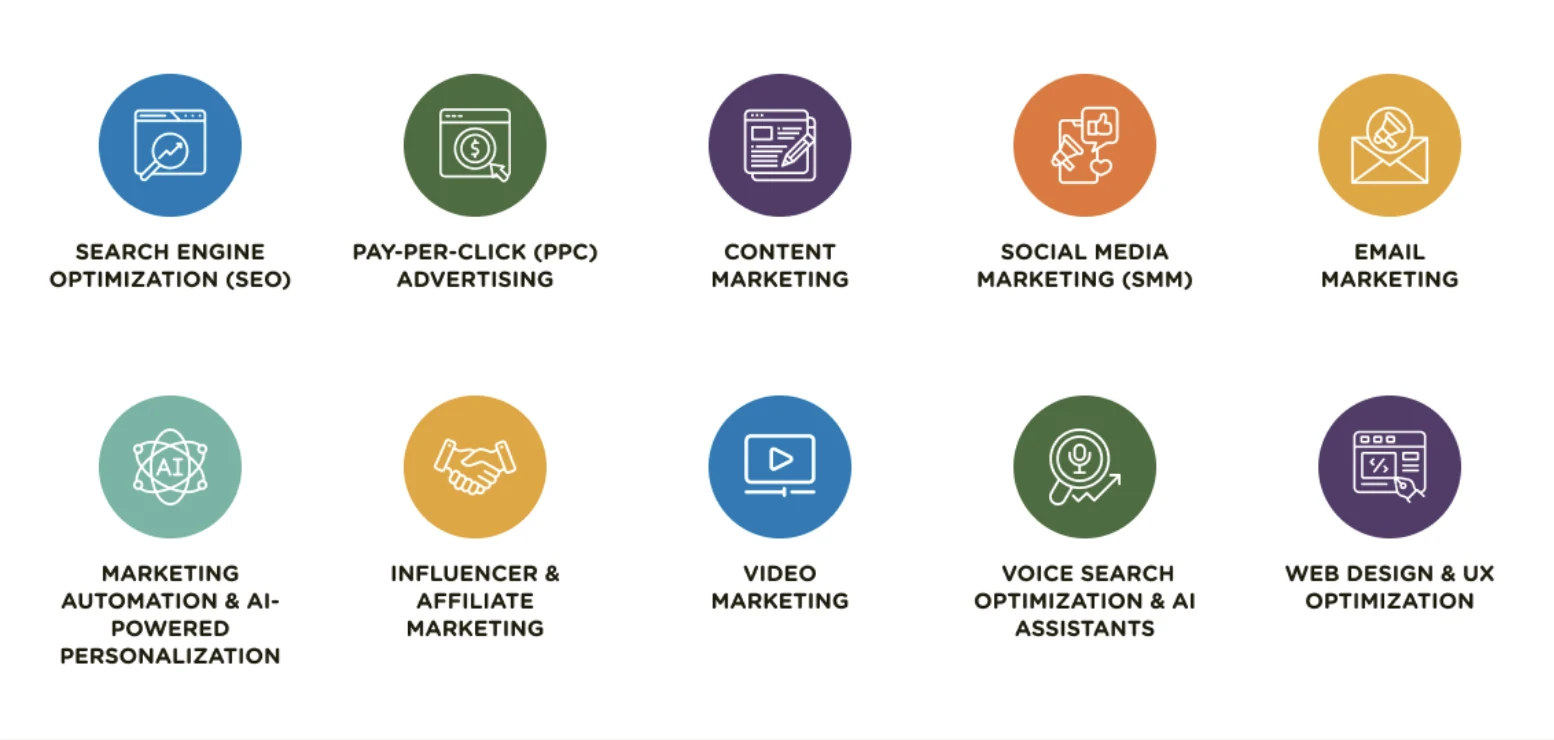
But before deciding where to invest, it helps to understand what SEO and PPC actually do.
In a nutshell: SEO builds your website's visibility organically by attracting traffic over time; PPC puts your brand in front of the right people immediately through paid placements.
Which online marketing tactic is better?
Though both drive visitors, they differ in cost, timing, and long-term impact, which is why knowing the distinction matters for small businesses.
What SEO actually does
SEO basically means making your website easier for people to find when they search Google. No tricks, no hacks. Just publishing content that answers what people are looking for and making sure Google can read it correctly.
Think about SEO as a few key pieces:
- First, you figure out what your customers search for: their questions, problems, the words they use.
- Then, you create pages that answer those questions better than anyone else. You make sure your site loads fast, works on phones, and has clear navigation.
- And finally, you earn mentions from other reputable websites in your industry.
SEO applies to K-12 schools, pest control, HVAC services, all types of businesses across different industries. Small businesses should care because organic search drives massive amounts of traffic. About half of all website visits come from organic search. Once you rank well, people keep finding you without you having to pay for each visit.
How PPC ads really work
Paid ads are simpler conceptually. You buy placement on Google, Facebook, Instagram, LinkedIn, wherever your customers hang out. Here are the steps you would usually take:
- You set a budget,
- Pick who sees your ads,
- Write something compelling, and
- Pay when people click on or see your ad enough times.
The mechanics aren't too complex: You're basically bidding in an auction against other businesses that want the same eyeballs. Your bid amount, ad quality, relevance determine if you win. You can target based on what people search, like:
- Their interests
- Demographics, or
- Past behavior on your site.
Ultimately, your webpage appears conspicuous on the first page of the search engine results page (SERP) like those sponsored ads below:
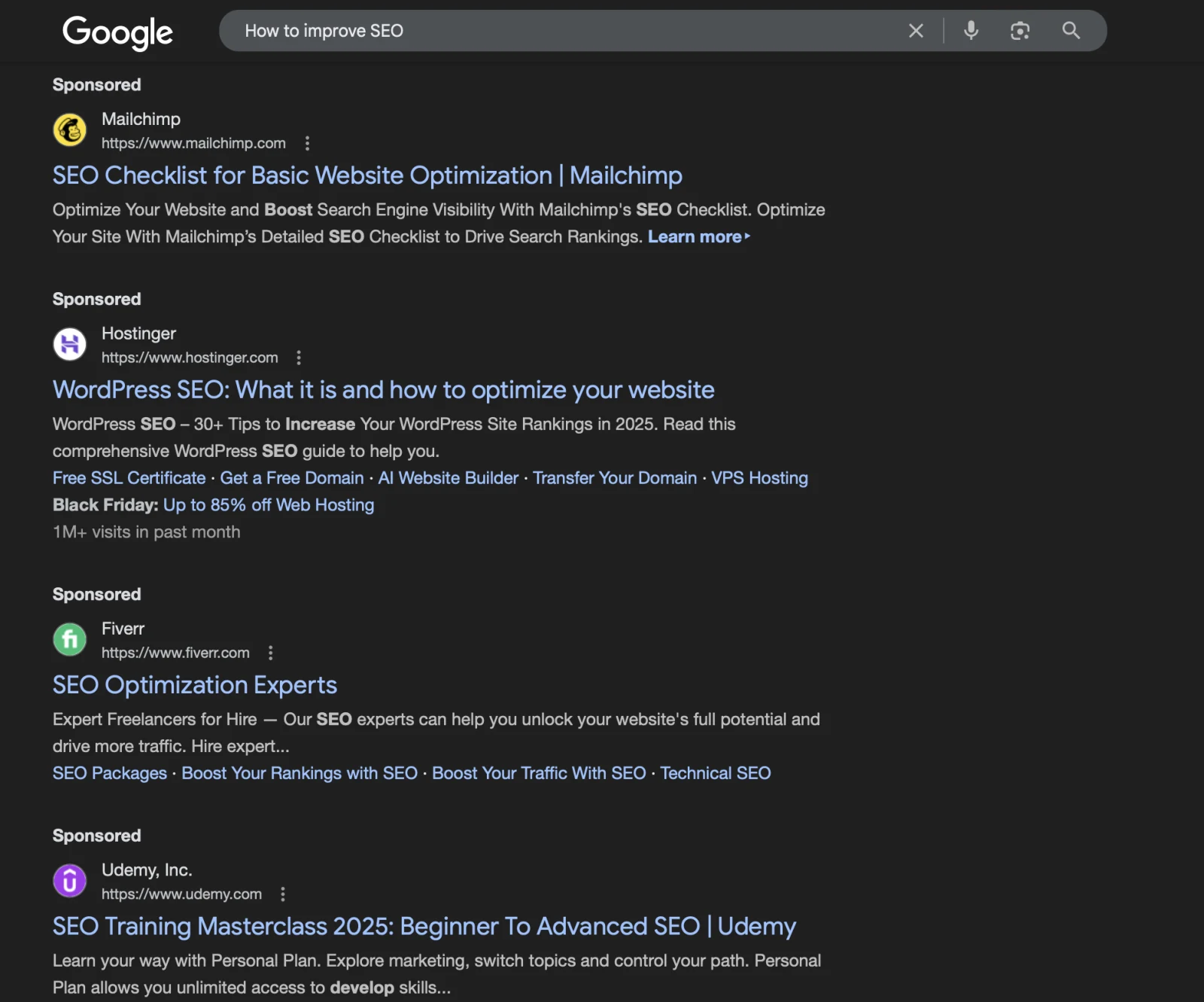
Image source: Screenshot of Google SERP
Learn from Ryan Beattie, Director of Business Development at UK SARMs. Their marketing team also runs PPC campaigns, whether on Google or social media, to promote their SARM business.
Beattie explains, "Paid ads give small businesses something invaluable: speed to market and instant feedback. You can test 10 different value propositions in a week and know exactly which resonate with your audience. This rapid learning cycle is especially crucial for new businesses that need to find product-market fit quickly."
Difference Between SEO and PPC in Terms of Costs and ROI
When deciding between SEO and PPC, understanding the costs and potential returns is key. Each approach has a different investment profile and scales differently, so knowing what you're paying for and what you're getting helps you choose the right strategy.
SEO vs. PPC costs
Let's get real about costs:
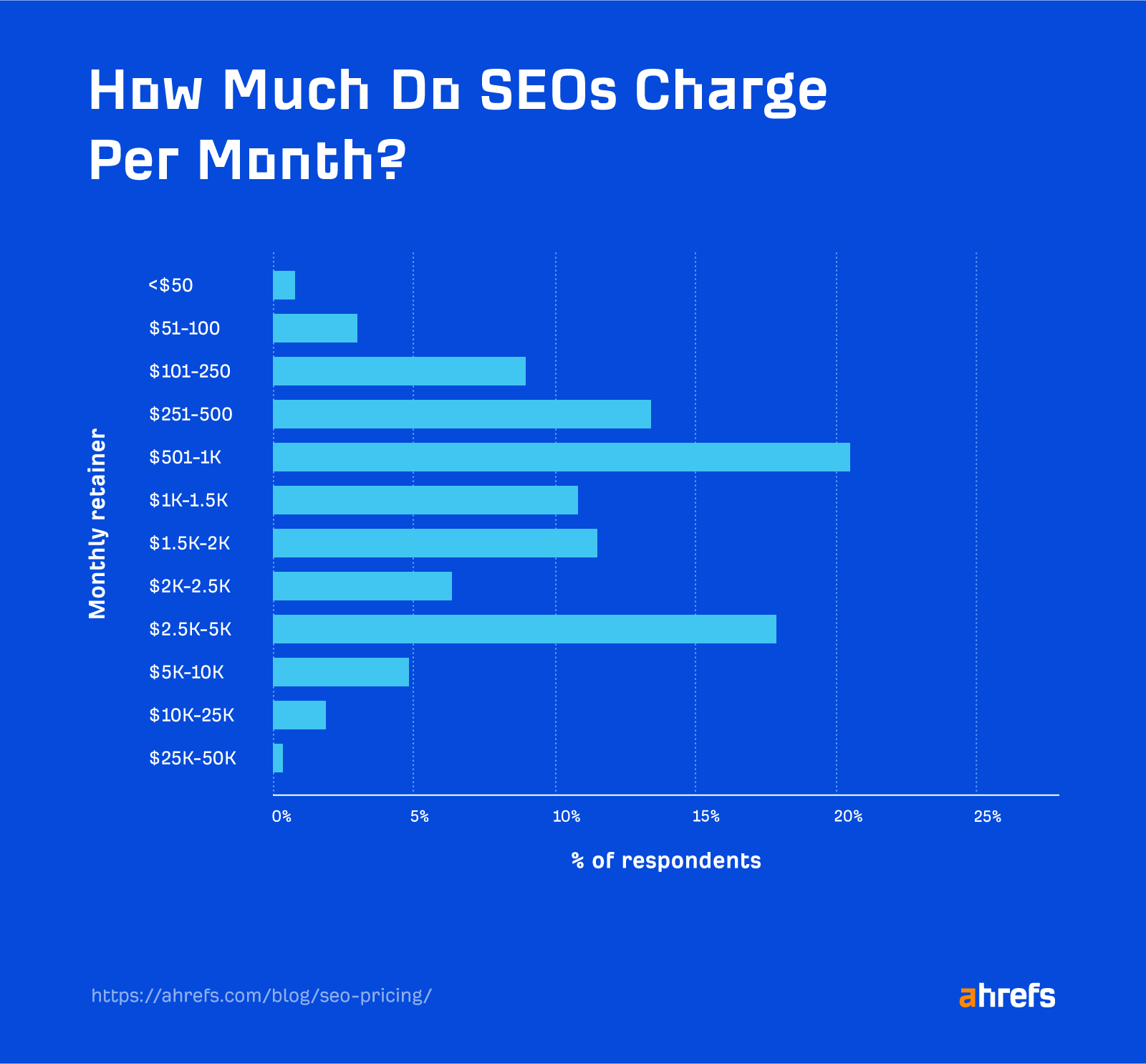
- SEO: SEO typically involves some upfront work: fixing technical issues, researching keywords, planning content. Then there are ongoing costs for creating content and improving pages, not to mention monitoring performance. Ahrefs surveyed SEO professionals and found most charge monthly retainers between $500 and $1,000, depending on what you need.
- PPC: Paid ads have their own cost structure. You'll pay to set things up initially: Think strategy, tracking, landing pages, creative work. Then, you have your actual ad spend plus any management fees.
This begs the question: Which is costlier? Here's the big difference in how they scale:
- SEO tactics work like compound interest. As your pages rank higher, your cost per visitor drops because you're not paying for clicks. But it takes time and consistent work to build momentum.
- Paid ads scale directly with budget. Double your spend, roughly double your traffic. But you pay for every single visitor, and costs tend to rise as more competitors enter your market. That's why it's crucial to keep up with PPC trends to maximize your ad conversions.
Bottom line: For cash-strapped businesses, ads can generate immediate revenue. But if you're thinking long-term, SEO becomes the better deal once it kicks in.
Cris McKee, Founder of GetWorksheets, has their fair share of implementing both SEO and PPC for their small business. They want to ensure their website becomes the go-to place online for free worksheets.
When asked which digital marketing strategy works best, McKee shares, “SEO and PPC serve very different purposes, and which one works best really depends on timing and goals. PPC delivers fast visibility and traffic when you need results right away, while SEO compounds over time and becomes more cost-efficient as authority builds.
He concludes, “For us, the real win came from using PPC for immediate traction while investing in SEO to create a sustainable, long-term growth engine.”
SEO vs. PPC ROI
The return on investment (ROI) isn't just about lead costs. You need to factor in lead quality, how many become customers, what they spend, even how long they stick around. In terms of returns, here's how both digital marketing strategies differ:
SEO returns
SEO work builds compounding returns. Your best content can drive traffic for years with minimal maintenance. You're earning traffic, not renting it. Plus, people trust organic results more than ads, which often means better conversion rates. The downside? It takes time. Ahrefs found that most top-ranking pages are over two years old.
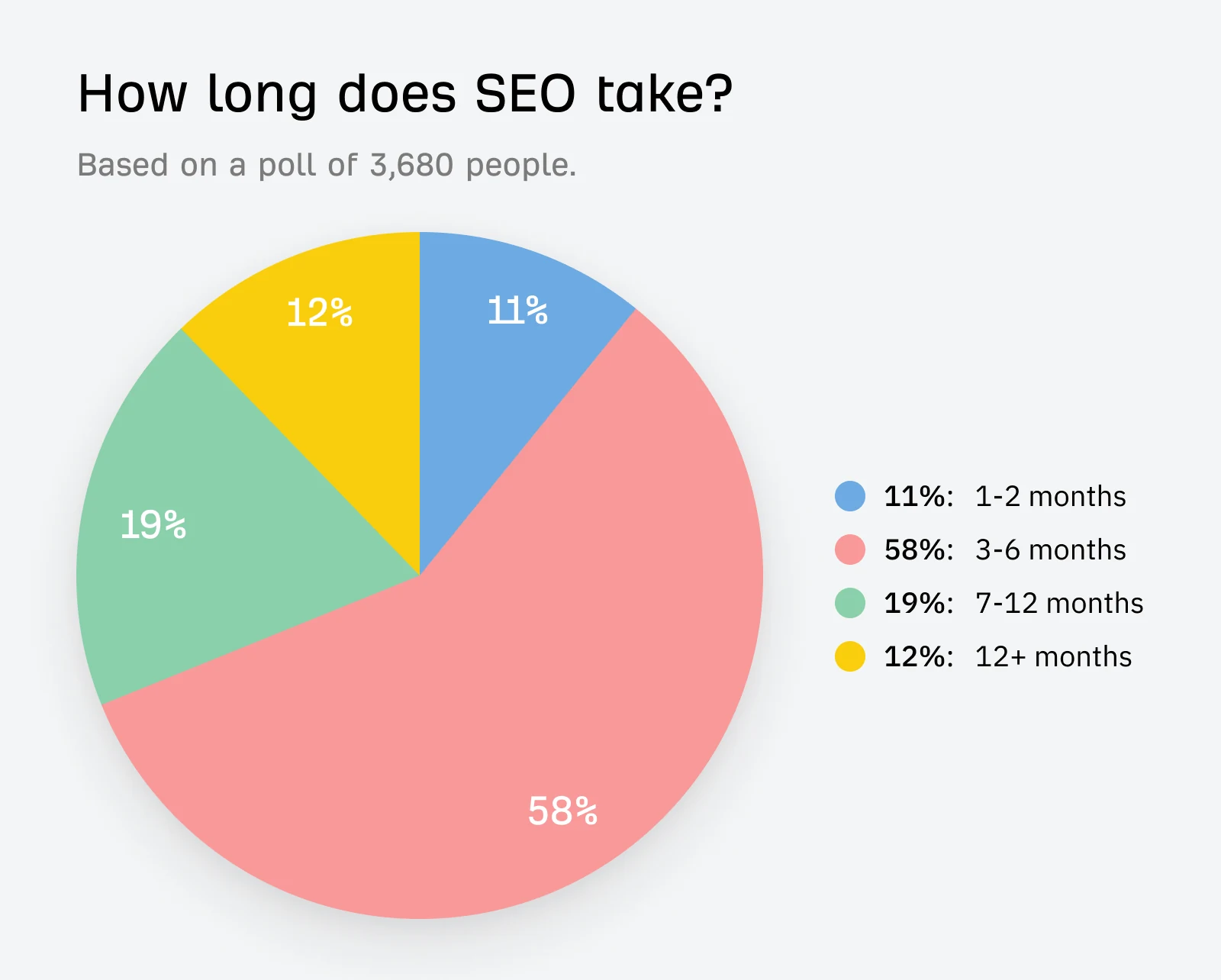
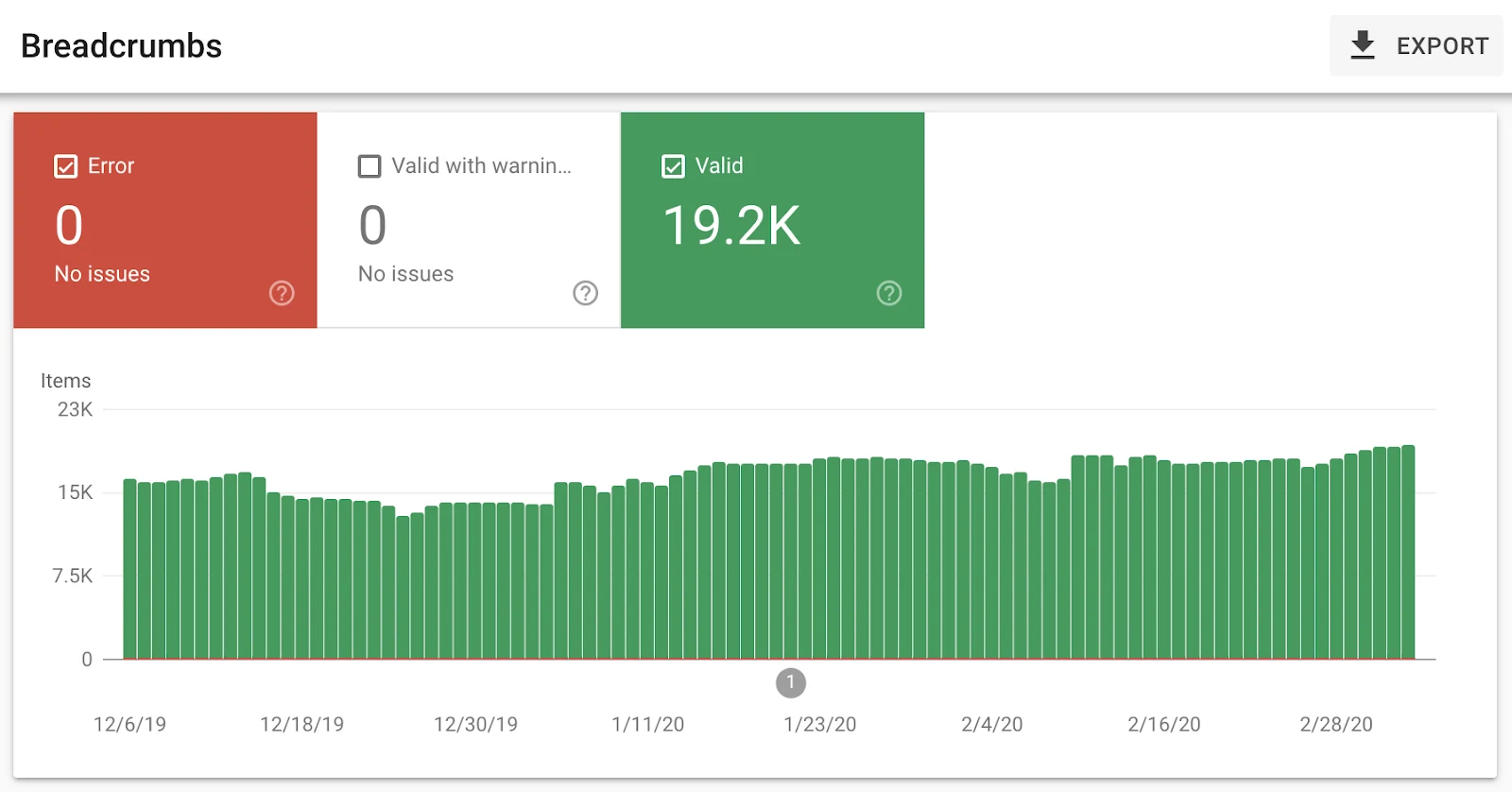
- Case study: As a leading Korean job platform, Saramin doubled its organic search traffic by systematically investing in SEO. By fixing crawl errors, cleaning up meta tags, using structured data, and following Google's best practices, they improved both traffic quality and conversions. This example shows how consistent SEO work builds long-term results that keep paying off over time.
PPC returns
Paid ads deliver immediate visibility and let you test ideas fast. You get detailed data on what works, making it easy to cut losers and scale winners. The attribution is crystal clear: You know exactly which ad drove which sale.
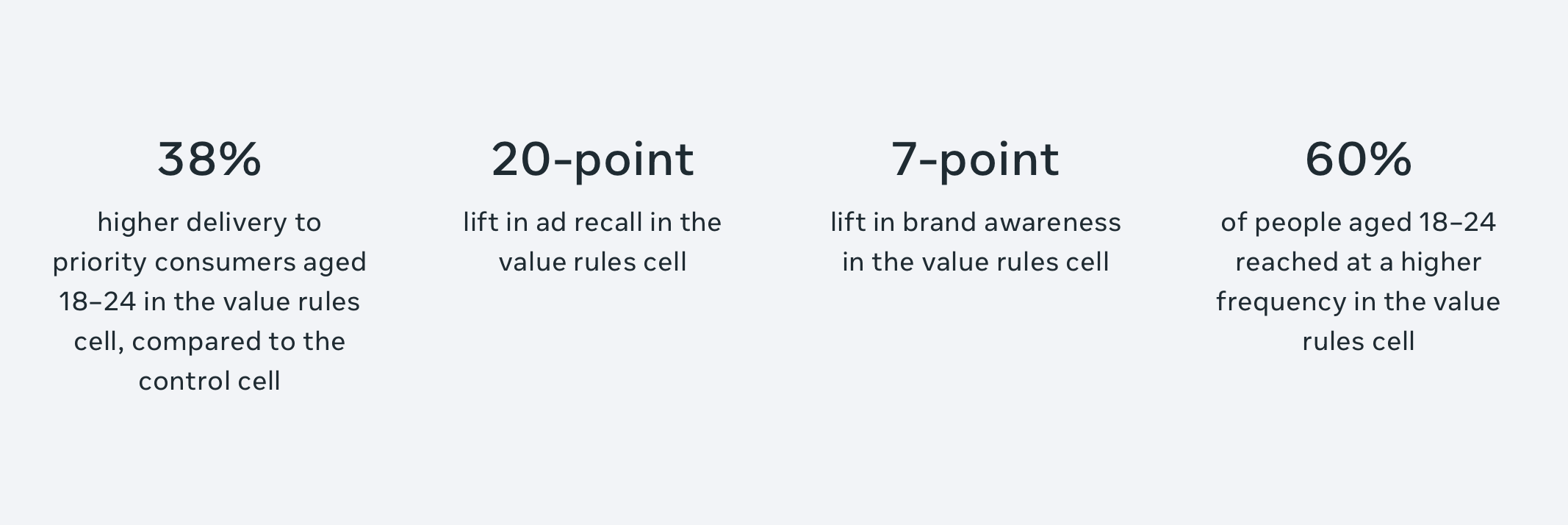
- Case study: Wendy's used Meta value rules to prioritize ads for Gen Z while running campaigns across Facebook and Instagram. The result? 38% more delivery to the 18–24 audience and measurable lifts in ad recall and brand awareness. It's a clear example of how paid ads can quickly test and target the audiences that matter most, giving actionable insights for broader marketing strategies.
How To Make Both Strategies Work for Your Business
When you combine SEO and paid ads the right way, you get the best of both worlds: short-term revenue and long-term growth. The key is to align your strategy with your business goals, project timeline, cash flow, and the data insights you already have, not what you hope will happen.
Here's how to make both strategies work together without wasting your budget:
- Be honest about your current situation. If you need revenue this month, prioritize ads while slowly building your SEO foundation. If you have a few months of runway, balance both channels more evenly.
- Look beyond cost per lead. Evaluate channels based on lifetime value, not just initial lead costs. Many businesses start with a 60/40 split (ads for immediate wins, SEO for long-term traction). Then, they shift more toward SEO as organic traffic grows.
- Use paid ads to guide your SEO tactics. Test keywords and headlines through paid campaigns. You can even go as far as repurposing content from Google ads to blog posts. When something works, build SEO content around it. No guesswork, no wasted effort!
- Fix your landing pages first. Slow, cluttered pages kill ROI on both ads and SEO. Make your pages fast, clear, even focused before you spend another dollar driving traffic.
- Track the metrics that matter. For SEO, monitor rankings, organic traffic, even organic conversions. For ads, focus on cost, CTR, and conversion rate, not to mention ROAS. Benchmark your numbers so you catch issues early.
- Use tools and technology to scale smarter. Leverage analytics platforms and automation tools. Even AI SEO and PPC solutions can help spot keyword opportunities and optimize content. Ultimately, the right tech saves time and reduces guesswork, helping both SEO and paid ads perform better.
Paul McKee, Founder of Reading Duck, recommends combining SEO and PPC for short- and long-term ROI. As he hopes to make his reading website highly visible and readily accessible to children online, he combines both online marketing strategies.
McKee shares, "Small businesses need to make the most of SEO and PPC as part of their online marketing strategies. If you need customers tomorrow to make payroll, paid ads are your lifeline. But if you're building for the next five years, SEO creates the compound growth that transforms businesses.
He concludes, "The smart play is often starting with ads to generate immediate revenue while building your SEO foundation."
The Bottom Line
Need immediate results tomorrow? Paid ads are your answer. Looking to build an asset that gets cheaper over time? SEO wins. Most small businesses need both, so strike a balance between the two. More importantly, follow the key steps above to make them work for your small business.
The most brilliant long-term strategy usually combines them: Use ads for immediate revenue and market insights. Meanwhile, build SEO to reduce your dependence on paid traffic over time. With ad costs rising and organic reach on social media tanking, owning your search visibility becomes more valuable every year.
Just ensure your approach aligns with your goals, timeline, budget, and even business reality. Start somewhere, measure results, adjust based on data. That's how you win! Cube Creative specializes in creating marketing strategies that work today while building for tomorrow. They'll help you balance quick wins from paid ads with the long-term value of SEO. Get in touch us today!!