Every home service company sits on a lead engine it barely runs. Not the phone. Not the truck wraps. The reviews. Think of your online reviews like referrals from a trusted neighbor, except this neighbor talks to 500 people at once and never sleeps. Most owners treat review management for home service businesses as something the office manager handles on a slow afternoon. That is the mistake. A finished job is raw material for your next booked job, and whether it turns into a lead depends on whether anyone is running a process behind it. We work with home services businesses that generate this material every day and leave most of it on the table.

Written By: Chad J. Treadway | August 13, 2026
Chad is a Partner and our Chief Smarketing Officer. He will help you survey your small business needs, educating you on your options before suggesting any solution. Chad is passionate about rural marketing in the United States and North Carolina. He also has several certifications through HubSpot to better assist you with your internet and inbound marketing.
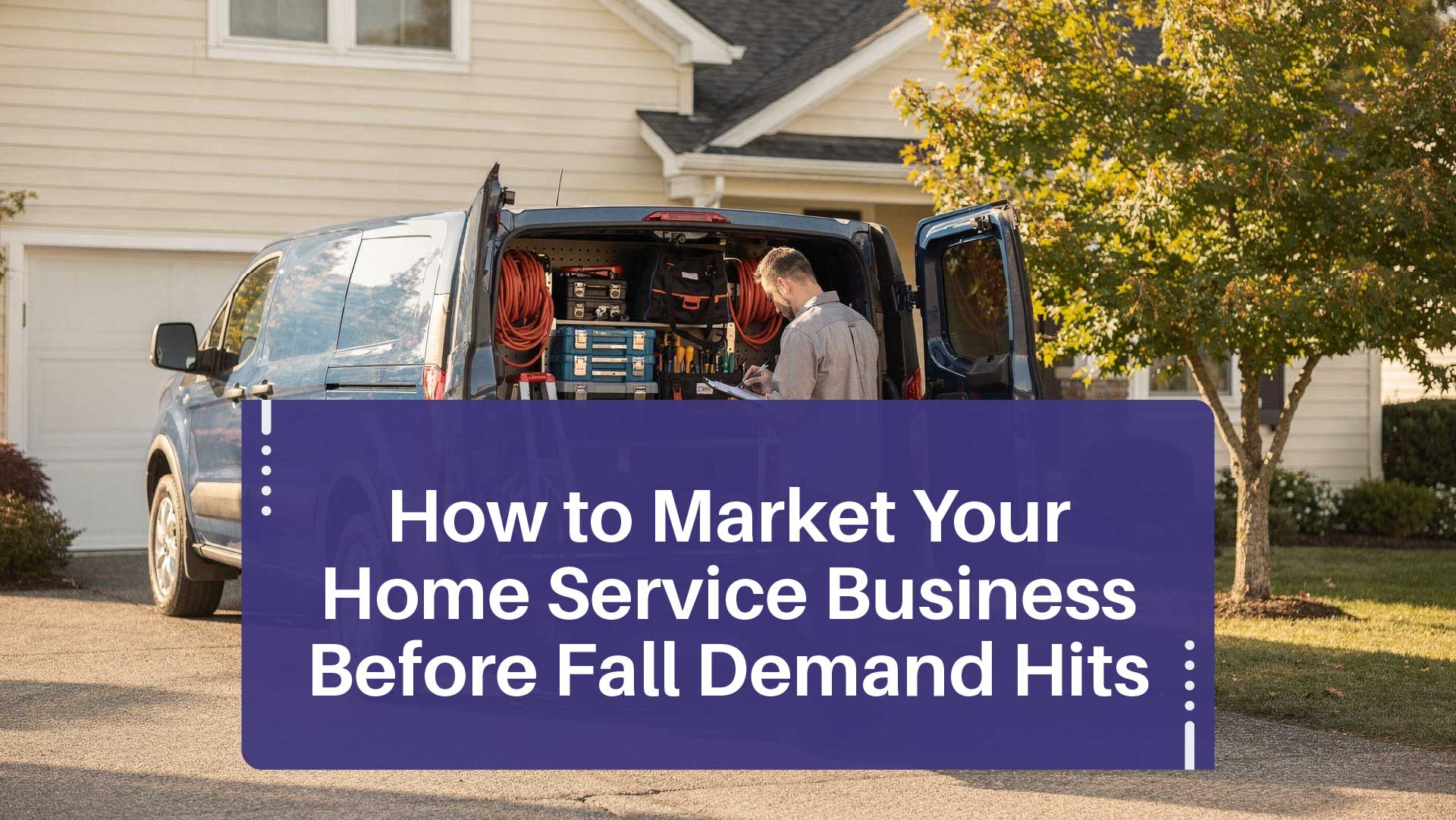
Ask most HVAC owners when fall starts, and they'll point to the first cold morning in October when the phone finally lights up. That answer is off by about two months. Fall marketing for home service businesses works best when it starts in the quiet stretch of late summer, weeks before a single furnace calls it quits.
Here is the part that trips people up. The demand you feel in October was already decided back in August. By the time the season turns, your customers have been searching, comparing, and booking for weeks, and your competitors have been bidding against you the whole time. The local home services businesses that plan around the search curve instead of the weather get cheaper leads and better slots on the calendar.
This post covers why fall demand moves ahead of the thermometer, how far in advance HVAC, roofing, and fall cleanup work each need to be marketed, why waiting costs you real money in ad spend, and a simple July-and-August plan you can put in motion this week.
Written By: Chad J. Treadway | August 10, 2026
Chad is a Partner and our Chief Smarketing Officer. He will help you survey your small business needs, educating you on your options before suggesting any solution. Chad is passionate about rural marketing in the United States and North Carolina. He also has several certifications through HubSpot to better assist you with your internet and inbound marketing.
Your monthly report says organic traffic is up. Your service calendar says leads are flat. If you run a home service company and that gap has started to bug you, you are not imagining things, and your agency owes you a better answer than "SEO takes time."
Something real changed in 2026. AI search for home service businesses has quietly rewritten the rules, and most owners found out from a flat month, not a memo. AI stopped being a feature bolted onto search and became the thing people actually read. Google now puts an AI-written summary at the top of the results page. Ask ChatGPT or Gemini "who is the best HVAC company near me," and you get a paragraph that names a company or two, then stops. The good news: the home service companies that understand what these systems pull from can still win the spot at the top.
This post covers what AI search actually is, why "we rank No. 3 on Google" no longer tells the whole story, what GEO really means once you strip out the vendor hype, and the specific signals that get a contractor named in an AI answer.
Written By: Chad J. Treadway | August 06, 2026
Chad is a Partner and our Chief Smarketing Officer. He will help you survey your small business needs, educating you on your options before suggesting any solution. Chad is passionate about rural marketing in the United States and North Carolina. He also has several certifications through HubSpot to better assist you with your internet and inbound marketing.
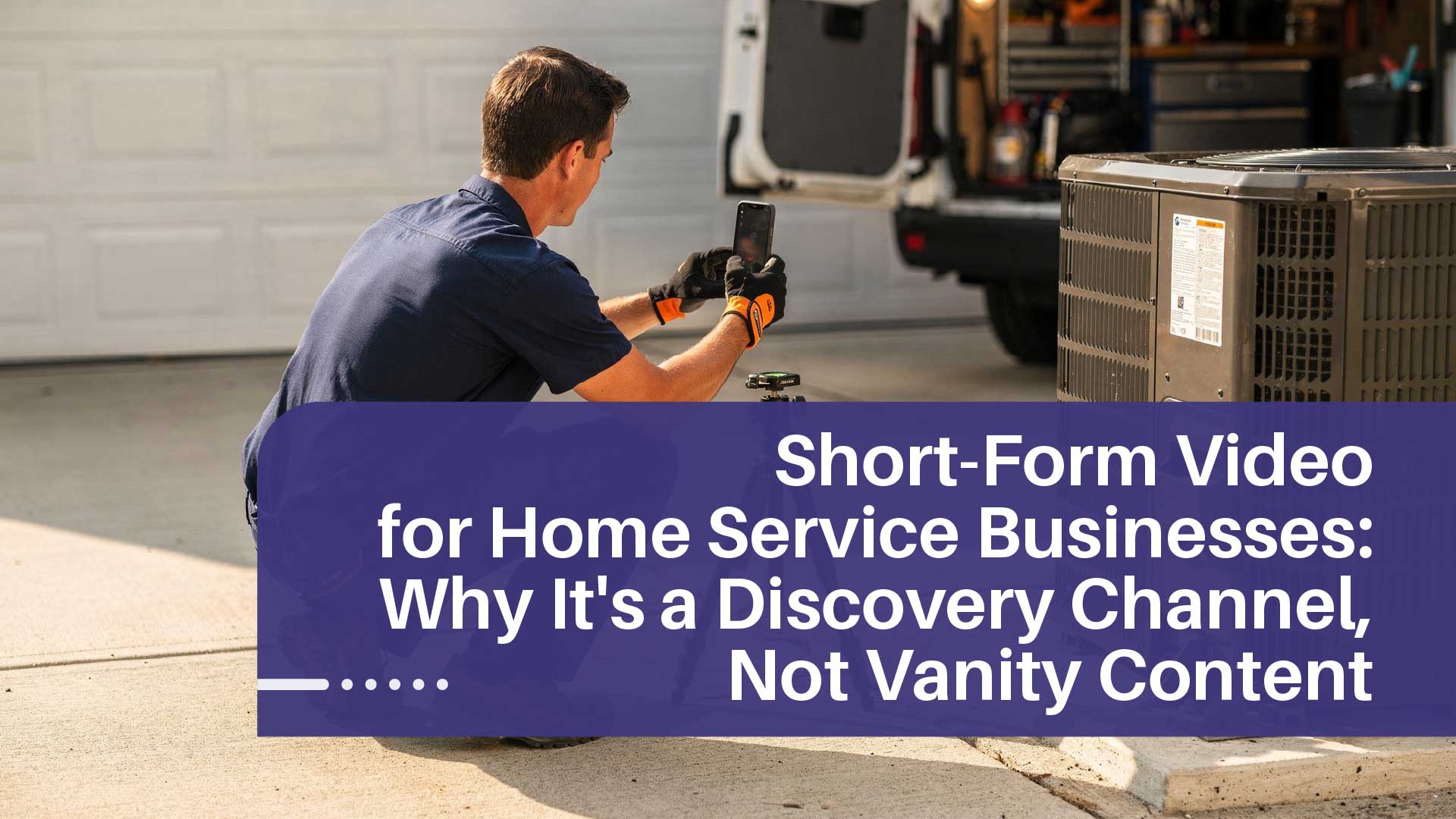
Most home service owners have quietly filed short-form video under "stuff for influencers." The crew is booked solid, the phone is ringing, and nobody has time to choreograph a dance on a roof. That instinct makes sense. It is also costing you leads.
Short-form video for home service businesses is not vanity content. It is a discovery channel that runs alongside Google, and your future customers are already there. The home services businesses that treat Reels, YouTube Shorts, and TikTok as a search-and-discovery play are showing up where homeowners now look, often before those homeowners ever type a company name into a search bar.
This post covers what to actually film on the jobsite, how long clips should run, how often a busy shop can post without wrecking the schedule, how a single shoot can feed every platform you care about, and how the right captions and setup help those clips get found in search. No influencer routine required.

Written By: Hannah Kilpatrick | August 03, 2026
Hannah Kilpatrick Cube Creative DesignHannah Kilpatrick graduated from Western Carolina University in 2021 with a Bachelor of Science in Communication with a Minor in Marketing and a Concentration in Public Relations. She has been around social media since its creation. (Meaning, she was in the first grade when Facebook became available to the general public.) As our very own professional Gen-Z, Hannah is a whiz when it comes to social media creation and paid advertising.