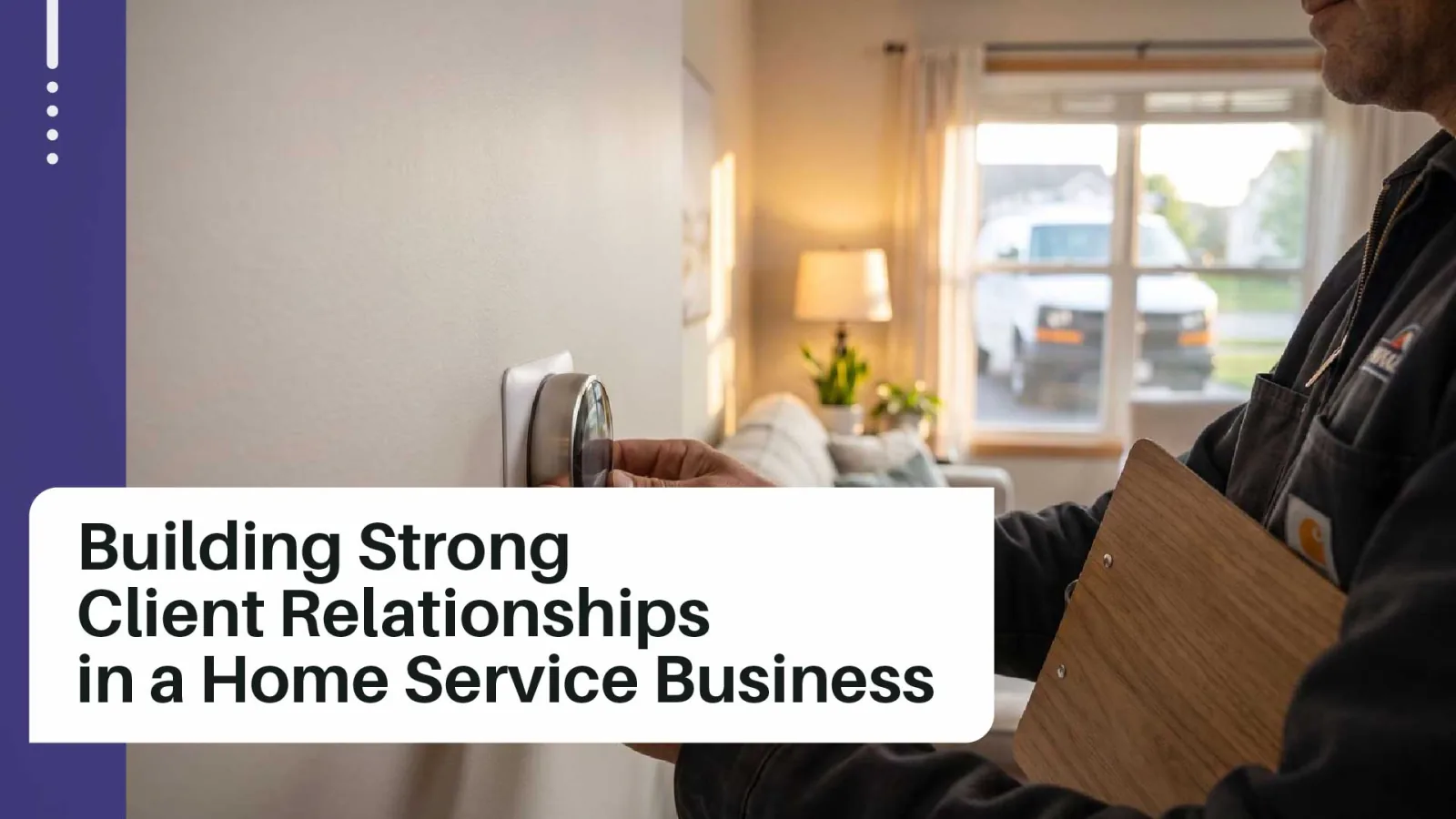
Two technicians finish the same repair on the same afternoon. One closes the ticket, hands over the invoice, and drives off. The other explains what failed, mentions the part that will probably go next spring, and asks whether the customer wants a reminder before the season turns. Six months later, only one of them gets the call.
That is what client relationships in a home service business come down to. Not a soft skill you either have or you don't. A revenue system with moving parts you can actually fix. We market to independent home services companies for a living. The same pattern shows up across every trade. Owners pour money into winning the first call while the second one quietly leaks out the back.
This post covers the three levers that keep customers from shopping around: response speed, service agreements, and seasonal check-ins. Then it covers where all three become visible to the next homeowner who looks you up.
Why Are Client Relationships Worth More Than New Leads?
A returning customer costs nothing to acquire and calls you first when something breaks, which is why retention beats lead volume on margin. Retention also compounds. Every customer who stays turns into a review, a referral, and a maintenance visit you never had to buy an ad to win.
The churn math is blunt. Level data shows that HVAC and plumbing customers on a service agreement leave at a rate of 12% to 18% a year, while customers with no agreement leave at 40% to 60%. Level presents this as the pattern it sees across its own benchmarking work rather than an industry average, drawn from financial reviews of more than 2,200 service businesses. Over five years, that gap makes an agreement customer worth 3 to 5 times more in total lifetime value.
Tracking that gap is one of the core metrics home service companies should watch, not a number you check once a year and forget.
Run the top of that range on yourself for a second. If you lose half your customer list every year, you are not building a business. You are running a very expensive treadmill, and the marketing budget is the electricity bill.
How Fast Does a Home Service Company Need to Respond?
Fast enough to be first. Most consumers hire whoever replies to the inquiry first, and speed of response outranks both reliable quality and brand trust when they decide whether to stay with a company. In practice, that means same-hour replies during the day and a real plan for the early evening, the same discipline behind turning inbound calls into booked appointments.
In a survey of 500 U.S. home services decision-makers and 2,000 consumers, Moneypenny found that 83% of consumers choose the business that responds first. Censuswide ran that survey in the spring of 2026. As reported by Green Industry Pros, it also ranked the factors behind loyalty: speed of response at 36%, quality customers can rely on at 32%, and trust in the brand at 30%.
Read that order twice. Customers rated how fast you pick up above the work itself.
The wider problem is that companies grade their own communication generously. Moneypenny's survey results show that 91% of building trades believe the phone drives conversion, while only 69% of consumers said the phone experience met their expectations. (Source: Green Industry Pros)
Jesper With-Fogstrup, group CEO of Moneypenny, said it plainly: "Many businesses believe they're delivering a high standard of service, yet clients are telling a different story."
Evenings are the other half of it. Green Industry Pros reported that 39% of consumers want support between 9 a.m. and 5 p.m., while 24% would rather reach someone between 5 p.m. and 9 p.m. Evening availability made customers more likely to feel reassured (37%) and more likely to choose or stay with a company (32%). Most trades cite staffing and cost for skipping it, which is fair. An answering service that takes a real message still beats a voicemail box that collects complaints.
Do Service Agreements Actually Keep Customers?
Yes. An agreement gives the customer a reason to call you before they call anyone else, and it puts a visit on the calendar before anything breaks. In HVAC, these plans have moved from a pleasant add-on to the base of the revenue model, and the same structure travels to other trades.
The ACCA HVAC Blog reported, "With recurring service agreements now representing 55% of HVACR industry revenue, these contracts have become essential for business stability." That figure covers heating, air conditioning, and refrigeration specifically. Other trades sell the same idea under different labels: annual electrical inspections, drain maintenance plans, gutter and roof checks, seasonal lawn programs.
Selling them is a technician habit before it is a marketing tactic. Based on findings from the same ACCA guidance, service technicians should aim for a minimum 25% conversion rate from service calls to agreements, and specialized maintenance technicians can reach 70% or higher.
Then there is the renewal half, which almost nobody watches. In Level's review of one contractor's agreement book, expired agreements carried roughly twice the average value of active ones. The best customers were the ones who lapsed, because nobody called them, while small residential plans renewed themselves on a credit card. Auto-renew is not a billing convenience. It is retention with a calendar attached.
What Should a Seasonal Check-In Look Like?
A seasonal check-in is a short, useful message that lands before the season creates the problem, not after. Ahead of the first freeze or the first stretch of 90-degree days, you tell the customer what to watch for and offer a slot. The goal is a booked visit, not a pitch.
Timing is the whole product here. Nobody wakes up in July thinking about the furnace, and nobody thinks about a drain line until the water is on the floor. Your reminder arrives in the narrow window where the customer can still act cheaply, which is why it reads as helpful instead of promotional.
The tooling scales with the company. A three-person shop can work from a spreadsheet, 20 calls a week, and the owner's cell phone. An eight-person operation can send one seasonal email and let the office manager work a call list on slow afternoons. A 40-technician company can trigger the whole sequence from the service software it already pays for. The mechanics differ by size. The message does not.
Two rules keep these touches from turning into noise. Send them by trade and by season rather than on a monthly schedule. And make each one reference something specific to that customer's equipment or property, even if it is a single line pulled from the last visit notes.
Where Do Client Relationships Show Up Online?
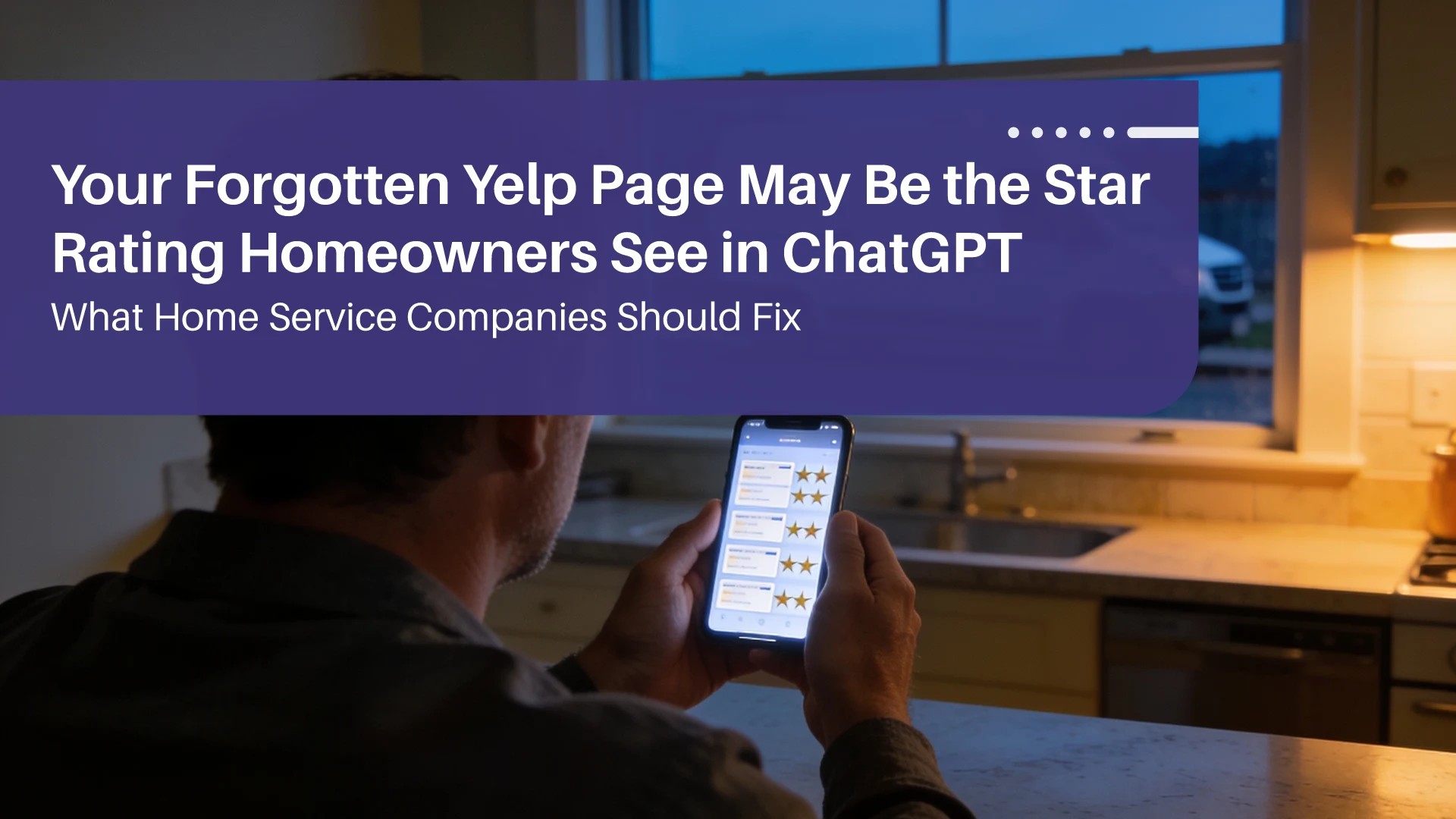
In your reviews and on your website. A customer who trusts you leaves a review; the way you answer that review is what the next customer reads, and more than half of those readers head to your website right afterward. Both are public evidence of how you treat people.
Review replies are no longer optional. BrightLocal found that 89% of consumers expect a business owner to respond to reviews, 19% expect a same-day response, up from 6% the year before, and 81% expect to hear back within a week.
Silence and copy-paste both cost you. BrightLocal's survey results show that 80% of consumers are more likely to use a business that replies to every review, 42% are unlikely to use one that never replies, and templated responses put off 50%. A "Thanks for the 5 stars!" pasted 40 times in a row reads exactly like what it is.
Recency counts as much as volume. Data collected by BrightLocal indicates that 74% of consumers only care about reviews written in the last three months. That turns review requests into a routine instead of a campaign. Ask after every completed job, not once a quarter when someone remembers.
Then comes the handoff. Evidence from BrightLocal points to 54% of consumers visiting a company's website after reading positive reviews, up from 32% when the same question was asked in 2019. Businesses that want to launch or refresh their site faster can also use professionally designed Framer templates to create modern, responsive pages without starting every layout from scratch. Your reviews earn the click. The website has to close the deal, which means current service pages, a phone number that works with one tap, and a form that reaches a human the same day.
What Retention Looks Like at an 8-Person Shop
Picture a county-wide home services operation with eight people: an owner, an office manager, five technicians, and a part-time bookkeeper, running between $450,000 and $750,000 a year. There is no marketing staff. The office manager already handles scheduling, billing, and the phone, and the customer list lives in a mix of software and memory.
Three changes fit inside that reality. First, every inbound call gets a person or a callback within the hour, and every missed call gets logged where the owner sees the weekly count. Second, technicians offer an agreement on every maintenance visit, treating the 25% benchmark as the floor rather than a stretch goal. Third, somebody works a renewal list 90 days out and calls the largest accounts personally.
Do the arithmetic on that middle one. If 10 of the week's calls are maintenance visits, a 25% conversion rate is two or three new agreements a week. That is unremarkable in any single week. Across a year, it changes what January looks like, and it moves a slice of revenue off the weather.
None of this shows up next month. Retention work pays on a delay, which is exactly why it keeps losing the argument to one more lead source.
The Second Call Is Where the Money Is
Winning a customer is the expensive part. Keeping one is mostly discipline: answer faster than the shop across town, put the next visit on the calendar before anything breaks, and reach the customer before the season does. Those three habits cost less than a month of ads, and they compound instead of resetting every 30 days.
The last piece is the one owners tend to miss. All of that relationship work eventually gets judged by a stranger reading your reviews and clicking through to your website. If the replies are thin and the site still looks like 2016, the trust your crew earned in person never reaches the next customer.
If you want a straight look at whether your website and review presence back up the relationships your team is already building, reach out. I'll start with your last 20 reviews and tell you what a homeowner sees.
Frequently Asked Questions
How Do You Turn a One-Time Service Call Into a Repeat Customer?
Leave the customer with a next step before you leave the driveway. Tell them what you fixed, what you would keep an eye on, and when it makes sense to look at it again. Then follow up on that timeline. A service agreement formalizes the habit, but a logged reminder and one honest phone call cover most of the value.
Are Maintenance Agreements Worth It for a Small Home Service Company?
Yes, and small shops often feel the benefit faster because every retained customer is a bigger share of the schedule. Level's benchmarking puts churn at 12% to 18% a year for agreement customers against 40% to 60% for everyone else, and the agreement also creates a standing reason for contact. Start with one simple plan at one price instead of three tiers, and put renewals on auto-charge so they never depend on anyone remembering.
How Quickly Should You Respond to a Customer Inquiry?
Same hour during business hours, same day at the outside. Most consumers hire whichever company responds first, and 41% told the researchers behind the Moneypenny survey that a reply within minutes would meet their expectations. If your crew is in attics all day, an answering service or a shared inbox with one clear owner beats a voicemail nobody checks until 6 p.m.
Should You Respond to Every Online Review?
Yes, positive ones included. Replying to every review makes 80% of consumers more likely to use a business, while 42% are unlikely to use one that never replies and 50% are put off by templated answers. Keep responses short, specific, and template-free: name the job, thank the person, and move on. A standing review reply routine matters more than any single reply.
What Is the Cheapest Way to Improve Customer Retention?
Answer the phone and follow up. Neither one costs money. After that, ask for a review at the end of every completed job and reply within a day. That keeps your review profile recent, which matters because 74% of consumers only care about reviews written in the last three months.