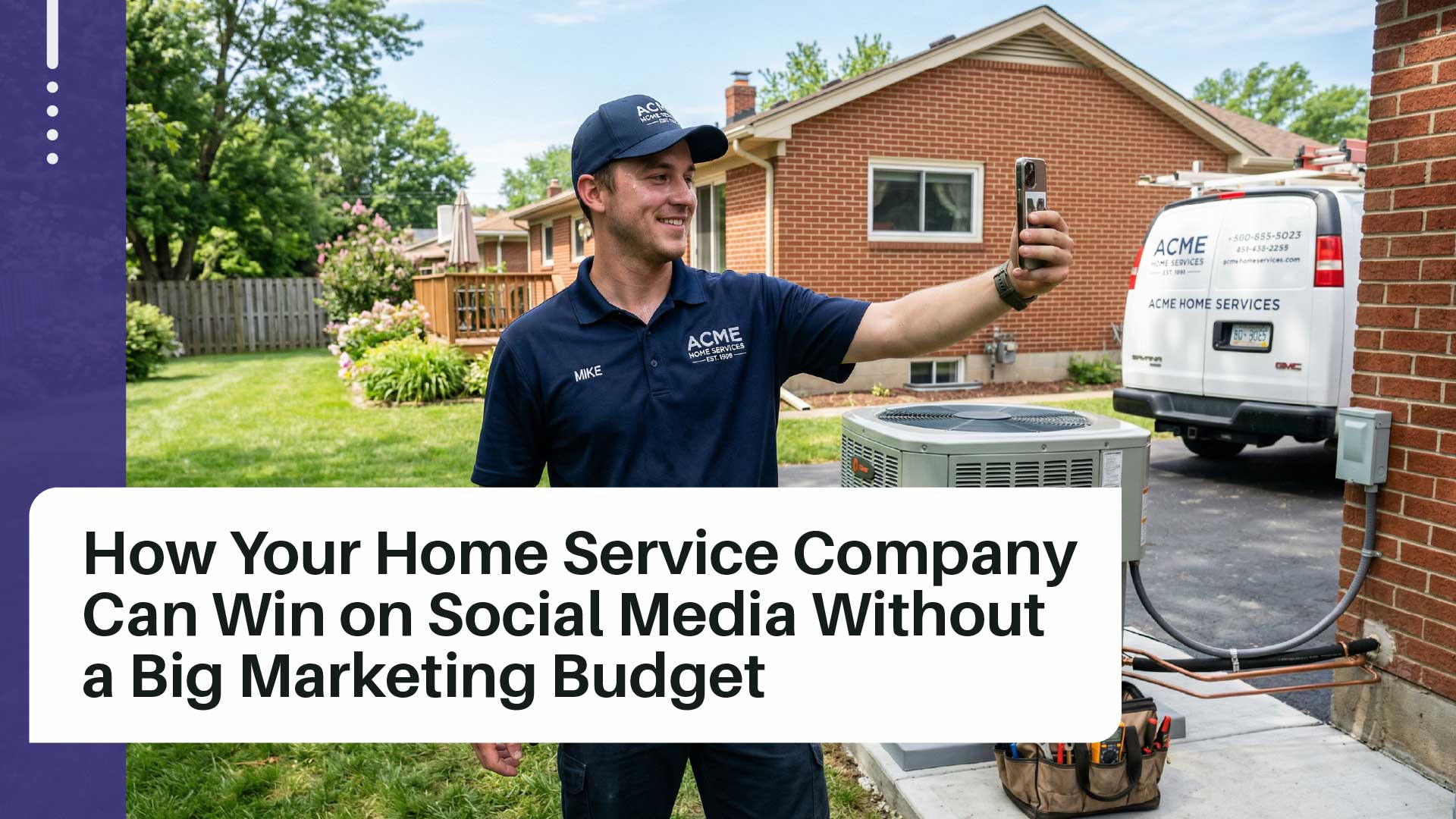
Your competitors are posting on social media. Some of them are posting well. And the ones doing it right are getting calls from homeowners who never even saw your truck drive by. Suppose that bothers you, good. It should. Because social media is not just for brands with marketing departments and content calendars pinned to the wall. It works for home service companies with five trucks and a shared office, too. You just need the right approach.
The problem is not that social media doesn't work for home service businesses. It does. The problem is that most service company owners treat it like an afterthought. A random post here, a shared meme there, then radio silence for three weeks. That is not a strategy. That is a waste of your time.
This post breaks down how to build a social media presence that actually produces results, even if your budget is closer to zero than it is to $1,000 a month.

Written By: Hannah Kilpatrick | May 19, 2026
Hannah Kilpatrick Cube Creative DesignHannah Kilpatrick graduated from Western Carolina University in 2021 with a Bachelor of Science in Communication with a Minor in Marketing and a Concentration in Public Relations. She has been around social media since its creation. (Meaning, she was in the first grade when Facebook became available to the general public.) As our very own professional Gen-Z, Hannah is a whiz when it comes to social media creation and paid advertising.
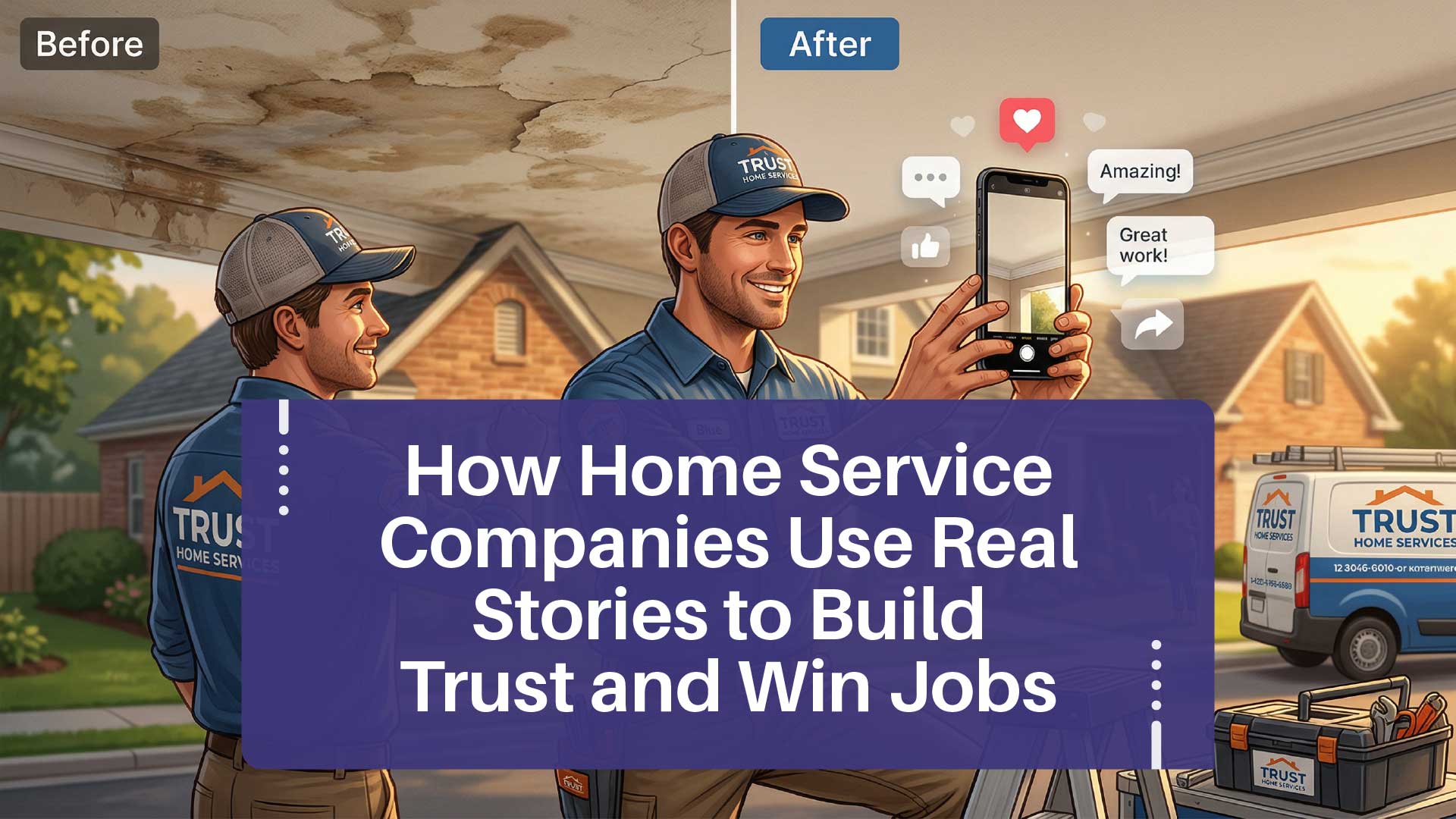
Every home service business has a story. The problem is, most of them never tell.
You are out there every day solving real problems for real people. A family's furnace dies at 2 a.m. in January, and your tech shows up, fixes it, and saves the night. A first-time homeowner finds a sewer line backup the week they move in, and your crew handles it professionally and at a fair price. These are not just jobs. They are stories. And they are the most powerful marketing tool you are not using.
This post is about storytelling for service businesses, not the kind that requires an ad agency or a creative writing degree. The kind that turns your actual work into content that builds trust, creates emotional connections, and wins you more customers.

Written By: Chad J. Treadway | May 12, 2026
Chad is a Partner and our Chief Smarketing Officer. He will help you survey your small business needs, educating you on your options before suggesting any solution. Chad is passionate about rural marketing in the United States and North Carolina. He also has several certifications through HubSpot to better assist you with your internet and inbound marketing.
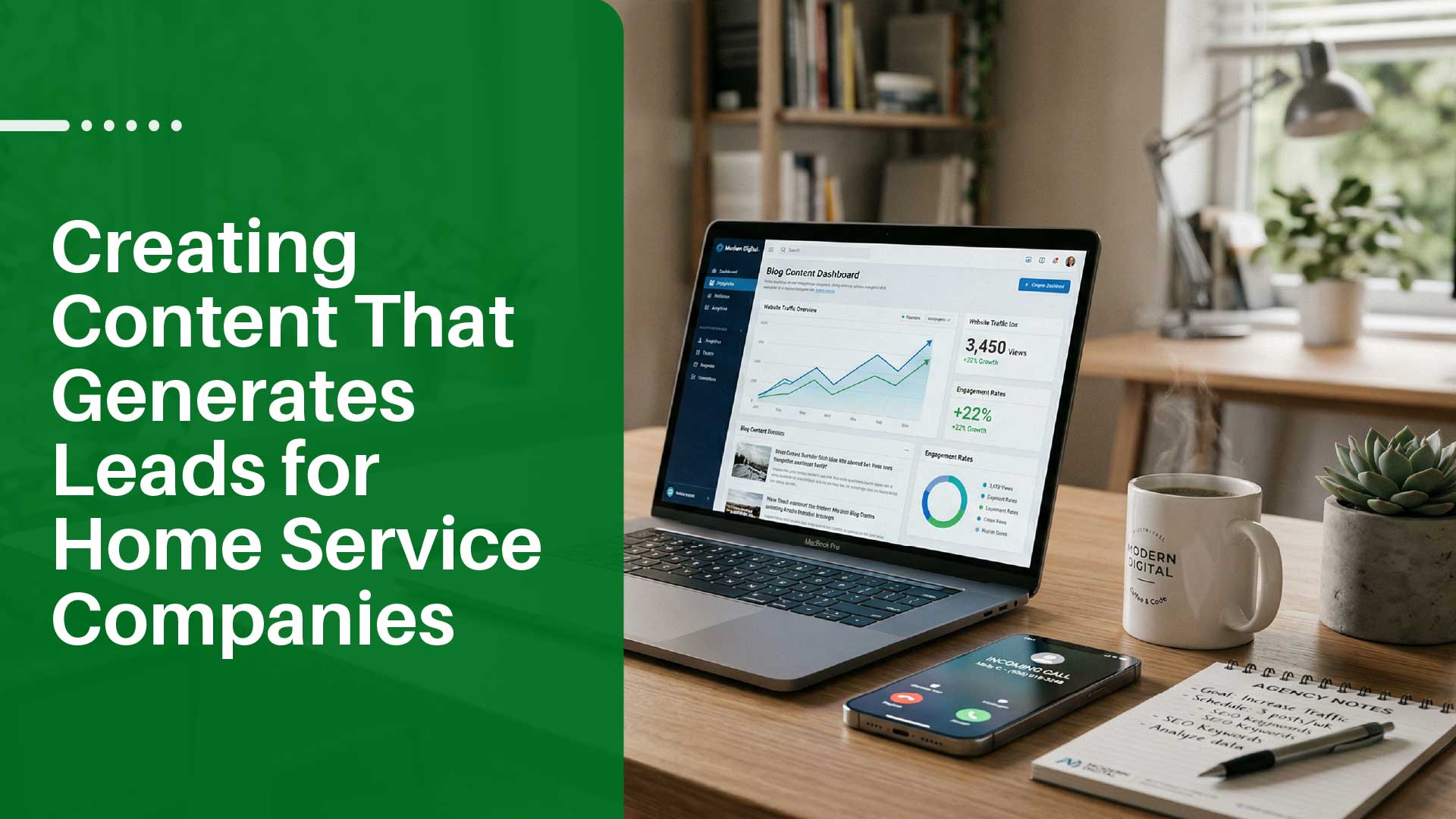
Here is the reality for most home service companies: you have a website, maybe a blog with a few posts from 2021, and a Facebook page your office manager updates when she remembers. And somehow, you are surprised the phone is not ringing more.
That is like painting the truck, parking it in the driveway, and wondering why nobody is calling the number on the door. Content works the same way as that truck; it only generates leads when it is moving. The right content, posted consistently, with a clear call to action, turns your website from a digital brochure into a lead generation machine. The wrong content (or no content at all) just sits there like a truck on blocks.
This post covers exactly what types of content generate actual phone calls and form fills for home service businesses like plumbing, HVAC, roofing, and electrical companies. Not theory. Not a list of 10 content types you will never use. Just the ones that work and how to put them to work during your busiest season.
Written By: Chad J. Treadway | May 07, 2026
Chad is a Partner and our Chief Smarketing Officer. He will help you survey your small business needs, educating you on your options before suggesting any solution. Chad is passionate about rural marketing in the United States and North Carolina. He also has several certifications through HubSpot to better assist you with your internet and inbound marketing.
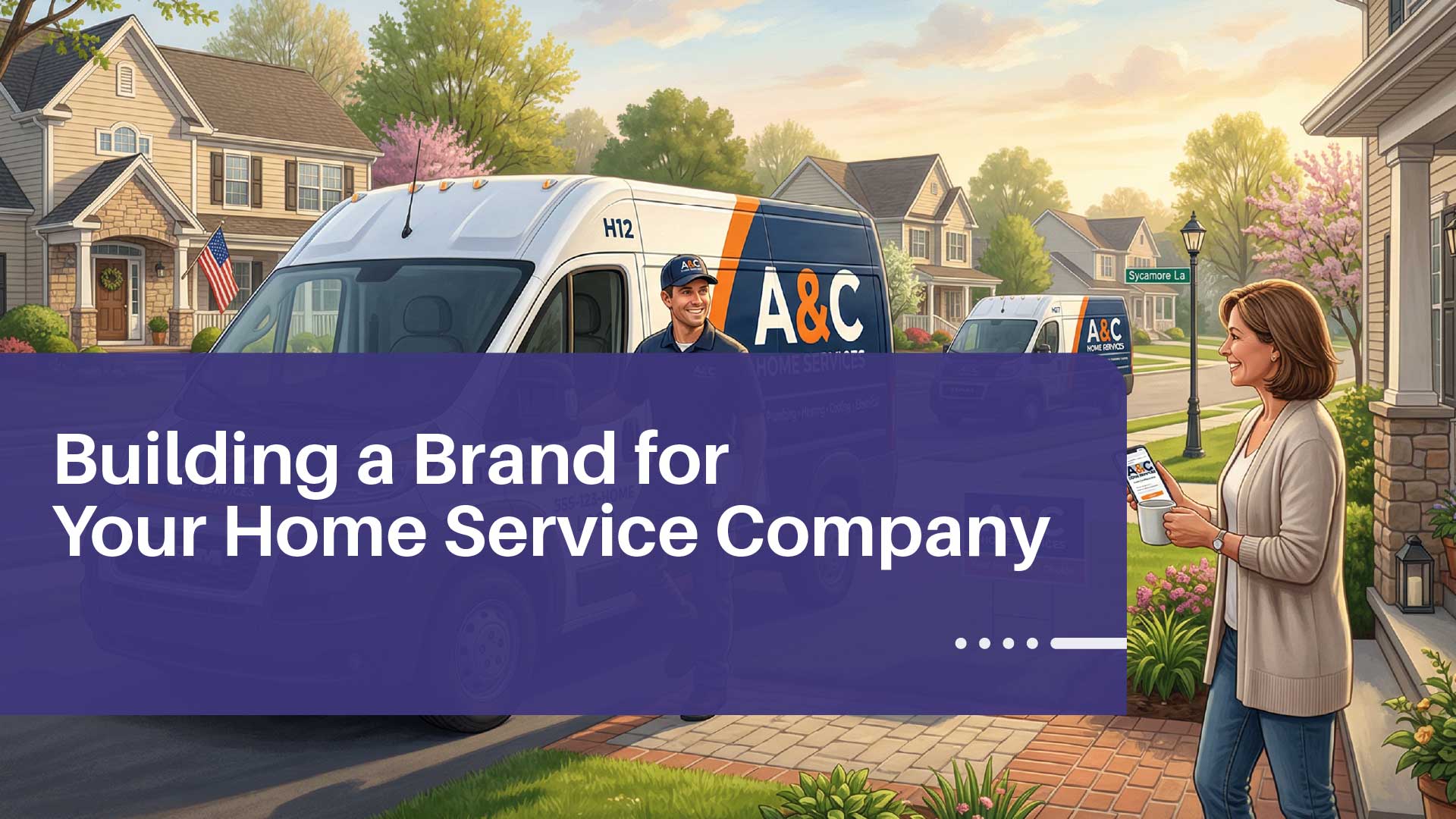
Think of your brand as your business's uniform. When your team shows up in mismatched outfits with different logos and colors, customers start wondering what you're about. That inconsistency costs you money.
Research by Lucidpress found that consistent brand presentation increases revenue by 23-33%. But here's the catch: according to Lucidpress and Demand Metric research, 95% of organizations have brand guidelines, but only 25% (1 in 4) consistently enforce them. A 2019 follow-up study found that 81% of companies still struggle with off-brand content sneaking into their marketing.
If you're running a home service business, every customer touchpoint matters. Your truck, your estimate, your Facebook post, your business card—they all tell your brand story. When that story changes depending on which employee is handling it, you lose trust. When customers see a polished, consistent brand, they see a professional business worth paying for.
This checklist helps you audit your visual brand right now. Print it out, grab a cup of coffee, and let's see what you're doing right and where the gaps are. As a small business owner, your brand is your most valuable asset. Let's make sure it's working as hard as you are.
Written By: Chad J. Treadway | May 05, 2026
Chad is a Partner and our Chief Smarketing Officer. He will help you survey your small business needs, educating you on your options before suggesting any solution. Chad is passionate about rural marketing in the United States and North Carolina. He also has several certifications through HubSpot to better assist you with your internet and inbound marketing.