use Joomla\CMS\Uri\Uri;
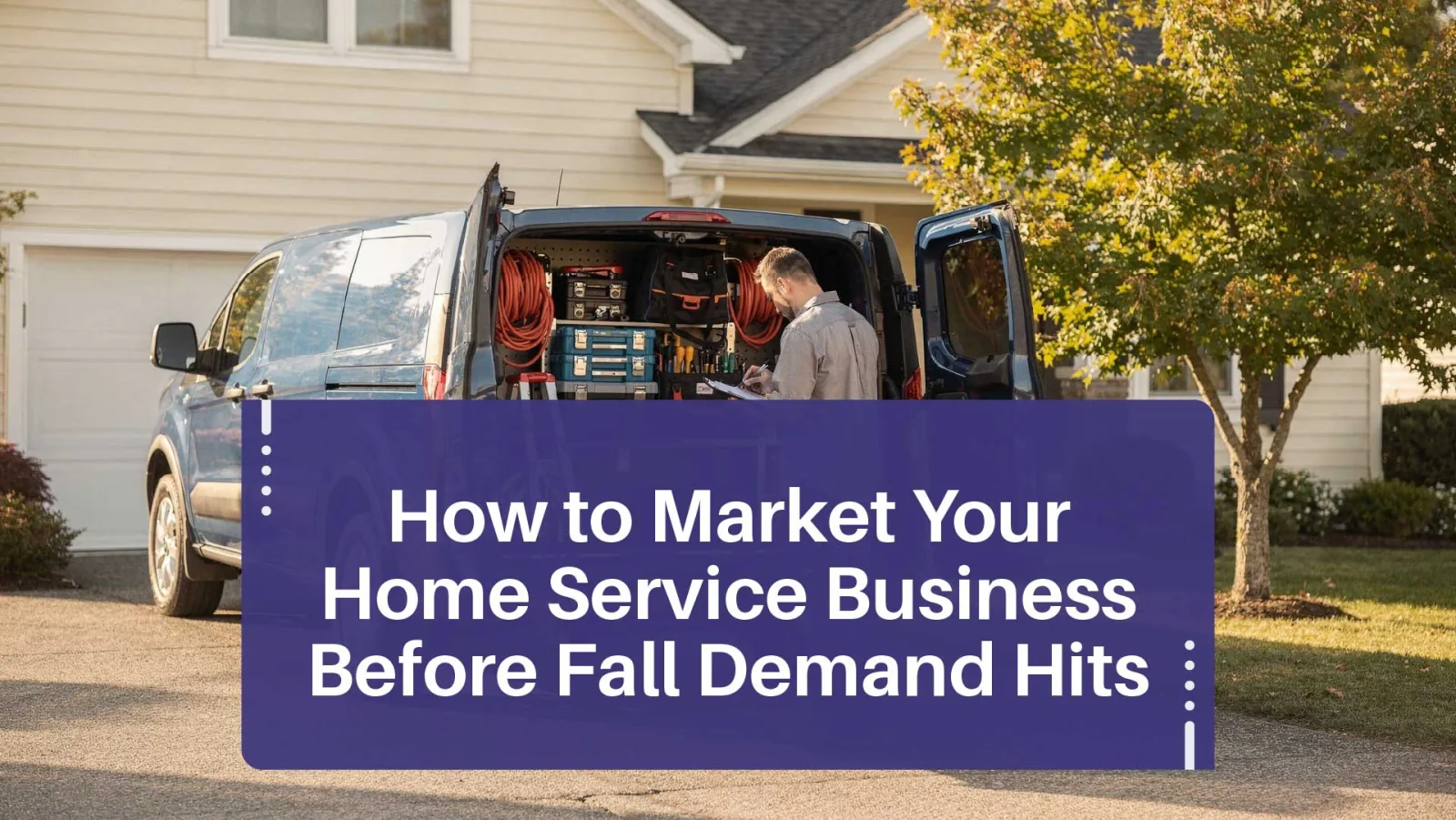
Ask most HVAC owners when fall starts, and they'll point to the first cold morning in October when the phone finally lights up. That answer is off by about two months. Fall marketing for home service businesses works best when it starts in the quiet stretch of late summer, weeks before a single furnace calls it quits.
Here is the part that trips people up. The demand you feel in October was already decided back in August. By the time the season turns, your customers have been searching, comparing, and booking for weeks, and your competitors have been bidding against you the whole time. The local home services businesses that plan around the search curve instead of the weather get cheaper leads and better slots on the calendar.
This post covers why fall demand moves ahead of the thermometer, how far in advance HVAC, roofing, and fall cleanup work each need to be marketed, why waiting costs you real money in ad spend, and a simple July-and-August plan you can put in motion this week.

Written By: Chad J. Treadway | August 10, 2026
Chad is our Chief Smarketing Officer. He will help you survey your small business needs, educating you on your options before suggesting any solution. Chad is passionate about rural marketing in the United States and North Carolina. He also has several certifications through HubSpot to better assist you with your internet and inbound marketing.
Your monthly report says organic traffic is up. Your service calendar says leads are flat. If you run a home service company and that gap has started to bug you, you are not imagining things, and your agency owes you a better answer than "SEO takes time."
Something real changed in 2026. AI search for home service businesses has quietly rewritten the rules, and most owners found out from a flat month, not a memo. AI stopped being a feature bolted onto search and became the thing people actually read. Google now puts an AI-written summary at the top of the results page. Ask ChatGPT or Gemini "who is the best HVAC company near me," and you get a paragraph that names a company or two, then stops. The good news: the home service companies that understand what these systems pull from can still win the spot at the top.
This post covers what AI search actually is, why "we rank No. 3 on Google" no longer tells the whole story, what GEO really means once you strip out the vendor hype, and the specific signals that get a contractor named in an AI answer.
Written By: Chad J. Treadway | August 06, 2026
Chad is our Chief Smarketing Officer. He will help you survey your small business needs, educating you on your options before suggesting any solution. Chad is passionate about rural marketing in the United States and North Carolina. He also has several certifications through HubSpot to better assist you with your internet and inbound marketing.
Most home service owners have quietly filed short-form video under "stuff for influencers." The crew is booked solid, the phone is ringing, and nobody has time to choreograph a dance on a roof. That instinct makes sense. It is also costing you leads.
Short-form video for home service businesses is not vanity content. It is a discovery channel that runs alongside Google, and your future customers are already there. The home services businesses that treat Reels, YouTube Shorts, and TikTok as a search-and-discovery play are showing up where homeowners now look, often before those homeowners ever type a company name into a search bar.
This post covers what to actually film on the jobsite, how long clips should run, how often a busy shop can post without wrecking the schedule, how a single shoot can feed every platform you care about, and how the right captions and setup help those clips get found in search. No influencer routine required.

Written By: Hannah Kilpatrick | August 03, 2026
Hannah Kilpatrick Cube Creative DesignHannah Kilpatrick graduated from Western Carolina University in 2021 with a Bachelor of Science in Communication with a Minor in Marketing and a Concentration in Public Relations. She has been around social media since its creation. (Meaning, she was in the first grade when Facebook became available to the general public.) As our very own professional Gen-Z, Hannah is a whiz when it comes to social media creation and paid advertising.

A homeowner pulls up your website at 9 p.m. with water pooling under the kitchen sink. Before they read a single word, they have already decided whether you look like a company worth calling. That decision happens in about 0.05 seconds. Professional design is what wins that split-second, and for many home service companies, it is doing more selling than their best closer.
This matters most for local home services businesses trying to compete against bigger names. Your website, your trucks, your uniforms, and your printed materials all send a signal about trust before you ever pick up the phone. The good news is that you control every one of them. Here is how each one builds credibility, and how to make them work for you instead of against you.
Written By: Chad J. Treadway | July 29, 2026
Chad is our Chief Smarketing Officer. He will help you survey your small business needs, educating you on your options before suggesting any solution. Chad is passionate about rural marketing in the United States and North Carolina. He also has several certifications through HubSpot to better assist you with your internet and inbound marketing.
You have probably been told your home service company needs more backlinks. What nobody tells you is how many, or where to actually get them, when you are busy running an HVAC, plumbing, or roofing business. Here is the part that should make you feel better: building local backlinks for a home service company is a smaller job than the internet makes it sound. You do not need 500 links. You need 20 to 30 good ones from sources your community already trusts.
At Cube Creative Design, we build local search visibility for independent home services companies, and the link question comes up on almost every call. So this guide skips the theory. It covers how many links you actually need, where real local links come from, and why they matter more for some rankings than others.
Written By: Chad J. Treadway | July 27, 2026
Chad is our Chief Smarketing Officer. He will help you survey your small business needs, educating you on your options before suggesting any solution. Chad is passionate about rural marketing in the United States and North Carolina. He also has several certifications through HubSpot to better assist you with your internet and inbound marketing.

Here is something your accountant probably never mentioned. You know more about your customers than their bank does.
Think about what sits in your system right now. Home addresses. Credit cards on file from last spring's AC install. Bank details for recurring payments. Gate codes, alarm codes, and notes about which homes sit empty on weekdays. A bank knows a balance. You know how to get inside the house.
That is the reality of customer data protection for a home service company, and it gets more complicated with every technician you add. This guide is for the owners and operations managers we work with at home services companies, the ones running a real CRM, processing cards in the field, and trying to scale without turning their data into a liability.
Written By: Chad J. Treadway | July 20, 2026
Chad is our Chief Smarketing Officer. He will help you survey your small business needs, educating you on your options before suggesting any solution. Chad is passionate about rural marketing in the United States and North Carolina. He also has several certifications through HubSpot to better assist you with your internet and inbound marketing.
Most home service companies treat Google Business Profile posts the way they treat the gym membership they signed up for in January. Good intentions, then nothing. They either skip posts entirely or fire off one update every few months and call it a strategy. Meanwhile, that same Google Business Profile is often the last thing a homeowner looks at before deciding to call you or the plumber three listings down.
That is the part most guides get wrong. They promise that Google Business Profile posts will rocket you up the local rankings. They will not. But for home services businesses that show up consistently, posts do something more useful than chasing a ranking bump. This guide covers what posts actually do, what to post, how often, and the verified data behind all of it, so you can stop guessing and start treating your profile like the sales tool it is.
Written By: Chad J. Treadway | July 08, 2026
Chad is our Chief Smarketing Officer. He will help you survey your small business needs, educating you on your options before suggesting any solution. Chad is passionate about rural marketing in the United States and North Carolina. He also has several certifications through HubSpot to better assist you with your internet and inbound marketing.
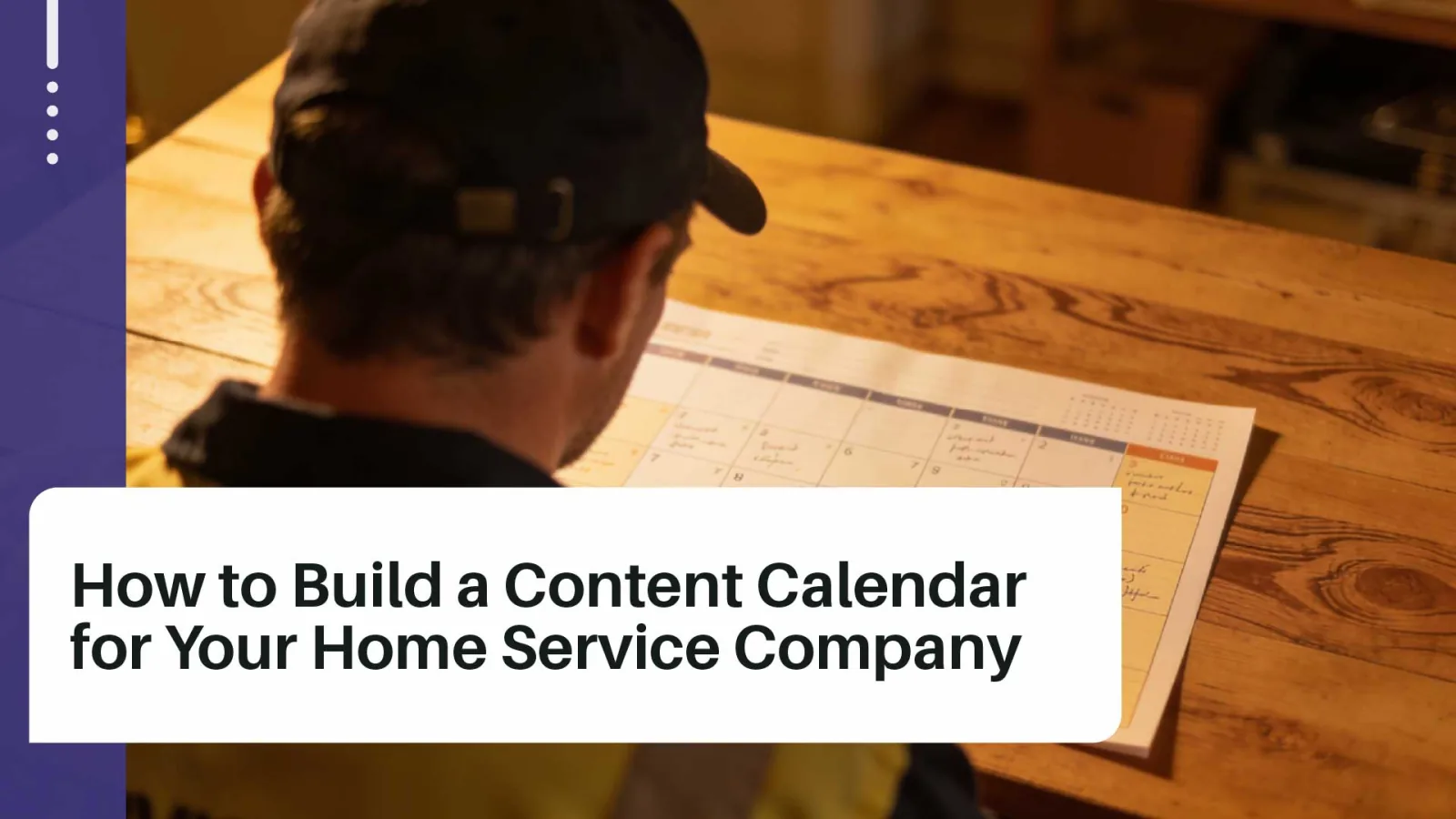
Most home service companies plan their content backward. They publish "spring AC tune-up tips" in April, right as the phones start ringing, then wonder why the post never shows up in search. A content calendar for your home service company fixes that timing problem. The companies that win local search aren't writing about what's busy today. They're writing about what will be busy in 60 to 90 days. This guide shows home services businesses how to build a calendar that leads demand instead of chasing it.
Think of it like planting a garden. You don't drop seeds in the ground the day you want tomatoes. You plant in spring, so you harvest in summer. Content works the same way. Google needs time to find a new page, rank it, and move it into a competitive position. If you publish your summer content in June, you've already missed the season.
Written By: Chad J. Treadway | July 06, 2026
Chad is our Chief Smarketing Officer. He will help you survey your small business needs, educating you on your options before suggesting any solution. Chad is passionate about rural marketing in the United States and North Carolina. He also has several certifications through HubSpot to better assist you with your internet and inbound marketing.
The big regional HVAC outfit across town runs a $15,000 monthly marketing budget. You have $200 and a work van with a coffee stain on the passenger seat. Sounds like a mismatch. It isn't. For a new home service company, the marketing budget matters far less than where you point it. We help home services companies sort the noise from the work that actually books jobs, and the honest truth is that your first 10 customers almost never come from paid ads.
If money is tight, you are in good company. Direct mail firm PostcardMania reported that 41% of small and midsize businesses spend less than $500 a month on advertising. The U.S. Small Business Administration says that it is fine for a while, because, as the Small Business Administration put it, "Tactics such as word-of-mouth, social media marketing and volunteering at community events are all virtually free ways to get your business in front of the public."
This is the $0 to $500 playbook: five neighborhood-level tactics that get a new contractor in front of local homeowners before you spend a dime on ads. Each one wins on proximity and trust, the two things the big company with the giant budget can't buy in your zip code.
Written By: Chad J. Treadway | July 03, 2026
Chad is our Chief Smarketing Officer. He will help you survey your small business needs, educating you on your options before suggesting any solution. Chad is passionate about rural marketing in the United States and North Carolina. He also has several certifications through HubSpot to better assist you with your internet and inbound marketing.

On a Tuesday morning, a homeowner drops the kids off at school and passes a plumbing truck wrapped in clean blue-and-white graphics. She doesn't think twice about it. Two weeks later, the pipe under her kitchen sink starts dripping. She grabs her phone, types "plumber near me," and there it is in the results: the same logo from that truck. She calls. The plumber she barely remembers seeing just won the job.
That is home service company visual branding doing its work, and it happens every day in your service area, whether you planned for it or not. For home services companies, the truck in the driveway, the tech at the door, and the sign in the front yard are marketing moments that play out constantly. The only question is whether they are working for you or just driving past.
If you have ever watched a competitor's shiny wrapped fleet roll through town and wondered why they seem to be everywhere, this post is for you. We'll cover the five visual touchpoints that decide whether people remember your company, and where to put your first dollar if you can't do all of them at once.
Written By: Chad J. Treadway | July 01, 2026
Chad is our Chief Smarketing Officer. He will help you survey your small business needs, educating you on your options before suggesting any solution. Chad is passionate about rural marketing in the United States and North Carolina. He also has several certifications through HubSpot to better assist you with your internet and inbound marketing.
There is a specific moment every growing home service business owner hits. You are sitting across from a potential commercial client, and you slide your business card across the table. The logo looks like it was designed in Microsoft Paint. The tagline references a service you stopped offering three years ago. And you realize that the brand representing your $800,000 company looks like it belongs to a one-man operation running jobs out of a pickup truck.
That moment is uncomfortable. It should be. Because your brand is the first thing people judge, and if it does not match the quality of your work, you are losing customers before you even get a chance to talk to them.
Rebranding is not vanity. For home service companies that have outgrown their original identity, it is a business decision with measurable impact. Research by Marq (formerly Lucidpress) found that consistent brand presentation across all channels increases revenue by up to 20% (1 in 5 dollars). The question is not whether your brand matters. It is whether your current brand is helping or hurting you.

Written By: Adam Bennett | June 23, 2026
Adam is the president and founder of Cube Creative Design and specializes in private school marketing. Since starting the business in 2005, he has created individual relationships with clients in Western North Carolina and across the United States. He places great value on the needs, expectations, and goals of the client.
Your website is like the front door to your business. Except right now, that front door has no welcome mat, no doorbell, and a sign that just says "We do stuff. Call us." That is not a marketing strategy. That is a missed opportunity.
Most home service companies build a website, put their phone number on it, and call it done. Maybe they add a "Services" page and an "About Us" section. Then they wonder why nobody calls. The reason is simple: your website is competing with thousands of other pages for the same search results, and a five-page brochure site does not give Google anything to work with.
Content marketing fixes this. It is the practice of creating useful, relevant content that attracts the people you want as customers and gives them a reason to trust your company before they ever pick up the phone. And it is not just theory. DemandSage's content marketing research shows that content marketing costs 62% less than outbound marketing while generating more than three times as many leads as traditional outbound approaches.
Written By: Chad J. Treadway | June 16, 2026
Chad is our Chief Smarketing Officer. He will help you survey your small business needs, educating you on your options before suggesting any solution. Chad is passionate about rural marketing in the United States and North Carolina. He also has several certifications through HubSpot to better assist you with your internet and inbound marketing.