Your website is like the front door to your business. Except right now, that front door has no welcome mat, no doorbell, and a sign that just says "We do stuff. Call us." That is not a marketing strategy. That is a missed opportunity.
Most home service companies build a website, put their phone number on it, and call it done. Maybe they add a "Services" page and an "About Us" section. Then they wonder why nobody calls. The reason is simple: your website is competing with thousands of other pages for the same search results, and a five-page brochure site does not give Google anything to work with.
Content marketing fixes this. It is the practice of creating useful, relevant content that attracts the people you want as customers and gives them a reason to trust your company before they ever pick up the phone. And it is not just theory. DemandSage's content marketing research shows that content marketing costs 62% less than outbound marketing while generating more than three times as many leads as traditional outbound approaches.

Written By: Chad J. Treadway | June 16, 2026
Chad is a Partner and our Chief Smarketing Officer. He will help you survey your small business needs, educating you on your options before suggesting any solution. Chad is passionate about rural marketing in the United States and North Carolina. He also has several certifications through HubSpot to better assist you with your internet and inbound marketing.
Here is a question most home service business owners hate to answer: how much do you spend on marketing, and what are you getting for it? If the answer involves a shrug and the words "I'm not really sure," congratulations. You are in the majority. That does not mean you are in good company.
Most service area businesses treat their marketing budget like a spare parts drawer. A little bit here, a little bit there, and eventually nobody knows what is in it or whether any of it is useful. The result is wasted money, missed opportunities, and a lingering suspicion that marketing "doesn't work for us." It works. You are just spending wrong.
This post gives you a framework for setting and allocating your marketing budget based on your revenue, your growth goals, and the channels that actually produce results for home service companies.

Written By: Adam Bennett | June 09, 2026
Adam is the president and founder of Cube Creative Design and specializes in private school marketing. Since starting the business in 2005, he has created individual relationships with clients in Western North Carolina and across the United States. He places great value on the needs, expectations, and goals of the client.

If you run a home service company, you already know the pattern. Summer is chaos. Fall starts to cool off. And then somewhere around late October, you look at the schedule and wonder where everybody went. It is like your phone forgot how to ring.
Every home service business deals with some version of this. HVAC companies see it in spring and fall. Roofers feel it in winter. Landscapers watch it happen as soon as the first frost hits. The slow season is not a surprise. But for some reason, most business owners wait until they are staring at an empty calendar before they start doing something about it.
That is the wrong approach. The time to build your slow season marketing strategy is right now, while you are still busy. Think of it like changing the oil in your truck. You do not wait for the engine to seize. You do it on schedule so everything keeps running.
Written By: Chad J. Treadway | June 02, 2026
Chad is a Partner and our Chief Smarketing Officer. He will help you survey your small business needs, educating you on your options before suggesting any solution. Chad is passionate about rural marketing in the United States and North Carolina. He also has several certifications through HubSpot to better assist you with your internet and inbound marketing.
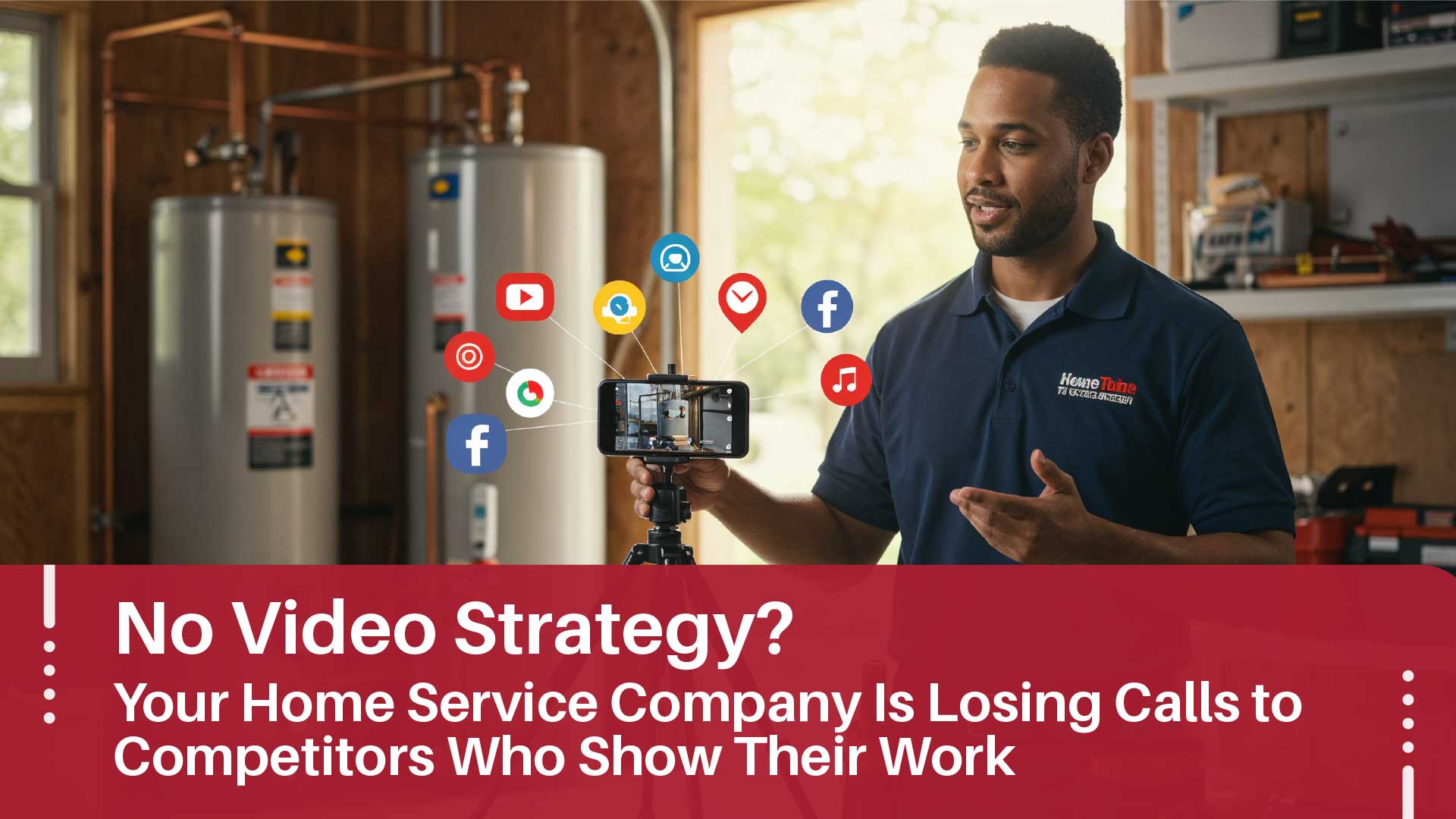
Here is a question every home service business owner should ask themselves: When was the last time you watched a video to learn how to do something? Yesterday? This morning? Your customers are doing the same thing; they just happen to be watching videos about plumbing problems, HVAC installations, and roof repairs.
Video is not optional anymore. It is how homeowners research, evaluate, and choose service companies. And the best part? You do not need a film crew. You need a phone, a willingness to show your work, and about 60 seconds of your time.
This post covers exactly how home service businesses can use video across the three platforms that matter most: YouTube, Google Business Profile, and social media. No theory. No expensive production advice. Just practical steps you can start this week while your crews are already out on job sites.
Written By: Chad J. Treadway | May 26, 2026
Chad is a Partner and our Chief Smarketing Officer. He will help you survey your small business needs, educating you on your options before suggesting any solution. Chad is passionate about rural marketing in the United States and North Carolina. He also has several certifications through HubSpot to better assist you with your internet and inbound marketing.