 use Joomla\CMS\Uri\Uri;

People don’t read websites the way they read books. They scan, skim, and hunt for what they need. If visitors can’t find information fast, they’ll leave. That’s the reality of web browsing today.
Your website design either helps people absorb information quickly, or it doesn’t. There’s no middle ground. When someone lands on your site, they’re making split-second decisions about whether to stay or go. Research indicates that 75% of visitors judge a company’s credibility solely based on its website design.
The difference between a site that works and one that frustrates comes down to scannability. Smart layout choices and strategic visuals guide visitors’ eyes to what matters most. They make complex information digestible. They turn overwhelming content into clear, actionable insights.
In this piece, we’ll break down how to structure your content so readers get the message fast. Whether it’s breaking up text, using spacing effectively, or choosing the right visuals, small tweaks can make a big difference.
Let’s get into it.
Let's address the elephant in the electronic classroom: Digital learning isn't just a pandemic-era necessity or a flashy tech trend to impress prospective parents at open houses. It's rapidly becoming the backbone of modern education. While traditional independent schools pride themselves on personalized attention (often with a healthy side of wood-paneled tradition), thoughtful digital tools now separate the educational innovators from the merely adequate.
Between 2023 and 2028, the K-12 online learning industry was expected to grow at an 8.3% compound annual growth rate, reaching $12.9 billion by 2028. That's more than $1 out of every $10 spent in the educational technology market going to online learning platforms." (Source: Valuates Reports) Private schools without a compelling digital presence risk falling behind more tech-savvy competitors. This isn't about survival—it's about thriving by preparing students for an increasingly digital world.
The challenge: How do you introduce technology that genuinely enhances learning rather than simply digitizing old practices? How do you ensure the faculty embraces these tools? And critically, how do you showcase the value to parents who may be paying premium tuition precisely because they value traditional educational approaches?

Written By: Adam Bennett | June 25, 2025
Adam is the president and founder of Cube Creative Design and specializes in private school marketing. Since starting the business in 2005, he has created individual relationships with clients in Western North Carolina and across the United States. He places great value on the needs, expectations, and goals of the client.

Is your service business harder to find online than a pipe wrench in a flower shop? You've invested in a sleek website, a team of skilled professionals, and the best equipment money can buy. Yet somehow, when local customers search for your services, your competition keeps stealing the spotlight while you're stuck in the digital shadows.
Don't sweat it! The missing piece of your local SEO puzzle might be something that sounds fancy but is actually pretty straightforward: local citations. These digital mentions across the web act like virtual signposts pointing customers to your business. As BrightLocal said, "75% of consumers believe that if business information is incorrect in search results, they'll mistrust that business." When managed correctly, citations can dramatically improve your local rankings and keep your phone ringing.
In this guide, we'll uncover the nuts and bolts of creating and managing local citations to boost your service business's visibility. No technical jargon, just actionable strategies that will have potential customers finding you faster than a homeowner with a flooded basement finds your emergency number.

Written By: Chad J. Treadway | June 25, 2025
Chad is our Chief Smarketing Officer. He will help you survey your small business needs, educating you on your options before suggesting any solution. Chad is passionate about rural marketing in the United States and North Carolina. He also has several certifications through HubSpot to better assist you with your internet and inbound marketing.

Gaming platforms have mastered the mechanics of brand loyalty. Through structure, reward, and interaction, they build relationships that last. Players engage daily, driven by clear incentives and evolving experiences. Every feature is designed to deepen customer engagement and keep participation high.
This level of loyalty doesn’t happen by accident. It’s the result of deliberate, user-focused systems that respond to behavior and encourage continued involvement. Gaming platforms track progress, highlight achievements, and make users feel part of something bigger.
Brands outside the industry can learn from these strategies. By creating engaging experiences, rewarding consistent interaction, and fostering connection, they can achieve similar loyalty. The blueprint is already working in gaming. The challenge is adapting it for your audience.
Is your pest control operation crawling along instead of soaring? You might need to exterminate some inefficiency in your team structure! Sorry, I couldn't resist that one. But here's the real point: a good organizational structure isn't just a list of job titles. It's the framework that lets your team operate at full speed while delivering great service to your customers.
The economics of pest control still look strong. "The pest control market is expected to grow by nearly $7 billion by 2026," according to BookCleanGo. (Source: BookCleanGo) That's a lot of new business heading your way. So the right team structure isn't just nice to have. You need it to capture your share.
Maybe you're running a small operation with a few technicians, or maybe you oversee dozens of employees across several departments. Either way, this guide will help you design a team structure that evolves as your business does. That's what sets you up for the long haul. And when it comes to pest control team structure, you don't want to just wing it. (Another bug joke. I promise they'll get better.)
Written By: Chad J. Treadway | June 23, 2025
Chad is our Chief Smarketing Officer. He will help you survey your small business needs, educating you on your options before suggesting any solution. Chad is passionate about rural marketing in the United States and North Carolina. He also has several certifications through HubSpot to better assist you with your internet and inbound marketing.

For many local businesses, the website is more like an awkward digital brochure than a valuable team member. It's there, but it’s not doing much. Maybe it loads slowly, buries the contact info, or just... sits there. Meanwhile, your competitors are getting clicks, calls, and clients.
Here’s the thing: people are checking out your site before they ever step foot in your shop or give you a call. If it doesn’t give them a reason to stay, you’re leaving money on the table.
A sleek web design and explicit content can turn a so-so site into a real asset for small businesses. This article will guide you through the essentials, from understanding your audience to building trust, so your website can deliver its full potential and help you grow right where you are.

In today's digital battlefield, where every business is desperately waving its virtual arms for attention on search engines, SEO isn't just important—it's survival. Ahrefs reported, "92.96% of global traffic comes from Google search, Google Images, and Google Maps." Yet surprisingly, many still think SEO consultants are just keyword-stuffing wizards who sprinkle magic search terms throughout content. Spoiler alert: that hasn't been true since dial-up internet was considered cutting edge. The modern SEO consultant's role has evolved dramatically, encompassing a much broader range of responsibilities that leave traditional marketing techniques looking like they belong in a digital history museum. Semrush, with their 2025 State of SEO report, said, "7 out of 10 SEO professionals now spend more time on technical analysis and user experience than on traditional keyword research."
Written By: Chad J. Treadway | June 23, 2025
Chad is our Chief Smarketing Officer. He will help you survey your small business needs, educating you on your options before suggesting any solution. Chad is passionate about rural marketing in the United States and North Carolina. He also has several certifications through HubSpot to better assist you with your internet and inbound marketing.
In the high-stakes world of private education, the schools that consistently hit their enrollment targets aren't just lucky—they're methodical. Schools that leverage data-driven strategies gain a competitive edge over those still relying on outdated marketing tactics. Yet surprisingly, nearly 2 out of 3 private school marketers struggle to quantify the impact of their marketing efforts, despite having numerous analytical tools at their disposal. (Source: National Association of Independent Schools Research)
The reality is stark: while your admissions team is busy giving tours and processing applications, critical data that could transform your enrollment outcomes is often going uncollected or, worse, unanalyzed. This isn't just a missed opportunity—it's potentially leaving your school vulnerable in an increasingly competitive landscape.
When I begin working with a new school, one of the first questions I ask is, "What are you measuring?" The awkward silence or vague responses that typically follow reveal the uncomfortable truth: most institutions don't have a robust analytics framework for their enrollment marketing.
But fear not—this is actually good news. This means that the bar for improvement is relatively low, and implementing even basic measurement protocols can quickly set your school apart. With that in mind, let's explore the five essential data points that will transform your enrollment marketing effectiveness.
Written By: Adam Bennett | June 23, 2025
Adam is the president and founder of Cube Creative Design and specializes in private school marketing. Since starting the business in 2005, he has created individual relationships with clients in Western North Carolina and across the United States. He places great value on the needs, expectations, and goals of the client.

Milestones are more than moments; they're leverage. Whether it's your fifth year, your 500th sale, or your first product launch, these occasions are fertile ground for meaningful marketing. Instead of tossing out a casual "thank you" and moving on, pause. Celebrate loudly. But more importantly, turn that celebration into momentum. People love stories, especially those marked by persistence, change, and growth. Your job? Make sure they remember yours.

Let's face it—when parents are shopping for private schools these days, they're not just looking for mahogany-paneled libraries and well-manicured lacrosse fields anymore. They're asking, "How will your school prepare my child for a future where AI can write essays better than most college graduates?"
In today's educational landscape, technology isn't just a nice-to-have; it's a core component of how modern private schools deliver exceptional learning experiences. The EdTech market is expanding rapidly, with its global market size expected to reach USD 810.3 billion by 2033, growing at a CAGR of 13.9% between 2024 and 2033. Market.us reports that private schools that effectively communicate their technology investments gain a significant competitive advantage in attracting tech-savvy families.
This guide provides a strategic framework for marketing your school's educational technology investments to prospective and current families, demonstrating how your digital resources enhance learning outcomes and prepare students for future success.
Written By: Adam Bennett | June 20, 2025
Adam is the president and founder of Cube Creative Design and specializes in private school marketing. Since starting the business in 2005, he has created individual relationships with clients in Western North Carolina and across the United States. He places great value on the needs, expectations, and goals of the client.
While your faculty are enjoying some well-deserved beach time and your hallways sit eerily quiet, there's something critical happening in the digital world: parents are searching for schools. Recent data shows that a whopping 83% of searchers use Google to find information about nearby businesses, including educational institutions, according to Saffron Edge. What's more, a 2022 Niche survey revealed that search engines are the primary source for discovering schools in the awareness stage of the enrollment journey. If your school isn't optimized for local search, you might as well be invisible to these prospective families.
The summer months aren't just for maintenance crews to wax floors and repair desks; they represent the perfect opportunity for savvy school marketers to polish their digital presence before the enrollment season heats up. Studies show that private schools saw an increase in enrollment from 2022-2023 to 2023-2024, and with parents increasingly turning to online resources to evaluate educational options, your local SEO strategy could be the difference between filled classrooms and empty seats.
This comprehensive checklist will guide you through optimizing your school's local search presence during the summer lull, turning those "private schools near me" searches into campus tours and, ultimately, new student enrollments. Whether you're a marketing director at an established academy or an admissions coordinator at a growing institution, these strategies will help your school rise to the top of local search results when it matters most.
Written By: Adam Bennett | June 20, 2025
Adam is the president and founder of Cube Creative Design and specializes in private school marketing. Since starting the business in 2005, he has created individual relationships with clients in Western North Carolina and across the United States. He places great value on the needs, expectations, and goals of the client.
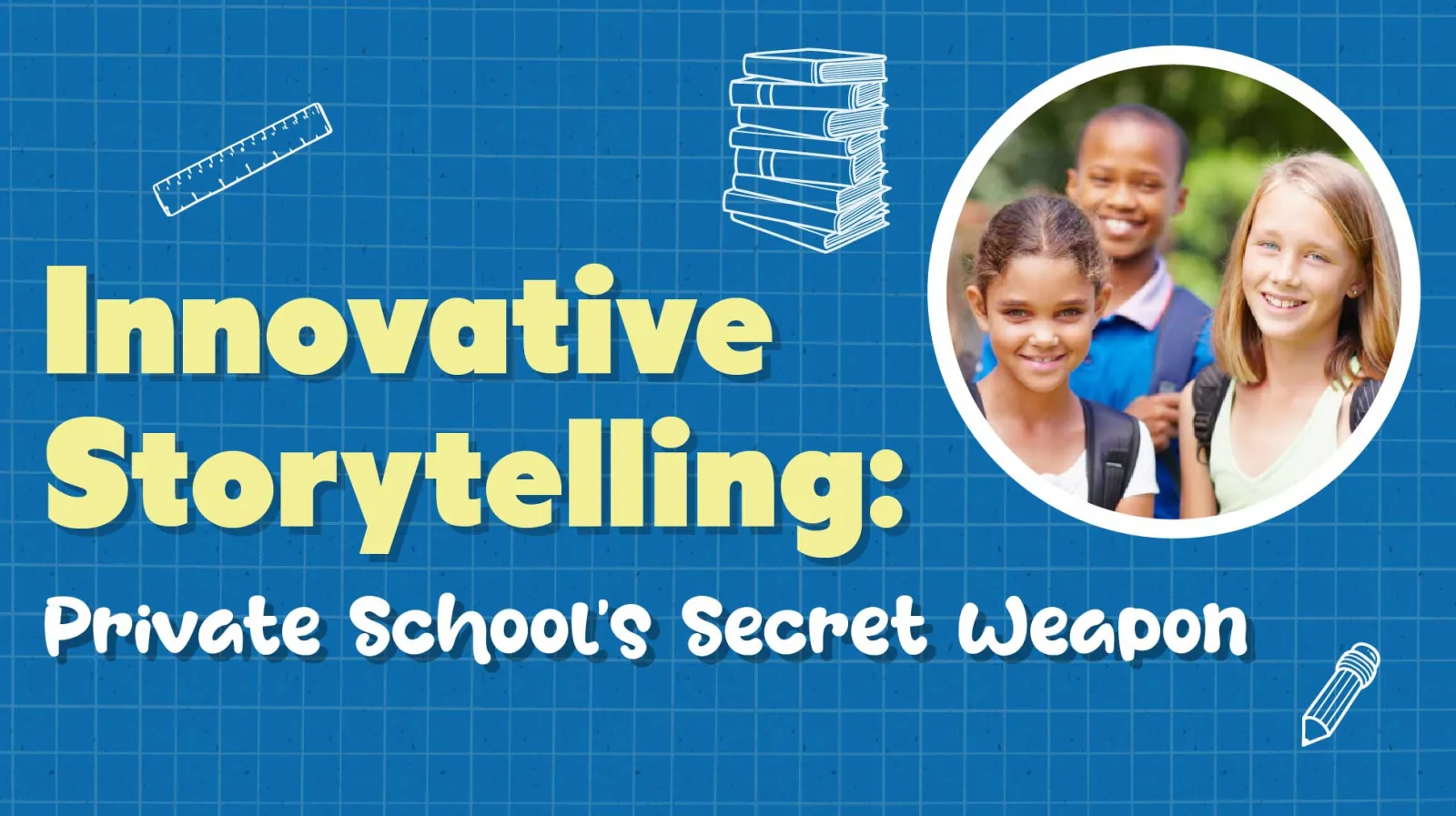
Let's face it – private schools are doing amazing things in education, yet many struggle to effectively communicate their innovations. The hallways buzz with creative teaching approaches, technology integration, and student-centered learning, but these stories often remain trapped within campus boundaries.
Why? Because telling the story of innovation is just as challenging as the innovation itself.
As one education marketing expert noted, success in school storytelling depends entirely on your content marketing goals. Without a clear strategy for sharing your innovation journey, even the most groundbreaking educational approaches remain your best-kept secret – which isn't exactly helpful when you're trying to attract new families and differentiate your institution.
Written By: Adam Bennett | June 20, 2025
Adam is the president and founder of Cube Creative Design and specializes in private school marketing. Since starting the business in 2005, he has created individual relationships with clients in Western North Carolina and across the United States. He places great value on the needs, expectations, and goals of the client.