 use Joomla\CMS\Uri\Uri;

Let's face it – your private school needs students, but your marketing budget looks more like pocket change than a war chest. You're not alone. While competition for students intensifies, professional marketers recommend that private K-12 schools allocate between 2-12% of their annual revenue to marketing (Source: National Association of Independent Schools [NAIS]), though many smaller institutions must accomplish their enrollment goals with far less. According to the NAIS Report, private schools typically operate with small marketing teams, with nearly 90% of schools reporting marketing teams of three or fewer full-time employees. This is why having a structured marketing plan is even more essential for educational institutions.
But here's the good news: budget constraints don't have to mean enrollment constraints. In fact, some of the most effective enrollment marketing happens when creativity fills the gap left by cash. Although a small budget of just $1,000 is unlikely to net even one new student, strategic implementation of the right tactics can deliver strong results.
This guide will walk you through creating a focused 90-day enrollment marketing plan that maximizes every dollar. We'll cover everything from setting clear goals to measuring your success, providing actionable strategies that work even when resources are tight. And yes, there will be a downloadable template at the end to help you implement everything you learn.
Ready to turn your shoestring budget into a student-attracting machine? Let's dive in.

Written By: Adam Bennett | June 04, 2025
Adam is the president and founder of Cube Creative Design and specializes in private school marketing. Since starting the business in 2005, he has created individual relationships with clients in Western North Carolina and across the United States. He places great value on the needs, expectations, and goals of the client.

In 2025, the scroll has replaced the stroll. People don’t flip pages — they tap screens. And what are they tapping on? Videos.
And nowadays, there are many: a bite-sized TikTok clip, a sleek YouTube ad, a helpful how-to Reel on Instagram… The list can go on and on. Video has taken over the minds of ordinary folk, content creators, businesses, and even politicians.
Especially businesses. Video marketing is a huge trend and if your brand isn't using it, you’re basically whispering in a concert hall. Let's explore why video marketing has become so popular and how it can benefit businesses of all sizes.

Data matters. Yet even the most sophisticated research tools fall short if the user experience frustrates, confuses, or misleads. Every digital interaction—from how a question is worded to the way a button is placed can shape the outcome. When design fails, data suffers.
Research integrity depends on more than protocols or intentions. It begins with a design that respects the participant’s attention, comprehension, and ease. A survey may look simple on the surface, but small UX decisions can have a major impact on response quality. The clearer the interface, the better the data. Researchers and designers share a responsibility: build systems that help people share what they know, clearly and confidently.

Visitors decide in seconds if a local business deserves their time. A small ripple of motion, a gentle color shift, or a subtle click sound can calm nerves immediately. These tiny signals whisper, “You can trust this site.” Without them, even polished pages can appear cold. People leave, bookings drop, and ad budgets leak value swiftly. First impressions rule revenue today.
Micro-interactions change that story. A form button lifts when tapped, showing it heard the user. A progress bar eases doubt during a quote request. Even a heart pulsing beside five-star reviews invites a smile. Each cue earns seconds of patience, and patience gives you space to present value. Design those cues with intent, and the visitor of local service websites becomes a client.

Are your technicians spending more time battling traffic than bugs? If your routing strategy still involves pushing pins into maps or scribbling notes on whiteboards, you might be watching profits crawl away one mile at a time.
In the pest control industry, time truly is money. Every minute your technicians spend driving between jobs represents a lost opportunity and increased expenses. In the past, companies plotted routes manually, often pushing pins into maps on walls. Today, many use routing software and electronic optimization tools to make routes as efficient as possible. The difference between these approaches can mean thousands of dollars to your pest control marketing bottom line.
Let's exterminate those inefficient routes and explore how proper route optimization can be the secret weapon your pest control business needs to thrive.

Written By: Chad J. Treadway | June 02, 2025
Chad is our Chief Smarketing Officer. He will help you survey your small business needs, educating you on your options before suggesting any solution. Chad is passionate about rural marketing in the United States and North Carolina. He also has several certifications through HubSpot to better assist you with your internet and inbound marketing.

What does it mean to create a green business? There are many different definitions you might consider, including having a business that provides sustainable products or simply being environmentally conscious in your corporate actions. Each has the same outcome, which is to make the world a healthier place for today and in the future.
In today's market, sustainable entrepreneurship isn't just an ethical choice—it's increasingly becoming a smart business strategy. "Companies with strong ESG (Environmental, Social, Governance) profiles outperform their peers by up to 10% on average." (Source: McKinsey)
Written By: Chad J. Treadway | June 02, 2025
Chad is our Chief Smarketing Officer. He will help you survey your small business needs, educating you on your options before suggesting any solution. Chad is passionate about rural marketing in the United States and North Carolina. He also has several certifications through HubSpot to better assist you with your internet and inbound marketing.
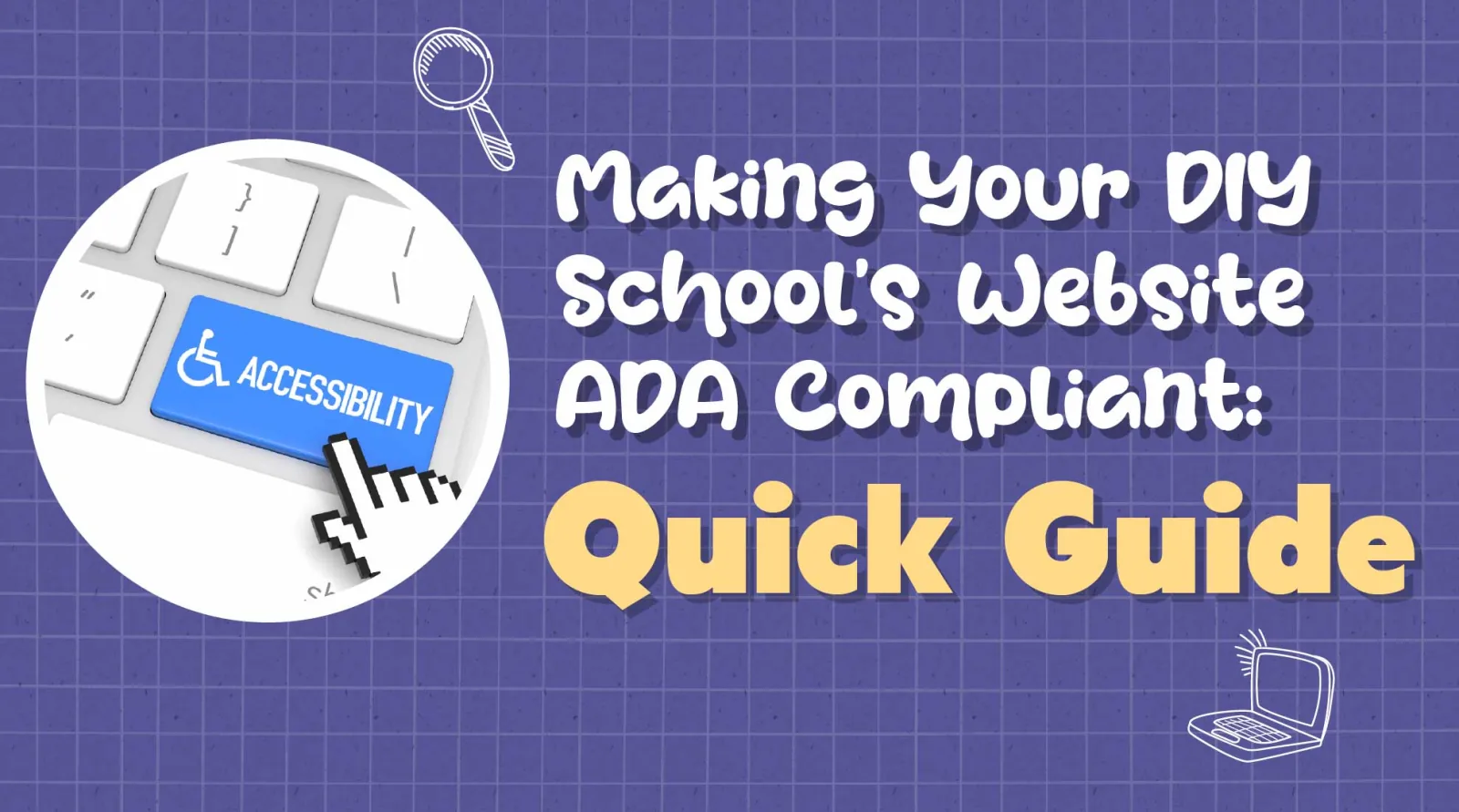
In today's digital landscape, having a website is essential for schools, businesses, and individuals alike. Popular website builders like Wix, Squarespace, and GoDaddy make it easy for anyone to create a professional-looking site without coding knowledge. But there's an important question that often gets overlooked: How accessible are these platforms for users with disabilities?
Web accessibility ensures that people with visual, auditory, physical, or cognitive disabilities can navigate and interact with your website. Beyond being an ethical consideration, accessibility is increasingly becoming a legal requirement under laws like the Americans with Disabilities Act (ADA).
Let's examine how the top website builders stack up in terms of accessibility and what you need to know if you're using one of these platforms.
Written By: Adam Bennett | June 02, 2025
Adam is the president and founder of Cube Creative Design and specializes in private school marketing. Since starting the business in 2005, he has created individual relationships with clients in Western North Carolina and across the United States. He places great value on the needs, expectations, and goals of the client.

Remember the good old days when parents chose schools based solely on reputation and a brochure with suspiciously happy stock photos? Well, those days are long gone. It only takes 0.05 seconds for users to form an opinion of a website, and with over 9 out of 10 parents researching schools online, your website has essentially become your digital front door.
Summer break presents the perfect opportunity to give your school website the attention it deserves. While students are away enjoying their vacation, your digital presence continues working 24/7 as the primary connection point for prospective families, current parents, and your broader community.
This comprehensive audit checklist will help K-12 school administrators, marketers, and IT professionals identify critical improvements to enhance usability, accessibility, and performance. Consider this your roadmap to creating a website that not only meets technical standards but actually serves your community's needs—because nothing says "we care about education" quite like a website that actually works.
By the end of this article, you'll have a detailed, actionable guide to transform your school's digital presence before the new academic year begins. Let's make this the summer your website graduates from "barely functional" to "head of the class."
Written By: Adam Bennett | June 02, 2025
Adam is the president and founder of Cube Creative Design and specializes in private school marketing. Since starting the business in 2005, he has created individual relationships with clients in Western North Carolina and across the United States. He places great value on the needs, expectations, and goals of the client.

In the crowded, hyper-competitive world of modern marketing, standing out is no longer just about catchy slogans or flashy visuals. Consumers are bombarded with thousands of messages each day, and their brains have adapted to filter out noise and prioritize only what emotionally resonates.
Enter neuromarketing—a powerful discipline that applies neuroscience and psychology to better understand how people respond to marketing stimuli. Rather than guessing what works, neuromarketing helps brands tap into the subconscious minds of their customers to refine campaigns, build loyalty, and drive purchasing behavior.
We will explore how neuromarketing works, the science behind it, practical strategies to adopt, and ethical considerations for sustainable use.

The modern-day home service industry has become extremely competitive, which means capturing every potential client is critical. A common problem is that website visitors often don’t book. Luckily, there is a way you can mitigate such issues, and that’s where the power of remarketing comes in.
In IAB Australia’s survey, 74% of marketers reported that remarketing campaigns increased online conversions, and 55% saw an increase in mobile conversions. (Source: IAB Australia) Such figures only go to show how important remarketing strategies can be for your home service business.
In this post, we’ll help you understand the concept of remarketing, explain why it matters for your home service business, introduce some easy-to-apply strategies, and share some effective tips.

Thank you for contributing a guest post to our platform. To ensure your submission is processed quickly and appears correctly, please follow these guidelines carefully:
Search engine optimization (SEO) and content marketing are often discussed as distinct strategies. In fact, they're interdependent—you can't succeed at content marketing without search visibility, and SEO can't work without valuable content. Together, they form the foundation of a successful digital marketing strategy, drive quality traffic to your site, and convert visitors into repeat customers.
In this article, we demystify SEO and content marketing, explain how they complement each other, and highlight their key differences.
Machine learning has changed many industries, from finance to healthcare and transportation to online search. When machine learning algorithms advance, they need careful use and reliable data to work at their best. That’s where web design and digital marketing take machine learning projects to the next level. By making websites easy to use and bringing in users, web designers and marketers give people the chance to work with quality data and applications. We get improved simulations, stronger products, and companies that are smart about taking care of customers.
In this guide, we will explore key ways web design and marketing complement machine learning initiatives. We’ll uncover how these disciplines work synergistically to enhance machine learning projects through:
- User-centric design principles
- Traffic, engagement, and data collection
- Explainability and trust building
- Accessibility and inclusion
- Education and managing expectations
Along the journey, we’ll highlight relevant statistics, examples from industry leaders, and actionable recommendations for organizations exploring how web design and marketing can maximize their machine learning investments. Let’s get started
Crafting Intuitive Interfaces with User-Centric Design
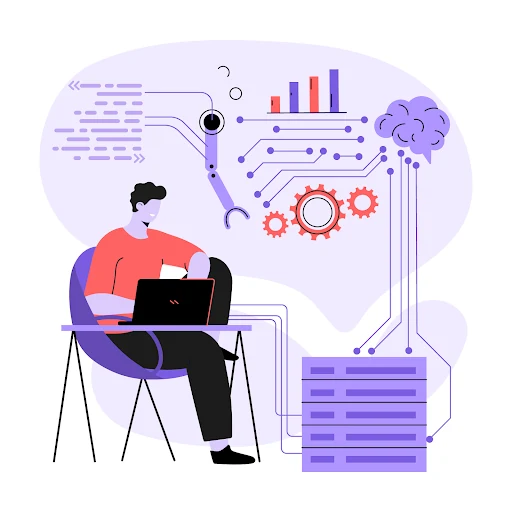
A model is only as accurate as the data used to train it. For many machine learning in healthcare projects, much of this vital data comes from users interacting with web and mobile applications. Thoughtfully designed interfaces that embrace user-centric principles are essential for collecting quality data.
What exactly is user-centric design? The approach is to deeply understand target users and their goals, behaviors, needs, and limitations before designing an interface. As a result, this empathetic orientation results in intuitive digital experiences that seem easy. Useful data is generated when users can easily provide input to the interface, whether browsing content, entering data, rating, or providing feedback.
Let’s look at some user-centric design strategies that elevate the data collection of machine learning:
Simplifying Complex Tasks
The more variables we are dealing with, the better machine learning is at solving complex problems. Humidity, temperature, wind patterns, and others need to be forecasted over locations and time for weather forecasting. This means that document classification must interpret tone, writing style, keywords, and semantics. Breaking down these complex tasks into simpler steps for the users is what user-centric design does. Do users want to label training documents? One last thing to do is design clear categories and provide annotation guidelines. Want to train users to train an image classifier? Help them trace out important areas and objects. User-centered design allows people to build on top of complex machine learning tasks.
Prioritizing Relevant Information
Not all user inputs are created equal. User-centric design research identifies the most useful data needed to solve a problem. This data is then prominently featured in the interface design. For example, an e-commerce site relying on machine learning for product recommendations must understand user preferences. The information architecture explicitly asks users about favorite brands, categories, and prices while allowing seamless browsing and purchasing. Over time, these relevant inputs strengthen recommendations.
Designing for Accessibility
Ensuring accessibility broadens the user pool and generates more diverse training data. User-centric design is about how people with auditory, visual, motor, and cognitive disabilities will interact with an interface. Best practices include writing alt text for images, having good color contrast around form fields, labeling form fields correctly, and allowing navigation via keyboard or voice. By designing for accessibility right from the beginning, we ensure that more users get to make use of an interface and give input.
Overall, embracing user-centric design means machine learning systems are trained on higher quality, more relevant data from a wider population of users. But crafting an intuitive interface is only the first step. We still need users themselves. This is where digital marketing enters the picture.