If your pest control website's traffic is down, you are not imagining it. You are not behind on something everyone else figured out. You are sitting inside an industry-wide decline that started in 2024, and most of the field is still in denial about it. Our 2026 audit looked at 300 pest control companies across the country, and the pattern is the same almost everywhere: organic traffic is down, map pack visibility is shaky, and most of the marketing playbook that worked between 2018 and 2023 stopped working at roughly the same moment.
This post walks through what changed, what the audit found, and how to figure out which of the four most common problems is hitting your site right now. If you run a 6 to 20-technician shop and you have been wondering why the phone is quieter even though your service quality is the same, this is for you. We work with pest control business owners every day who are seeing the exact same numbers, and the diagnosis is almost never what owners think it is.
What Does the Pest Control Website Traffic Decline Look Like Across the Industry?
About 90% of pest control companies with measurable traffic data are losing organic visits, with the median company down roughly 57% from its previous peak. Among that group, more than half are down 51% or more, nearly a third are down 76% or more, and roughly one in seven are down over 90%. The collapse is broad, not isolated.
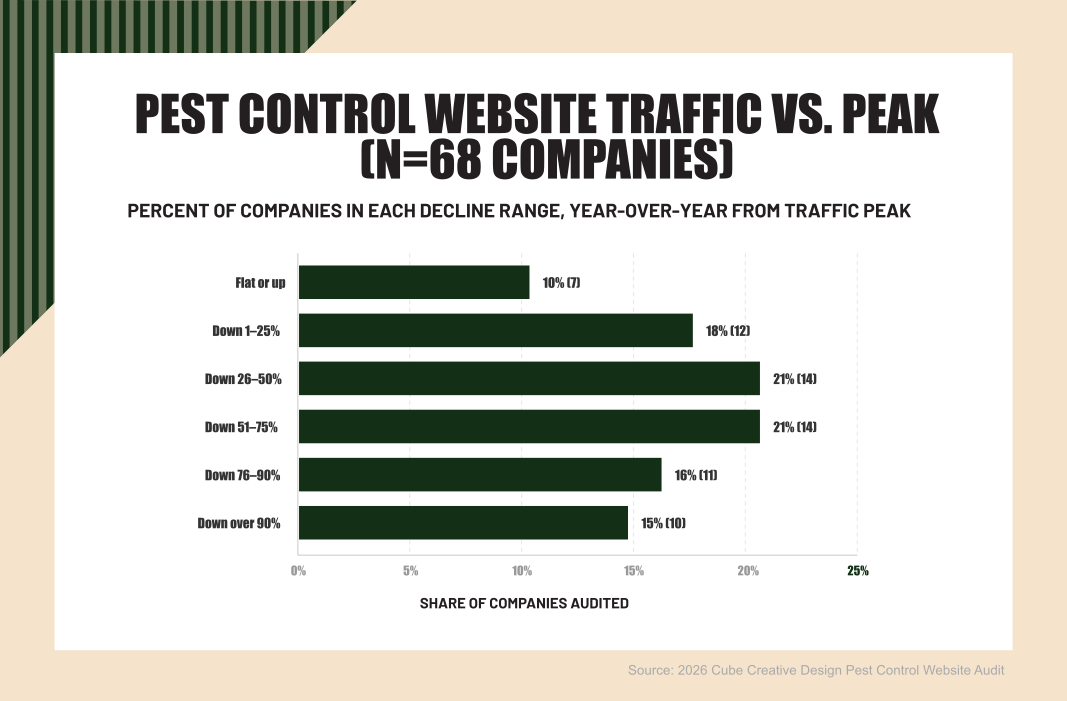
Source: 2026 Cube Creative Design Pest Control Website Audit
The full numbers live in the 2026 Field Audit Report, but the short version is this: when you compare the previous traffic peak for any given pest control site against its current numbers, the trend line is going one direction for almost everybody. The 9 or 10% who held up did so because of specific decisions about their site, their Google Business Profile, and their content footprint. They are not lucky. They are not in a less competitive market. They built differently.
What makes the drop so disorienting for owners is the timing. A site that did the same things for six straight years and ranked steadily through 2023 suddenly fell off in a six-month stretch. No penalty. No big change to the site itself. Just steadily shrinking impressions and clicks. Most owners assumed they were the only ones seeing it because nobody talks about traffic loss out loud. The audit confirms what owners suspected: it is happening to almost everybody.
There is a second story underneath the headline number, and it matters more than the average decline. The companies still getting traffic are pulling further ahead. They are filling the space the rest of the field is giving up. The map pack and the top three organic spots are getting harder to win, not easier, because a smaller group is doing the work that earns them. That is the gap this post is about.
What Changed in 2024 That Killed Pest Control Website Traffic?
Three things changed in 2024 that compounded into the traffic collapse. Google AI Overviews started answering common questions inside the search results page itself. Google sunset free Google Business Profile websites and redirected them. And Google rolled out a site diversity adjustment that made it harder for one company to rank in more than one or two spots on the same results page. Each one alone would have hurt. Together, they rewired the channel.
How AI Overviews Reduced Click-Through for Pest Control Searches
When a homeowner searches for something like "how to get rid of ants in the kitchen," Google now writes a short AI-generated answer at the top of the results. The answer is usually pulled from a handful of sources, with a small expandable list of citations. According to Google's own announcement, AI Overviews launched broadly in May 2024. For informational pest control queries, this means the user often gets the answer without clicking through to any pest control company's blog. The blog post you wrote in 2021 about cockroach prevention is still ranking. It is just getting fewer clicks because Google handed the answer to the searcher before the link appeared.
Why Free Google Business Profile Websites Going Away Hurt Local Search
Google retired the free websites tied to Google Business Profiles in March 2024 and redirected those sites to the Business Profile itself. For pest control companies that had a "real" website plus a Business Profile mini-site, the redirect created broken backlinks and confused users who had bookmarked the wrong page. For competitors that used the free Business Profile site as their only web presence, traffic dropped to zero overnight. The cleanup work most operators never did is still showing up as a confidence signal Google uses to decide who to rank.
What the Search Diversity Update Did to Multi-Page Rankings
Google's site diversity system generally limits any single domain to two results per page — and through 2024, that limit became a compounding factor on top of the other quality updates. One domain is now far less likely to hold multiple positions on the same results page for the same query. For pest control companies that had a service page, a blog post, and a geo-page all ranking on page one for a single search, the combined effect collapsed those three spots into one or two. The other two slots opened up for whichever competitors had different pages targeting the same query.
These three shifts are the main reasons the channel changed. The deep version of this story lives in a separate post about what I call the Triple Convergence; this section is the short, owner-readable summary. You do not need to memorize the algorithm. You need to know that the rules changed and adjust the playbook.
What Separates Pest Control Sites That Still Get Traffic From Those That Don't?
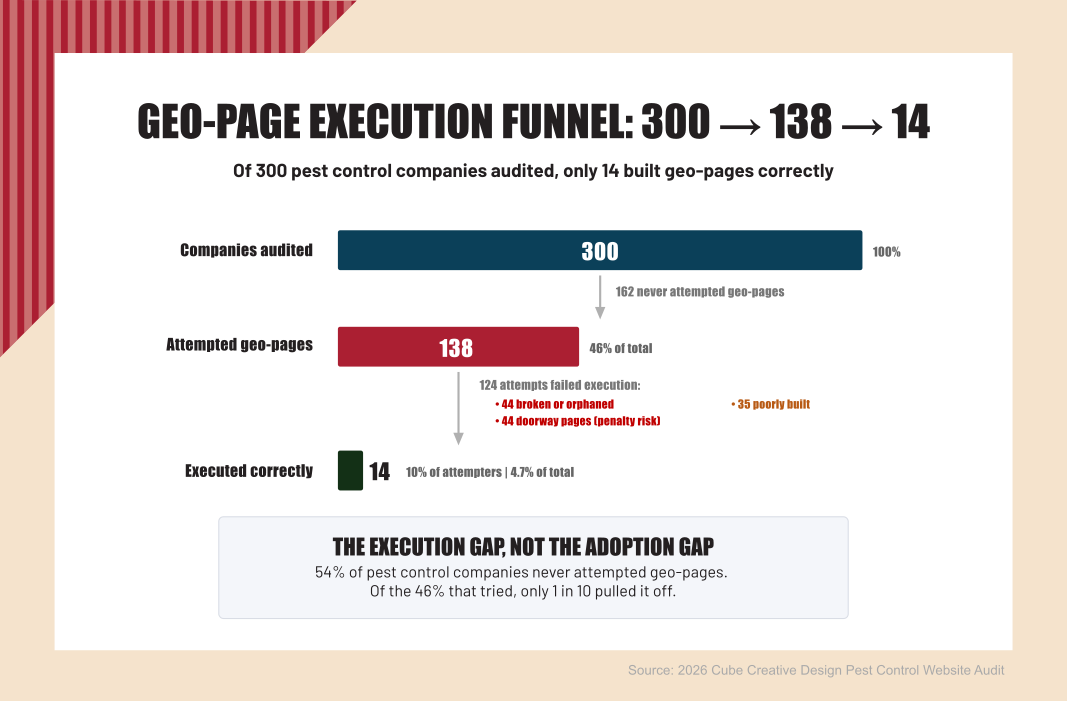
Geographic landing pages, done correctly, are the single biggest difference between pest control sites that are still getting traffic and those that are not. Of 129 audited companies with geo-pages, only 14 built them right. The other 115 published pages that hurt the site, did nothing, or invited a Google penalty. That 10% execution rate is the cleanest signal of who built for the new search rules and who did not.
Source: 2026 Cube Creative Design Pest Control Website Audit
Here is the breakdown of the 115 that got it wrong:
- 32% broken or orphaned. The page returned a 4xx or 5xx error, hung in a redirect chain, or existed in the sitemap but was not linked from anywhere a user could click to reach it. Google could find them. Customers could not.
- 32% doorway pages. Pages built only to rank for a city name, with no real content for the visitor once they arrived. Doorway pages are a named violation of Google's spam policies going back to 2015. Roughly 37 of the 129 companies with geo-pages are running this risk right now.
- 25% poorly built. Technically present, technically indexed, but functionally useless. Thin content. Templated copy with the city name swapped in. No local photos, no specific service nuances for the area. Google ignores them; users bounce.
- 11% executed correctly. Distinct content per city, real local detail, internal links to and from service pages, and a Google Business Profile that matches what is on the page.
Source: 2026 Cube Creative Design Pest Control Website Audit
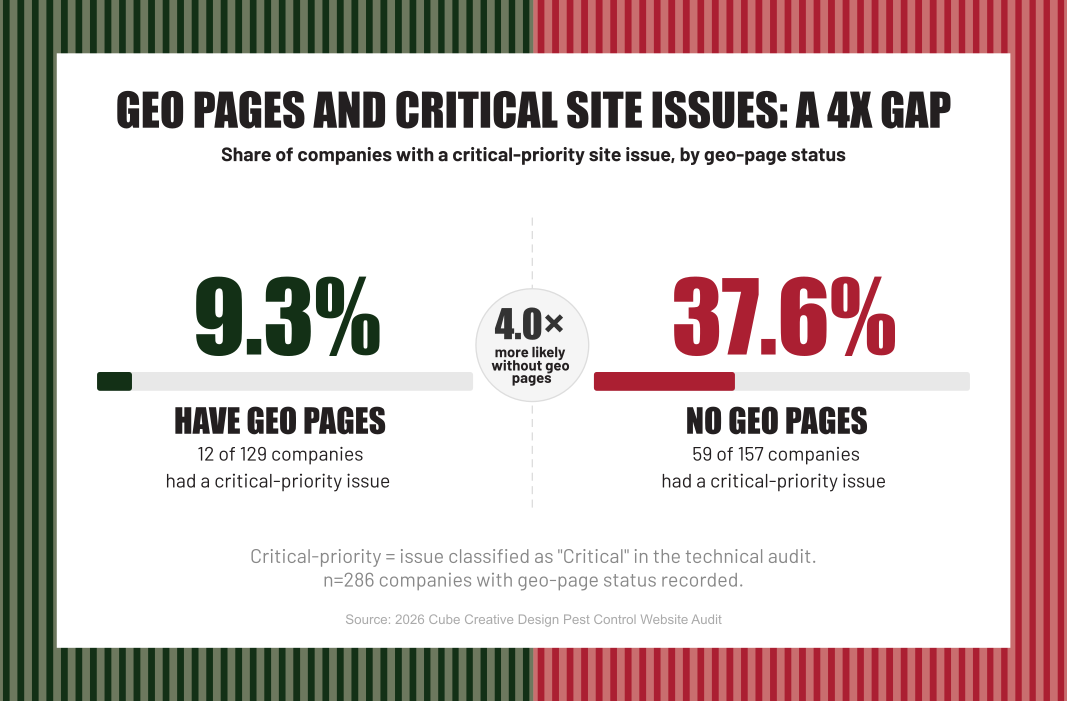
The pattern under those numbers is the one worth pinning to the wall. Companies without working geo-pages were about four times more likely to have a serious issue somewhere else on the site (37.6% versus 9.3% for companies with good geo-pages). That correlation does not mean geo-pages magically fix the rest of a website. It means operators who take geo-pages seriously also tend to take canonical tags, site structure, internal linking, and review management seriously. The geo-page is a tell.
Think about it the same way you would think about a customer's house when you arrive for an inspection. If the gutters are clogged, the deck rail is wobbly, and the back fence is half down, you do not need to look inside to know what kind of maintenance habits the owner has. Geo-pages are the gutters. Show me a pest control site with broken geo-pages, and I will show you a Google Business Profile that has not been updated in two years and a review request process that is "we send a text sometimes."
If you are going to fix one thing first, fix this. But fix it right, because a doorway page is worse than no page. A doorway page that exists for a year before you notice it can drag down the trust signals on the rest of your site. The good news: there is a build sequence that works, and it is not complicated. The hard part is committing to it.
What Does a "Doing It Right" Pest Control Website Look Like in 2026?
The 14 companies that executed geo-pages correctly all shared a specific set of habits, not a specific design or template. They had distinct content per geographic location, real internal linking between geo-pages and service pages, a Google Business Profile aligned with the on-page content, and consistent review activity across locations. The common factor was operational discipline, not creative flair.
When the audit dug into what those pages actually contained, a few patterns repeated:
- Each city or service-area page included at least three local-specific signals. Examples include a customer review from someone in that city, a photo of a technician at a recognizable local landmark, references to local pest pressures like termite issues in older homes in a specific historic district, or a partnership with a local realtor or property management group.
- Geo-pages were internally linked to from service pages and from a "service areas" hub, and they linked back to the corresponding service pages. The sites did not treat each geo-page as an island.
- The corresponding Google Business Profile used the same service categories, the same primary phone number, the same hours, and the same primary service description as the on-page content. Google reads the alignment between the site and the GBP as a trust signal. Mismatches read as either spam or inattention.
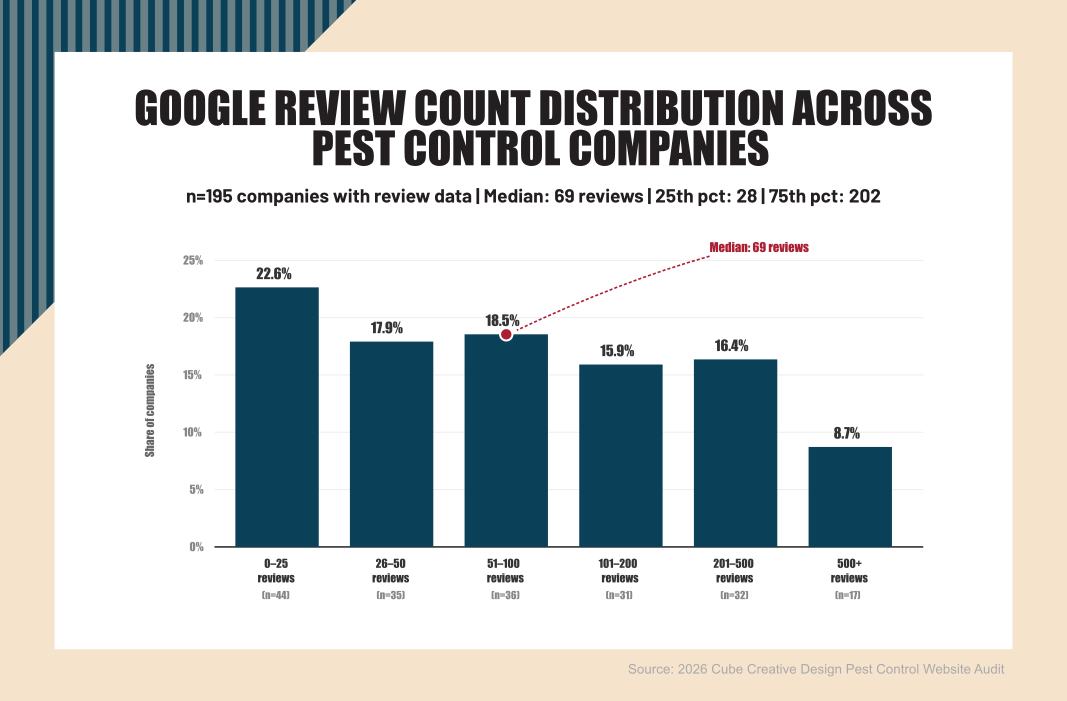
- Review activity was steady, not sporadic. The companies were not necessarily the ones with the most reviews. They were the ones whose review velocity (reviews per month) had been consistent for the previous 12 to 24 months, with responses to both positive and negative reviews.
Source: 2026 Cube Creative Design Pest Control Website Audit
Here is the catch nobody likes hearing. Of those 14 companies that executed geo-pages correctly, only 8 of them (about 57%) also show up in their own map pack for their primary service area. The other 6 are doing the geo-page work right and still not getting the map pack visibility their pages should be earning.
This matters because it means geo-pages by themselves are not the finish line. They are the entry ticket. Once the geo-pages are real and indexable, the next layer of work is the Google Business Profile and the review program. If your geo-pages are clean and you are still invisible in the map pack, the Google Business Profile build is almost certainly the next step. There is a specific sequence to it, and most of the field is doing it wrong by skipping the foundational pieces and posting random photo updates instead.
One more thing worth saying about the 14: none of them looked particularly fancy. The designs were not award-winning. The copy was not written by a national marketing agency. A few of them looked like they were built in 2019 and updated steadily since. What separated them was the same thing that separates a clean, well-run pest control route from a chaotic one. Somebody had a checklist, somebody worked the checklist every month, and somebody fixed problems when they were small instead of when they were a phone call from a frustrated customer.
How Do You Know Which Pest Control Website Problem You Have?
The diagnosis depends on what you can see when you check your own setup. If you do not have geo-pages, that is the starting point. If you have them but they look broken or thin, that is a different starting point. If your geo-pages are solid but you are still invisible in the map pack, the work shifts to Google Business Profile and reviews. The path forward depends on which symptom matches.
Use this branched check to figure out your starting point. Most owners will find that more than one applies. Start with the first match, in order, because each problem feeds the next.
- No geo-pages. Your site has service pages but no city-specific or area-specific pages, or your "service areas" section is a comma-separated list at the bottom of a page. Start with the geo-page build guide; it is the highest-impact move available to most owners right now.
- Geo-pages exist, but they look broken, orphaned, or copied. If you can pull up your sitemap and find pages no internal link points to, or pages that show duplicated copy with just the city name swapped, those pages are likely doing more harm than good. The build guide also covers the cleanup sequence.
- Geo-pages look fine, but you are not in the map pack. Open Google Maps in your primary service area, search for "pest control near me," and see whether your business appears in the top three. If it does not, the next move is the Google Business Profile build. Start here, and pay attention to category selection, service definitions, and posting cadence.
- Reviews are sparse, old, or unresponded to. Even with good geo-pages and a clean GBP, reviews can sink you. If your review count is below 50, your average is under 4.6, or you have not responded to a review in the last 90 days, this is the gap. The review response framework covers the request cadence and the reply templates that work.
- Service pages are not ranking for the obvious queries. "Termite control [city]" or "mosquito control [city]" should rank if your service pages are built right. If they don't, the issue is usually thin content, weak internal linking, or a service page that reads like an internal product spec instead of a customer-facing page. The service page architecture post walks through the rebuild.
- You want the deeper "why did the rules change" story. If you want to understand the algorithm-level shifts that broke the channel in 2024, the Triple Convergence post is the long read.
Most owners I work with end up doing two of these, in order, before they see traffic recover. That is normal. The point is to start with the right one.
What's the Next Step If Your Pest Control Website Stopped Getting Traffic?
The next step depends on which problem is yours, but the audit is the same regardless. Pull up your site, check whether your geo-pages exist and look right, check whether you are in your own map pack, and check whether your reviews are recent and answered. From there, the path is specific. The trap is doing nothing because the problem feels too big.
The full audit data, including the 6 patterns the 14 winners shared and the 5 most common severe issue types, lives in the 2026 Field Audit Report. If you want a faster answer specific to your site, I run a free audit that takes about 10 minutes on our side and gives you a written report with the three highest-impact moves for your specific situation. No email capture, no sales call required to receive the report.
If you have read this far and any of it sounds familiar, let's talk. I'd rather spend 15 minutes telling you which problem you actually have than watch another pest control owner spend a year guessing.
Frequently Asked Questions
Why Is My Pest Control Website Not Getting Traffic in 2026?
Pest control websites lost organic traffic in 2024 because of three combined shifts: Google AI Overviews answering questions on the search results page, the shutdown of free Google Business Profile websites, and a site diversity update that limits how many results one domain can hold per query. About 90% of audited pest control sites are seeing declines, so this is industry-wide, not site-specific. The fix depends on which problem hits your site hardest.
Are Geographic Landing Pages Worth It for Pest Control Companies?
Geographic landing pages are worth building if you commit to doing them right. In a 2026 audit of 300 pest control companies, only 11% of those with geo-pages built them correctly. The other 90% published pages that were broken, orphaned, doorway, or thin, and those pages can hurt rankings more than help. A well-built geo-page with local content, internal links, and a matching Google Business Profile is one of the highest-impact moves available to most operators.
What Is a Doorway Page and Why Is Google Penalizing Pest Control Sites for Them?
A doorway page is a page built only to rank for a city or service term, with no useful content for the visitor. Google's spam policies have prohibited doorway pages since 2015, and the March 2024 core update reinforced that policy. In our audit, 32% of the companies that attempted geo-pages built them as doorway pages — roughly 37 of the 129 with geo-pages, all running real penalty risk on their existing site.
How Do I Tell If My Pest Control Website Has Broken or Orphaned Geo-Pages?
Pull up your XML sitemap (usually at yoursite.com/sitemap.xml) and click through every city or service-area page listed. If any returns a 4xx or 5xx error, that page is broken. If a page loads but you cannot find a link to it from your main navigation, footer, or service-area hub, that page is orphaned. Both signal to Google that the site is not being maintained, even if the rest of the site is fine. If you would rather not run the check yourself, our pest control website audit flags broken and orphaned geo-pages alongside the other highest-impact issues.
How Long Does It Take to Recover Pest Control Website Traffic After Fixing These Issues?
Most pest control sites see partial recovery within 90 to 180 days after fixing the highest-priority issues, with full recovery taking 9 to 12 months. Google indexes the changes within a few weeks, but ranking improvements depend on Google trusting the fix. Geo-page rebuilds tend to show results first; Google Business Profile and review work tend to show map pack improvements within 60 to 90 days if the posting and review cadence is consistent.