It's peak pest season, and homeowners in your service area are frantically searching online for help with their pest problems. But your website isn't showing up in their search results. It's like having the best pest control equipment in town but forgetting to put your company name on the truck.
If you're running a pest control business, you know that timing is everything. When someone discovers bed bugs in their home or sees termite damage, they're not going to scroll through pages of search results – they're going to call one of the first companies they see. That's where proper SEO comes in.
SEO for pest control is different from other industries. You're not selling products nationwide or writing blog posts about the latest tech trends. You're providing critical services to specific geographic areas, often in time-sensitive situations. Your SEO strategy needs to reflect that.
This guide combines technical SEO (the nuts and bolts of how your website works) with semantic SEO (making sure your content matches what potential customers are actually searching for). Think of technical SEO as your foundation treatment – if you don't get it right, everything else you do is just treating the symptoms. And semantic SEO? That's your targeted treatment plan, ensuring you're reaching the right customers with the right solutions at the right time.
Whether you're dealing with seasonal surge searches for mosquito control or emergency calls for wasp nest removal, we'll show you how to make sure your website is properly optimized to capture that traffic and turn it into real customers. No fluff, no jargon – just practical, actionable advice that works as effectively as your best pest control methods.
Part 1: Understanding SEO for Pest Control Companies
What Makes Pest Control SEO Different
If you've been reading general SEO guides, you might feel like they don't quite fit your pest control business. That's because they don't. Your business has unique challenges and opportunities that require a specialized approach.
Local Service Area Focus
Unlike an e-commerce store shipping products nationwide, you serve specific geographic areas. Your SEO strategy needs to target not just pest-related keywords but also location-specific searches. When someone searches for "bed bug treatment near me" or "pest control in [city name]," you need to be there.
Seasonal Search Patterns
Let's face it, nobody's searching for mosquito control in January. Your SEO strategy needs to account for these seasonal fluctuations:
- Spring: Ant and termite searches spike
- Summer: Mosquitoes, wasps, and general pest control
- Fall: Rodent control as temperatures drop
- Winter: Indoor pests and preventive treatments
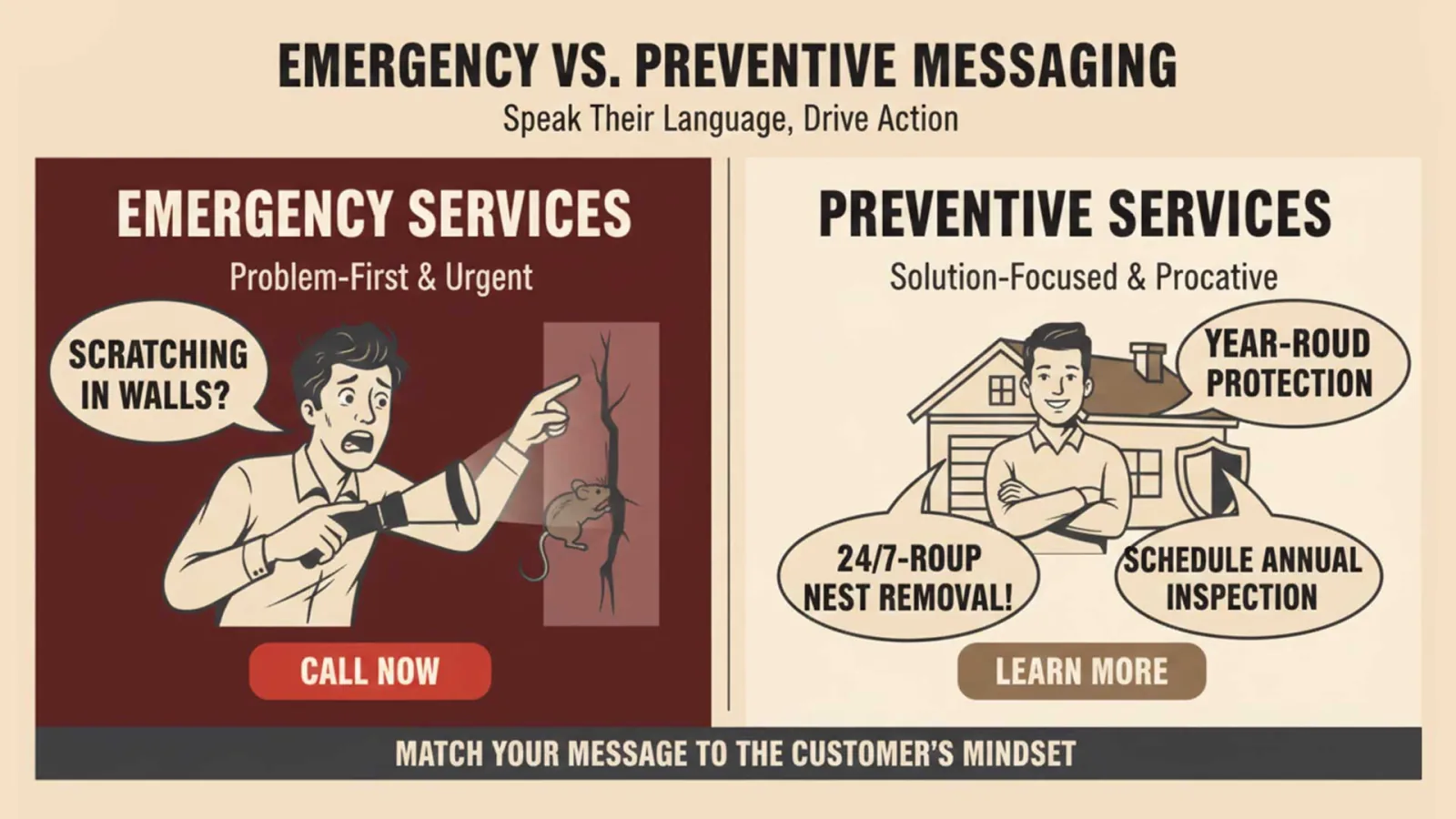
Emergency vs. Preventive Service Searches
Your customers typically fall into two categories:
- Emergency needs: "wasp nest removal now" or "24/7 pest control"
- Preventive services: "quarterly pest control service" or "annual termite inspection"
Your website needs to be optimized for both types of searches, with different content and call-to-action strategies for each.
Multiple Service Pages and Locations
Most pest control companies offer various services across different locations. This means managing and optimizing:
- Individual service pages (termite treatment, bed bug removal, etc.)
- Location-specific pages
- Season-specific content
- Emergency service information
The Four Pillars of Modern SEO
1. Technical Foundation
Think of this as your website's infrastructure – just like you need the proper equipment to treat pests effectively, your website needs a proper technical setup to rank well. This includes:
- Fast loading times (because nobody waits around when they've got pests)
- Mobile-friendly design (most emergency searches happen on phones)
- Proper site structure (making it easy for both users and search engines to find information)
- Secure hosting (because customers trust you with their homes and their data)
2. Semantic Understanding
This is about making sure search engines understand exactly what services you offer and where. It's like the difference between saying "pest control" and specifying "residential termite treatment in Charlotte, NC." This includes:
- Structured data markup
- Content organization
- Entity relationships
- Local service area definitions
3. Local Relevance
Being relevant locally isn't just about mentioning city names. It's about demonstrating that you understand and serve specific communities. This means:
- Local content that reflects regional pest problems
- Service area specificity
- Community involvement signals
- Local business schema markup
4. AI and Generative Search Optimization
The newest pillar of SEO addresses how artificial intelligence is changing search results. In 2026, this isn't optional anymore.
AI Search and SGE Impact on Pest Control SEO
Google's search results have fundamentally changed. When someone searches for pest control help today, they often see an AI-generated overview at the top of the results page before they see any traditional website listings. According to Local Falcon's 2025 whitepaper, 40.2% of all search queries trigger AI Overviews (formerly called Search Generative Experience or SGE). However, for local business queries specifically, searches like "pest control near me", AI Overviews appear at a much lower rate of just 7.9%.
This changes everything about how you need to think about SEO.
From SEO to GEO: The Strategic Shift
Traditional SEO focused on ranking in position one to get the most clicks. But with AI Overviews, the goal has shifted. Backlinko defines Generative Engine Optimization (GEO) as "the practice of creating and optimizing content so that it appears in AI-generated answers on platforms like Google AI Overviews."
For pest control companies, this means your new objective isn't just to rank number one. It's to become the authoritative source that the AI cites when answering pest control questions in your service area.
The payoff is significant. Seer Interactive's 2025 research found that when a brand is cited within an AI Overview, it achieves 35% higher organic click-through rates (0.70% vs 0.52%) compared to queries where AI Overviews appear but the brand is not cited.
What AI Prioritizes for Pest Control Content
AI Overviews don't just pull from any website. They prioritize content that demonstrates what Google calls E-E-A-T: Experience, Expertise, Authoritativeness, and Trustworthiness.
As Moz explains, "Different topics require different levels and types of expertise to be trustworthy. For example, which would you trust: home electrical rewiring advice from a skilled electrician or from an antique homes enthusiast who has no knowledge of electrical wiring?"
The same principle applies to pest control. AI systems trust and cite businesses that demonstrate:
- Specific pest expertise: Detailed information about pest behavior, treatment methods, and prevention strategies
- Local knowledge: Understanding of regional pest challenges and seasonal patterns
- Verified credentials: Proper licensing, certifications, and business verification
- Customer validation: Reviews, testimonials, and documented service history
According to Ahrefs' analysis of 146 million search results, queries with seven or more words are nearly 5 times more likely to trigger an AI Overview than single-word queries (46.4% vs. 9.5%). This means your content strategy should focus on answering detailed, specific questions rather than optimizing for broad terms.
Schema Markup: Your AI Visibility Foundation
Here's where the technical meets the practical. Schema markup has always been important for SEO, but it's now critical for AI visibility. Think of schema as the language that helps AI systems understand exactly what your business does, where you operate, and what expertise you offer.
A case study from Hookflash demonstrated this dramatically. After implementing proper LocalBusiness, Service, and FAQ schema markup for a service business, their visibility in AI Overviews increased from 0% to over 40% within weeks.
Research from Fast Frigate confirms that pages using structured data are up to 40% more likely to appear in AI summary, overview, or citation positions.
For pest control businesses, the most critical schema types are:
- LocalBusiness schema: Verifies your business identity, service areas, and contact information
- Service schema: Defines each pest control service you offer
- FAQ schema: Answers common questions that AI systems pull from
- Review schema: Validates your expertise through customer feedback
The key insight is that schema markup functions as a verification factor. AI systems trust and cite businesses that have properly verified their identity and expertise through structured data. Without it, you're essentially invisible to AI-powered search results.
Practical Implications for Your Pest Control Business
What does this mean for your day-to-day SEO strategy?
- Create comprehensive, authoritative content: AI systems favor detailed explanations over thin content. Your termite treatment page should explain the biology, signs, treatment methods, and prevention strategies.
- Use citations and expert quotes: Search Engine Land notes that adding citations, quotations, and statistics can achieve a 30-40% improvement in AI visibility.
- Implement complete schema markup: This is no longer optional. Every service page needs a proper schema defining what you offer and where.
- Focus on being cited, not just ranked: Track whether your business appears in AI Overviews for your target keywords, not just your traditional ranking position.
Remember: Your pest control expertise is what sets you apart – your website needs to communicate that expertise effectively to both AI systems and potential customers. In 2026, that means optimizing for authority and verification, not just keywords.
Part 2: Technical SEO Fundamentals
Let's crawl into the technical side of SEO (see what I did there? I will be here all week). Just like you need to understand building entry points to prevent pest problems, you need to understand how search engines enter and navigate your website.
Website Architecture
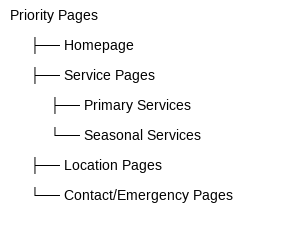
Think of your website architecture like a well-planned pest inspection – you need to cover every area systematically and thoroughly. Here's how to structure your pest control website for maximum SEO impact:
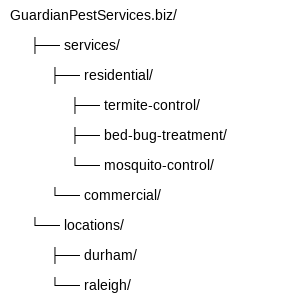
Service Area Structure
Create a logical hierarchy of service areas.
Example structure:
Content Organization
Your content should be organized like a professional treatment plan – systematic, thorough, and easy to follow:
- Main service categories at the top level
- Specific treatments as sub-pages
- Clear paths to emergency service pages
- Seasonal content in appropriate sections
- FAQs and resource sections are properly categorized
Pro Tip: No need to stuff your URLs with keywords like "best-pest-control-charlotte-nc-top-rated" – keep them clean and logical, just like your treatment methods.
Mobile Optimization
In 2026, if your website isn't mobile-friendly, you might as well be trying to catch wasps with a butterfly net. This matters because for pest control specifically.
The mobile imperative for pest control isn't just about screen size; it's about intent and urgency. According to Google's 2016 research, 3 out of 4 people who conduct a local search on their smartphone visit a physical place within 24 hours. While this data is from 2016, the principle of high-velocity mobile-to-action behavior remains fundamental to local service businesses.
For pest control specifically, the numbers are even more compelling. Emergency pest control searches happen overwhelmingly on mobile devices, with most urgent pest situations driving immediate mobile searches. This makes sense when you consider the scenario: someone discovers a wasp nest on their patio or sees a mouse in their kitchen. They're not walking to their desktop computer. They're grabbing their phone and searching right then.
Here's the nuance that many guides miss: mobile users actually convert differently than desktop users, but not in the way you might think. Smart Insights data from 2025 shows desktop converting at nearly 14% higher rates than mobile (3.2% vs. 2.8%) for ecommerce transactions. However, that's measuring high-friction shopping cart transactions. For pest control, the primary mobile "conversion" is a low-friction phone call. Research from Tek Revol shows that as of April 2025, mobile devices drive about 60% of global website traffic. The ability to immediately tap a phone number and connect with your business is precisely why mobile optimization matters so much for emergency services.
The bottom line: when someone has an urgent pest problem, they're on their phone, they're in your service area, and they're ready to act within hours. Your mobile experience needs to be flawless.
Key Mobile Elements to Check
- Tap targets (buttons, links) should be large enough for fingers
- Phone numbers should be click-to-call
- Forms should be easy to fill out on mobile
- Emergency contact information should be prominent
- Images should resize properly
Mobile Speed Imperatives
Your mobile site needs to load in under 3 seconds. Emergency situations don't allow for patience with slow-loading pages. Test your mobile performance separately from desktop, as mobile networks and processing power create different challenges.
Site Speed Optimization
Nobody likes to wait – especially when they've just discovered termites in their kitchen. Here's how to keep your site as quick as your emergency response time:
Image Optimization
- Compress those before/after pest treatment photos
- Use modern image formats (WebP with JPEG fallback)
- Implement lazy loading for galleries
- Proper image dimensions (no 4000px wide images scaled down to 400px)
Server Response Time
- Choose a reliable hosting provider
- Implement proper caching
- Minimize server requests
- Optimize database queries
Performance Checklist
- Pages load in under 3 seconds
- Images are properly compressed
- CSS and JavaScript are minified
- Browser caching is enabled
- Mobile performance is optimized
Security and SSL
Just like you protect homes from pests, you need to protect your website from security threats. Plus, Google loves secure websites.
Essential Security Elements
- SSL certificate (https://) implementation
- Regular security updates
- Form submission encryption
- Secure customer data handling
- Regular security audits
Crawlability
Help search engines crawl your site as efficiently as you inspect a property. Here's how:
XML Sitemaps
Your sitemap is like a blueprint for search engines. Include:
- Service pages
- Location pages
- Blog posts
- Seasonal content
- Emergency service pages
Pro Tip: Update your sitemap automatically when you add new services or service areas.
Robots.txt Configuration
Think of robots.txt as your website's pest control perimeter – it tells search engines where they can and can't go.
Internal Linking Structure
Create a web of internal links (pun intended) that helps both users and search engines navigate your site:
- Link related services
- Connect location pages to relevant service pages
- Link from blog posts to service pages
- Create clear pathways to emergency contact pages
Remember, every technical optimization should serve two purposes:
- Make it easier for search engines to understand and index your site
- Make it easier for customers to find and use your services
Part 3: Semantic SEO for Pest Control
Remember when you could just stuff "pest control + city name" all over your website and rank #1? Yeah, those days are as dead as a termite after proper treatment. Today's SEO is about understanding and matching user intent. Let's break down how semantic SEO works for pest control companies.
Understanding Search Intent
Just like you need to identify the exact pest species to treat it effectively, you need to understand exactly what potential customers are searching for. Here's how search intent breaks down in the pest control industry:
Emergency Searches
- High urgency
- Location-specific
- Immediate solution needed
Examples:
- "24/7 pest control near me"
- "emergency wasp removal [city]"
- "bed bugs treatment today"
Prevention Searches
- Research-focused
- Price-conscious
- Long-term solution-oriented
Examples:
- "quarterly pest control service cost"
- "best termite prevention methods"
- "how often should I spray for bugs?"
Seasonal Patterns
Different pests = different search patterns:
- Spring: "ant control," "termite swarmers"
- Summer: "mosquito treatment," "wasp nest removal"
- Fall: "rodent prevention," "mouse control"
- Winter: "indoor pest control," "cockroach infestation"
Pro Tip: Structure your content to capture all these intents while prioritizing the most profitable ones for your business.
Entity Optimization
Think of entities as the building blocks of your online presence. For pest control, your main entities are:
Business Entity
- Company name
- Service areas
- Contact information
- Business hours
- Emergency availability
- Licensing and certifications
Service Entities
- Treatment types
- Pest species
- Prevention methods
- Service packages
- Equipment used
- Treatment guarantees
Location Entities
- Service areas
- Branch locations
- Coverage radius
- Local landmarks
- Neighborhood specifics
Content Organization
Organization is key – just like having an organized truck makes treatments more efficient, organized content makes your website more effective.
Topic Clusters
Center your content around main topics with supporting pages:
Main Topic: Termite Control
- Prevention methods
- Treatment options
- Signs of infestation
- Cost factors
- Service guarantees
- FAQ
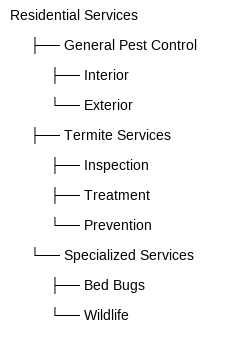
Service Hierarchies
Structure your services logically:
Schema Markup
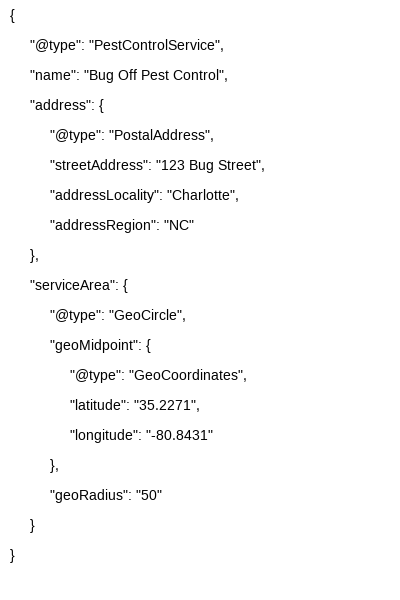
Here's where we get technical (but stick with us – it's worth it). Schema markup is like leaving detailed instructions for search engines about your business.
Local Business Schema
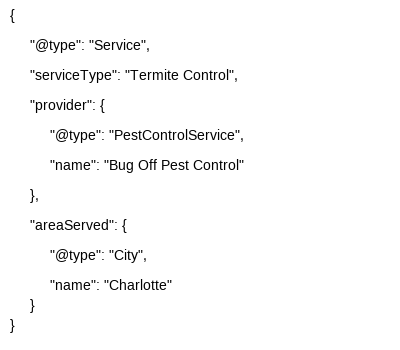
Service Schema
For each service you offer:
FAQ Schema
Perfect for common pest control questions:
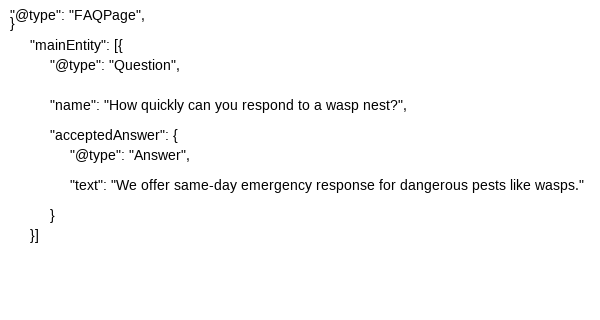
Remember: Schema markup might look complicated (like explaining the difference between carpenter ants and regular ants to a customer), but it's crucial for helping search engines understand exactly what services you offer and where.
Part 4: Implementation Guide
Time to roll up our sleeves and get to work. Just like a thorough pest inspection, we're going to go through this systematically to make sure we don't miss anything important.
Step-by-Step Technical Audit
1. Site Structure Assessment
First, map out your current website structure. Look for:
- Dead ends (pages with no internal links)
- Orphaned content (pages not linked from anywhere)
- Broken hierarchies (misplaced service pages)
- Duplicate content (multiple location pages with identical content)
Use a site crawler to create a visual map of your website. Pay special attention to:
2. Speed Testing
Run a comprehensive speed test on key pages:
- Homepage
- Main service pages
- Location pages
- Contact pages
- Blog/resource pages
Check these specific elements:
- Image loading times
- Server response time
- Time to First Byte (TTFB)
- First Contentful Paint (FCP)
- Largest Contentful Paint (LCP)
Pro Tip: Don't just test your desktop site. Most emergency pest control searches happen on mobile devices, so mobile performance is crucial.
3. Mobile Compatibility
Critical elements to check:
- Click-to-call buttons
- Contact forms
- Service area maps
- Emergency contact information
- Photo galleries
- Navigation menus
Semantic Optimization Process
1. Keyword Research and Clustering
Start with your core services:
Primary Keywords:
- Pest control [city]
- [pest type] treatment
- Emergency pest control
- Commercial pest control
Long-tail Keywords:
- How much does termite treatment cost in [city]
- Best pest control company near me
- 24/7 wasp nest removal
- Quarterly pest control service plans
Organize these into clusters based on:
- Service type
- Location
- Urgency level
- Seasonal relevance
2. Content Gap Analysis
Compare your current content against:
- Common customer questions
- Seasonal pest issues
- Emergency situations
- Preventive services
- Treatment methods
- Service areas
Create a content calendar addressing:
- Seasonal pest problems (before they become trending searches)
- Common customer concerns
- Treatment explanations
- Prevention tips
- Cost factors
- Service area specifics
3. Entity Mapping
Create a comprehensive entity map:
Business Entities:
- Company information
- Service areas
- Certifications
- Team members
- Equipment/Methods
Service Entities:
- Treatment types
- Target pests
- Service packages
- Guarantees
- Response times
Location Entities:
- Service areas
- Coverage zones
- Local regulations
- Regional pest issues
Local SEO Integration
1. Google Business Profile Optimization
Essential elements:
- Accurate business name
- Service area definition
- Emergency hours
- Service categories
- Recent photos
- Regular posts
- Review management
2. Location Page Structure
Each service area page should include:
- Area-specific pest problems
- Local regulations and requirements
- Service coverage details
- Emergency response times
- Local team information
- Area-specific testimonials
3. Citation Management
Maintain consistent information across:
- Business directories
- Industry associations
- Chamber of Commerce listings
- Local business organizations
- Social media profiles
Pro Tip: Use a citation management tool to maintain consistency across all platforms. One incorrect phone number can cost you emergency calls.
4. Implementation Sequence
- Fix technical issues first
- Update content structure
- Implement schema markup
- Optimize local presence
- Monitor and adjust
Remember: This is not a one-and-done process. Like pest control itself, SEO requires regular monitoring and maintenance to stay effective.
Part 5: Common SEO Issues in Pest Control Websites
Let's debug your website (pun absolutely intended). Here are the most common SEO issues we see with pest control websites and how to fix them.
Technical Problems
1. Duplicate Location Pages
Problem: Creating separate pages for each service in each location leads to duplicate content.
Example of What Not to Do:
- /charlotte/termite-control/
- /charlotte/pest-control/
- /charlotte/bed-bug-treatment/
- /raleigh/termite-control/
- /raleigh/pest-control/
- /raleigh/bed-bug-treatment/
(All with nearly identical content, just city names changed)
Solution:
- Create unique content for each location
- Focus on local pest issues
- Include area-specific information
- Use proper canonical tags when needed
- Implement location-specific schema markup
2. Slow-Loading Treatment Photos
Problem: High-resolution before/after pest photos are killing your page speed.
Common Issues:
- 5MB+ image files
- Wrong image formats
- No image optimization
- No lazy loading
- Improper image dimensions
Solution:
- Compress images properly
- Use WebP format with fallbacks
- Implement lazy loading
- Maintain image quality while reducing file size
- Use appropriate image dimensions
3. Mobile Usability Issues
Problem: Emergency contact information is buried on mobile devices.
Critical Mobile Issues:
- Tiny tap targets
- Hidden phone numbers
- Complex contact forms
- Slow-loading maps
- Unreadable service area lists
Solution:
- Make contact buttons prominent
- Implement click-to-call
- Simplify forms for mobile
- Use responsive maps
- Prioritize emergency information
Semantic Challenges
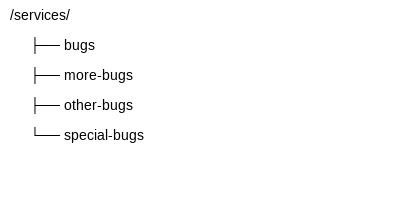
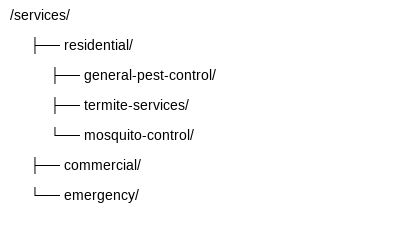
1. Confusing Service Hierarchies
Problem: Unclear relationship between services makes it hard for search engines to understand your offerings.
Bad Example:
Good Example:
2. Missing Seasonal Content
Problem: Not addressing seasonal pest issues before they become trending searches.
Fix By Creating:
- Seasonal content calendars
- Pre-season pest guides
- Prevention tips
- Treatment timing guides
- Regional pest forecasts
Example Timeline:
- January: Winter pest prevention
- March: Termite swarm season prep
- May: Mosquito season readiness
- September: Rodent prevention
- November: Holiday pest control
3. Poor Review Management
Problem: Not leveraging customer reviews for semantic relevance.
Solution:
- Actively request reviews
- Respond to all reviews
- Include service-specific keywords in responses
- Address location-specific issues
- Highlight emergency response times
4. Outdated NAP Information
Problem: Inconsistent Name, Address, and Phone Number across the web.
Impact:
- Lost emergency calls
- Confused customers
- Lower local rankings
- Reduced trust signals
- Poor user experience
Solution:
- Regular citation audits
- Consistent format across all platforms
- Quick updates when information changes
- Local phone numbers for each service area
- Regular verification of business listings
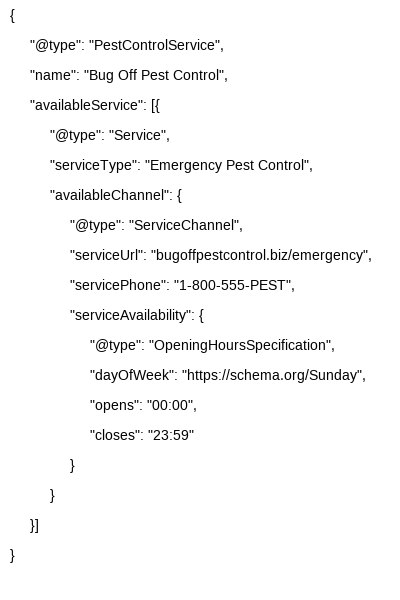
5. Schema Implementation Errors
Common Schema Mistakes:
- Missing required properties
- Incorrect service areas
- Wrong business categories
- Incomplete hours
- Missing emergency service markup
Correct Schema Example:
6. Content Depth Issues
Problem: Thin content that doesn't demonstrate expertise.
Examples of Thin Content:
- "We kill bugs in [city]"
- Generic pest descriptions
- Copied treatment explanations
- Basic service lists
Solution: Create In-depth Content About:
- Specific pest behaviors
- Local pest challenges
- Treatment methods
- Prevention techniques
- Safety measures
- Environmental considerations
- Seasonal variations
- Geographic factors
Remember: These issues aren't just technical problems – they directly impact your bottom line. A slow website during wasp season costs you emergency calls. Incorrect business hours in Google mean missed opportunities. Fix these issues, and you'll see the difference in both rankings and revenue.
Part 6: Measuring Success
Just like you track the effectiveness of your pest treatments, you need to track your SEO performance. Let's break down exactly what to measure and how to measure it.
Key Performance Indicators (KPIs)
1. Local Search Visibility
Track rankings for:
- "[city] pest control"
- "emergency pest control near me"
- "24/7 exterminator"
- Individual pest terms (termites, bed bugs, etc.)
- Seasonal pest terms
Pro Tip: Track rankings on mobile devices separately – they often differ from desktop rankings and are more important for emergency services.
2. Emergency Service Metrics
Monitor:
- Time of day for emergency calls
- Response time to contact forms
- Click-to-call usage
- Emergency page bounce rates
- After-hours contact rates
3. Conversion Tracking
Set up tracking for:
- Phone calls (by source)
- Contact form submissions
- Emergency service requests
- Free inspection bookings
- Quote requests
- Chat interactions
4. Seasonal Performance
Track these patterns:
- Search volume by pest type
- Conversion rates by season
- Cost per lead by season
- Emergency vs. scheduled services
- Weather-related spikes
ROI Tracking
1. Cost Per Acquisition
Calculate separately for:
- Emergency services
- Regular maintenance contracts
- Seasonal services
- Commercial contracts
- Residential one-time services
Formula:
CPA = Total Marketing Cost / Number of New Customers
Break it down by:
- Service type
- Location
- Season
- Lead source
2. Conversion Path Analysis
Track how customers find and choose you:
- First touch point
- Path to conversion
- Number of interactions
- Time to decision
- Influencing content
Example Path:
- Organic Search (termite signs)
- → Blog Post Read
- → Service Page Visit
- → Free Inspection Form
- → Phone Call
- → Booking
3. Service Area Performance
Monitor by location:
- Conversion rates
- Cost per lead
- Response times
- Customer lifetime value
- Service type demand
Create Service Area Scorecards:
- Primary zip codes
- Secondary markets
- Expansion opportunities
- Underperforming areas
Performance Benchmarks
Set these minimum targets:
Technical
- Page load time: < 3 seconds
- Mobile usability score: > 90%
- Core Web Vitals: All "Good"
- Crawl efficiency: > 95%
Engagement
- Bounce rate: < 40% on average
- Time on site: > 2 minutes
- Pages per session: > 2
- Return visitor rate: > 25%
Conversion
- Contact form completion: > 10%
- Click-to-call rate: > 15%
- Quote request rate: > 5%
- Emergency response rate: > 95%
Monthly Reporting Template
Create a monthly scorecard including:
- Overall Performance
- Organic traffic
- Conversion rates
- Revenue attribution
- YoY comparison
- Technical Health
- Site speed
- Mobile performance
- Crawl stats
- Index coverage
- Local Presence
- GMB performance
- Local pack rankings
- Review sentiment
- Citation accuracy
- Content Performance
- Top landing pages
- Seasonal content effectiveness
- Blog engagement
- Resource section usage
Remember: The goal isn't just to track numbers – it's to identify opportunities for improvement and justify your SEO investment. Focus on metrics that directly tie to revenue, not just vanity metrics like raw traffic numbers.
Troubleshooting Guide
Common Technical Issues
Problem: Pages Not Being Indexed
Possible Causes:
- Robots.txt blocking access
- Noindex tags
- Poor internal linking
- Duplicate content
Quick Fixes:
- Check robots.txt configuration
- Review meta tags
- Improve internal linking
- Create unique content
Problem: Slow Page Speed
Possible Causes:
- Large images
- Unoptimized code
- Poor hosting
- Too many plugins
Quick Fixes:
- Optimize images
- Minimize code
- Enable caching
- Remove unnecessary plugins
Problem: Mobile Issues
Possible Causes:
- Non-responsive design
- Small tap targets
- Hidden content
- Slow loading
Quick Fixes:
- Implement responsive design
- Enlarge buttons and links
- Make all content accessible
- Optimize for mobile speed
Common Semantic Issues
Problem: Poor Local Rankings
Possible Causes:
- Inconsistent NAP information
- Weak local signals
- Poor review management
- Limited local content
Quick Fixes:
- Audit and correct business listings
- Strengthen local content
- Implement review strategy
- Add local schema markup
Problem: Low Emergency Service Conversions
Possible Causes:
- Difficult to find contact information
- Slow mobile response
- Poor emergency content
- Weak call-to-action
Quick Fixes:
- Make contact info prominent
- Optimize mobile experience
- Create clear emergency pages
- Strengthen calls-to-action
Problem: Seasonal Traffic Drops
Possible Causes:
- Missing seasonal content
- Poor timing
- Limited keyword coverage
- Weak internal linking
Quick Fixes:
- Create a seasonal content calendar
- Plan content ahead of the seasons
- Expand keyword targeting
- Improve internal linking
Problem: Not Appearing in AI Overviews
Possible Causes:
- Missing or incomplete schema markup
- Thin content lacking expertise
- Poor E-E-A-T signals
- No authoritative citations
Quick Fixes:
- Implement comprehensive schema markup (LocalBusiness, Service, FAQ)
- Expand content with detailed, expert-level information
- Add certifications, licenses, and credentials to your site
- Include citations from authoritative pest control sources
- Build comprehensive FAQ sections answering specific questions
When to Get Help
While many SEO issues can be fixed in-house, consider professional help when:
- Major technical issues persist
- Rankings suddenly drop
- Algorithm updates hit hard
- Expanding to new service areas
- Rebranding or website redesign
- Struggling to appear in AI Overviews despite implementing best practices
Remember: The best time to fix SEO issues is before they impact your bottom line. Regular monitoring and maintenance prevent small problems from becoming major headaches.
Conclusion
You wouldn't send a technician out without proper training and equipment – and you shouldn't approach SEO without a solid strategy, either. By implementing both technical and semantic SEO practices, you're building a foundation for sustainable organic growth.
Key Takeaways
- Technical SEO ensures search engines can find and understand your content
- Semantic SEO helps match your services with customer needs
- Local optimization is crucial for pest control companies
- AI-powered search results require new optimization strategies focused on authority and verification
- Regular monitoring and adjustment are essential
- Mobile optimization can make or break emergency service calls
Next Steps Checklist
- Audit your current website structure
- Fix any technical issues
- Implement proper schema markup
- Create a seasonal content calendar
- Optimize for AI Overviews and GEO
- Set up tracking and monitoring
- Review and update regularly
Remember, SEO isn't a one-time treatment – it's ongoing maintenance. Just like pest control, regular attention and updates keep small issues from becoming big problems.
Contact me at Cube Creative Design for a free SEO audit of your pest control website. We handle technical and semantic SEO for pest control companies, and we'll show you which leads you're missing.
Frequently Asked Questions
What’s the Difference Between Technical SEO and Semantic SEO for a Pest Control Website?
Technical SEO makes sure search engines can crawl, load and trust your site. Semantic SEO makes sure your pages match what people in your service area actually search for.
Technical SEO covers site structure, page speed, mobile design, security and crawlability. Semantic SEO covers search intent, entities (your business, your services and your locations), topic clusters and schema markup. You need both. Content and schema can’t rank on a slow or broken site, and a fast site still loses if its pages don’t answer the searches your customers make.
Where Should a Pest Control Company Start With SEO?
Fix technical issues first, then update your content structure, then add schema markup, then optimize your local presence. After that, monitor and adjust.
Start with an audit of your site structure. Look for dead ends, orphaned pages, misplaced service pages and location pages with nearly identical content. Then test the speed of your homepage, main service pages, location pages and contact pages, on mobile as well as desktop.
How Fast Should a Pest Control Website Load?
Under 3 seconds, and test mobile separately from desktop. Someone who just found a wasp nest won’t wait for a slow page.
Before and after treatment photos are a common cause of slow pages. Compress them, use WebP with a JPEG fallback, lazy-load your galleries and size images to the space they fill. On the server side, use reliable hosting and caching. Check Time to First Byte, First Contentful Paint and Largest Contentful Paint on your key pages.
Why Does Mobile Matter So Much for Pest Control SEO?
Emergency pest searches happen mostly on phones, and the conversion you want is a phone call.
Google’s 2016 research found that 3 out of 4 people who do a local search on a smartphone visit a place within 24 hours. Tek Revol reports that mobile devices drive about 60% of global website traffic. Make phone numbers click-to-call, keep tap targets large, keep forms short and put emergency contact information where it’s easy to see.
How Do Emergency, Prevention and Seasonal Searches Differ?
Each one has a different intent, so each needs its own page and its own call to action.
- Emergency searches (“24/7 pest control near me,” “bed bugs treatment today”) are urgent and local. The page should make it easy to call now.
- Prevention searches (“quarterly pest control service cost,” “best termite prevention methods”) are research-focused and price-conscious. The page should explain plans and costs.
- Seasonal searches follow the pests: ants and termite swarmers in spring, mosquitoes and wasps in summer, rodents in fall, indoor pests in winter. Publish that content before the searches start trending.
Which Schema Markup Does a Pest Control Website Need?
LocalBusiness, Service, FAQ and Review schema.
LocalBusiness schema confirms your business identity, service areas and contact details. Service schema defines each service you offer. FAQ schema marks up the answers AI systems pull from. Review schema backs your expertise with customer feedback. Fast Frigate found that pages with structured data are up to 40% more likely to appear in AI summary, overview or citation positions. Common mistakes are missing required properties, wrong service areas, wrong business categories and incomplete hours.
Do AI Overviews Show Up for Local Pest Control Searches?
Less often than for other searches, but they still matter. Local Falcon’s 2025 whitepaper found AI Overviews on 40.2% of all searches, but on only 7.9% of local business searches like “pest control near me.”
Longer questions trigger them far more often. Ahrefs found that searches of seven or more words are nearly 5 times more likely to show an AI Overview than one-word searches (46.4% vs. 9.5%). So answer detailed, specific questions in depth. Being cited pays off: Seer Interactive found that brands cited in an AI Overview get a 35% higher organic click-through rate than brands that aren’t.
How Should I Handle Pages for Multiple Cities Without Creating Duplicate Content?
Give each location page unique content about that area. Pages that only swap the city name count as duplicate content.
Cover the area’s own pest problems, local regulations, service coverage, emergency response times, the local team and testimonials from customers there. Add location-specific schema markup, and use canonical tags where pages overlap. Link each location page to the service pages that apply to it.
How Do I Measure Whether Pest Control SEO Is Working?
Measure calls by source, form leads and booked jobs, not raw traffic.
Track phone calls by source, contact form submissions, emergency service requests, free inspection bookings and quote requests. Work out cost per acquisition (total marketing cost divided by new customers) for each service type, location, season and lead source. Track mobile rankings separately from desktop, because they often differ and matter more for emergency calls.