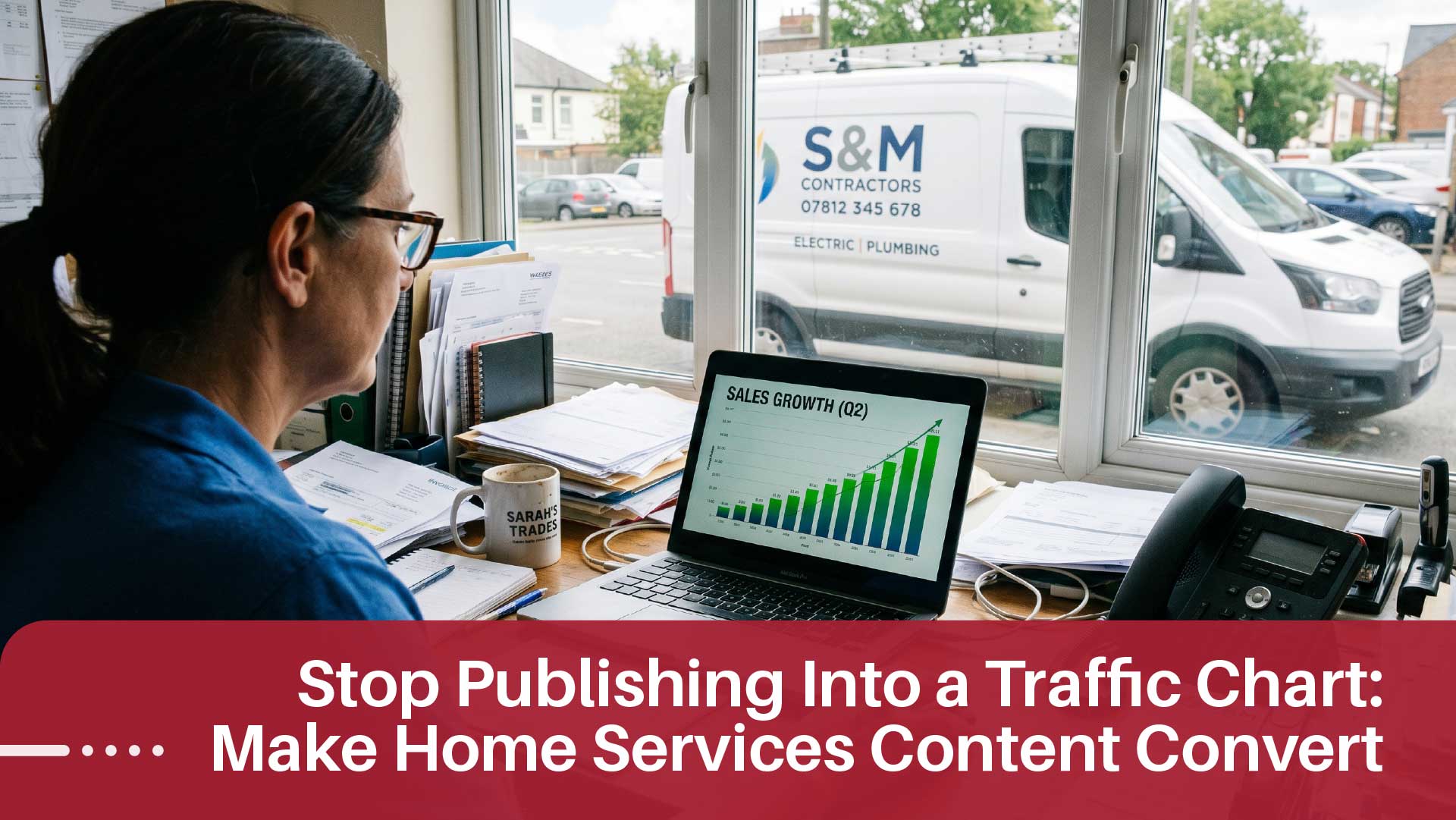
The key to increasing your Asheville area small business’s clientele is through marketing, primarily content marketing. With content marketing, you are telling your business’s story in such a way that it attracts prospects, educates them, and entices them to choose your WNC small business.
Now, there are numerous options for small businesses to get the word out, but content marketing is one of the better and more cost-effective ways to differentiate yourself and your business from the competition.
As prospects begin their search for services or products, they have several questions, such as:
- What distinguishes your Asheville small business from the one down the street?
- What are the criteria for hiring employees?
- What is the business’s mission/philosophy?
- How much can clients be involved, and what role can they play?
- What are the expectations for communication with clients?
- What results can we expect if we use your services or products?
- What are the business’s difficulties? What are the areas that need to be improved?
Your marketing materials, website, social media presence, and personal interactions should all follow a consistent theme and work to answer these questions.
Ensure you deliver on what you promise regarding what you say and do. This will not only reassure clients, but they will also be able to see the quality of your services or products.
You can and should create buyer personas to help you focus your marketing efforts. Defining an ideal client will help you develop marketing content and collateral that speaks directly to them.

Written By: Adam Bennett | May 03, 2023
Adam is the president and founder of Cube Creative Design and specializes in private school marketing. Since starting the business in 2005, he has created individual relationships with clients in Western North Carolina and across the United States. He places great value on the needs, expectations, and goals of the client.

As we emerge from the COVID pandemic and many restrictions have been lifted, small businesses are trying to return to normal. However, one thing that has fundamentally changed is not only the need but the necessity of a strong internet presence.
Before many, many small businesses could get away with a simple website or “have a Facebook page,” and that was all they needed to “show up on Google” or get found. Unfortunately, that isn’t the case; things have changed. Your clients will first look you up in various places and do their research before contacting you.
You need to employ several different techniques to ensure you show up. Content marketing is one of the best. Content marketing is about creating value, relevance and attracting prospects with content that answers people’s questions. But you also need to promote it. Therefore one of the best tools for that is social media.
It wasn’t long ago that social media was viewed as a way for people to stay in touch and play games. But now, it has become a powerful marketing tool. Take a look at these statistics:

Written By: Chad J. Treadway | April 26, 2023
Chad is a Partner and our Chief Smarketing Officer. He will help you survey your small business needs, educating you on your options before suggesting any solution. Chad is passionate about rural marketing in the United States and North Carolina. He also has several certifications through HubSpot to better assist you with your internet and inbound marketing.

When done correctly, a content marketing strategy can significantly impact your small business’s brand exposure and reputation. It can also boost your client interactions and drive higher-quality traffic to your small business website.
Now I realize that that one statement might not be enough to convince you. Therefore let me provide you with these:
- Researchers expect the content marketing industry to generate a revenue of nearly $140 million by 2026. (Source: Business Report by Research Dive)
- Nearly 3 out of 10 businesses will spend less than $1,000 monthly on content marketing, whereas almost 5 out of 10 will invest $1000-$5000 monthly. (Source: State of Content Marketing: 2023 Global Report)
- Almost 7 out of 10 businesses plan to increase their content marketing budgets in 2023 (Source: State of Content Marketing: 2023 Global Report)
- 7 out of 10 B2B and B2C marketers use content marketing as part of their overall marketing strategy. (Source: Content Marketing Institute B2B 2022 Research Report and Content Marketing Institute B2C 2022 Research Report)
Given those statistics, I hope you realize that content marketing is one of the most efficient and cost-effective ways to build awareness, boost sales, and grow your small business.
This begs the question of how effective is your content marketing strategy.
If you answered very effectively or effectively, congratulations, you are well on your way. However, if you answered it’s not or what is a content marketing strategy, then you have come to the right place.
Written By: Chad J. Treadway | April 24, 2023
Chad is a Partner and our Chief Smarketing Officer. He will help you survey your small business needs, educating you on your options before suggesting any solution. Chad is passionate about rural marketing in the United States and North Carolina. He also has several certifications through HubSpot to better assist you with your internet and inbound marketing.

Small businesses often face the challenge of limited resources, making marketing a crucial aspect of their growth strategy. By implementing effective marketing tactics, small businesses can significantly impact their target audience, drive sales, and increase brand awareness. In this post, we’ll explore the foundations of small business marketing and how it differs from marketing for larger enterprises.
One common misconception is that small businesses don’t need marketing. However, this couldn’t be further from the truth. Regardless of size, marketing is essential for any business, and small businesses can greatly benefit from targeted efforts that cater to their unique needs and goals. By addressing these misconceptions head-on, we can uncover the true potential of small business marketing.
It would be best to consider several things when building a winning marketing strategy for your small business. Here are my top five strategies:
Written By: Chad J. Treadway | April 17, 2023
Chad is a Partner and our Chief Smarketing Officer. He will help you survey your small business needs, educating you on your options before suggesting any solution. Chad is passionate about rural marketing in the United States and North Carolina. He also has several certifications through HubSpot to better assist you with your internet and inbound marketing.