While the National Association of Independent Schools reports that 83% of private schools credit word-of-mouth as their most effective marketing channel, most are missing the strategic window when those conversations actually happen: the holiday season, when families have time to research and discuss their children's educational future. This reality makes developing a comprehensive private school marketing strategy more critical than ever.
Picture this: It's December 26th. Your campus is quiet, your staff is on well-deserved vacation, and your phone isn't ringing with tour requests. Meanwhile, across town, affluent families are gathered around their kitchen tables with laptops open, researching schools for next year's applications. They have time, mental bandwidth, and motivation to dive deep into their options. The question is: Will your school be part of that critical conversation?

Written By: Adam Bennett | October 06, 2025
Adam is the president and founder of Cube Creative Design and specializes in private school marketing. Since starting the business in 2005, he has created individual relationships with clients in Western North Carolina and across the United States. He places great value on the needs, expectations, and goals of the client.
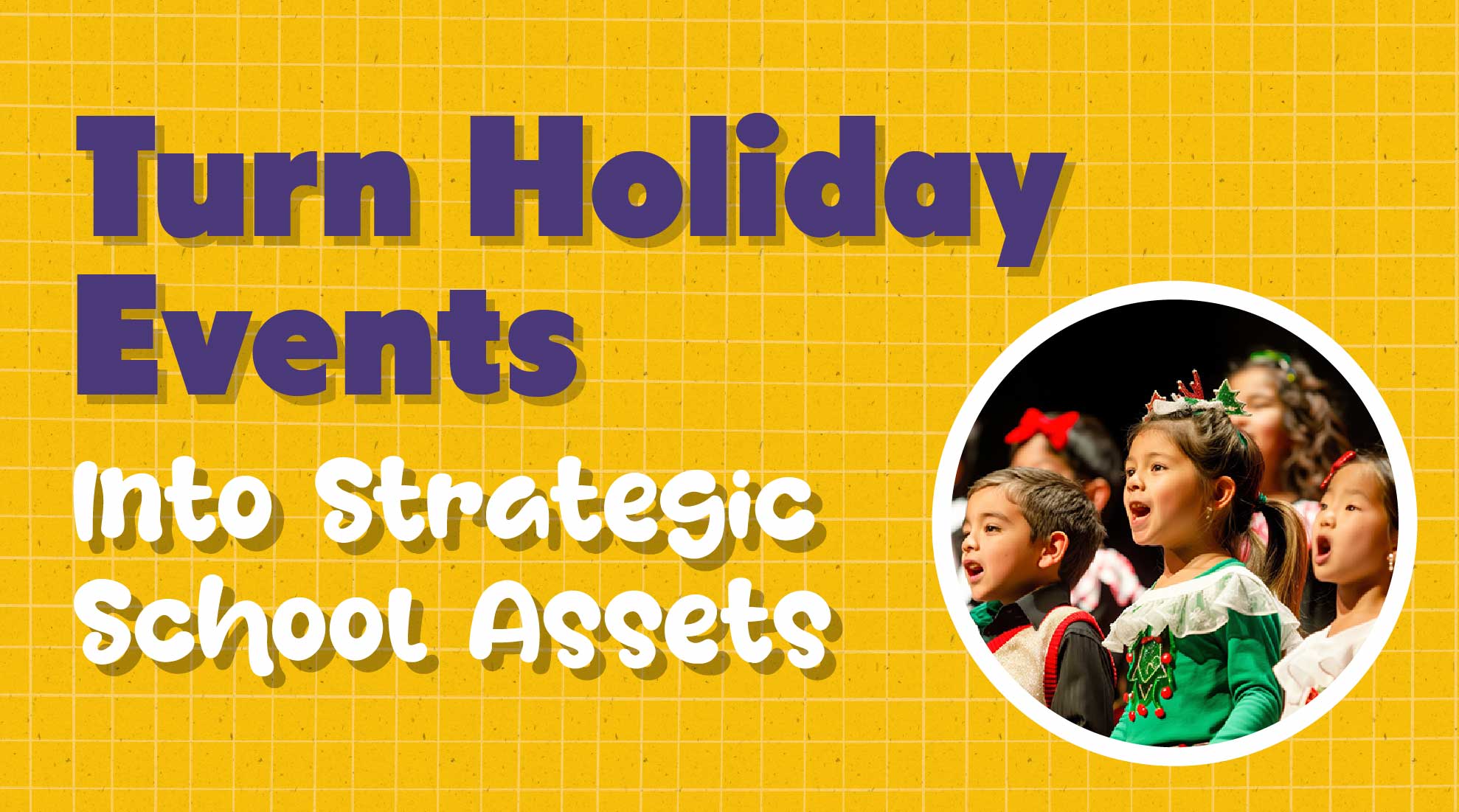
Ah, the holiday season at your private school. The cheerful chaos of Winter Concerts. The frantic last-minute preparations for the annual fundraising gala. The slightly-too-warm gymnasium full of parents recording their children's performances with shaky camera work that would make Blair Witch directors proud.
If you're like most private school leaders, you view these seasonal events as a mixed blessing—wonderful traditions, sure, but also logistical nightmares that consume staff time and energy.
But what if I told you that you're sitting on an untapped goldmine?
Most schools make the critical mistake of treating holiday events as mere operational tasks—nice-to-have social gatherings that keep tradition alive but drain resources. They plan these events in departmental silos (marketing does the Fall Festival, advancement handles the gala, and academics manages the concerts) without a unified strategy, missing the tremendous opportunity these moments present.
It's time for a paradigm shift: Holiday events aren't just calendar fillers—they're powerful strategic platforms that, when approached correctly, can drive enrollment, build your community, express your brand values, and fuel your fundraising efforts.
This post will show you exactly how to transform your holiday events from obligatory traditions into strategic assets that deliver measurable returns. No fancy consultants required—just a smarter approach to what you're already doing.
Written By: Adam Bennett | October 06, 2025
Adam is the president and founder of Cube Creative Design and specializes in private school marketing. Since starting the business in 2005, he has created individual relationships with clients in Western North Carolina and across the United States. He places great value on the needs, expectations, and goals of the client.
Let's be honest — when you're running a small private school, "marketing budget" often feels like an oxymoron. You're expected to compete with bigger schools that have glossy viewbooks, fancy websites, and marketing directors who don't also teach three classes, coach volleyball, and unplug toilets (sometimes all before lunch).
Here's the good news: Your smaller school has a secret marketing superpower hiding in plain sight. It's not your budget, your branding, or even your fancy new logo. It's your community — the authentic, deeply-rooted network of relationships that larger schools can't easily replicate.
Written By: Adam Bennett | September 29, 2025
Adam is the president and founder of Cube Creative Design and specializes in private school marketing. Since starting the business in 2005, he has created individual relationships with clients in Western North Carolina and across the United States. He places great value on the needs, expectations, and goals of the client.

Let's face it — gone are the days when parents simply enrolled their kids in the nearest private school with a decent reputation. In 2025, we're dealing with a whole new breed of educational consumers who are simultaneously more satisfied with their current schools and more likely to be shopping for alternatives.
Yes, you read that right. It's what I call the "Satisfaction Paradox," and it's completely upending how we need to think about attracting and retaining families. According to the National School Choice Awareness Foundation, a staggering 60% of U.S. parents considered switching schools for at least one of their children last year — even though most report being satisfied with their current school.
Why? Because today's parents aren't just problem-solvers; they're optimization machines. The operative question is no longer "Is this school failing my child?" but rather "Could another school give my child an even greater advantage?"
If you're still marketing your school like it's 2015, you're already behind. This post will decode what's really driving parent decisions in 2025 and give you actionable strategies to not just survive but thrive in this hyper-competitive landscape.
Written By: Adam Bennett | September 26, 2025
Adam is the president and founder of Cube Creative Design and specializes in private school marketing. Since starting the business in 2005, he has created individual relationships with clients in Western North Carolina and across the United States. He places great value on the needs, expectations, and goals of the client.