If your private school's social media strategy still revolves around posting occasional student achievement photos, you're missing families actively searching for schools like yours.
The education sector has become increasingly fragmented, with microschools, hybrid homeschools, and online academies redefining what schooling means. In this competitive environment, NAIS research confirms that the most common marketing challenge facing independent schools is "identifying three unique advantages that competitors would struggle to match and promoting awareness of the school among audiences"—making differentiation more critical than ever for school marketing leaders.
This creates a strategic shift from "presence" to "performance." Simply existing on social platforms is no longer sufficient. By 2026, schools must focus on quantifiable performance directly tied to institutional goals.
The data backs this up: Over half of independent schools report annual marketing budgets exceeding $70,000, with an additional 28% spending over $120,000. Such substantial investment creates an urgent and justifiable demand from leadership to see a clear return on investment.
This guide provides the comprehensive, evidence-based framework you need to architect a resilient strategy, connect with prospective families where they actually spend time, and prove the undeniable value of your social media efforts to school leadership.
Building Your Strategic Foundation Before You Post Anything
Before diving into platform tactics and content creation, successful social media strategies begin with a solid foundation. Schools that skip this strategic groundwork inevitably create inconsistent messaging, waste resources on unfocused efforts, and struggle to prove value to leadership.
Start With Clear, Measurable Goals
The top two strategic priorities for independent schools are clear: growing enrollment and building or strengthening the school's brand. Data from NAIS research on the state of independent school marketing shows these goals drive significant financial commitments, with over half of independent schools reporting annual marketing budgets exceeding $70,000 and an additional 28% spending over $120,000. With this level of investment, leadership rightfully demands measurable outcomes.
Every element of your social media strategy should be explicitly tied to one of these core objectives. For instance, evaluate whether a "Teacher Tuesday" spotlight series directly showcases faculty expertise (brand strengthening) or if it's just filling space on your calendar. If it doesn't serve a strategic purpose, eliminate it.
Understand Your Resource Reality
Your first step is acknowledging where you actually stand. Approximately two-thirds of independent schools benefit from centralized marketing teams with multiple staff members, while a substantial 30% rely on a single person to manage all marketing functions. Understanding this reality is crucial for setting realistic expectations and allocating resources effectively.
Resource reality matters because it determines what's actually achievable. Solo marketing directors typically manage 12 to 15 distinct responsibilities beyond social media, including website updates, print materials, event planning, and crisis communications. If this describes your situation, you cannot be active on every platform—strategic focus is essential.
Your strategy must prioritize tools and systems that multiply your efforts. This means investing heavily in systems that work while you sleep: content calendars that plan months ahead, faculty training programs that turn teachers into content contributors, and student ambassador initiatives that generate authentic content at scale. You cannot be everywhere at once, so build the infrastructure that allows your school community to become your content engine.
The right tools make all the difference. Platforms like HubSpot have transformed how under-resourced school marketing teams operate. HubSpot's all-in-one marketing platform allows you to schedule posts across Facebook, Instagram, and LinkedIn from a single dashboard, track which posts drive actual website visits, and automatically add engaged families to your CRM—eliminating the need for three separate tools and manual data entry.
Define Your Brand Voice Before Creating Content
Before creating content, identify your voice. In a crowded digital space where families are researching dozens of schools simultaneously, a distinctive brand voice is what makes your school memorable. Many schools skip this foundational step, resulting in generic content that could represent any institution.
Start by identifying three to five core adjectives that authentically describe your school's personality. Are you "forward-thinking and progressive"? "Warm and nurturing"? "Academically rigorous and excellence-driven"? These aren't aspirational descriptors—they should reflect how your community actually experiences the school every day.
Once defined, create specific guidelines for tone, vocabulary, and communication style. For example:
- Progressive schools might use phrases like "pioneering approaches," "reimagining education," and "preparing students for a future we can't yet imagine."
- Traditional schools might emphasize "time-tested methods," "enduring values," and "building on a foundation of excellence."
- Community-focused schools might use "every child known and valued," "family partnership," and "growing together."
This defined voice should inform every piece of content you create and serve as the filter through which all community-generated content is reviewed.
Establish Governance That Gives Staff Freedom While Maintaining Standards
As you scale your content creation to include faculty contributors and student ambassadors, clear governance becomes essential. The goal is to maintain brand integrity and protect student privacy while giving your team freedom to move quickly and capture authentic moments.
Develop a tiered approval system:
- Tier 1 (Pre-approved content types): Standard posts that follow established templates can be published by trained staff without additional review. Examples: classroom activity photos with generic captions, event reminders, achievement announcements.
- Tier 2 (Marketing team review): Content involving student quotes, faculty spotlights, or campaign messaging requires marketing director approval before publishing.
- Tier 3 (Leadership approval): Sensitive topics, policy announcements, or crisis communications require the Head of School sign-off.
This structure prevents the common bottleneck where every single post must pass through one person, allowing your content pipeline to flow consistently.
Build Your Content Architecture with Strategic Pillars
Content pillars are thematic categories that organize your strategy and ensure comprehensive storytelling. They prevent the common trap of posting randomly based on what happened that day, instead creating intentional balance across the topics that matter most to prospective families.
For K-12 schools, these five pillars create a complete picture:
- Academic Excellence: Not bragging about test scores, but showing learning in action. Student presentations, teacher creativity, classroom projects, student-created work.
- Student Life & Community: The "vibe" prospective families obsessively research. Friendships, traditions, events, and daily moments that answer: "Will my child be happy here?"
- Outcomes & Alumni Success: Where do your students go next? College acceptances, alumni career paths, graduate school placements, and competition wins.
- Behind-the-Scenes Access: Humanizing the institution. Teacher preparation, administrative decision-making, facility tours, and staff spotlights.
- Values in Action: Mission brought to life. Service projects, character education moments, community partnerships, instances where stated values become visible actions.
Track your content distribution across these pillars monthly using a simple spreadsheet—marketing automation isn't necessary for effective content planning. If 90% of posts fall under "Academic Excellence," prospective families can't assess whether students are actually happy. If everything showcases social events, they can't evaluate academic rigor. Balance is the key to telling your complete story.
Why Social Media is No Longer Optional for Private Schools
The modern school search doesn't begin with a brochure in the mail or a booth at a community fair. It begins with a search query. And increasingly, that search happens directly on social platforms rather than Google.
The Digital-First Parent Revolution
Today's prospective families—primarily Millennials and Gen Z parents—are digital natives who live on social media. Consider these statistics: 90% of Gen Z adults (ages 18-24) and 88% of Millennials (ages 25-34) are active social media users. Social media isn't just for socializing—for these parents, it's their primary source for researching vital family decisions, including education.
Research from WebFX's 2025 SEO statistics shows that 68% of all online experiences begin with a search engine, making a school's digital footprint the first and most critical touchpoint in the enrollment funnel. Yet social platforms have evolved into search engines in their own right. Prospective families are bypassing Google entirely, turning directly to TikTok, Instagram, and YouTube search bars to research schools, watch candid reviews, and assess campus culture.
Academic research from Harvard University validates this behavior shift. Their study found that social networks are a common and critical source of information for parents across all socioeconomic backgrounds. The research revealed something crucial: Parents assess and privilege information from network ties they perceive to have "affinity and authority." Translation: They trust recommendations from people they see as peers or credible experts far more than polished institutional marketing.
The Trust Deficit and Peer Validation Power
The reality: Millennial and Gen Z parents have developed a healthy skepticism toward traditional top-down institutional marketing. They've grown up saturated with advertising and are adept at filtering out corporate messaging. Your beautifully designed viewbook? They're scrolling past it to find what real parents are saying in Facebook groups.
The data confirms this bias: Over 90% of people report that online reviews impact their purchasing decisions. While choosing a school is more complex than buying a product, the underlying psychology is identical. Parents seek validation from other parents who've already made that choice.
This represents a fundamental power shift. Your school is no longer the sole authority on its own brand—significant authority now resides within your community network. Data from the Pew Research Center shows 79% of parents on social media report getting useful information from their networks, and 59% have encountered specific, helpful parenting-related information in just the last 30 days.
Your most valuable marketing asset isn't your marketing team. It's the collective voice of your satisfied parents, successful alumni, and passionate students. Therefore, a 2026 social media strategy cannot be predicated solely on institution-created content. Its primary function must be cultivating, amplifying, and showcasing authentic stories and positive word-of-mouth generated by the community itself.
Your Platform-Specific Strategy for 2026
Not all social platforms are created equal, and a one-size-fits-all approach is destined to fail. Each channel has distinct audiences, content formats, and algorithms. Here's how to approach the platforms that matter most for K-12 private schools.
Facebook - The Community Building Powerhouse
Despite proclamations of its demise, Facebook remains vital for K-12 school marketing. Data from the CDC on social media use shows 75% of Millennial parents use Facebook (81% of mothers, 66% of fathers), and it remains the platform of choice for parents aged 30-65.
Perhaps more impressively, 83% of mothers and 76% of fathers on Facebook engage daily, with 56% of mothers checking several times per day compared to 43% of fathers. These are the decision-makers in your enrollment funnel.
Primary Use Case: Community building, event promotion, parent group discussions, and alumni connections.
Content That Works:
- Photo albums from school events (parents love seeing their kids)
- Event pages for open houses, admissions events, and community gatherings
- Live video broadcasts from athletic events or special presentations
- Private parent groups for deeper community engagement
- Longer-form text updates and storytelling
Posting Strategy: Research from Sprout Social indicates optimal posting times are Monday through Friday, 9 AM to 12 PM, with evenings also performing well. This aligns with when parents have downtime during work or after dinner.
Pro Tip: Facebook's "boosted posts" offer an affordable middle ground between organic and full advertising campaigns. When a post performs well organically, amplify it with $50-$100 to extend reach to your target geographic area. If you're using HubSpot to manage your social media, you can schedule Facebook posts, track engagement metrics, and even integrate Facebook lead ads directly into your CRM—all from one platform.
Instagram - Visual Storytelling for Discovery
Instagram deserves special attention because if Facebook is where parents hang out, Instagram is where they research. This is your visual portfolio, your highlight reel, your chance to show (not tell) what makes your school special.
25% of Millennial parents use Instagram (30% of mothers, 19% of fathers), while Gen Z shows significantly higher engagement with 37.3 million monthly users. If you're targeting younger families or high school students, this platform is non-negotiable.
Primary Use Case: Visual exploration of campus culture, "day-in-the-life" content, student stories, and brand vibe assessment.
Content That Works:
- Reels (15-90 seconds): Your highest-engagement format. Think quick campus tours, student takeovers, trending audio with a school-appropriate twist.
- Stories: Behind-the-scenes, in-the-moment updates. Use polls and question stickers to boost engagement.
- Grid posts: Curated, high-quality visuals that define your brand aesthetic. This is your permanent portfolio.
- Carousels: Multi-image storytelling—perfect for student spotlights or breaking down complex programs into digestible slides.
The Instagram SEO Revolution: Strategy has shifted dramatically. Instagram's own creators account recently recommended moving from the old advice of using 30 hashtags to using just three to five highly relevant, targeted hashtags per post. The rationale: A smaller, more focused set helps the algorithm better understand and categorize your content, leading to more effective reach.
Hashtag Strategy:
Start by researching hashtags used by schools in your geographic area. Check three competitor accounts and note which hashtags appear consistently. Test these with your own content and track which drives discovery versus vanity metrics. Your approach should include:
- Lower-competition, niche hashtags (e.g., #CharlottePrivateSchools rather than #PrivateSchool)
- One branded hashtag for your school
- Keywords directly in captions and image alt text for searchability
Posting Strategy: Monday through Thursday, 10 AM to 3 PM performs best, when parents scroll during work breaks or lunch.
Tool Integration: If you're managing multiple social accounts, platforms like HubSpot let you schedule Instagram posts (including Reels), respond to comments, and track performance—all without leaving your main dashboard. This is especially valuable when you're juggling Facebook, LinkedIn, and Instagram simultaneously.
TikTok - Reaching Students and Younger Parents
TikTok presents a decision point: It isn't for every school. 41.4 million monthly Gen Z users make it the highest among major platforms, but if your primary audience is parents of K-8 students rather than high schoolers, your return on investment may be limited. That said, approximately 25% of TikTok users are ages 25-44, meaning younger parents are present.
Primary Use Case: Unfiltered look at student life, trend-based content, peer-to-peer insights, and "real talk" about school experience.
The Authenticity Imperative: Polished, corporate-style content dies on TikTok. The platform rewards raw, authentic, creative content. Think student-shot videos on iPhones, not professionally produced marketing pieces.
Content That Works:
- Day-in-the-life student takeovers
- Participation in relevant (and school-appropriate) trends
- "Get Ready With Me" content from students or teachers
- Quick campus tours with personality
- Student challenges or showcases
TikTok SEO Is Critical: Research from DesignRush's analysis of TikTok SEO strategies shows keywords should appear in three places: your video caption, as on-screen text within the video, and spoken aloud in the audio (TikTok transcribes and analyzes spoken words). This triple-layer optimization helps your content surface in platform searches.
Posting Strategy: Monday through Thursday, 12 PM to 5 PM, with Wednesday from 2-5 PM being the sweet spot.
YouTube - Your School's Digital Video Library
YouTube serves a fundamentally different purpose than other platforms. As the world's second-largest search engine, it's where families conducting in-depth research land. More than half of US parents use YouTube and engage daily, using it as a primary search tool.
Primary Use Case: In-depth research, virtual tours, student/parent testimonials, faculty interviews, and event recaps.
Essential Content:
- High-quality virtual campus tour (this is your 24/7 open house)
- Student testimonials (authentic, not scripted)
- Parent testimonials (why they chose your school)
- Alumni success stories
- Faculty expertise showcases
- "Day in the Life" videos
- Program deep-dives (STEM, arts, athletics)
Professional Channel Organization:
Beyond content creation, professional channel organization is critical for user experience and discoverability. Higher Education Marketing's guide to video marketing emphasizes that a well-optimized school YouTube channel includes:
- Branded channel banner that reinforces school identity and immediately communicates your value proposition
- Customized thumbnails for all videos (not auto-generated screenshots)—these are the billboards that drive clicks
- Detailed descriptions with keywords and links to your admissions pages, making every video a potential conversion point
- Well-organized playlists that make content easy to browse: "Admissions Info," "Athletics," "Arts Program," "Student Life," "Academic Programs"
- A consistent upload schedule that trains your audience when to expect new content
This professional setup transforms your channel from a video dump into a strategic enrollment resource that works around the clock.
Video Hosting Pro Tip: While YouTube is great for discovery and SEO, consider using a professional video hosting platform like Wistia for videos embedded on your website. Wistia offers several advantages for schools: customizable video players that match your branding, detailed analytics showing exactly who watched what and for how long, and the ability to add email capture forms (called "Turnstile") directly within videos. Most importantly, when you embed Wistia videos on your site, Google indexes your site's URL rather than YouTube's—meaning you get the SEO benefits. For admissions-critical content like virtual tours or program explainers hosted on your website, this matters.
YouTube SEO: Optimize every element:
- Title: Include primary keywords (e.g., "Private School Virtual Tour - [Your School Name] - Charlotte, N.C.")
- Description: First 150 characters are crucial; include keywords naturally and links
- Tags: Mix broad and specific keywords
- Transcripts: Upload or verify auto-generated transcripts for searchability
The Longevity Advantage: Unlike social posts with 24-48 hour lifespans, YouTube videos work for years. A well-optimized campus tour created today will drive inquiries for the next three to five years.
Posting Strategy: Monday through Thursday, 1 PM tends to perform best.
LinkedIn - Building Institutional Credibility
LinkedIn won't drive the enrollment volume of other platforms, but it serves a critical strategic purpose. 27% of Millennial parents use LinkedIn (equal usage between mothers and fathers), and parents who use LinkedIn are more likely than non-parents to use it daily (19% vs. 10%).
Primary Use Case: Assessing academic credibility, faculty expertise, alumni career outcomes, and institutional thought leadership.
Target Audience: Professional parents evaluating academic rigor, alumni maintaining connections, and potential faculty recruits.
Content That Works:
- Faculty thought leadership articles
- Alumni career success stories
- Academic achievement highlights
- Published research or new programs
- Head of School perspectives on education trends
- Faculty recruitment posts
Why It Matters: LinkedIn builds a perception of academic excellence and professional preparedness. It signals to achievement-oriented parents that your school takes academics seriously and prepares students for competitive colleges and careers.
Platform Comparison Matrix
| Platform | Primary Audience | Best Content Formats | Strategic Goal | Posting Frequency | Optimal Times (General) |
|---|---|---|---|---|---|
| Parents (30-65), Grandparents, Alumni | Photo Albums, Events, Live Video, Updates | Community Building, Events | Three to five times/week | M-F: 9 AM-12 PM, Evenings | |
| Parents (25-45), Students (13+) | Reels, Stories, High-Quality Photos | Visual Storytelling, Discovery | Four to seven times/week (one to two Reels/week) | M-Th: 10 AM-3 PM | |
| TikTok | Students (13-18), Young Parents | Short Vertical Video (15-90s) | Authentic Student Voice | Three to five times/week | M-Th: 12-5 PM (Wed: 2-5 PM) |
| YouTube | All Ages Researching | Long-Form Video, Tours, Testimonials | In-Depth Research | One to two times/month | M-Th: 1 PM |
| Professional Parents, Alumni, Faculty Recruits | Articles, Achievement Highlights | Credibility, Thought Leadership | Two to three times/week | Tu-Th: 9-11 AM |
Note for Solo Marketing Directors: These frequencies represent ideal targets. If you're managing marketing alone, start with half these frequencies across your top two platforms, then scale as you build your content engine.
Creating Social Media Content That Drives Enrollment
Having a platform strategy is step one. Creating content that converts curious browsers into enrolled families requires a framework.
The 80/20 Rule (or 70/20/10 - Your Choice)
Most school social media suffers from the same problem: It's all promotional all the time. Open house announcement. Application deadline reminder. Award notification. Repeat.
Why this fails: Nobody follows a brand that constantly sells to them.
The 80/20 Rule (sometimes cited as 70/20/10) provides the antidote. 80% of your content should provide value—information, education, entertainment, or problem-solving. Only 20% can be directly promotional (open houses, deadlines, enrollment calls-to-action).
School marketing expert Brendan Schneider notes that artificial intelligence holds particular promise for school environments. "School marketers' offices tend to be overworked, understaffed, and underfunded," he states, "and the possibility of AI to help them do more excites me." (Source: Blue Ocean Global Technology Interviews Brendan Schneider)
Value Content Examples:
- Behind-the-scenes look at teacher preparation
- Student showcasing their science fair project
- Tips for supporting anxious students during transitions
- Faculty Q&A about learning philosophy
- "Day in the life" student takeover
- Alumni sharing college application advice
Promotional Content Examples:
- Open house registration announcement
- Application deadline reminder
- Financial aid information session promotion
- Summer camp enrollment
The value content builds relationships and trust. The promotional content converts that goodwill into action. One without the other fails.
Understanding Your Audience Through Parent Personas
Before you can create content that resonates, you need to move beyond broad demographic targeting. The most effective marketing speaks directly to the specific needs and aspirations of distinct audience segments. This requires developing detailed parent personas—semi-fictional representations of your ideal parent segments built from research, data, and institutional knowledge.
As marketing expert Brendan Schneider advises, a school's social media goals should be simple: "It's all about the attraction and retention of students!" To achieve this, go beyond demographics (age, income, location) to explore the deeper psychological drivers: motivations, fears, communication preferences, values, and decision-making criteria.
Example Persona: The Community-Seeker Parent
- Primary Motivation: Wants their child to feel a deep sense of belonging and connection
- Key Fear: Child being lost in the crowd or feeling isolated
- Decision-Making Process: Heavily influenced by recommendations from other parents; asks, "Are the families like us?"
- Content Preferences: Responds to posts showing student friendships, family events, parent testimonials, community traditions
- Communication Style: Values warm, personal communication over data and statistics
Example Persona: The Academic Achiever Parent
- Primary Motivation: Preparing the child for admission to top-tier colleges
- Key Fear: Child not being sufficiently challenged or falling behind
- Decision-Making Process: Data-driven; compares test scores, college matriculation lists, AP offerings
- Content Preferences: Responds to faculty credentials, academic competition results, alumni success stories, and program descriptions
- Communication Style: Values detailed information, evidence of rigor, intellectual substance
Creating three to four distinct personas allows you to tailor messaging to resonate with each group's unique priorities. You might dedicate certain content specifically to one persona, while other content has a broader appeal. The key is intentionality—understanding who you're speaking to and why.
As the marketing axiom states: "If You're Marketing to Everyone, You're Marketing to No One." Personas ensure your content has a clear, specific audience in mind, dramatically improving resonance and conversion.
Five Content Pillars for Schools
Content pillars are thematic categories that organize your content strategy and ensure comprehensive storytelling. Here are the five pillars that work for K-12 schools:
- Academic Excellence - Not bragging about test scores—showing the learning in action. Student presentations, teacher creativity, classroom projects, student-created work. Proof, not promises.
- Student Life & Community - The "vibe" prospective families research obsessively. Friendships, traditions, events, daily moments, student perspectives. This answers: "Will my child be happy here?"
- Outcomes & Alumni Success - Where do your students go next? College acceptances, alumni career paths, graduate school placements, student achievements, and competition wins.
- Behind-the-Scenes Access - Humanizing the institution. Teacher preparation, administrative decision-making, facility tours, staff spotlights, "how we do what we do."
- Values in Action - Mission brought to life. Service projects, character education moments, community partnerships, leadership development, and instances where your stated values become visible actions.
Aim for content balanced across these pillars. If 90% of your posts are about academic awards, prospective families can't assess whether students are actually happy. If everything is a social event, they can't evaluate academic rigor.
Content as Your Proof Point
A critical lens for evaluating every piece of content you create: What brand promise does this post prove?
Your viewbook and website articulate your brand promises—a "nurturing community," "new programs," or "commitment to excellence." These are claims. For prospective families navigating the trust deficit we discussed earlier, these are merely words until they're substantiated with credible proof.
Social media is where you deliver that proof. The claim of a "nurturing community" is proven by a candid Instagram post showing an older student mentoring a younger one during a difficult moment. The promise of "new programs" is made real by a TikTok video from the robotics lab, where students are excitedly collaborating on solving a complex engineering challenge. The value of "passionate faculty" is demonstrated through a heartfelt testimonial video from an alumnus about a teacher who changed their life's trajectory.
This understanding provides a powerful framework for content planning. Every piece of content should be created and evaluated through this strategic lens: "What brand promise does this post prove?" This approach ensures that content is not just decorative or filler, but evidentiary. It systematically builds a case for your school's value proposition, post by post, transforming abstract brand values into tangible, believable proof points.
The stakes are high. Research shows that 27% of newly enrolled families who leave a school do so because the academic experience did not match what was portrayed in the marketing. Effective content closes this expectation gap. When your social media authentically reflects the lived experience at your school—when the promise and proof align—families arrive confident in their choice and committed to the partnership. When there's a disconnect, you face the expensive problem of attrition and reputation damage.
This is why authentic storytelling matters so much. It's not just about being genuine for its own sake—it's about building trust through evidence that survives first contact with reality. The prospective parent who sees student joy in your Instagram Reels should recognize that same joy when they visit campus. The teaching methods showcased in your videos should be what they observe in the classroom. Content isn't just marketing—it's a promise you must be prepared to keep.
Content Calendar Essentials
A content calendar transforms strategy from aspiration into execution. Research on social media management for schools shows that a content calendar saves time by allowing advance planning, improves team coordination through centralized collaboration, ensures a balanced content mix across topics, and strategically aligns posts with critical dates in the school year and enrollment cycle.
Calendar Components:
- Annual Overview: Map all critical dates well in advance—open houses, application deadlines, major school events, re-enrollment periods, key athletic competitions, arts performances, and academic milestones. This bird's-eye view ensures you're never caught off-guard by important dates and allows for strategic content buildup before major events.
- Monthly Planning: Assign content themes and campaign focuses for each month. September might emphasize "Community Building" as families settle into the new year, while January shifts to "Academic Excellence" and "Student Outcomes" during peak application season. This thematic approach creates cohesion and allows you to go deep on topics that matter most at specific times.
- Weekly Schedule: Break down the monthly plan into a platform-specific posting schedule. This is where strategy becomes an actionable daily workflow. Monday might be a faculty spotlight on LinkedIn, Wednesday a Reel on Instagram, Friday an event recap on Facebook. This granular planning prevents the dreaded "What should we post today?" scramble.
- Content Mix Tracker: A dashboard ensuring you're maintaining the 80/20 balance (value vs. promotional content) and distributing posts across all five content pillars (Academic Excellence, Student Life, Outcomes, Behind-the-Scenes, Values in Action). This prevents the common trap of overemphasizing one type of content while neglecting others. If you notice 70% of your content falls under "Academic Excellence" for three months straight, you know you need to rebalance.
Strategic Timing:
- Peak Application Season (November-February): Increase "Academic Excellence" and "Outcomes" content, incorporate more (but not excessive) promotional posts about application deadlines and open houses
- Re-enrollment Season (January-March): Heavy emphasis on "Community" and "Values in Action" content for retention, showcasing why current families love the school
- Summer (June-August): "Student Life" and "Behind-the-Scenes" content that keeps your brand visible during the quiet months, setting up momentum for fall recruitment
- Planning Horizon: Most successful schools plan 90 days ahead with built-in flexibility for spontaneous moments. You want structure without losing the ability to capture authentic, real-time content opportunities when they arise. The 90-day plan provides the backbone; real-time additions provide the authenticity.
Tool Recommendation: If you're using HubSpot, their social media publishing tools include a built-in content calendar that allows you to schedule posts across multiple platforms, collaborate with team members, and track what's published versus what's scheduled. This eliminates the spreadsheet juggling act and keeps everything in one place.
Video Content: The Essential Format for 2026
If you're still treating video as "nice to have," let's address that directly: Video has become the essential content format that drives engagement, builds emotional connection, and dominates every major platform's algorithm.
The Short-Form Video Dominance
The ideal length for social video is 15-90 seconds. Competition for attention has intensified dramatically. Data from Sprout Social's 2025 social media video statistics shows video content consistently outperforms static images, with Instagram Reels generating 1.23% engagement compared to 0.70% for photo posts—demonstrating video's superior performance in capturing audience attention.
Critical Technical Requirement: Captions and text overlays are mandatory, not optional. A significant portion of users watch videos with sound off (hello, people scrolling at work or in public). Your video must communicate its message silently.
Video Content That Works:
- Dynamic classroom activity clips (20-30 seconds)
- Student explaining their project or passion (45-60 seconds)
- Teacher sharing teaching philosophy (60 seconds)
- Fast-paced event recap set to music (30 seconds)
- "Get ready with me" from a student perspective (60-90 seconds)
- Campus tour snippets highlighting specific spaces (30 seconds each)
Student-Generated Content and Social Media Takeovers
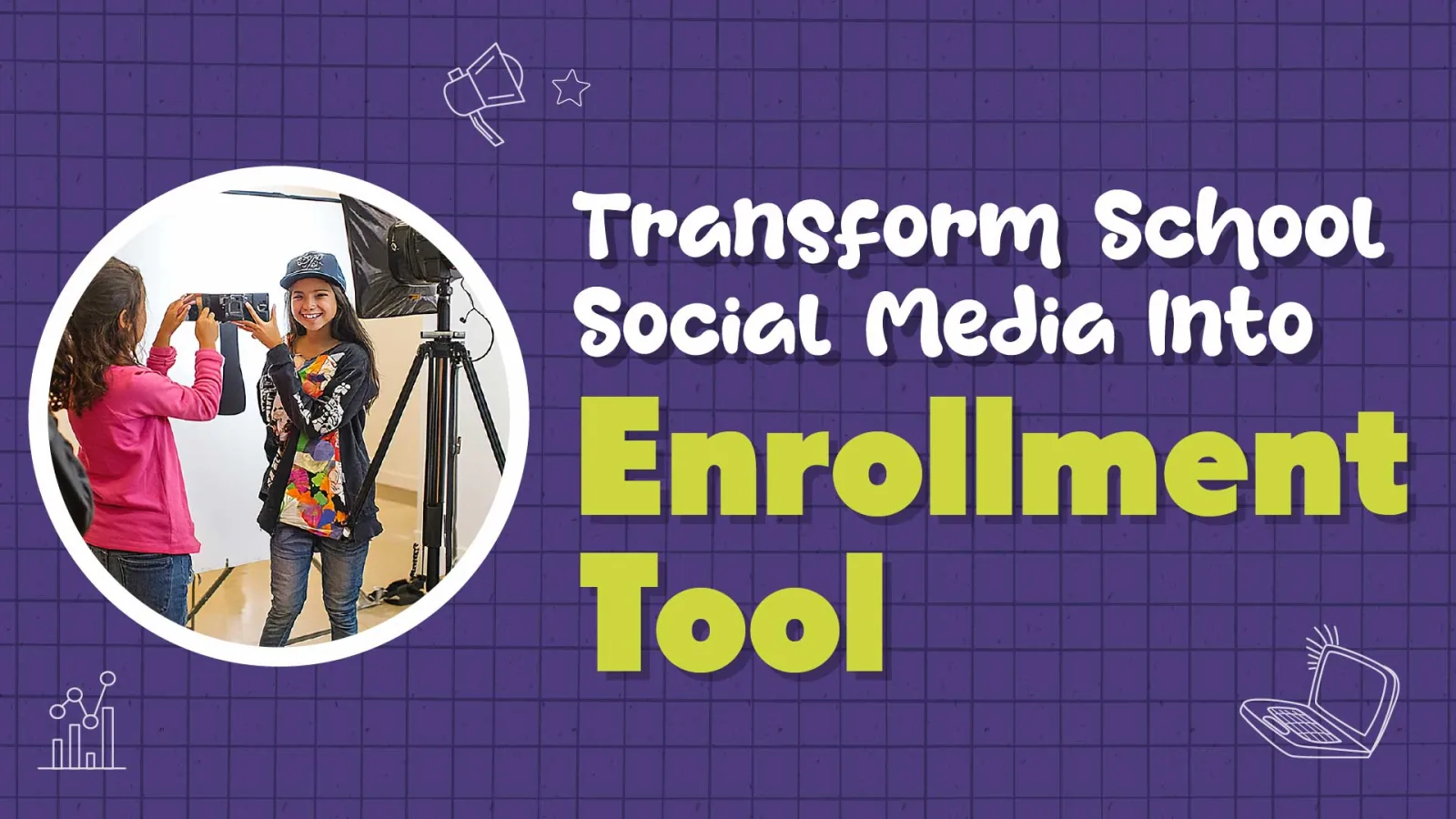
The most authentic voice your school can share is that of its students. Gen Z audiences place immense trust in peer recommendations, making student-created content uniquely powerful.
The Social Media Takeover: A highly effective tactic where a student or group of students receives temporary control of your school's Instagram or TikTok account to document their day.
Research from KALIX's guide to Instagram takeovers shows that executing a successful takeover requires:
1. Student Ambassador Selection
- Choose students who genuinely love the school
- Look for natural communicators, not necessarily the most popular
- Ensure diverse representation (grade levels, interests, backgrounds)
- Verify they understand and respect school values
2. Clear Guidelines and Training
- What can/cannot be filmed (respect privacy, appropriate content)
- Brand voice and values
- How to write captions
- Hashtag requirements
- Prohibited topics or areas
3. Defined Timeframe
- Most successful: Single day (arrival to departure)
- Aligned with a specific event (game day, field trip, special event)
- Clear start/end times
4. Approval Workflow
- Faculty sponsor reviews content before posting, OR
- Real-time monitoring with the ability to remove if needed, OR
- Student films, faculty member posts (middle-ground approach)
5. Promotion
- Announce the takeover in advance to build anticipation
- Student posts introduction and conclusion
- School amplifies by sharing to other platforms
The result: Prospective families get an unfiltered, behind-the-scenes look at actual student experience—the exact thing they're searching for but rarely find in polished marketing materials.
Faculty and Staff Spotlights: Humanizing Your Greatest Asset
A school's greatest asset is its people. Faculty and staff spotlights humanize your institution and showcase the expertise, passion, and care that define the educational experience.
SocialSchool4EDU notes in their guide to celebrating staff that these features build trust by revealing the character and quality of adults shaping children's education.
Spotlight Formats:
- Q&A with a beloved teacher (five to seven questions)
- "Why I teach at [School Name]" 60-second video
- Teacher explaining their pedagogical approach
- Staff member's professional achievement or award
- "Thank you" post highlighting someone who went above and beyond
- Teacher's hidden talent or interesting background
Pro Tip: Don't just spotlight the veteran faculty everyone knows. Highlighting your newest teachers shows you're investing in talent and provides fresh faces for prospective families to connect with.
The Equipment Reality
You don't need expensive gear. The camera on a modern smartphone produces broadcast-quality video. What you need is:
- Good lighting (natural light or a $30 ring light)
- Clean audio (a $20 lavalier mic for interviews)
- Stable shots (a $15 phone tripod)
- Basic editing app (CapCut, iMovie—both free)
Total investment: Under $100. If even $100 feels out of reach, start with just your smartphone and natural light. The newest teachers on your faculty likely already know how to create engaging short-form video—ask them for help. The barrier usually isn't equipment—it's finding time in an already packed schedule. That's why starting small matters.
Video Management Tip: For videos you're hosting on your website (like virtual tours or admissions explainers), consider using Wistia instead of uploading directly to your site. Wistia handles all the technical heavy lifting—compression, adaptive streaming, mobile optimization—so your videos load fast and look great on every device. Plus, their analytics show you exactly which parts of videos people rewatch or skip, giving you insights to improve future content.
Social Search Optimization (SSO) - The Convergence of Social and SEO
The seismic shift most schools are missing: Social media platforms are no longer just social networks. They're search engines. And families are using them as their primary research tool.
The Death of Siloed Strategies
The traditional division between "social media strategy" and "SEO strategy" is obsolete. Forward-thinking schools understand that social media platforms must be treated as powerful search engines, requiring a unified approach called Social Search Optimization (SSO).
The behavior change is clear. Niche reports in their analysis of K-12 social media trends that growing numbers of parents and students initiate school research directly on platforms like TikTok and Instagram, using them to find answers to specific questions and evaluate schools based on discovered content.
The goal is no longer creating a post that engages existing followers in a fleeting moment on their feed. The goal is to create a durable digital asset that ranks in platform-specific search results for valuable queries like "best private schools in Boston" or "high school robotics programs" weeks, months, or even years after publication.
Platform-Specific SSO Tactics
Instagram SSO:
- Use three to five highly targeted, niche hashtags per post
- Include keywords directly in captions (first sentence especially)
- Optimize your bio with searchable keywords
- Write detailed alt text for every image (accessibility + searchability)
- Use location tags consistently
- Save posts to searchable Highlights categories
TikTok SEO: Research from Hootsuite's TikTok SEO guide shows keywords must appear in three places:
- Video caption - Include primary keyword naturally
- On-screen text - Display keyword visually in video
- Spoken audio - Say the keyword aloud (TikTok transcribes and indexes spoken words)
This triple-layer optimization dramatically improves discoverability.
YouTube SEO:
- Title: Include primary keyword (front-load if possible)
- Description: First 150 characters matter most; include keywords, links, timestamps
- Tags: Mix broad and specific keywords
- Transcript: Verify auto-generated or upload an accurate transcript
- Playlists: Organize content into searchable, keyword-rich playlists
- Thumbnail text: Include keyword in thumbnail design
Facebook SSO:
- Write keyword-rich post copy (first two to three sentences visible without "See More")
- Use searchable descriptions in event pages
- Optimize group descriptions with keywords
- Create topic-specific content that answers common questions
The Content Planning Shift
SSO demands that keyword research happen during content planning, not as an afterthought. Ask:
- What are prospective families searching for?
- What questions do they have at different stages?
- What keywords describe our unique offerings?
Tools like Google Keyword Planner, AnswerThePublic, and even platform search bars themselves reveal what your audience is actually looking for.
Example: Instead of "Student Council Bake Sale Today!" (not searchable), try "Student Leadership Fundraising: How Student Council Develops Business Skills Through School Events" (searchable for multiple relevant queries).
This convergence of social and search elevates social media from a communication channel to a strategic asset for lead generation and brand discovery.
Building Your Whole-School Content Engine
The reality: Your marketing team—whether it's one person or five—cannot create enough authentic, diverse content alone to compete effectively in 2026. The solution isn't hiring more marketers. It's transforming your entire school into a content engine.
The Internal Sell: Getting Buy-In
The most common challenge schools face is internal. Faculty and staff see social media as "the marketing department's job," not theirs. Changing this mindset requires the internal sell.
Frame It Around Mission: Connect social media to why everyone chose education. "Our mission is to prepare students for the future. Today's world requires digital citizenship and personal branding. By creating content together, we're not just marketing—we're modeling the skills we want students to develop."
Address the Fear: Many educators fear social media—worried about mistakes, time commitment, or not understanding platforms. Provide training that demystifies the process and sets clear, achievable expectations.
Show Quick Wins: Pilot with willing early adopters when a teacher's classroom video gets 500 views and leads to an inquiry call, share that win schoolwide. Success breeds participation.
Training Faculty as Content Contributors
Research shows a direct correlation between leadership's perceived importance of digital marketing and its effectiveness. When the Head of School views social media as a strategic priority, the marketing team is better resourced and empowered to succeed.
Training Program Components:
- Why This Matters (30 minutes): Connection to enrollment, retention, mission
- Platform Basics (45 minutes): How Instagram/Facebook/TikTok work, what performs well
- Content Ideas for Educators (45 minutes): Classroom moments, student work, teaching philosophy
- Practical How-To (60 minutes): Filming on phone, basic editing, writing captions
- Boundaries and Guidelines (30 minutes): What can/can't be shared, approval process, brand voice
- Q&A and Concerns (30 minutes): Address fears, clarify expectations
Make It Easy:
- Provide shot lists of content types they can capture
- Create caption templates that they can customize
- Set realistic expectations (two to three posts per semester, not per week)
- Have the marketing team handle editing if needed
- Celebrate and share their content schoolwide
Plan for 20-30% participation from trained faculty. If you train 15 teachers and five become regular contributors generating two posts monthly each, that's 10 additional authentic posts per month—substantially expanding your content output without burning out your marketing team.
Student Ambassadors: Selection, Training, Boundaries
Student ambassadors serve a dual purpose: creating authentic content AND developing valuable personal branding skills.
Selection Criteria:
- Genuine enthusiasm for the school (not just resume padding)
- Represents your diverse student body
- Reliable and responsible
- Strong communication skills
- Understands digital citizenship
Training Topics:
- Brand voice and school values
- What makes good content (storytelling, not just selfies)
- Technical skills (filming, editing basics)
- Privacy and consent (never film someone without permission)
- Appropriate versus inappropriate content
- How to handle negative comments
- Time management (balancing with academics)
Clear Boundaries:
- Content approval process (if any)
- No filming in private spaces (locker rooms, bathrooms)
- Respect others' privacy and dignity
- No controversial topics without guidance
- Represent the school positively (but authentically)
- Require written parent/guardian permission for any student to participate in the ambassador program
- Never include the last names of minors in public social media posts
Recognition: Feature ambassadors on website, provide recommendation letters, create certificate program, offer small perks (school swag, lunch with administration).
The Role of School Leadership
Leadership's public support makes or breaks this initiative. When the Head of School shares content, thanks contributors in faculty meetings, and references social media in strategic discussions, it signals importance.
Leadership Actions That Matter:
- Publicly recognize content contributors
- Include social media metrics in board reports
- Participate in content creation (student interviews, thought leadership)
- Resource the marketing team appropriately
- Defend the strategy when questioned
Creating Sustainable Content Pipeline
The goal is a self-sustaining system where content flows consistently without marketing team burnout.
Pipeline Structure:
- Tier 1 (Marketing Team): Strategic planning, platform management, high-priority content
- Tier 2 (Faculty Contributors): Classroom content, student showcases, teaching insights
- Tier 3 (Student Ambassadors): Student perspective, event coverage, peer stories
- Tier 4 (Parent Volunteers): Event photography, testimonials, community perspective
Each tier has clear expectations, training, and support. The marketing team curates and refines, but doesn't create everything.
Result: Diverse, authentic content that reflects the full richness of school life—something no single marketing team could produce alone.
Measuring What Actually Matters - Proving ROI to Leadership
Followers don't pay tuition. Likes don't cover operational costs. For social media to maintain its position as a strategic priority deserving investment, marketing leaders must demonstrate value in terms that school leadership understands.
Beyond Vanity Metrics
"Vanity metrics" look impressive but don't connect to business outcomes. Followers, likes, and even engagement are vanity metrics if they're not part of a larger conversion story.
Here's the reframe marketing directors must make when presenting to leadership:
Followers aren't just a number—they're potential brand ambassadors who will share your content and recommend your school.
Engagement (likes, comments, shares) isn't just interaction—it's active participation in your school community and a signal of content resonance.
Shares aren't just content distribution—they're word-of-mouth recommendations from trusted sources with exponential reach.
This reframing helps leadership see the qualitative value. Yet it's not enough. You need quantitative data connecting social media activity to enrollment.
The Metrics That Connect to Enrollment
Cube Creative Design's analysis of social media metrics identifies the KPIs that truly matter by tracking a prospective family's journey from social media to the admissions office.
1. Click-Through Rate (CTR) - Percentage of people who saw a post and clicked a link. This measures how effectively social media drives traffic to your website—the primary conversion hub.
Benchmark: 1-3% is typical; 3-5%+ is excellent.
2. Conversion Rate - The most important metric. Percentage of website visitors arriving from social media who complete a desired action (inquiry form submission, open house registration, admissions guide download).
How to Track: Use UTM parameters in all social media links. In Google Analytics, track behavior flow from social sources to conversion goals. If you're using HubSpot, this tracking happens automatically—the platform shows you exactly which social posts drove inquiries, which families engaged with multiple touchpoints, and the complete journey from first click to enrolled student.
For instance, if 1,000 people visit your website from Instagram in a month and 30 complete inquiry forms, your conversion rate is 3%—strong performance, indicating your Instagram content attracts genuinely interested families.
3. Cost Per Inquiry / Cost Per Application / Cost Per Enrollment - By tracking advertising spend and staff time against leads, applications, and enrollments generated through social channels, schools calculate precise financial return on investment.
Example Calculation:
- Instagram ad campaign: $2,500 spent
- Generated: 50 inquiries (Cost Per Inquiry = $50)
- Led to: 15 applications (Cost Per Application = $167)
- Resulted in: five enrollments (Cost Per Enrollment = $500)
- First-year tuition revenue: five students × $25,000 = $125,000
- ROI: 2,400% (accounting for full enrollment value over 13 years would be even more dramatic)
Important Note: This example represents an ideal scenario. Your results will vary based on tuition level, market competition, and campaign execution. Most schools see a return on investment ranging from 200 to 800% on well-executed social campaigns. Additionally, these numbers assume consistent enrollment through graduation—plan for 10-20% attrition over a student's tenure when calculating lifetime value.
This calculation speaks the language of CFOs and Heads of School.
Real-World Results: The Data-Driven Transformation
This framework isn't theoretical—schools implementing data-driven strategies are seeing measurable results. Research analyzing social media transformations in educational institutions found that schools are shifting from promotional posts to authentic storytelling while rigorously tracking metrics achieved:
- Notable increases in qualified admissions inquiries
- Improved website traffic from social channels
- Positive return on investment on social media investments based on new enrollment attribution
- Enhanced parent satisfaction and community engagement
The shift wasn't about spending more—it was about strategically aligning content with what prospective families actually wanted to see and measuring the results that mattered to leadership. One institution implementing this approach surveyed parents to identify preferred platforms, then concentrated resources on those channels rather than attempting to maintain a presence everywhere. They trained faculty to contribute authentic classroom content and established clear success metrics tied to enrollment goals.
The outcomes weren't just about numbers on a dashboard. Qualitative indicators showed stronger community morale, more positive word-of-mouth referrals, and families arriving for campus visits already deeply familiar with the school's culture and values. This pre-qualification meant higher conversion rates from tour to application.
Engagement Rate Benchmarks for K-12 Schools
To evaluate performance, schools need external reference points. ed2market's 2025 K-12 marketing benchmarks provide current engagement rate standards for the K-12 education sector:
| Platform | 2025 K-12 Benchmark | Industry Range | Good Performance | Key Engagement Driver |
|---|---|---|---|---|
| 3.6% | 0.5% - 4.0% | >1.0% | Community-focused content, questions prompting discussion, and photo albums | |
| 4.7% | 0.5% - 4.0% | >1.0% | High-quality visuals, Reels, student-centric stories, behind-the-scenes | |
| 1.8% | 0.5% - 4.0% | >1.0% | Faculty expertise, alumni success, thought leadership, achievements |
Note: Engagement rate is typically calculated as (Total Engagements ÷ Total Reach or Followers) × 100. A rate above 1% is generally considered good, while rates below 0.5% are considered low.
These benchmarks help answer the board's inevitable question: "How do we know if we're doing well?"
The ROI Narrative: Combining Data with Story
The most persuasive presentations to leadership combine hard data with compelling stories that illustrate broader impact.
The Dual Approach:
Quantitative Analysis: "Our targeted Instagram Reels campaign highlighting our STEM program generated 50 qualified inquiries at a cost of $100 per inquiry. This led to 15 applications and ultimately five new student enrollments, representing $125,000 in first-year tuition revenue on a $5,000 investment. That's a 2,400% return on investment in year one, with these students potentially staying through graduation."
Qualitative Narrative: "Furthermore, our 'Teacher Tuesday' spotlight series, which had no direct ad spend, was shared extensively by current parents and led to two unsolicited applications from highly qualified teaching candidates. It has become a significant point of pride within our community, strengthening parent satisfaction and fueling the positive word-of-mouth referrals essential for long-term retention. One prospective parent told me during a tour that she started following us on Instagram six months before reaching out, and those teacher spotlights convinced her our faculty were exactly who she wanted teaching her daughter."
This combined approach satisfies fiscal accountability while demonstrating deep mission alignment. It proves social media isn't an expense—it's one of the most powerful investments a school can make. The quantitative data justifies the budget to the CFO and board. The qualitative narrative connects to the mission and values that drove everyone into education in the first place. Both are essential for sustained support and investment in social media as a strategic priority.
Future-Proofing Your Strategy - What's Coming in 2026 and Beyond
The online environment never stands still. To thrive in 2026 and beyond, K-12 private school marketing leaders must stay informed about emerging trends and adapt quickly.
AI Integration in Social Media Marketing
Artificial Intelligence is moving from science fiction to practical, everyday applications. As school marketing expert Brendan Schneider notes in his interview with Blue Ocean Global Technology, this technology is particularly exciting for school environments. "School marketers' offices tend to be overworked, understaffed, and underfunded," he states, "and the possibility of AI to help them do more excites me."
Current AI Applications:
- AI-driven chatbots managing 24/7 website communications, answering common questions, and scheduling tours
- Automated ad optimization improving targeting and efficiency
- Content creation assistance for captions, ideas, and editing
- Analytics and reporting automation, freeing time for strategy
2026 Evolution: AI will become more sophisticated in personalization, predicting which content resonates with specific audience segments and automatically adjusting strategies.
HubSpot AI Features: If you're using HubSpot, their AI tools can already help draft social media captions, suggest optimal posting times based on your audience's behavior, and even generate first drafts of blog content that you can refine and publish. It's not about replacing human creativity—it's about giving you a head start so you can focus on strategy rather than staring at a blank screen.
Interactive Video - The Next Frontier
The nature of video content itself is evolving. QQV Media's analysis of video marketing trends shows that interactive video transforms audiences from passive viewers into active participants.
Interactive Formats:
- "Choose-your-own-adventure" virtual tours (viewer selects which building to explore next)
- Polls and quizzes embedded directly into videos
- Clickable hotspots providing additional information
- Branching narratives based on viewer interest
Benefits: Dramatically increased engagement, valuable data on viewer preferences and interests, and a personalized experience.
Tool Note: Wistia supports interactive elements like clickable calls-to-action, email capture forms, and chapter markers that allow viewers to jump to specific sections. If you're creating a comprehensive virtual tour, you could use chapters to let families navigate directly to "Athletics Facilities" or "Science Labs" without watching the entire 10-minute video.
The Permanence of Social Search
Social platforms functioning as search engines isn't a trend—it's the new reality. Schools must permanently integrate keyword research and on-platform optimization into core content workflows.
Strategic Imperative: Every piece of content should be evaluated through the lens: "Will families searching for [relevant topic] find this?"
Data-Driven Personalization at Scale
By using analytics to understand user behavior, schools can move beyond generic messaging to deliver highly relevant content tailored to a family's specific interests—arts, STEM, athletics, and college prep.
This personalized approach must be delivered through a cohesive omnichannel strategy, ensuring a family's experience with your brand is consistent across every touchpoint—from the first Instagram ad they see to the follow-up email after an open house.
Automation Example: Using HubSpot's workflows, you can automatically segment families based on their interests (tracked through which pages they visit on your website and which social posts they engage with), then deliver personalized email nurture sequences. A family that engages heavily with your athletics content gets a different email series than one focused on your arts program. This level of personalization used to require a massive marketing team; now it's automated.
Budget-Friendly Alternative: If HubSpot isn't in your budget, free tools like Buffer or Later can handle basic scheduling across multiple platforms, while Google Analytics (free) tracks website behavior to inform your content strategy.
The Constant: Authenticity
Amidst technological change and strategic complexity, the most important guiding principle remains timeless: authenticity. A school's messaging, regardless of platform or technology, must always reflect its core values and mission.
Niche emphasizes in their social media trends analysis that the most resilient strategies "focus on enduring strategies, like short-form video, storytelling, and community engagement, that remain impactful regardless of platform changes."
Technology changes. Platforms rise and fall. Yet authentic storytelling that genuinely reflects who you are and honestly portrays student experience never goes out of style.
Your Action Plan for Social Media Success
The gap between strategy and execution is where many schools struggle—often due to competing priorities, not lack of commitment. Here are five immediate actions your school should take to translate this guide into results:
1. Audit Your Current Social Presence and Performance
Before you can improve, you need baseline data.
- What platforms are you on? Which are dormant?
- What's your current engagement rate by platform?
- What content types perform best?
- Where do most inquiries come from?
- What are competitors doing well?
Timeline: Complete within two weeks.
2. Implement Platform-Specific SSO Tactics
Start with your two strongest platforms.
- Conduct keyword research for your market.
- Optimize existing high-performing content
- Create five pieces of new content designed for search discoverability
- Track which queries drive traffic
Timeline: Launch within one month.
3. Build Internal Content Engine and Training
You can't do this alone.
- Identify three to five faculty early adopters
- Conduct the first training session
- Create a simple content submission process
- Pilot student ambassador program with two to three students
Timeline: Establish structure within six weeks.
4. Establish ROI Tracking from Social to Enrollment
Connect the dots between activity and outcomes.
- Implement UTM parameters on all social links.
- Set up Google Analytics goals for conversions (or use HubSpot's built-in tracking)
- Create a simple reporting dashboard
- Schedule monthly return on investment reviews
Timeline: Set up tracking within three weeks.
5. Commit to Authentic Storytelling Over Promotional Content
Shift the balance.
- Apply the 80/20 rule to the content calendar
- Identify stories across five content pillars
- Give students and teachers a voice
- Measure both engagement AND conversion
Timeline: Immediate implementation.
If this seems overwhelming, start with just one or two actions. Even small improvements in your social strategy will yield results. Most schools begin with auditing their current performance and implementing basic return on investment tracking—these two steps alone provide clarity on what's working and what needs attention.
The Gap Between Strategy and Implementation
If you're like most school marketing directors I talk with, you're thinking some version of: "This all makes sense. I know what we should be doing. But between managing the website, planning next week's open house, responding to this morning's crisis, and the seventeen other things on my list, actually implementing this feels impossible."
That gap—between knowing the strategy and actually executing it—is where most private school social media efforts stall out. Not because marketing directors lack competence or commitment. Because they're managing too many priorities with too few resources, while leadership expects measurable results.
The schools that break through that gap share a common pattern: They stop trying to do everything themselves. They build systems that work while they sleep. They turn their faculty and students into content contributors. They focus ruthlessly on the platforms and tactics that actually drive enrollment rather than spreading themselves thin across every possible channel.
But here's what they don't do: They don't figure it all out in isolation while juggling a dozen other responsibilities.
What Happens Next
The families who will fill your classrooms in 2026 and 2027 are researching schools right now. Not next quarter when you finally have time to "get serious about social media." Right now. On Instagram. On TikTok. In Facebook groups. They're comparing schools, asking questions, forming impressions.
The question isn't whether your school appears in those searches and conversations. The question is whether what they find when they look represents your school accurately and compellingly—or whether they're finding your competitors instead.
If you're reading this and thinking, "We need to transform our approach, but I can't figure out how to make it happen with everything else on my plate," let's have a conversation about what that actually looks like for your school. Not a sales pitch. A strategic discussion about which pieces you can realistically implement internally, which pieces need outside support, and what the path from "we know we should be doing this" to "we're actually doing this consistently" looks like for your specific situation.
Because the schools winning the enrollment battle in 2026 aren't the ones with the biggest budgets or fanciest production equipment. They're the schools that stopped trying to do everything alone and started building systems that actually work.
Frequently Asked Questions
How Do We Measure ROI When Families Research for Months Before Inquiring?
The extended research timeline (often six to 18 months) makes attribution challenging but not impossible. Implement a multi-touch attribution model that tracks the entire customer journey.
Start by using UTM parameters on all social media links to identify which platforms drive website traffic. In Google Analytics, set up goals tracking inquiry form submissions, open house registrations, and admissions guide downloads, then analyze the behavior flow from social sources. If you're using HubSpot, this becomes even easier—the platform automatically tracks every touchpoint a family has with your school, from first social media click through email opens to website visits, showing you the complete journey to enrollment.
Survey every new inquiry: "How did you first hear about our school?" and "Where did you research us online?" This provides qualitative data complementing analytics. For families who enroll, conduct a detailed conversation during the process to understand their full research journey—most will mention specific social media content that influenced them.
Track "assisted conversions" in addition to "last-click" attribution, recognizing that social media often plays an important early-stage awareness role even if families ultimately convert through a different channel.