Sarah stared at the tiny black dots marching across her kitchen counter, her morning coffee forgotten. These weren't just any ants – they were the same persistent invaders that had sent her previous pest control company on four failed missions. Frustrated, she pulled out her phone, but instead of calling the same company again, she opened Instagram.
Twenty minutes later, she had found her solution. Not from an ad, but from a local pest control company's profile filled with before-and-after photos, educational Reels about different ant species, and genuine customer reviews. Their latest post? A time-lapse video showing how they solved an identical ant problem using pet-safe treatments. She clicked their bio link and scheduled an appointment before her coffee even got cold.
This isn't just a story – it's happening thousands of times every day. Modern customers like Sarah aren't reaching for the phone book or calling the first Google Ad they see. They're researching, watching, and deciding based on social media presence. They want to see proof, understand your process, and trust your expertise before they ever pick up the phone.
Here's the million-dollar question: When they search, are they finding your pest control company, or just your competitors?
Most pest control companies are missing out on these customers because they're stuck in the past. They're either completely invisible on social media or posting the same tired content that nobody engages with.
I've helped dozens of companies transform their social media from dead zones into lead-generating machines. This guide shares the exact strategies working in 2025 – no fluff, just proven methods that drive real business growth.

Written By: Hannah Kilpatrick | March 17, 2025
Hannah Kilpatrick Cube Creative DesignHannah Kilpatrick graduated from Western Carolina University in 2021 with a Bachelor of Science in Communication with a Minor in Marketing and a Concentration in Public Relations. She has been around social media since its creation. (Meaning, she was in the first grade when Facebook became available to the general public.) As our very own professional Gen-Z, Hannah is a whiz when it comes to social media creation and paid advertising.
Are you tired of watching potential customers scurry away to your competitors? In the pest control industry, attracting new customers can sometimes feel like trying to catch flies with chopsticks – frustrating and inefficient.
As a pest control business owner, you're likely all too familiar with the challenges: seasonal revenue swings that leave you scrambling during slow months, the pressure to respond instantly to emergency calls, and the constant battle against big national chains with their massive marketing budgets not to mention the rising customer acquisition costs that can eat away at your profits faster than termites through a wooden beam.
Many pest control businesses face these exact challenges. The turning point often comes when they develop a systematic marketing approach rather than relying on sporadic, reactive marketing efforts
In this comprehensive guide, we'll explore proven strategies to help your pest control business stand out from the swarm of competitors. You'll discover how to build a digital presence that attracts qualified leads, leverage social proof to build trust, create content that positions you as the local pest control authority, and implement systems that turn one-time customers into loyal advocates. Let's exterminate your marketing problems once and for all.

Written By: Chad J. Treadway | March 12, 2025
Chad is our Chief Smarketing Officer. He will help you survey your small business needs, educating you on your options before suggesting any solution. Chad is passionate about rural marketing in the United States and North Carolina. He also has several certifications through HubSpot to better assist you with your internet and inbound marketing.
In the pest control industry, where customer relationships can last for years, email remains one of the most powerful tools in your marketing arsenal. With an ROI of $36-42 for every $1 spent, email marketing continues to outperform nearly every other digital channel. But here's the catch—sending generic "spray and pray" emails won't cut it anymore. Today's customers expect personalized, timely, and relevant communications.
Let's face it, nobody wakes up excited to read about rodent infestations while sipping their morning coffee—unless that coffee happens to be sitting next to a mouse trap. That's precisely why strategic email marketing is crucial; it helps you communicate essential information in a way that engages rather than annoys your subscribers.
Written By: Chad J. Treadway | March 12, 2025
Chad is our Chief Smarketing Officer. He will help you survey your small business needs, educating you on your options before suggesting any solution. Chad is passionate about rural marketing in the United States and North Carolina. He also has several certifications through HubSpot to better assist you with your internet and inbound marketing.
It's Tuesday morning, peak season. You're sitting in your office, watching yet another competitor's truck buzz by your window. (Speaking of buzz, that's more action than your phone's seen all week.) Your technicians are giving you that look – the one that says, "So... when's our next job?" Meanwhile, the stack of bills on your desk is starting to look taller than the termite tunnel you treated last month.
If this scenario makes you squirm in your seat, you're not alone. Every pest control business owner has been there, caught in the feast-or-famine cycle that can bug even the most seasoned professionals.
Here's the good news: You don't have to stay trapped in this feast-or-famine cycle. Just like you help customers eliminate pest problems, we're going to help you eliminate your lead generation problems with proven lead generation strategies that work specifically for pest control businesses.
Ready to start attracting leads like mosquitoes to a backyard barbecue? Let's dive in and build a lead generation system that keeps your schedule full and your team busy.
Written By: Chad J. Treadway | March 12, 2025
Chad is our Chief Smarketing Officer. He will help you survey your small business needs, educating you on your options before suggesting any solution. Chad is passionate about rural marketing in the United States and North Carolina. He also has several certifications through HubSpot to better assist you with your internet and inbound marketing.
If you've been following tech news lately (or if your phone has been bombarding you with alerts about Google), you've likely heard rumblings about Google's "Chrome divestiture." As a pest control business owner, you might wonder if this is yet another digital apocalypse that threatens to exterminate your hard-earned online presence.
First, take a deep breath. While the words "Google" and "changes" in the same sentence are enough to send shivers down any business owner's spine—rivaled only by the words "termite infestation" in your own customers’ homes—the situation isn't as dire as some headlines suggest.
The digital marketing landscape has always been something of a moving target. Just when you've figured out how to rank for "best pest control near me," something shifts. But here's the good news: understanding these changes gives you a competitive advantage, and with the right approach, your pest control business won't just survive—it might even thrive.
In this article, I'll break down what's actually happening with Google Chrome, how it affects your pest control website, and the practical steps you can take to ensure customers still find you when they're frantically searching "how to get rid of bedbugs at 2 AM" (we know these searches happen, and yes, your business should be there when they do).
Written By: Chad J. Treadway | March 11, 2025
Chad is our Chief Smarketing Officer. He will help you survey your small business needs, educating you on your options before suggesting any solution. Chad is passionate about rural marketing in the United States and North Carolina. He also has several certifications through HubSpot to better assist you with your internet and inbound marketing.
Let's get real about social media marketing for pest control. While other guides give you the basics, I'm going to share what's actually working right now for pest control companies. After managing social media for multiple pest control brands, I've learned exactly what drives engagement, how to attract new leads, and most importantly - actual bookings.
Written By: Hannah Kilpatrick | March 10, 2025
Hannah Kilpatrick Cube Creative DesignHannah Kilpatrick graduated from Western Carolina University in 2021 with a Bachelor of Science in Communication with a Minor in Marketing and a Concentration in Public Relations. She has been around social media since its creation. (Meaning, she was in the first grade when Facebook became available to the general public.) As our very own professional Gen-Z, Hannah is a whiz when it comes to social media creation and paid advertising.
As temperatures rise, so do pest populations—and customer inquiries. Spring represents the perfect storm for pest control companies: warming weather awakens dormant pests while homeowners emerge from their own winter hibernation, ready to address household issues. This seasonal alignment creates the ideal marketing opportunity that can set the tone for your entire year's success.
The pest control industry sees a predictable surge in demand each spring, but capturing market share requires more than simply opening your doors. A strategic marketing approach during this critical season can help you not only attract immediate business but also establish recurring revenue streams that continue throughout the year.
This guide will help you develop a comprehensive spring marketing strategy that leverages seasonal triggers, targets the right audiences, and deploys effective tactics across multiple channels. Whether you're looking to spray away the competition or ensure your business doesn't get bugged by missed opportunities, these strategies will help your pest control business thrive when it matters most.
Written By: Chad J. Treadway | March 05, 2025
Chad is our Chief Smarketing Officer. He will help you survey your small business needs, educating you on your options before suggesting any solution. Chad is passionate about rural marketing in the United States and North Carolina. He also has several certifications through HubSpot to better assist you with your internet and inbound marketing.
Let's face it – running a pest control business means you're great at eliminating unwanted visitors but attracting the right ones (customers, that is) can feel like trying to catch a greased rodent. While your competitors might be scrambling like cockroaches when the lights come on, you're about to learn how to make your marketing strategy as targeted as your most effective pest treatments.
Here's the thing: in today's digital world, having the best pest control service isn't enough. You need a marketing approach that works as hard as you do – one that doesn't just catch customers' attention but keeps them coming back. Whether you're an established exterminator looking to expand your territory or a startup ready to make your mark in the industry, this comprehensive guide will help you build a customer base that's more loyal than a colony of termites (but significantly better for business).
What's eating away at your growth potential? Let's squash those marketing challenges and transform your pest control business into the go-to solution in your service area.
Written By: Chad J. Treadway | March 05, 2025
Chad is our Chief Smarketing Officer. He will help you survey your small business needs, educating you on your options before suggesting any solution. Chad is passionate about rural marketing in the United States and North Carolina. He also has several certifications through HubSpot to better assist you with your internet and inbound marketing.
In the competitive world of digital marketing, choosing the right agency partner can make or break your business's online success. A recent story from a pest control company serves as a powerful reminder of what's at stake when making this crucial decision.

Written By: Adam Bennett | March 03, 2025
Adam is the president and founder of Cube Creative Design and specializes in private school marketing. Since starting the business in 2005, he has created individual relationships with clients in Western North Carolina and across the United States. He places great value on the needs, expectations, and goals of the client.
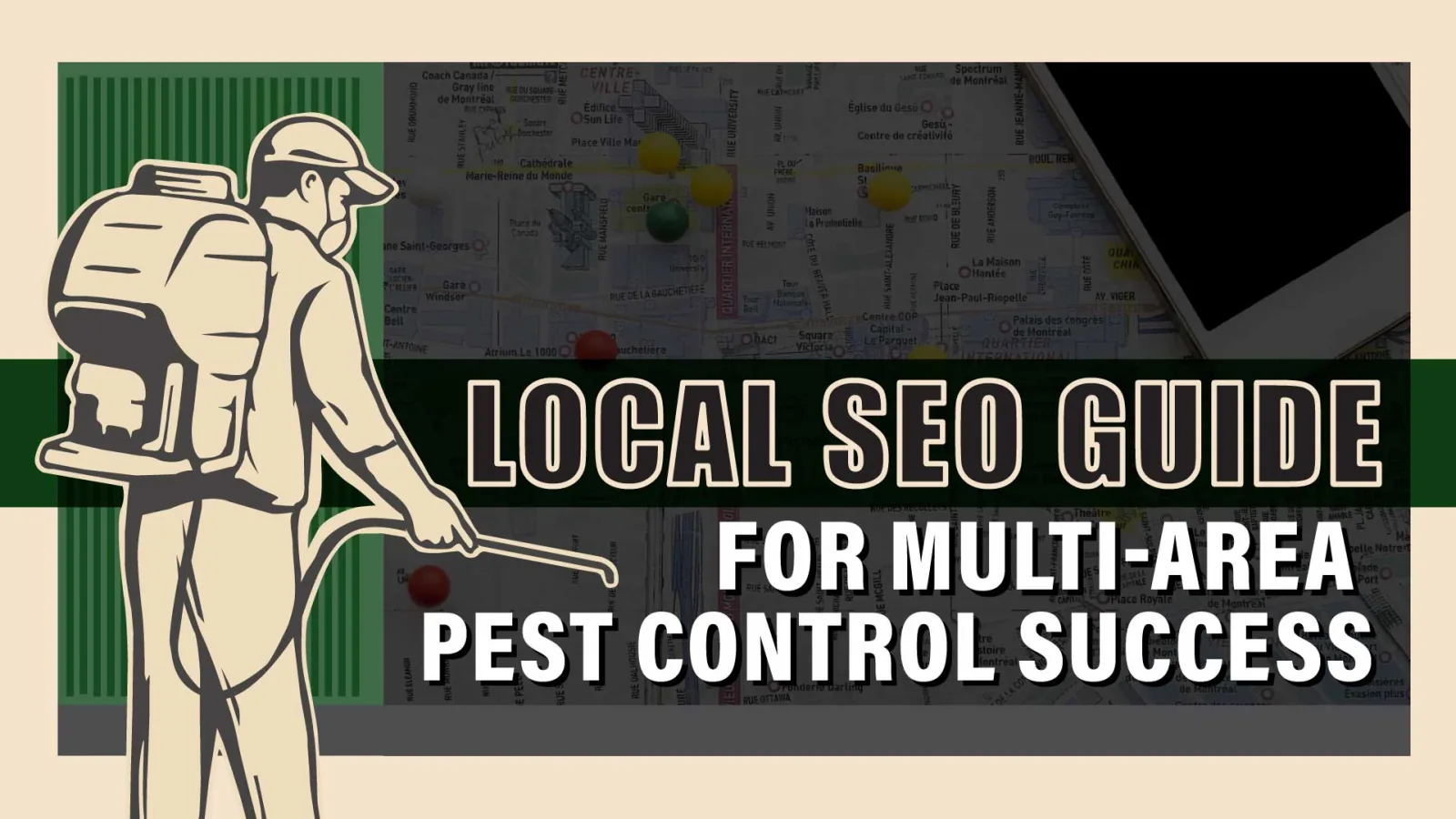
Your pest control company's reputation is solid. Customers love your service, referrals are strong, and your team handles every job with expertise. There's just one problem: while you serve multiple communities, Google seems stuck showing your business only in your home territory.
You know the challenge well. A homeowner in a neighboring city searches for pest control, but your business doesn't show up in their results—even though you serve their area daily. Meanwhile, the calls keep coming in from further afield. Your actual service area grows while your digital footprint stays stubbornly local.
The question facing every expanding pest control company is clear: How do you effectively market your services and rank in Google searches across all your service areas without opening physical offices in each location?
Written By: Chad J. Treadway | February 26, 2025
Chad is our Chief Smarketing Officer. He will help you survey your small business needs, educating you on your options before suggesting any solution. Chad is passionate about rural marketing in the United States and North Carolina. He also has several certifications through HubSpot to better assist you with your internet and inbound marketing.
It was a quiet Tuesday morning when Gary, a pest control business owner, noticed something unusual in his service calendar - empty slots, far too many of them. Just six months ago, his phone was ringing off the hook. Now? Cricket chirps would be an improvement (and at least those would be paying customers).
The feast-or-famine cycle in pest control services isn't just a nuisance - it's a business killer. But here's the thing: while Gary was scratching his head over empty appointment slots, his competitor across town was turning away business. The difference? A strategic approach to digital lead generation.
Written By: Chad J. Treadway | February 19, 2025
Chad is our Chief Smarketing Officer. He will help you survey your small business needs, educating you on your options before suggesting any solution. Chad is passionate about rural marketing in the United States and North Carolina. He also has several certifications through HubSpot to better assist you with your internet and inbound marketing.
It's 2:17 AM. Sarah's finally gotten her colicky six-month-old back to sleep when she hears it – the unmistakable scurrying sound coming from behind the nursery wall. In a panic, she grabs her phone and types: "emergency pest control near me."
In the next 30 seconds, two pest control companies will compete for Sarah's business. One will show up prominently in her local search results, complete with five-star reviews, clear emergency contact information, and proof of 24/7 service. The other... well, they might be just as qualified, just as close, and just as ready to help – but Sarah will never know because they're buried on page two of the search results.
Which company will you be?
In 2025, 97% of your potential customers will find you exactly like Sarah did – through local search, often in moments of urgent need. Whether it's a midnight rodent discovery, a Sunday morning bee swarm, or a basement termite revelation, your future customers are searching for you right now.
But here's the challenge: showing up when and where they need you isn't about luck. It's about strategy.
In this guide, I will walk you through a comprehensive step-by-step strategy to improve your local visibility. No technical jargon without explanation, no tactics without context – just clear, actionable steps to help your pest control business climb those local rankings and be there when customers need you most.
Consider this your pest control plan for unwanted ranking issues. Just as you wouldn't start a pest treatment without proper inspection and planning, we'll methodically address each aspect of your local SEO strategy to ensure lasting results.
Written By: Chad J. Treadway | February 12, 2025
Chad is our Chief Smarketing Officer. He will help you survey your small business needs, educating you on your options before suggesting any solution. Chad is passionate about rural marketing in the United States and North Carolina. He also has several certifications through HubSpot to better assist you with your internet and inbound marketing.