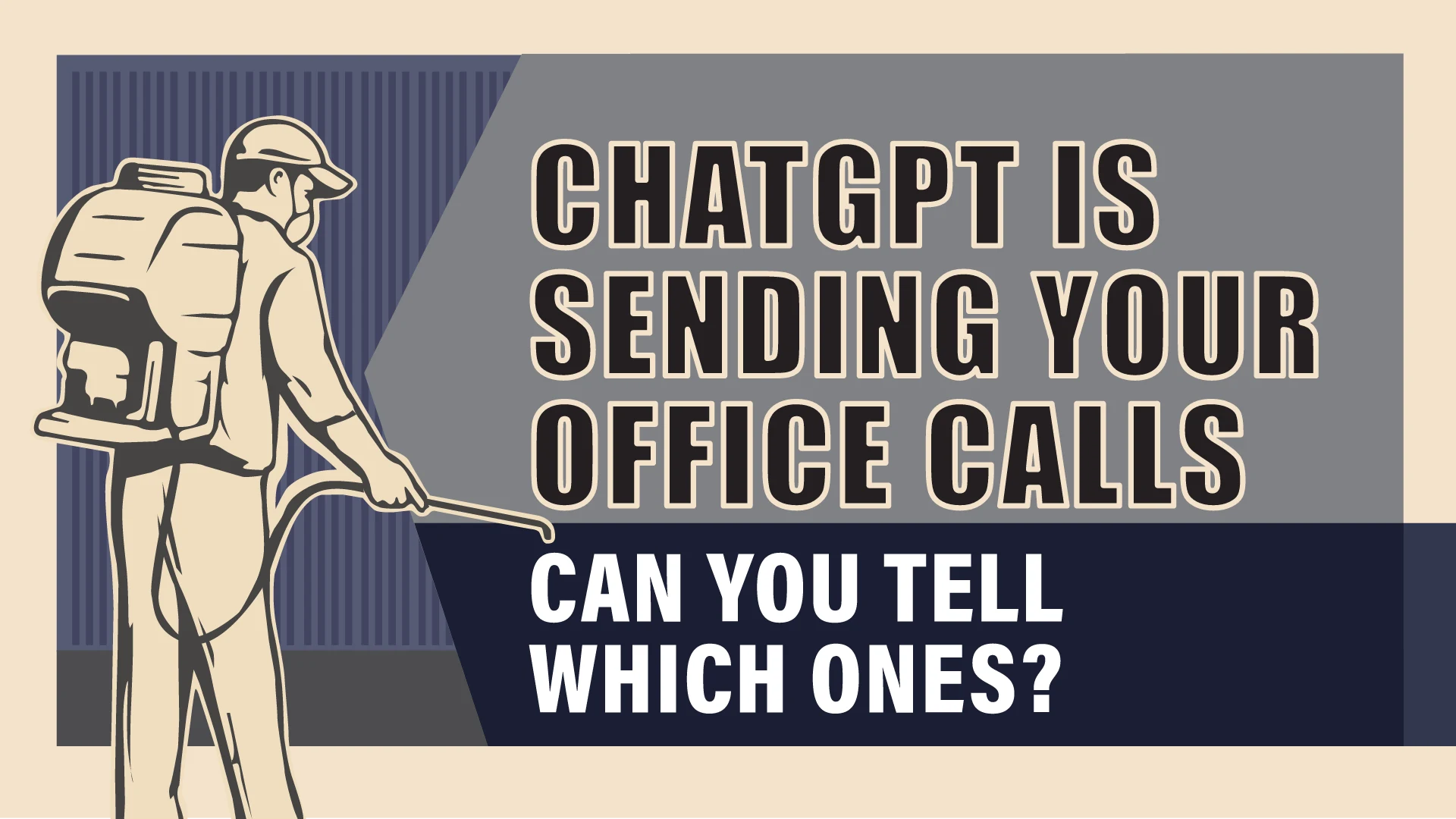
Picture this: You're celebrating 200 leads this month from your fancy integrated marketing system. Your CRM is automatically populating appointments, your technicians' routes are optimized, and everything feels seamless. Then you run the numbers and realize only 15 of those 200 leads became paying customers. Suddenly, that "efficient" system doesn't look so efficient.
In our previous posts, we've covered hidden costs, ownership illusions, and red flags in pest control marketing. Now let's tackle the biggest selling point agencies use: seamless integration. That magical promise where leads flow directly from your website into ServiceTitan, FieldRoutes, or whatever CRM you're using sounds like a dream until you calculate what those automated leads actually cost you.
Here's what most business owners discover too late: convenience and profitability aren't the same thing. While your integrated system is busy flooding your CRM with every tire kicker who Googled "ant problem," your competitors who use quality-focused manual processes are closing deals and building sustainable businesses. The math might surprise you—and it definitely surprised me when I first crunched these numbers.

Written By: Chad J. Treadway | October 10, 2025
Chad is our Chief Smarketing Officer. He will help you survey your small business needs, educating you on your options before suggesting any solution. Chad is passionate about rural marketing in the United States and North Carolina. He also has several certifications through HubSpot to better assist you with your internet and inbound marketing.
Picture this: You're six months into a marketing contract when you realize something's wrong. Your website needs a simple update, but you're told it'll take "2-3 weeks to queue." You want to check your Google Ads performance directly, but you're redirected to a "custom dashboard." You ask about contract flexibility, and suddenly there's talk of $15,000 termination fees.
Sound familiar? You're not alone.
In earlier posts, we've covered hidden costs that drain your budget and ownership illusions that trap your business. Now, let's talk prevention. Whether you're evaluating your current agency relationship or shopping for a new one, these red flags will help you spot problematic partnerships before they cost you thousands.
The best part? Every red flag comes with specific questions you can ask today to protect your business tomorrow.
Written By: Chad J. Treadway | October 09, 2025
Chad is our Chief Smarketing Officer. He will help you survey your small business needs, educating you on your options before suggesting any solution. Chad is passionate about rural marketing in the United States and North Carolina. He also has several certifications through HubSpot to better assist you with your internet and inbound marketing.
Picture this: You've invested $25,000 in a professional website and digital marketing setup for your growing pest control business. The contract says you "own" everything. Then you decide to switch marketing agencies and discover your expensive website can't be moved to another provider. The agency holds your digital assets hostage, demanding thousands more to "release" what you thought you already owned.
Sound familiar? You're not alone.
You wouldn't lease your service trucks and call them "owned." So why are you doing it with your website and marketing data? In the pest control industry, where seasonal fluctuations and competitive pressures already challenge your cash flow, getting trapped in a digital rental agreement can cripple your pest control marketing growth plans.
This isn't just about contracts and fine print—it's about your business's strategic independence. When you can't control your own digital presence, you can't pivot quickly during slow seasons, can't integrate with new pest management software, and can't leverage your marketing data to make smarter business decisions.
Let's cut through the marketing speak and examine what "ownership" actually means when it comes to your pest control company's digital assets.
Written By: Chad J. Treadway | October 08, 2025
Chad is our Chief Smarketing Officer. He will help you survey your small business needs, educating you on your options before suggesting any solution. Chad is passionate about rural marketing in the United States and North Carolina. He also has several certifications through HubSpot to better assist you with your internet and inbound marketing.
Picture this: It's peak termite season, and your phones are ringing off the hook. You need to update your website's emergency contact information immediately because your main technician is handling the overflow. You contact your marketing agency, and they tell you it'll be "2-3 business days" for a simple text change. Meanwhile, your competitor down the street is already capturing those urgent calls.
This scenario plays out more often than you'd think in the pest control industry. What many business owners don't realize is that their marketing platform isn't a partnership—it's a rental agreement with hidden costs that can trap your business for years.
You built a successful pest control business by owning your equipment, your trucks, and your customer relationships. But do you actually own your most important marketing asset? If you're working with agencies using proprietary platforms, the answer might surprise you—and cost you thousands when you try to leave.
Industry analysis suggests that pest control companies using proprietary marketing platforms often face significantly higher switching costs than those using industry-standard systems. Some businesses report extended transition periods when changing providers, particularly when attempting to recover access to advertising accounts and digital assets. This reveals what many business owners learn too late—some marketing partnerships are structured more like rental agreements than true ownership.
Written By: Chad J. Treadway | October 07, 2025
Chad is our Chief Smarketing Officer. He will help you survey your small business needs, educating you on your options before suggesting any solution. Chad is passionate about rural marketing in the United States and North Carolina. He also has several certifications through HubSpot to better assist you with your internet and inbound marketing.
Winter in the pest control business can feel like nature's cruel joke. You built the momentum, you established the routes, and you hit your stride. Then the cold weather rolls in, and everyone assumes the bugs packed their tiny suitcases for an extended beach vacation. If only it were that simple.
Winter hits pest control revenue hard, and most companies watch income fall by one-fifth to two-fifths of normal. That's not just an inconvenience. It's a survival test, and it separates the companies that thrive from the ones that limp through the cold praying for spring to rescue their bank accounts. A real plan for year-round pest control marketing is how you keep the revenue coming in.
Here's what the struggling companies miss. Winter isn't the enemy. The enemy is the myth that pest problems vanish when it gets cold. Smart owners know the winter dip is predictable and manageable. Play it right and it becomes an advantage over your competition.
This guide shows you how to do more than survive the winter months. You'll use the season to build a stronger business, improve how the work gets done, and position yourself for an enormous spring. And no, we're not talking about "find busy work for your technicians."
Written By: Chad J. Treadway | October 03, 2025
Chad is our Chief Smarketing Officer. He will help you survey your small business needs, educating you on your options before suggesting any solution. Chad is passionate about rural marketing in the United States and North Carolina. He also has several certifications through HubSpot to better assist you with your internet and inbound marketing.
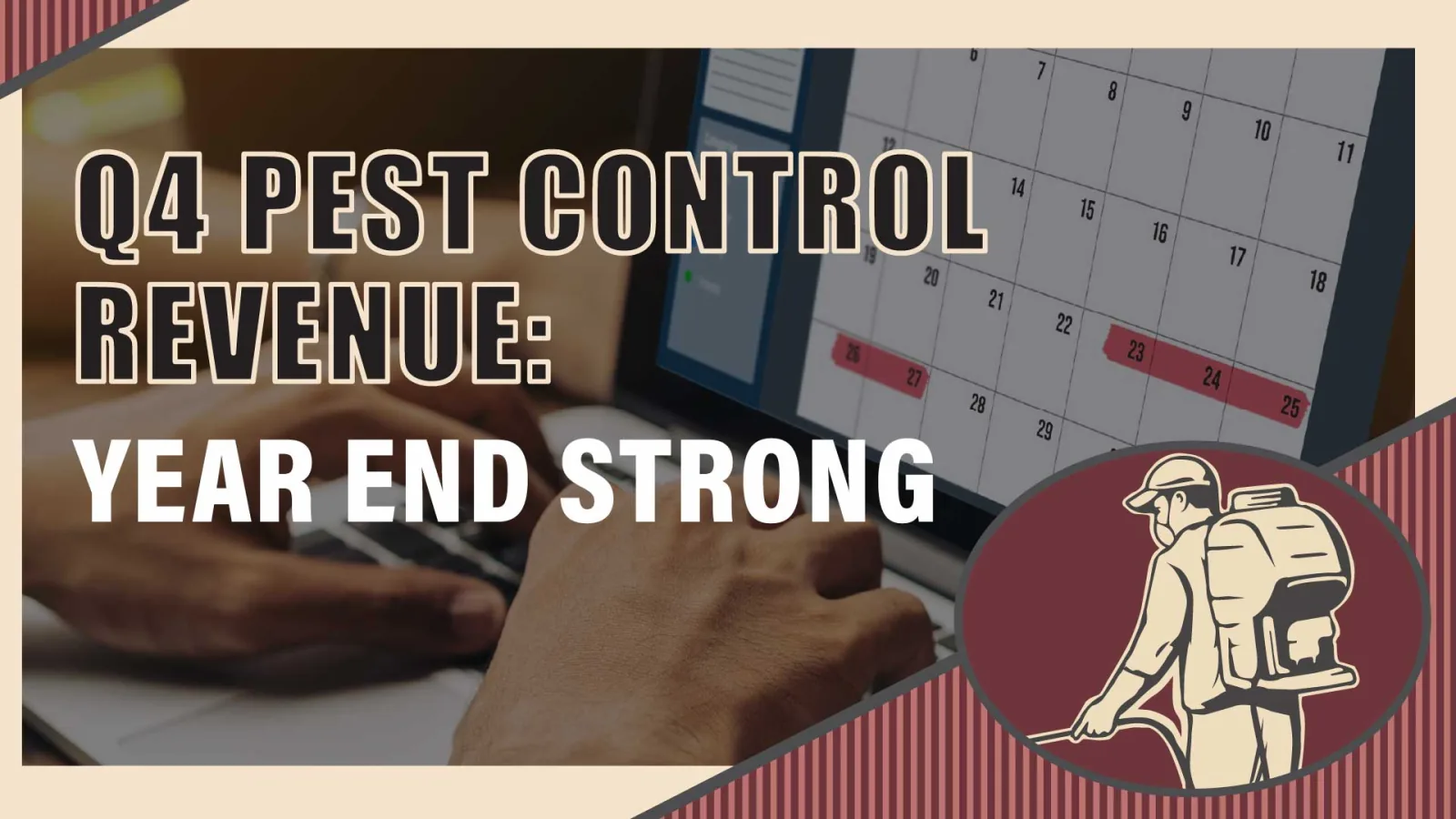
If you've been treating October through December as the industry's "off-season," you're not just missing chances. You're handing revenue to rivals who know Q4 can be one of your best quarters. Other pest control companies hibernate right along with the summer bugs. Smart owners cash in on a rare mix of three things: pest behavior, consumer psychology, and commercial budget cycles.
Picture this. It's 3 PM on a Tuesday in November, and you're staring at a half-empty schedule for next week. Your phone isn't ringing like it did in July, and you're wondering how you'll keep your technicians busy all winter. Meanwhile, just down the road, your competitor is booked solid through January because they cracked the code on Q4 marketing.
Think of Q4 like a farmer's harvest season. It's not when you plant new crops, it's when you reap what you've built all year. Here's the twist: in pest control, this harvest can actually exceed your spring and summer yields if you play your cards right.
The numbers tell a different story than conventional wisdom does. Rollins, Inc. reported revenue of $832 million in the fourth quarter of 2024, up 10.4% over the year before. That's not exactly "slow season" performance from one of the industry's biggest players.
This guide lays out 12 revenue-building strategies that turn Q4 from a survival stretch into a payday. From October prep through December fine-tuning, you'll see how to catch the seasonal shift in demand, own the holiday marketing window, and lock in the repeat revenue that sets up your whole next year.
Written By: Chad J. Treadway | October 02, 2025
Chad is our Chief Smarketing Officer. He will help you survey your small business needs, educating you on your options before suggesting any solution. Chad is passionate about rural marketing in the United States and North Carolina. He also has several certifications through HubSpot to better assist you with your internet and inbound marketing.
The pest control industry stands at a remarkable crossroads of opportunity. Far from being a static, necessity-driven service, the sector is experiencing dynamic growth fueled by powerful macroeconomic and environmental trends. Straits Research projects the global pest control market will surge from $25.86 billion in 2024 to $40.81 billion by 2033, advancing at a compound annual growth rate of 5.2%. Even more impressive, the market reached $28.4 billion in 2024 after maintaining an 8.6% average annual growth rate over the past five years, according to Kentley Insights.
This industry-wide momentum doesn't just happen by chance. Several key global drivers are fundamentally increasing demand for professional pest management services:
- Accelerating Urbanization: The continuous global shift toward urban living concentrates populations, creating denser environments. This exponential rise in population inadvertently establishes more favorable habitats for pests, heightening the need for structured, professional control measures.
- Climate Change Impact: Tangible shifts in global weather patterns are having a direct and measurable impact on pest populations. As Terminix reports, "Warmer temperatures and increased precipitation extend breeding seasons, accelerate insect metabolism, and expand the geographic territories of various pests." This phenomenon, known as increased "pest pressure," translates into more frequent, severe, and widespread infestations.
- Evolving Consumer Awareness: Modern consumers are increasingly informed about health risks associated with pests. This heightened awareness pairs with growing preferences for sustainable, eco-friendly, and professionally administered solutions over less effective do-it-yourself methods.
In this thriving but increasingly competitive landscape—populated by over 34,000 businesses in the U.S. alone—sustainable growth doesn't happen accidentally. It's the result of a deliberate, multi-faceted strategy that systematically integrates market expansion, service innovation, team development, technological leverage, and disciplined financial planning.
Ready to transform your pest control operation into a scalable, profitable enterprise? Let's crawl into the details—because in this business, even small steps can lead to tremendous growth. (And that's the only "bug" pun I'll make today... probably.)
Written By: Chad J. Treadway | September 29, 2025
Chad is our Chief Smarketing Officer. He will help you survey your small business needs, educating you on your options before suggesting any solution. Chad is passionate about rural marketing in the United States and North Carolina. He also has several certifications through HubSpot to better assist you with your internet and inbound marketing.
You've built a solid pest control business with effective treatments and skilled technicians, but potential customers hesitate to pick up the phone. Does this sound familiar?
For pest control businesses, building trust isn't just important—it's essential. When customers invite you into their homes to handle potentially dangerous pests and chemicals, they need absolute confidence in your expertise and reliability.
Your website serves as your digital handshake—and research shows it makes this impression with startling speed. Studies from Stanford's Persuasion Technology Lab reveal visitors form their initial judgment about your credibility within just 50 milliseconds of landing on your site—entirely based on visual design before they read a single word.
Ready to transform your pest control website into a trust-building powerhouse? We'll walk you through six proven strategies that convert hesitant browsers into confident customers. BrightLocal research found that 93% of consumers research a service business online before making contact, and websites with strong trust signals can increase conversion rates by up to 67%.
By the end of this article, you'll have practical, actionable strategies to showcase your expertise and win over skeptical homeowners and business managers alike.
Written By: Chad J. Treadway | September 26, 2025
Chad is our Chief Smarketing Officer. He will help you survey your small business needs, educating you on your options before suggesting any solution. Chad is passionate about rural marketing in the United States and North Carolina. He also has several certifications through HubSpot to better assist you with your internet and inbound marketing.
For pest control shops, turning a potential customer into a loyal client is a lot like tracking down and wiping out an infestation. You need a clear method, the right ID, and solid follow-through. This path, often called the sales funnel, matters to every pest control company, no matter your company's size.
Maybe you're a solo operator who covers one small suburb. Maybe you run a multi-county shop with dozens of techs. Either way, knowing each stage of the pest control customer journey can sharply raise your lead conversion rates. It also helps you build a business that lasts.
But here's the hard truth: the old, straight-line sales funnel doesn't match real life anymore. Research from Forrester finds that today's customers move more like cars on a "highway" than down a funnel. They merge at different points, change lanes without warning, and sometimes exit only to come back later. That's extra true in pest control. An emergency can make a customer skip whole stages of the buying process.
Let's look at how to build and tune a modern sales system for pest control. You'll get real-world moves that work in every season and for any size of shop.
Written By: Chad J. Treadway | September 24, 2025
Chad is our Chief Smarketing Officer. He will help you survey your small business needs, educating you on your options before suggesting any solution. Chad is passionate about rural marketing in the United States and North Carolina. He also has several certifications through HubSpot to better assist you with your internet and inbound marketing.
Is your pest control website generating the leads you need, or is your conversion rate crawling along like a bed bug in broad daylight? If you're not seeing the traffic flow to service calls you expected, your homepage might be missing some crucial elements.
You've probably invested good money in getting your pest control website up and running. Maybe you've made it look professional, ensured it loads quickly, and even added some pictures of your team and service vehicles. That's a solid foundation—but in today's competitive pest management market, the bare minimum just won't cut it anymore. Stanford's Web Credibility Project found that 75% of users admit to making judgments about a company's credibility based on their website's design, and it takes just 50 milliseconds for visitors to form their first impression.
Research from Adobe shows that nearly 38% of people will stop engaging with a website if the content or layout is unattractive. (Source: HubSpot) Think of these elements as the essential tools in your pest management toolkit—without them, your online performance will never reach its full potential. Pages that take longer than three seconds to load experience a 53% abandonment rate on mobile devices, and each one-second delay in page response can result in a 7% reduction in conversions—devastating for a pest control business during peak season.
Written By: Chad J. Treadway | September 22, 2025
Chad is our Chief Smarketing Officer. He will help you survey your small business needs, educating you on your options before suggesting any solution. Chad is passionate about rural marketing in the United States and North Carolina. He also has several certifications through HubSpot to better assist you with your internet and inbound marketing.
Picture this: You've just wrapped up a stellar week in your pest control business. You've closed three major termite treatment contracts, your technicians completed every job ahead of schedule, and you've even implemented that new routing software everyone's been raving about. Life is good. Then you check your phone and see it—a scathing one-star review complete with ALL CAPS and enough exclamation points to punctuate a manifesto.
Suddenly, your perfect week feels like it's circling the drain.
If this scenario sends a shiver down your spine, you're not alone. For pest control businesses, online reviews are no longer just digital versions of traditional word-of-mouth—they've fundamentally rewired how consumers select professionals for everything from emergency bed bug treatments to preventative quarterly services.
As Scott Cook, co-founder of Intuit, famously said, "Your brand is no longer what you tell the consumer it is—it is what consumers tell each other it is." This perfectly captures this new reality where your online reputation has become your most valuable business asset.
With the Spiegel Research Center finding that 77% of local consumers report that they 'always' or 'regularly' read online reviews when researching a local business" and "93% of all consumers stating that reviews directly impact their purchase decisions, and Harvard Business School research showing that a one-star increase in ratings leads to a 5-9% revenue increase, the stakes have never been higher for pest control operators of all sizes.
But don't worry—this guide will transform review management from a source of anxiety into a powerful growth strategy for your pest control business. Get ready for a brutal truth: there are no shortcuts to review dominance. But with the right approach, you can build an authentic reputation that consistently drives new customers to your door while your competitors wonder what your secret is.

Written By: Adam Bennett | September 19, 2025
Adam is the president and founder of Cube Creative Design and specializes in private school marketing. Since starting the business in 2005, he has created individual relationships with clients in Western North Carolina and across the United States. He places great value on the needs, expectations, and goals of the client.
Let's start with a fundamental truth that the most successful pest control companies understand implicitly: you're not selling pest elimination. That's merely the functional task you perform. What you're truly selling is an emotional outcome — peace of mind, safety, security, and the restoration of the home as a sanctuary.
This isn't just marketing speak. Academic research in consumer behavior has consistently shown that service quality doesn't directly influence purchasing decisions on its own. Instead, service quality positively affects consumer trust, and it's this trust that "significantly affects buying decisions," according to a 2024 study published in the Journal of Consumer Behavior. This positions trust as the crucial mediating variable between your service claims and actual conversions.
Think about it: When someone discovers mice droppings in their pantry or termites eating away at their biggest investment (their home), they're not in a rational comparison-shopping mindset. They're in panic mode, looking for someone they can trust to solve their problem immediately.
Your brand needs to instantly communicate reliability, expertise, and reassurance at that precise moment of discovery. As one industry analyst puts it, "In these moments of high anxiety, validation must precede education." Your brand must first acknowledge and soothe the customer's emotional state before explaining your solution.
Every element of your brand—from its core promise and personality to its digital footprint and community involvement—must be meticulously aligned to deliver on this emotional value proposition, not just the technical one.
Written By: Chad J. Treadway | September 17, 2025
Chad is our Chief Smarketing Officer. He will help you survey your small business needs, educating you on your options before suggesting any solution. Chad is passionate about rural marketing in the United States and North Carolina. He also has several certifications through HubSpot to better assist you with your internet and inbound marketing.