Your pest control company's reputation is solid. Customers love your service, referrals are strong, and your team handles every job with expertise. There's just one problem: while you serve multiple communities, Google seems stuck showing your business only in your home territory.
You know the challenge well. A homeowner in a neighboring city searches for pest control, but your business doesn't show up in their results—even though you serve their area daily. Meanwhile, the calls keep coming in from further afield. Your actual service area grows while your digital footprint stays stubbornly local.
The question facing every expanding pest control company is clear: How do you effectively market your services and rank in Google searches across all your service areas without opening physical offices in each location?
Why Multi-Area SEO Matters for Pest Control Companies
When it comes to pest control services, geographic boundaries are just lines on a map. Your SEO strategy needs to reflect the true scope of your service area. In today's digital landscape, having a single physical location doesn't mean your online presence should be confined to one area. With a proper service area SEO strategy, your pest control business can effectively target and rank in multiple locations, even without physical offices in each city.
Consider these statistics:
- 46% of all Google searches have local intent (Source: SEO Roundtable )
- 97% of users search online for local businesses (Source: HubSpot)
- 72% of consumers who perform a local search visit a store within five miles (Source: BrightLocal)
But what if you want to capture customers beyond that five-mile radius? That's where strategic service area optimization comes into play.
The Multi-Location SEO Challenge
The challenge isn't just about showing up in search results—it's about showing up everywhere your potential customers are looking. Whether it's a homeowner in Davidson dealing with termites or a restaurant owner in Indian Trail facing a rodent issue, they need to find your services when they search.
This guide will walk you through proven strategies for:
- Optimizing your online presence for multiple service areas
- Building geographic relevance without physical locations
- Creating compelling, location-specific content that converts
- Implementing technical SEO best practices for service area businesses
Let's dive into the fundamentals of service area strategy and build a robust digital presence across your entire service region.
Understanding Google's Service Area Business Guidelines
For pest control companies, understanding Google's Service Area Business (SAB) guidelines isn't just about compliance—it's about leveraging them to your advantage. A service area business differs fundamentally from a business with physical locations that customers visit. This distinction is particularly important for pest control companies, where you travel to provide services rather than having customers come to you.
Setting Up Your Google Business Profile Correctly
Your Google Business Profile (GBP) serves as the foundation of your local SEO strategy. As a service area business, you need to:
- Clearly define your service boundaries
- Set up your business address correctly (even if it's not public)
- Specify which areas you serve
- Maintain consistent NAP (Name, Address, Phone) information across all platforms
Guardian Pest Services in Raleigh (a fictional company) provides an excellent example of an effective service area setup. Their operations manager, Daemon, discovered that properly defining their service radius increased their visibility in surrounding communities without diluting their local authority.
Geographic Targeting Without Physical Presence
The key to successful multi-area SEO lies in creating a strong digital presence in each target location without maintaining physical offices. Here's how to approach this strategically:
Service Radius Optimization
- Define realistic service boundaries based on travel time and resource allocation
- Consider seasonal variations in service capacity
- Account for different service types (emergency vs. scheduled treatments)
ZIP Code and Neighborhood Targeting
- Prioritize high-value service areas
- Create location-specific landing pages
- Develop content that addresses area-specific pest concerns
Avoiding Common Pitfalls
- Don't claim physical presence where you don't have it
- Avoid overlapping service areas that could confuse Google's algorithms
- Maintain consistent business information across all platforms
Building Digital Authority in Multiple Areas
Success in multiple service areas comes from demonstrating genuine involvement in each community, even without a physical office.
To build this authority:
- Participate in local online communities
- Share area-specific pest control tips and updates
- Engage with local business organizations
- Collect and showcase location-specific reviews and testimonials
The foundation of your service area strategy must balance aggressive growth with careful compliance. In the next section, we'll explore how to create compelling location pages that convert visitors into customers while maintaining Google's trust.
Creating Effective Service Area Pages That Convert
One of the biggest challenges in multi-area SEO is creating unique, valuable content for each service area. Let's examine how Wendy, the founder of Bug Off Pest Control (a fictional company) in Charlotte, NC, successfully expanded their digital footprint outside the 485 beltway to multiple Charlotte suburbs without triggering Google's duplicate content penalties.
Developing Unique Location Pages
Each service area page needs to stand on its own while maintaining your brand's voice. Here's how to achieve this balance:
Essential Elements for Each Location Page
- Unique meta titles and descriptions targeting location-specific keywords
- Area-specific pest problems and solutions
- Local landmarks and reference points
- Custom service packages based on local needs
- Location-specific customer testimonials
- Area-specific pricing information (if applicable)
- Local emergency response times
Differentiating Content Across Service Areas
Bug Off Pest Control discovered that successful location pages go beyond simply changing city names. Here's a structured approach to content differentiation:
Geographic Relevance Signals
- Local pest trends and seasonal patterns
- Area-specific environmental factors
- Local building types and common infestation points
- Municipality-specific pest control regulations
- Local climate considerations
Community Connection Points
- Participation in local events
- Partnerships with local businesses
- Community service initiatives
- Local environmental protection efforts
Content Development Best Practices
When creating content for multiple service areas, follow these guidelines:
- Research Local Nuances
- Identify unique pest challenges in each area
- Understand local construction styles that might affect pest control
- Research area-specific regulations and requirements
- Create Custom Value Propositions
- Highlight specific benefits for each location
- Address local competitive differences
- Emphasize unique service capabilities for the area
- Incorporate Local Social Proof
- Area-specific case studies
- Location-based customer testimonials
- Local business endorsements
Technical Considerations for Location Pages
Your location page strategy must also account for technical SEO elements:
- Implement proper URL structure (/service-area/city-name)
- Use location-specific schema markup
- Create unique meta descriptions for each page
- Develop location-specific XML sitemaps
- Implement proper canonical tags
Measuring Location Page Success
Track these key metrics for each service area page:
- Organic traffic by location
- Conversion rates per area
- Local keyword rankings
- User engagement metrics
- Lead quality by location
The key to successful service area pages lies in providing genuine value to each local audience. Let's explore how to establish and maintain a strong local presence without physical locations in each service area.
Building Local Authority Without Physical Locations
For pest control companies, establishing local authority without multiple physical locations requires a strategic combination of digital presence and community engagement. Dream Weaver Pest Control (our fictional company) in Hickory demonstrated this effectively by becoming a trusted name across multiple counties without opening satellite offices.
Virtual Office Considerations
While virtual offices might seem like an easy solution for multi-area presence, they require careful consideration:
Google's Virtual Office Policies
- Must have staff present during business hours
- Should provide in-person services
- Cannot be shared with multiple businesses
- Must be able to receive mail
Instead of relying on virtual offices, focus on these alternative strategies:
Digital Presence Optimization
-
Local Directory Management
- Claim and optimize business listings in local directories
- Maintain consistent NAP (Name, Address, Phone) information
- Use service area descriptions effectively
- Monitor and respond to reviews across platforms
Local Content Development
- Create area-specific blog posts about local pest issues
- Develop neighborhood pest prevention guides
- Share local pest alerts and seasonal updates
- Publish local customer success stories
Community Engagement Strategies
- Partner with local real estate agents
- Collaborate with local home service providers
- Participate in online community forums
- Engage with local environmental initiatives
Building Local Credibility
Build your local authority with these methods:
Digital Authority Signals
- Local business association memberships
- Industry certifications relevant to specific areas
- Area-specific pest control licenses
- Local Chamber of Commerce participation
Online Reputation Management
- Location-specific review generation strategies
- Prompt response to local customer feedback
- Regular monitoring of local brand mentions
- Proactive community engagement
Local Partnership Development
Establish strong local connections through:
Real Estate Partnerships
- Home inspection companies
- Property management firms
- Real estate agencies
- Home warranty providers
Community Organizations
- Local environmental groups
- Homeowner associations
- Business improvement districts
- Community service organizations
Leveraging Local Events and News
Create local relevance through:
- Participation in community events
- Local sponsorships
- Educational workshops
- Environmental initiatives
Measuring Local Authority
Track these key indicators of local authority:
- Local search visibility
- Review sentiment by area
- Local referral traffic
- Community engagement metrics
- Local conversion rates
Technical Implementation for Service Area Success
When Guardian Pest Services (our fictional company) expanded their service area across the Triangle region, they discovered that proper technical implementation was crucial for their SEO success. Let's break down the essential technical elements that support effective service area optimization.
Website Architecture for Service Areas
Your website's structure needs to clearly communicate your service areas to both users and search engines. Here's how to organize your site effectively:
URL Structure Best Practices
Main Service Page:
- bugoffpestcontrol.biz/services/pest-control
Location Pages:
- bugoffpestcontrol.biz/service-areas/charlotte
- bugoffpestcontrol.biz/service-areas/matthews
- bugoffpestcontrol.biz/service-areas/huntersville
Internal Linking Strategy
- Create a service area hub page
- Link between related service areas
- Implement breadcrumb navigation
- Use location-specific anchor text
- Maintain logical site hierarchy
Schema Markup Implementation
Proper schema markup helps search engines understand your service area business:
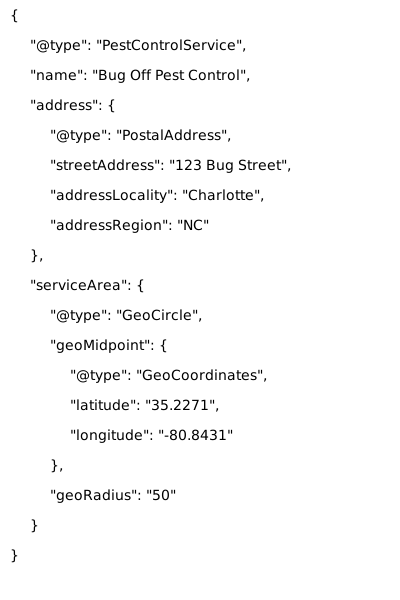
Technical Optimization Checklist
-
Mobile Responsiveness
- Fast loading times across devices
- Click-to-call functionality
- Mobile-friendly contact forms
- Responsive service area maps
Page Speed Optimization
- Image compression
- Browser caching
- Code minification
- Server response time
Location Detection
- Implement geolocation features
- Automatic service area detection
- Location-based content serving
- Mobile location services integration
Advanced Technical Considerations
Hreflang Implementation for Multi-language Areas
<link rel="alternate" hreflang="en" href="/bugoffpestcontrol.biz/service-areas/charlotte" />
<link rel="alternate" hreflang="es" href="/bugoffpestcontrol.biz/areas-de-servicio/charlotte" />
XML Sitemap Strategy
- Create location-specific sitemaps
- Include service area priorities
- Update frequency settings
- Coverage area specifications
Technical Monitoring Tools
Implement these tools for ongoing optimization:
- Google Search Console location monitoring
- Local rank tracking by service area
- Site speed monitoring by location
- Mobile usability reports
- Schema validation tools
Remember to regularly audit your technical implementation and adjust based on performance data.
Creating Compelling Content Across Service Areas
When Bug Off Pest Control expanded their content strategy beyond Charlotte, they learned that effective multi-area content requires more than just changing city names. Let's explore how to create content that resonates with local audiences while supporting your SEO goals.
Area-Specific Content Development
Location-Based Content Pillars
- Seasonal Pest Guides
- Local pest activity patterns
- Area-specific prevention tips
- Regional treatment schedules
- Local environmental factors
- Property-Type Content
- Historic home pest control
- New construction treatments
- Commercial property solutions
- Multi-family housing services
- Local Authority Content
- Municipal regulations
- Local pest control laws
- HOA compliance guides
- Environmental requirements
Creating Unique Value Propositions
Each service area needs distinct content that addresses the following:
Location-Specific Challenges
- Urban vs. suburban pest issues
- Local construction methods
- Regional pest species
- Climate-related concerns
Custom Service Solutions
- Area-specific treatment methods
- Local environmental considerations
- Specialized equipment needs
- Response time commitments
Content Templates for Scale
While maintaining uniqueness, use these templates for efficiency:
Service Area Page Template
[City Name] Pest Control Services
- Local pest challenges
- Service area coverage
- Common local pests
- Area-specific testimonials
- Local guarantees
Blog Content Framework
[Season] Pest Control Guide for [Area]
- Recent local pest trends
- Area-specific prevention tips
- Local success stories
- Seasonal considerations
Local Authority Building Through Content
Your content authority strategy should include the following:
- Educational Resources
- Local pest identification guides
- Area-specific prevention tips
- Regional treatment calendars
- Community health resources
- News and Updates
- Local pest alerts
- Weather-related pest warnings
- Community event participation
- Industry updates
- Expert Insights
- Local case studies
- Property type guides
- Treatment method explanations
- Prevention strategies
Content Distribution Strategy
Maximize content reach through:
- Local social media groups
- Community newsletters
- Area-specific email campaigns
- Local business partnerships
Measuring Content Success
Track these key metrics:
- Engagement by location
- Local conversion rates
- Time on page by area
- Local bounce rates
- Social shares by region
Remember, the best content answers the questions your local customers are actually asking, not just the ones you think they might ask.
Measuring Success Across Multiple Service Areas
When Dream Weaver Pest Control expanded from Hickory into surrounding areas, they quickly learned that effective tracking was crucial for optimizing their multi-area presence. Let's explore how to implement comprehensive tracking and analytics for your service areas.
Geographic Performance Metrics
Essential KPIs by Location
- Search Visibility Metrics
- Local pack rankings
- Organic position tracking
- Featured snippet appearances
- Google Business Profile insights
- Engagement Metrics
- Page views by location
- Time on site per area
- Bounce rates by region
- Click-through rates
- Conversion Metrics
- Lead generation by area
- Cost per acquisition per location
- Conversion rates by service area
- Return on ad spend by region
Setting Up Location-Based Tracking
Implement these tracking solutions:
Conversion Tracking
- Form Submissions
- Contact form completions
- Quote requests
- Emergency service calls
- Newsletter signups
- Phone Tracking
- Call tracking by location
- Peak call times by area
- Call duration metrics
- Conversion rates
Competitive Analysis Framework
Monitor your market position:
Local Competitor Tracking
- Service area overlap
- Keyword rankings
- Review ratings
- Service offerings
Market Share Analysis
- Share of voice by location
- Review volume comparison
- Service coverage gaps
- Pricing position
Data-Driven Decision Making
Use these metrics to optimize your strategy:
- Resource Allocation
- High-performing areas
- Underserved markets
- Seasonal demands
- Service type popularity
- Content Performance
- Top-performing pages by area
- Content gaps by location
- User engagement patterns
- Conversion pathways
ROI Calculation by Service Area
Track these financial metrics:
Cost Analysis
- Marketing spend per area
- Operational costs by location
- Customer acquisition costs
- Service delivery expenses
Revenue Tracking
- Revenue by service area
- Average ticket value
- Customer lifetime value
- Repeat customer rates
Reporting and Analysis Tools
Essential tools for tracking:
- Google Analytics 4
- Google Search Console
- Local Rank Tracking Software
- Call Tracking Platforms
- CRM Integration
Creating Action Plans from Data
Convert data into action:
- Identify underperforming areas
- Optimize high-potential markets
- Adjust resource allocation
- Refine marketing strategies
Frequently Asked Questions About Multi-Area SEO
How can I rank in multiple cities with one office?
Focus on creating unique, valuable content for each service area while maintaining proper technical SEO implementation. You can successfully rank in multiple cities by:
- Creating distinct service area pages with unique content
- Building local authority through community engagement
- Implementing proper schema markup
- Developing area-specific content strategies
- Maintaining consistent NAP information
What's the difference between service areas and physical locations?
Service areas are regions where you provide services without maintaining a physical office. Physical locations are brick-and-mortar establishments where you operate. Google treats these differently in search results:
- Service areas focus on coverage regions
- Physical locations emphasize storefront presence
- Different Google Business Profile settings apply
- Distinct ranking factors influence results
How many service area pages should I create?
Create pages based on the following:
- Actual service coverage
- Population density
- Service demand
- Resource availability
- Market opportunity
I recommend focusing on quality over quantity, starting with your core service areas and expanding strategically based on performance data.
How do I avoid duplicate content across service areas?
Prevent duplicate content by:
- Writing unique descriptions for each area
- Including local pest trends and challenges
- Adding area-specific customer testimonials
- Incorporating local environmental factors
- Customizing service offerings by location
Can I use virtual offices for SEO purposes?
While virtual offices might seem appealing, they're not recommended for SEO because:
- Google's guidelines discourage this practice
- Risk of penalties for misrepresentation
- Better alternatives exist for building a local presence
- Focus should be on genuine service area authority
How long does it take to see results from multi-area SEO?
Typically, you can expect:
- Initial ranking changes: 3-6 months
- Significant improvements: 6-12 months
- Full market presence: 12-18 months
- Continuous optimization needed
Results vary based on market competition, content quality, and implementation effectiveness.
How do I handle overlapping service areas with competitors?
I suggest:
- Focus on unique value propositions
- Highlight specialized services
- Emphasize customer service differences
- Build strong local relationships
- Maintain competitive pricing strategies
What role does mobile optimization play in service area SEO?
Mobile optimization is crucial because:
- Most local searches occur on mobile devices
- Google prioritizes mobile-friendly sites
- Emergency pest control searches are often mobile
- Click-to-call functionality is essential
- Local customers expect mobile accessibility
How do I track success across multiple service areas?
Implement tracking through:
- Area-specific conversion monitoring
- Local keyword ranking tracking
- Geographic performance metrics
- Call tracking by location
- Customer acquisition cost analysis
Taking Action: Your Multi-Area SEO Implementation Plan
Implementing a comprehensive service area SEO strategy might seem overwhelming, but as our fictional pest control companies have demonstrated, success comes from systematic implementation. Let's break down your next steps into manageable phases.
Phase 1: Foundation (Weeks 1-4)
- Audit Current Presence
- Review existing service areas
- Analyze current rankings
- Assess technical SEO status
- Evaluate content quality
- Technical Setup
- Configure Google Business Profile
- Implement proper schema markup
- Set up tracking systems
- Optimize website structure
Phase 2: Content Development (Weeks 5-12)
- Create Core Content
- Develop service area pages
- Write location-specific content
- Build resource sections
- Establish blog calendar
- Local Authority Building
- Begin local partnerships
- Join community organizations
- Initiate review generation
- Create local resources
Phase 3: Optimization (Weeks 13-24)
- Monitor and Adjust
- Track performance metrics
- Analyze user behavior
- Adjust content strategy
- Optimize conversion paths
- Expand and Refine
- Add new service areas
- Enhance existing content
- Strengthen local signals
- Build more partnerships
Resource Investment Guidelines
Allocate resources to:
- Content Creation: 40%
- Technical Implementation: 25%
- Local Engagement: 20%
- Analytics and Optimization: 15%
Success Indicators
Monitor these key metrics:
- Organic traffic growth by area
- Conversion rate improvements
- Local ranking positions
- Lead quality metrics
- Return on investment
Ready to Dominate Your Service Areas?
Implementing effective multi-area SEO is complex, but the potential for growth is substantial. Every market you serve represents an opportunity to establish your pest control company as the go-to local expert. The strategies in this guide provide your roadmap to digital success across all your service territories.
Ready to accelerate your multi-area growth? Our team of SEO specialists focuses exclusively on helping pest control companies expand their digital footprint. We combine industry expertise with proven SEO strategies to help you:
- Capture high-intent leads across all your service areas
- Build authority in each local market you serve
- Implement revenue-driving technical optimizations
- Scale your digital presence systematically and sustainably
Contact me today to discuss a customized strategy for expanding your pest control company's market presence.
Success in multi-area SEO comes from strategic implementation and consistent optimization. Start with a strong foundation, expand methodically, and let data guide your growth.