Are pests the only thing your marketing efforts are exterminating? Every pest control company is fighting for the same digital real estate. So old-school marketing is crawling back into the spotlight, and for good reason.
The pest control industry is booming. The global market is projected to reach a staggering $44.3 billion by 2034, with a steady growth rate of 5.4% a year, according to Allied Market Research. This growth isn't just because pests are getting worse. It's because smart pest control companies are finding that the best marketing doesn't only live online.
Online marketing has owned the talk for years. But a lot of top pest control owners are finding that offline marketing has perks online ads just can't match. From earning local trust to giving folks a brand they can hold in their hands, old-school marketing is making a comeback in the pest control industry.
In this article, we'll look at how offline marketing for pest control is making a strong comeback. We'll also show why the most successful companies use a hybrid approach that blends the best of old-school and online. You'll get proven tactics that help you build real bonds with your local community and turn prospects into long-term customers. After all, when you're building a thriving pest control business, you don't want to leave any stone (or marketing channel) unturned.

Written By: Adam Bennett | May 21, 2025
Adam is the president and founder of Cube Creative Design and specializes in private school marketing. Since starting the business in 2005, he has created individual relationships with clients in Western North Carolina and across the United States. He places great value on the needs, expectations, and goals of the client.
Picture this. It's 10 AM on a Friday, and Mrs. Johnson is calling in a panic. She reached for her pie dish, the one she needs for tomorrow's church potluck, and found a battalion of cockroaches holding tactical meetings in her kitchen cabinet. Her voice is trembling. Her patience is thinner than a termite's waistline. What you say in the next 60 seconds decides whether she becomes a loyal customer or your newest one-star Yelp reviewer.
Welcome to the high-stakes world of pest control customer support. You're not just answering phones. You're the frontline defender against fires both literal and imagined. In other industries, an "emergency" means a delayed package or a glitchy software update. In yours, a customer's personal space has been invaded, and that sets off a gut-level reaction of disgust, embarrassment, and panic.
Your communication skills aren't a nice-to-have. They're a weapon in your pest management arsenal. The right phrase at the right moment can transform a horrified homeowner into a relieved, loyal client who refers your company to everyone in the neighborhood watch group.
This guide pulls together 15+ battle-tested phrases built for pest control support calls. These aren't the tired "thank you for your patience" platitudes. Each one solves a real problem you face on the phone. How do you tell a customer those mysterious bites might be bed bugs? How do you explain that a one-time treatment won't banish every ant in a three-mile radius?
Written By: Adam Bennett | May 19, 2025
Adam is the president and founder of Cube Creative Design and specializes in private school marketing. Since starting the business in 2005, he has created individual relationships with clients in Western North Carolina and across the United States. He places great value on the needs, expectations, and goals of the client.
Let's face it—when customers find creepy crawlies in their homes, they're not exactly in a calm state of mind. They want help FAST from someone they can trust. In today's digital world, that trust often starts with your online reviews.
According to NiceJob, a whopping 97% of people say customer reviews impact their buying decisions. That's right—nearly ALL your potential customers are checking out what others say about you before they pick up the phone. If you're not actively managing your reviews, you're letting other people control your reputation—and that's about as wise as trying to catch wasps with your bare hands. Learn more about how reviews drive growth and build trust for your pest control business.
In the pest control industry, where customers are often dealing with stressful situations, positive reviews can be the deciding factor between choosing your company or your competitor. Modern customers simply don't trust companies that have a low star rating or no reviews at all. But don't worry—this guide will give you all the tools you need to build and manage a five-star reputation that attracts customers faster than ants at a picnic.

Written By: Chad J. Treadway | May 14, 2025
Chad is our Chief Smarketing Officer. He will help you survey your small business needs, educating you on your options before suggesting any solution. Chad is passionate about rural marketing in the United States and North Carolina. He also has several certifications through HubSpot to better assist you with your internet and inbound marketing.
Let's face it—nobody calls a pest control company because they're having a great day. When customers reach out, they're usually dealing with unwanted six-legged (or worse, eight-legged) roommates who have overstayed their welcome. They're uncomfortable, embarrassed, and sometimes downright terrified.
That's why exceptional customer service isn't just nice to have in pest control—it's absolutely essential.
According to research by McKinsey & Company, improving customer service increases sales by 2 to 7% and boosts profitability by 1 to 2%. When you provide excellent customer service, you're not just eliminating pests; you're actively driving revenue and increasing customer loyalty.
It's like I always say: in pest control, you're not just killing bugs—you're creating peace of mind. And that peace of mind is worth its weight in gold... or at least in recurring service agreements!
Written By: Chad J. Treadway | May 12, 2025
Chad is our Chief Smarketing Officer. He will help you survey your small business needs, educating you on your options before suggesting any solution. Chad is passionate about rural marketing in the United States and North Carolina. He also has several certifications through HubSpot to better assist you with your internet and inbound marketing.
Ever had a customer tell you they found your pest control company after frantically searching "emergency pest control near me" at 2 AM when they discovered a rodent invasion? That's the power of local search—and it's not going anywhere, even as the Chrome browser changes reshapes the digital landscape.
When homeowners discover unwelcome six-legged visitors or hear mysterious scratching in their walls, they don't leisurely browse for pest control options. They grab their phone and search for immediate help nearby. This urgent, location-based search behavior remains consistent regardless of browser changes, making your local business listings more critical than ever for pest control success.
Recent updates to Chrome's privacy settings and treatment of local data mean pest control companies need to adapt their digital strategy. But don't bug out! While these changes might affect how some customers find you, the fundamentals of a strong local presence remain unchanged. Companies with consistent, optimized business listings across multiple platforms will continue to capture those emergency calls, while competitors with neglected listings gradually disappear from view.
Let's explore how to pest-proof your digital presence and ensure customers can find you when critters come calling.
Written By: Chad J. Treadway | May 07, 2025
Chad is our Chief Smarketing Officer. He will help you survey your small business needs, educating you on your options before suggesting any solution. Chad is passionate about rural marketing in the United States and North Carolina. He also has several certifications through HubSpot to better assist you with your internet and inbound marketing.
It's 3 AM. A homeowner jolts awake to the sound of tiny feet scurrying across their kitchen floor. Panic sets in. They grab their phone and frantically type: "emergency pest control near me." Is your business showing up on their screen, or are you hiding like a cockroach when the lights come on?
For pest control companies, online visibility isn't just about marketing—it's about being there in moments of crisis when potential customers need you most. Whether it's termites silently destroying a home's foundation, bed bugs causing sleepless nights, or rodents making themselves comfortable in an attic, pest emergencies don't wait for business hours. And neither does Google.
Unfortunately, many pest control businesses are still treating their Google Business Profile (formerly Google My Business) like that forgotten ant trap behind the fridge—set it and forget it. A survey of the pest control industry shows that over 70% of companies have incomplete or outdated GBP listings, essentially leaving money on the table and sending potential customers straight to competitors.
This guide will walk you through everything you need to know about optimizing your Google Business Profile in 2025—from basic setup to advanced features—specifically tailored for pest control companies. By the end, you'll have a GBP listing that works as effectively as your most potent pesticide, attracting new customers while your competition keeps scratching their heads wondering where all the business went.
Written By: Chad J. Treadway | May 06, 2025
Chad is our Chief Smarketing Officer. He will help you survey your small business needs, educating you on your options before suggesting any solution. Chad is passionate about rural marketing in the United States and North Carolina. He also has several certifications through HubSpot to better assist you with your internet and inbound marketing.
When it comes to running a successful pest control operation, having the right team structure isn't just important—it's "in-pest-pensable." The pest control industry continues to grow steadily, with the market expected to reach over $30 billion globally in the coming years. But behind every successful pest control business are well-managed teams that ensure operations run smoothly, safely, and effectively.
Effective pest control team management goes far beyond simply assigning technicians to service calls. It encompasses everything from creating the right organizational structure to implementing robust communication systems, developing comprehensive training programs, tracking meaningful performance metrics, and maintaining stringent safety protocols.
In this guide, we'll explore each of these critical components to help you build and manage a pest control team that doesn't just eliminate pests but also builds a reputation for excellence in your service area.
Written By: Chad J. Treadway | April 23, 2025
Chad is our Chief Smarketing Officer. He will help you survey your small business needs, educating you on your options before suggesting any solution. Chad is passionate about rural marketing in the United States and North Carolina. He also has several certifications through HubSpot to better assist you with your internet and inbound marketing.
If pests took vacations, your job would be easier. But they don't. They just change their habits! Every successful pest control operation knows that Mother Nature doesn't follow a simple calendar, and neither should your business plan. Seasonal planning isn't just nice to have. It's a must for pest control companies that want steady revenue, smart use of their resources, and great service year-round.
When temperatures rise or fall, pest activity shifts in a big way. Rodents that weren't a problem in summer suddenly look for warm shelter in autumn. Mosquitoes that filled your service calls in July get scarce by October. Without a good plan, these natural cycles can leave your business scrambling to keep up. You could miss revenue or waste money getting ready for work that never comes.
This guide walks you through building a complete seasonal operations plan. It'll keep you one step ahead of both the pests and your competition. In pest control, those who fail to plan might as well plan to fail. And that's a situation no business wants to get "bugged" by.
Written By: Chad J. Treadway | April 16, 2025
Chad is our Chief Smarketing Officer. He will help you survey your small business needs, educating you on your options before suggesting any solution. Chad is passionate about rural marketing in the United States and North Carolina. He also has several certifications through HubSpot to better assist you with your internet and inbound marketing.
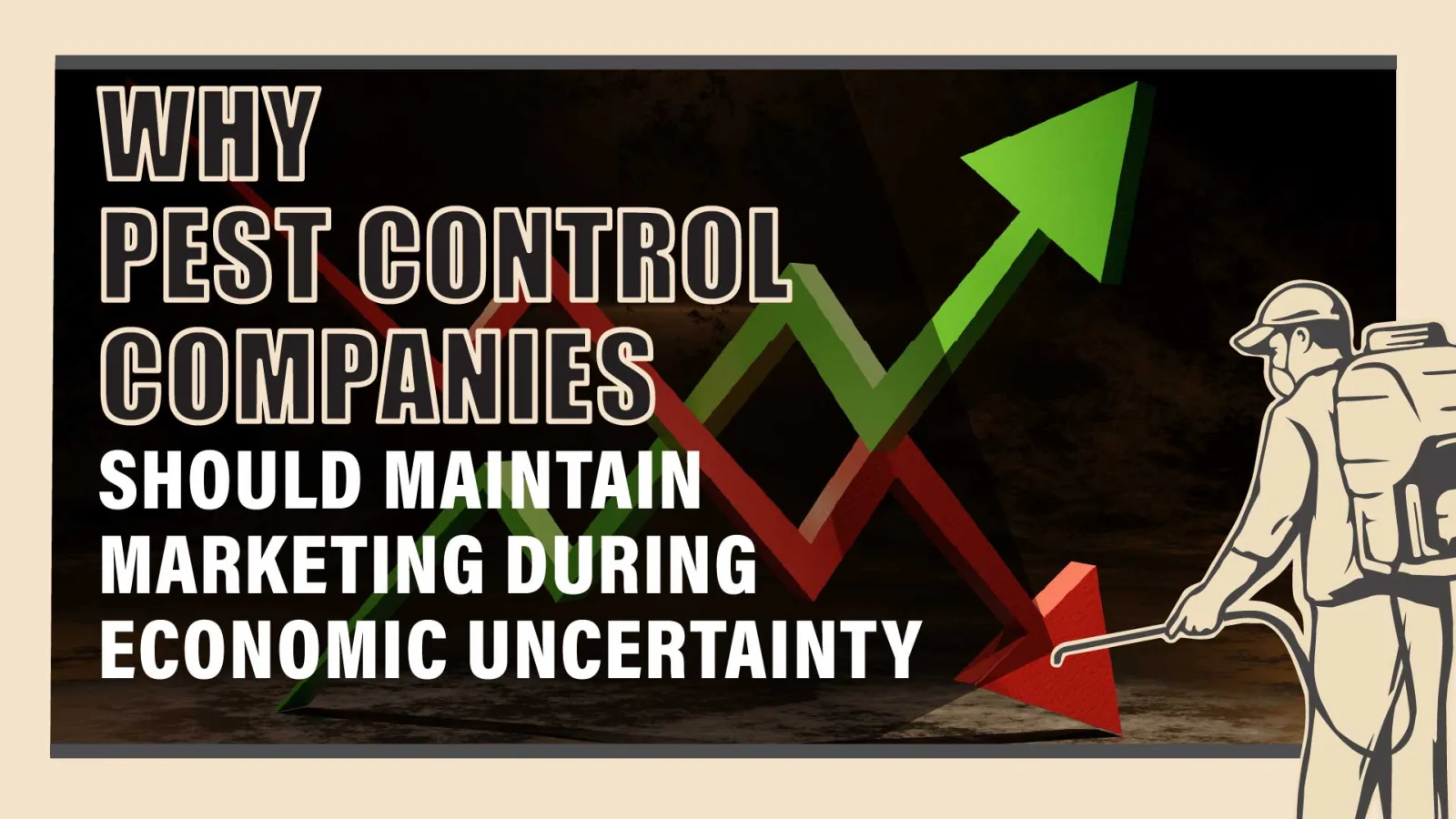
Pest control companies across the nation are facing a challenging economic landscape. Recent tariff implementations and international trade tensions have created market uncertainty that affects all sectors of the economy, including the home services industry. As pest control business owners review budgets, marketing expenses often become an easy target for cuts.
But is reducing your pest control company's marketing presence the right move during economic uncertainty? History and market data suggest otherwise.
Written By: Adam Bennett | April 14, 2025
Adam is the president and founder of Cube Creative Design and specializes in private school marketing. Since starting the business in 2005, he has created individual relationships with clients in Western North Carolina and across the United States. He places great value on the needs, expectations, and goals of the client.
Running a pest control business involves much more than simply eliminating unwanted critters. Behind every successful extermination is a well-oiled operation that maximizes resources, minimizes waste, and delivers exceptional customer service. In today's competitive landscape, operational efficiency isn't just nice to have—it's essential for survival.
If you feel like your business is getting bugged down by inefficient processes, you're not alone. Many pest control operators face similar challenges: technicians zigzagging across town, scheduling conflicts, miscommunication, and paperwork that multiplies faster than the pests you're trying to eliminate.
This guide will walk you through proven strategies to optimize your operations, implement the right technology, and measure success. By the end, you'll have a clear roadmap to transform your pest control business into a model of efficiency that not only improves your bottom line but also enhances customer satisfaction.
Let's exterminate those inefficiencies once and for all!
Written By: Chad J. Treadway | April 09, 2025
Chad is our Chief Smarketing Officer. He will help you survey your small business needs, educating you on your options before suggesting any solution. Chad is passionate about rural marketing in the United States and North Carolina. He also has several certifications through HubSpot to better assist you with your internet and inbound marketing.
In the battle against unwanted critters, your most valuable weapon isn't the latest spray technology or bait system—it's your people. The pest control industry is experiencing unprecedented growth, with demand for services crawling upward year after year. But while business opportunities are multiplying faster than fruit flies in a banana warehouse, finding qualified technicians and support staff has become increasingly competitive.
The truth is, you can have the most effective pest control solutions on the market, but without the right team to deploy them, your business won't reach its full potential. Think of recruitment like pest prevention itself—proactive strategies today prevent major headaches tomorrow.
This comprehensive guide will help you develop a recruitment approach that attracts qualified candidates who will stick around longer than that persistent colony of carpenter ants your customers keep calling about. Let's get the ball rolling and start building your dream team—no extermination required!
Written By: Chad J. Treadway | April 02, 2025
Chad is our Chief Smarketing Officer. He will help you survey your small business needs, educating you on your options before suggesting any solution. Chad is passionate about rural marketing in the United States and North Carolina. He also has several certifications through HubSpot to better assist you with your internet and inbound marketing.

The digital landscape for pest control businesses is crawling with change. While you've been busy exterminating real-world pests, the web browser ecosystem has been undergoing its own form of metamorphosis. For years, Google Chrome has dominated the market like a queen ant in a colony, but the hierarchy is shifting. Just as you wouldn't rely on a single treatment method for all pest infestations, depending solely on Chrome optimization for your online presence is becoming increasingly risky.
Today's pest control customers are as diverse as the browsers they use to find you. From homeowners frantically searching for "emergency wasp removal" on Safari to property managers methodically researching quarterly pest prevention plans on Firefox, your potential clients are scattered across the browser spectrum. And if your website isn't optimized to perform across this variety, you might as well be setting out traps with no bait.
In this comprehensive guide, we'll explore why multi-browser optimization isn't just a technical nicety—it's becoming a crucial competitive advantage for pest control businesses looking to thrive in 2025 and beyond. You're about to discover how diversifying your browser strategy can help you capture more leads, improve conversion rates, and ultimately grow your pest control empire. Let's debug your digital presence together!
Written By: Adam Bennett | April 02, 2025
Adam is the president and founder of Cube Creative Design and specializes in private school marketing. Since starting the business in 2005, he has created individual relationships with clients in Western North Carolina and across the United States. He places great value on the needs, expectations, and goals of the client.