In a small business, projects don’t usually arrive neatly packaged. They overlap. They get interrupted. They compete with everyday work that still has to get done. Without some kind of structure, it’s easy to lose track of what’s actually moving forward and what’s quietly stalled.
That’s why project management for small businesses matters. Not as a formal system, but as a way to keep work organized enough to stay in control as things change.
Why Project Management Matters for Small Businesses
Small teams feel the impact of poor planning more quickly than large ones. Missed deadlines, unclear responsibilities, and rework all cost time and money. According to the Project Management Institute, organizations with weak project practices waste around 11% of their investment due to poor performance. (Source: PMI)
For a small business, that kind of loss adds up fast. Even basic small business project management tools help teams stay focused, spot issues early, and make better use of limited resources.
How Small Businesses Can Effectively Run Their Projects
Most small businesses don’t “run projects” in isolation. Projects sit alongside everyday work and are often squeezed into gaps between other priorities.
“The most effective approaches tend to be practical rather than polished, focused on clarity, flexibility, and making progress without slowing everything down with unnecessary process. That’s why some teams use easy-to-use project management tools to keep tasks and responsibilities visible while projects run alongside daily work,” said Matija Konjić, Head of SEO at Breeze.
Keep your projects on track by doing the following:
Define Project Requirements
A lot of project problems don’t start during delivery. They start right at the beginning, when everyone thinks they agree on what’s being built, but nothing is actually written down. You’ll find versions of this cited all over the internet. A project kicks off with a quick conversation, enthusiasm is high, and work begins. Months later, the result doesn’t match what someone had in mind.
This is where project management vs. business management really comes out. Conversations about business can stay casual, but projects can’t. They need to be clearer. Requirements are what make a project what it is. They say what the end result should be, what is in scope, and what is not.
When managing a small business project, defined requirements serve as a point of reference throughout. They help teams plan their work realistically, identify dependencies, and address risk before it costs too much. When things change, which they often do, requirements make it easier to figure out what will happen instead of guessing and hoping for the best.
Put Clear and Consistent Communication at the Top of Your List
At first, communication problems don’t seem that bad. They happen more often as little misunderstandings that get worse over time. Someone thinks that the choice was final. Someone else never got the update. Communication is the most important part of project management for small businesses because gaps can slow a project down much more than expected when only a few people are working on it.
Transparency helps, but consistency is what keeps things running smoothly. Teams need to know where information lives and how updates are shared. Many small business project management tools help with this by keeping conversations, files, and decisions tied directly to the work, rather than scattered across emails and private messages.
For teams that operate outside the office, pairing clear communication with field operations software helps keep schedules, job details, and updates accessible in real time, reducing confusion as work moves forward.
When communication is clear and predictable, fewer things fall through the cracks. Expectations stay aligned, questions are raised earlier, and projects are far less likely to drift off course halfway through.
Track Progress Continuously Using Flexible KPIs
Progress in small businesses rarely follows a straight line. Priorities shift, workloads fluctuate, and unexpected tasks take over. Because of that, tracking progress needs to stay flexible. Rigid reporting systems tend to create more work than insight, especially for small teams.
Small teams usually get more out of watching a few signs that show how work is really going, rather than keeping track of everything. That might be whether key steps are being finished on time, where tasks tend to slow down, or how evenly work is spread across the team. With simple project management software for small companies, this kind of progress check stays visible without turning into extra paperwork.
For project management for small businesses, progress tracking works best when it’s low-pressure. The goal isn’t to get the exact right measurement; it’s to be aware. Regular, informal reviews make it easier to spot delays early and adjust plans while there is still time, rather than waiting until a deadline is at risk.
Review Performance and Refine Goals with OKRs (Objectives and Key Results)
When a project finishes, most small teams don’t spend much time reviewing it. There’s usually another deadline waiting, a client satisfaction issue, or something urgent that needs attention. It feels easier to move on than to stop and reflect. The problem is that without looking back, the same issues tend to repeat themselves.
OKRs can help with this, but only if they’re used lightly. They don’t need to become a formal process or a set of targets people feel judged against. In practice, they work best for structuring a short, honest conversation. You could be asking:
- What was this project meant to achieve?
- What actually happened?
- Where did expectations change along the way?
In project management for small businesses, this kind of review is about learning, not about scoring performance. Over time, these conversations help teams set clearer strategic goals, plan more realistically, and avoid carrying the same problems into the next project.
Adopt a Hybrid Project Management Approach
In theory, it sounds nice to pick a project management method and stick to it. In practice, that rarely happens in a small, local business. One project might feel predictable, the next one less so. Someone gets pulled into sales, a client changes direction, or a deadline suddenly matters more than the plan.
This is why a hybrid approach often works better, even if teams don’t call it that. Some structure is useful at the start. Knowing what needs to be delivered, roughly when, and who’s responsible helps everyone get aligned. After that, things usually loosen up. Tasks overlap, priorities shift, and plans get adjusted as new information comes in.
This way of working often develops on its own rather than being planned. Teams use structure where it helps and ignore it where it doesn’t. Plans change, work overlaps, and adjustments get made along the way. It isn’t perfect or especially tidy, but for many small businesses, it fits better than trying to force every project into a single, fixed method.
Leverage Technology Smartly: Automation and Cloud Solutions
Technology can help small teams, but it can just as easily slow things down. It usually starts with one useful tool, then another gets added, then another, until managing the tools becomes a job in itself. That’s when productivity drops rather than improves.
Cloud-based business tools tend to earn their place by removing small frustrations. Being able to check files, updates, or task lists without hunting through emails makes day-to-day work easier. Automation can also help, but only in small doses. Simple reminders or automatic updates are often enough.
The most effective project management software for small companies and small business project management tools are rarely the most complex. They fit existing habits, don’t demand constant input, and quietly support work instead of competing with it.
Managing Project Risks
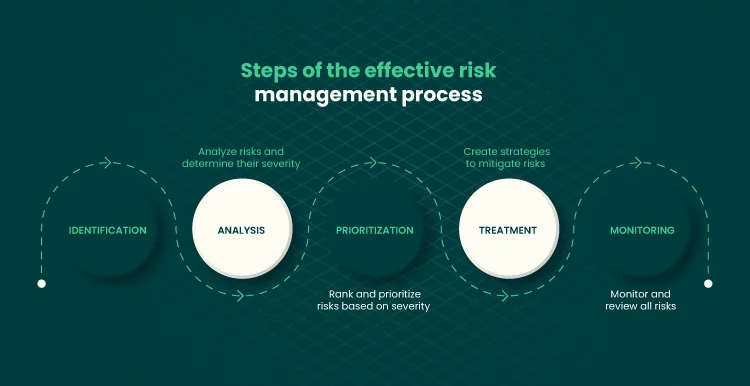
Source: Forbytes
Most of the time, the risk in small business projects isn't very high. It appears quietly. A due date that seems a little too close. Someone who knows how everything works. A supplier who is late once, then twice. If you don't address small problems like these, they can grow into bigger ones.
When managing a project, dealing with risk is less about following formal plans and more about being aware of where things could go wrong. It could be a schedule that doesn't leave time for breaks, tasks that depend on a single person, or decisions that take too long. Teams have more options and can make changes more easily before small problems get worse if they pay attention to the early warning signs.
Some teams handle this on their own, while others hire project management services for small businesses when projects get bigger or have more moving parts. Both ways can work. It's important to recognize risks rather than ignore them, and there should be room to make small changes before those risks affect delivery or relationships.
This approach is especially useful for digital projects like affiliate marketing, where timelines, partners, and performance can change quickly.
Boost Productivity with Timeboxing and Gamification
In small teams, productivity usually drops when work feels endless. Tasks don’t have a clear finish, so they get picked up, put down, and picked up again. Timeboxing changes that dynamic.
Instead of asking how long something should take, teams decide how long they’ll spend on it and stop there. For product development companies, this approach helps teams stay focused, reduce burnout, and make steady progress without feeling overwhelmed.
It also changes expectations. Not everything needs to be finished in one go. Sometimes progress is enough for now. That mindset tends to reduce overthinking and keeps things moving, even when time is limited.
Gamification works more quietly. Seeing tasks close out, lists shrink, or progress build creates a sense that something is happening. Many small business project management tools show this naturally. It’s not about motivation tricks. It’s about making progress visible when work would otherwise feel flat.
The Best Project Management Software for Small Companies
There isn’t a single “best” project management software for small businesses, because each business has different needs. Some teams want something that is easy to see and use, while others need better reporting or collaboration tools. Ease of use is what matters most. People usually don’t use tools that feel heavy or take a long time to use.
The best platforms are the ones that teams use every day. Small businesses need good software that helps them plan, communicate, and see what’s going on without forcing them to follow strict rules. It shouldn’t change how the team works; instead, it should make projects easier to manage without adding more work for the team.
Wrapping Up
There’s no single way small businesses manage projects. Most of the time, it’s a mix of habits that slowly form as things go wrong, then get fixed. Some tools stick, others don’t.
Processes get adjusted, dropped, picked up again. That’s normal. Over time, project management for small businesses becomes less about choosing the right method and more about finding a rhythm that doesn’t get in the way of actual work.