It doesn’t matter how much effort or money you pour into your website design. It can look amazing and perform great, yet still not feel ‘right.’ And the reason isn’t that your design decisions are bad. It’s just that they don’t align with what your audience wants, expects, and needs from your business.
Ultimately, a beautifully designed website is an extremely valuable asset. It can help position your business, attract and engage customers, and even differentiate your brand from your competitors. But it’s equally important that your online presence works for your audience.
User-centricity — particularly when choosing your layouts — holds great promise. But it can be challenging to achieve, especially in service industries such as pest control or small home service businesses. So, the best way to help your prospects identify the value you offer isn’t necessarily to rely on attention-grabbing (or even overwhelming) content. Rather, it’s ordering webpage elements in a way that follows your target audience’s buyer journey and helps them discover methods to resolve their pain points with maximum convenience.
In this article, we’ll take a deep dive into the psychology of web design. We’ll look at several popular web layout tactics that work for service businesses. And we’ll explore the reasons they feel ‘right,’ as well as tips to incorporate them into your company’s online presence. Let’s get into it.
Clear Page Structure That Highlights What’s Important
One of the most straightforward ways web design psychology can help you engage your audience is through visual hierarchy.
At its core, this design principle relies on emphasis. By using color, sizing, contrast, and spacing, visual hierarchy ensures that high-value webpage elements stand out, making them more likely to catch and engage web visitors’ attention.
What most business owners (and even some designers) forget is that certain layouts employ visual hierarchy exceptionally well.
For instance, research suggests that people spend most of their total web-browsing time above the fold. A page structure that communicates key service information within the first screenful has a much better chance of showing web visitors they’re in the right place to resolve their needs.
If you’re looking for real-life examples of how to use visual hierarchy to make your layout ‘work,’ just check out Massey Services Inc.
This business understands that its customers need immediate, convenient, and (most importantly) guaranteed-to-work results. That’s why its website layout reserves the hero section for a few core messages. These include the brand’s promise to help customers keep pests out of their homes all year round. It emphasizes that the brand has 15,000+ reviews with an impressively high rating. Furthermore, the lower-right corner suggests that Massey Services Inc. offers free inspections. Finally, the banner at the top of the page communicates that prospects can call a hotline for immediate help in emergencies.
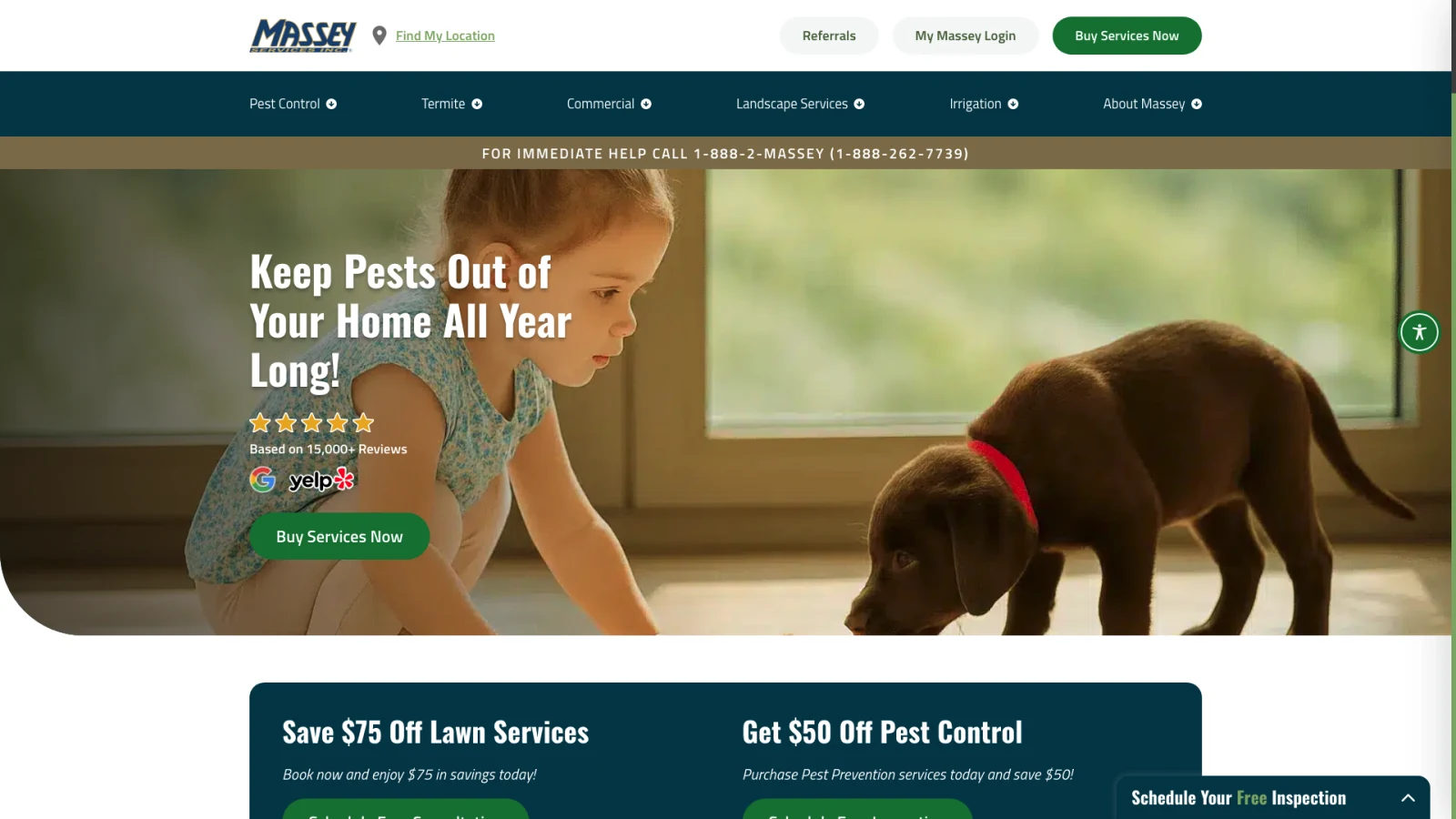
Source: masseyservices.com
Familiar Layouts That Feel Easy to Navigate
One of the most fascinating facts about web user preferences is that most people don’t inherently like innovative design. Yes, they appreciate aesthetic appeal. And they inevitably judge brand credibility based on website performance.
However, when it comes to the core aspects of what makes a site feel ‘right,’ it all comes down to simplicity and familiarity — a fact confirmed by a UX research study conducted by Google.
Ultimately, a familiar layout doesn’t just enable web visitors to find what they need on a website without having to work against a steep learning curve. More importantly, this web design principle ensures ease of navigation, which automatically translates into more natural movement through the sales funnel.
So, if you’re looking for web design psychology tips to build a website that simply ‘works,’ explore opportunities to make your layout a bit more predictable.
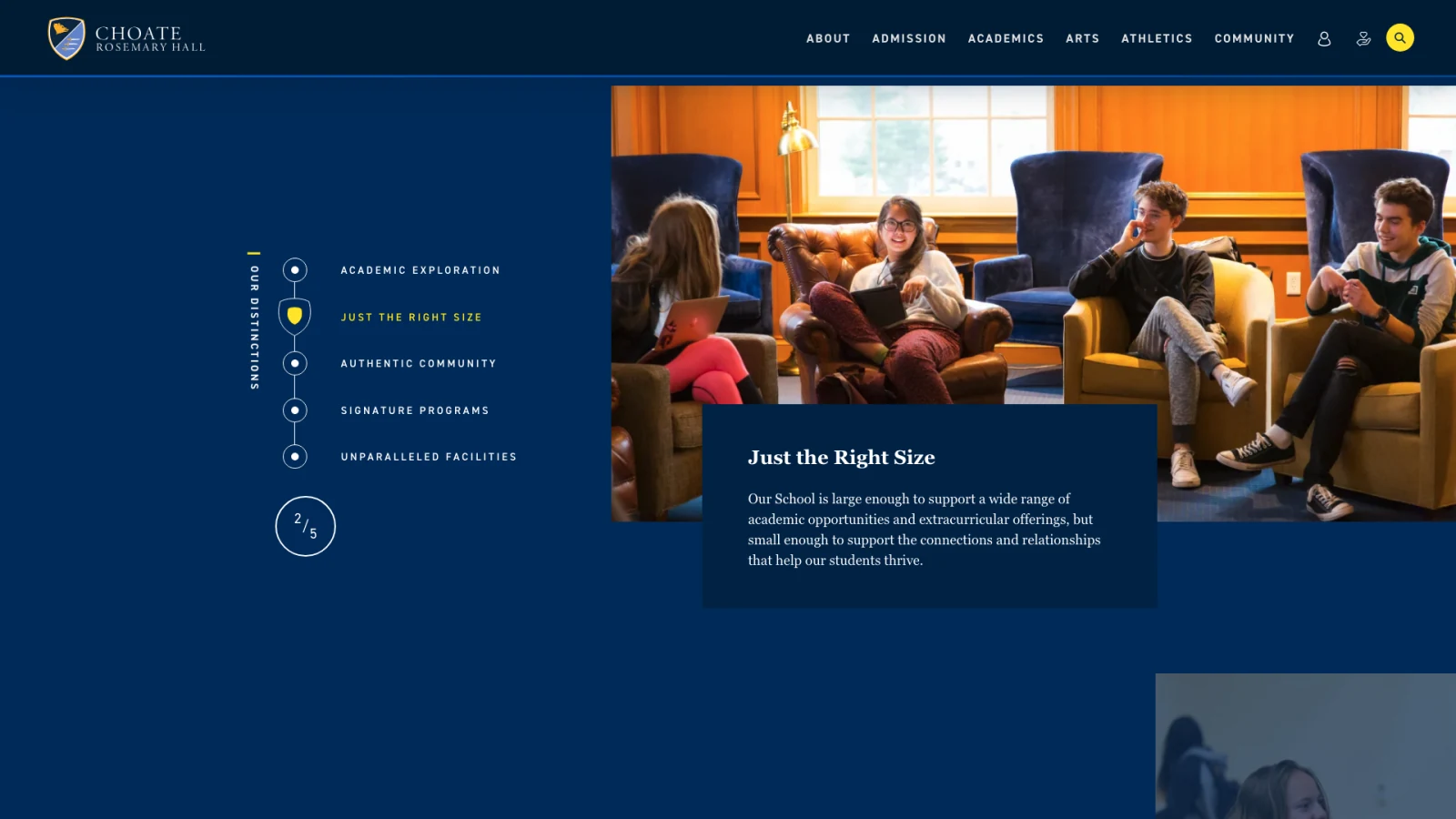
For instance, you can do this by integrating visual cues into your site’s design. It’s precisely what Choate Rosemary Hall does. This private school uses two separate scroll indicators on its homepage design. This simple visual choice communicates to web visitors that there’s more to see if they move further down the page. Additionally, the way this layout structure is repeated brings coherence to the entire website, making it an informative resource that feels intuitive in helping visitors find the info they need.
Source: choate.edu
Intentional Color Choices That Create Balance
Color choice plays a tremendously important role in web design. And it may even have a psychological impact on your web visitors, influencing their perception of your site, brand, and services.
According to color psychology insights, color directly impacts user emotions and behavior.
Research shows that people (subconsciously) assign meaning to specific hues — depending on their culture and past experiences, of course. But even more importantly, scientific studies suggest that web users form opinions about brands and websites based on the color palette used in a site’s design.
According to a 2024 study, color schemes that align with people’s cultural and psychological associations enhance emotional connections to a website, improve their perception of usability, and elevate engagement rates. Poorly-chosen palettes, on the other hand, harm brand trust and reduce satisfaction.
So, when looking to design a website layout that feels ‘right’ to your audience, pay attention to how you use color.
In addition to making intentional choices that align with your brand’s visual identity, also aim for balance.
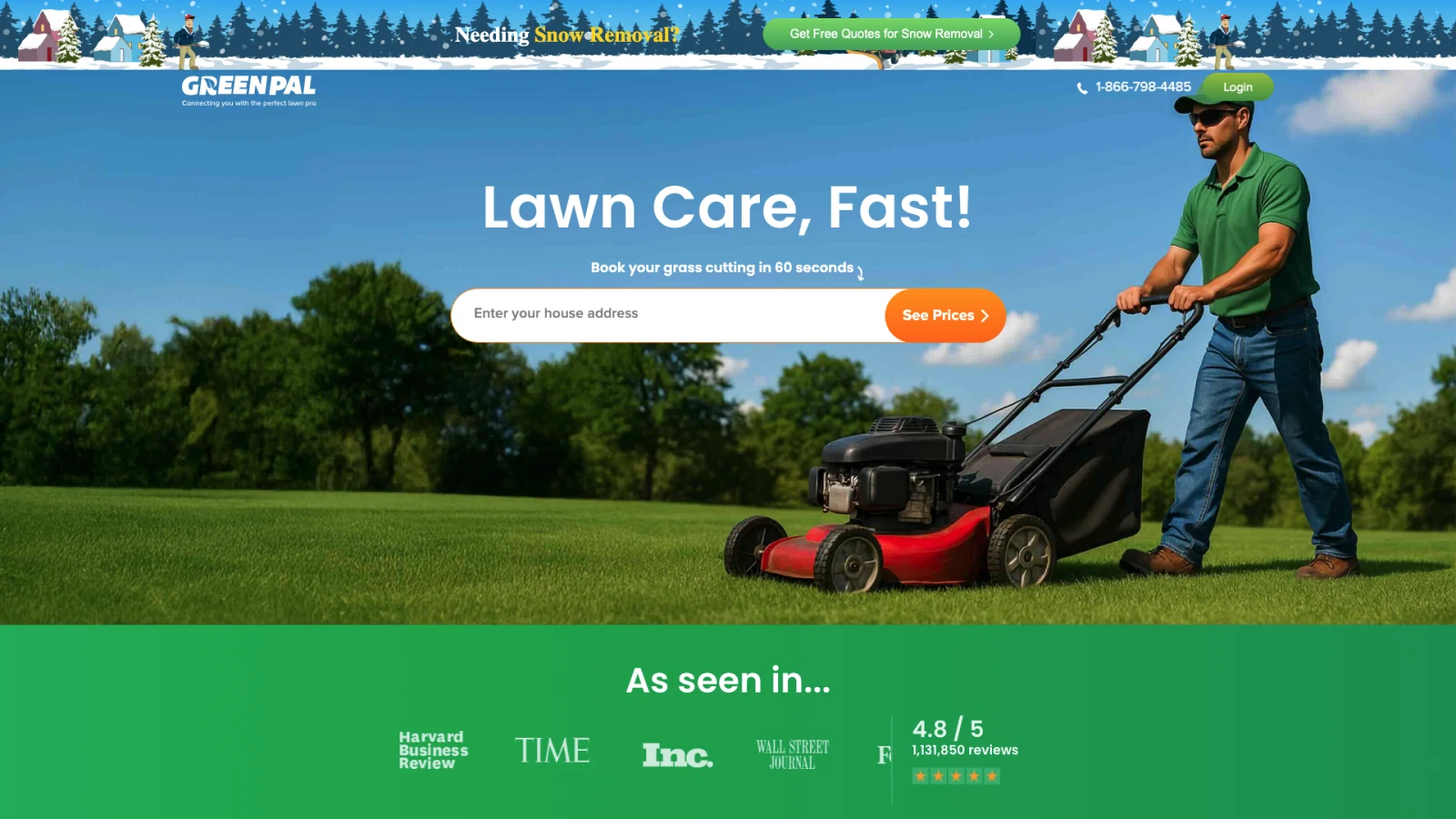
For inspiration on how you can use this web design tactic, check out GreenPal. You’ll notice that the lawn care business intentionally incorporates the color green into its web design. This choice perfectly matches the company’s service. But the hue also aligns with the brand’s identity, which is entirely built around year-round lawn care (and GreenPal’s target audience’s aspirational outcome — a beautiful green lawn on their property).
Source: yourgreenpal.com
Consistent Spacing That Feels Organized
One of the more commonly overlooked aspects of web design psychology is that leaving parts of your page blank can be just as powerful as filling them with content — if not more powerful.
The principle of negative space is fairly simple. It stipulates that a layout needs ample white space in order to be engaging and user-friendly. This design choice ensures proper visibility, readability, and contrast.
In practice, negative space doesn’t necessarily have to be white. However, it does have to contribute to a website’s layout by making it feel intentional, organized, and easy to interact with. What is more, intelligent use of negative space effectively removes informational overwhelm — a common occurrence that makes consumers stall (and even leave) the sales funnel.
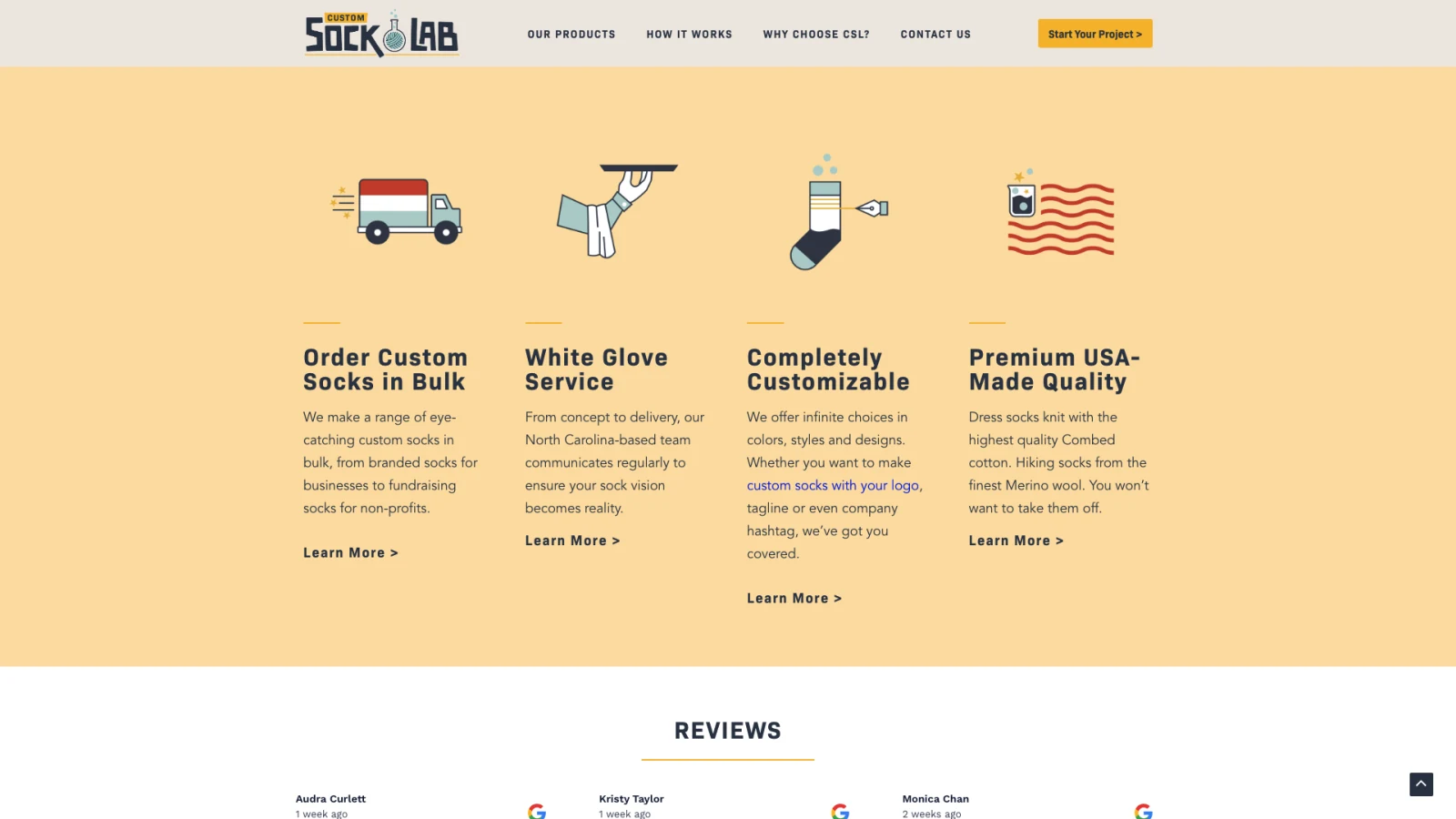
For example, check out how Custom Sock Lab incorporates consistent spacing into its online presence. By using ample white space and color blocks, this business manages to separate its website sections, creating a layout that feels organized and logical. Additionally, this design choice elevates the ease with which visitors can scan the Custom Sock Lab homepage, aiding them in identifying information relevant to their needs, boosting their understanding of the brand’s value propositions, and gently guiding them through the buyer’s journey.
Source: customsocklab.com
Easy-to-Read Typography That Supports Scanning
When exploring website layouts that are successful at meeting user expectations, one web user behavior to keep in mind is that most people don’t read online.
According to two decades of research conducted by the NN Group, most internet users scan pages instead of reading them word-for-word. What’s even more interesting is that most of them have developed preferred reading patterns, which determine where web visitors look while browsing.
Now, simply following these reading patterns with your site’s layout could be a smart UX design solution that helps make your site feel ‘right.’ Nevertheless, you don’t have to limit yourself to specific design choices just because they’re otherwise common. Instead, you can utilize other elements of web design to make your site user-friendly.
Typography, for instance, plays a major role in enabling scanning (and affecting readability). Research suggests that text size, shape, and spacing have the potential to maximize reading performance. So, optimizing your website fonts could be a great method to improve the scannability of your web content.
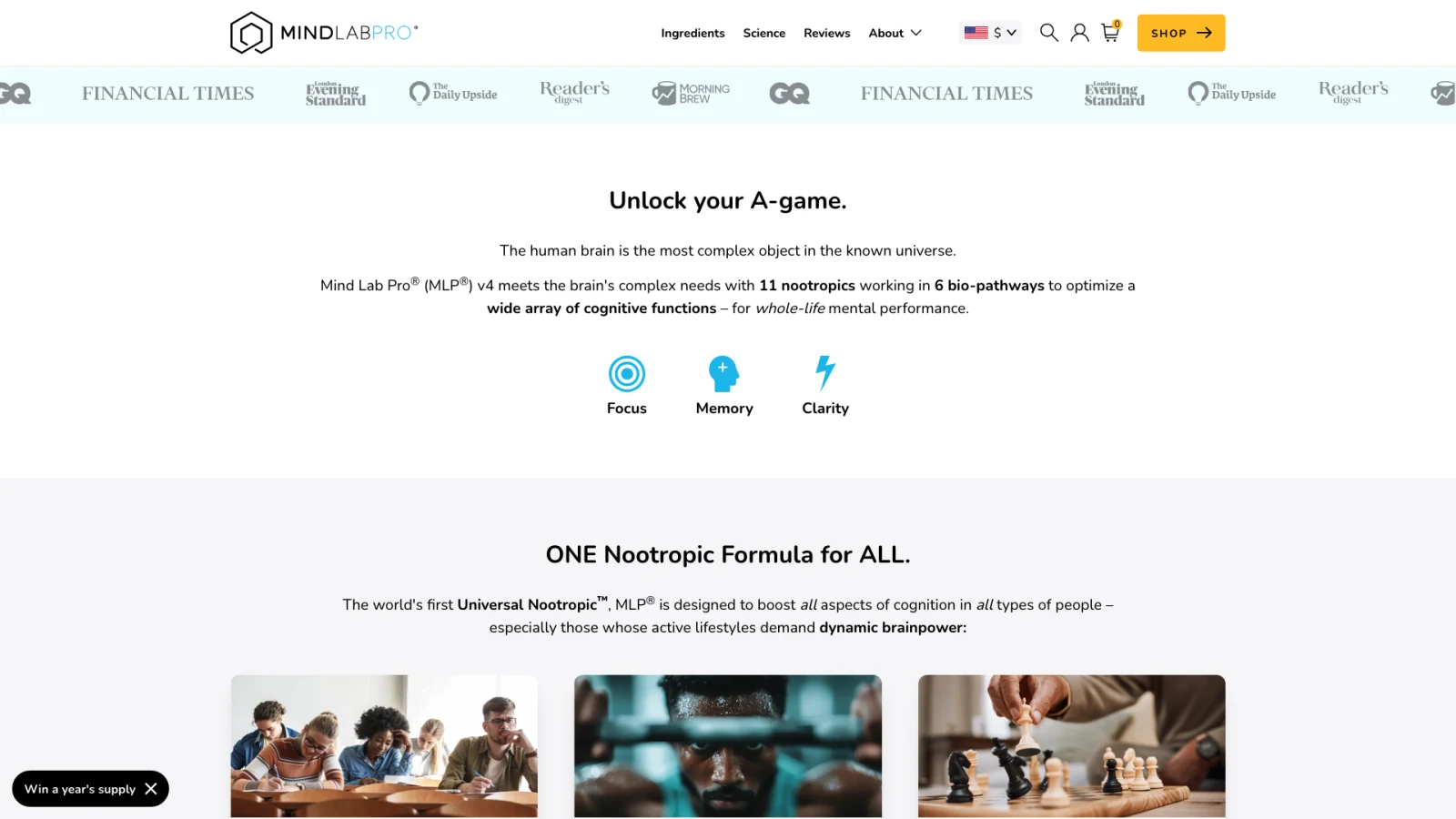
The great news is that implementing this design strategy requires minimal effort. Basic yet professional fonts — like the ones used on the Mind Lab Pro homepage — are perfect for guiding your visitors’ attention across your website, elevating service understanding, conversion intent, and ease of navigation.
Source: mindlabpro.com
Content Grouping That Is Easy to Understand
Another psychology-backed web design tactic that can be extremely beneficial in making your online presence user-friendly is content grouping.
Essentially, your site’s layout needs to accomplish two things.
On the one hand, your site should make it easy for visitors understand the benefits of investing in your services, making them want to convert into customers. This is particularly true for niche service brands whose offer commonly necessitates some industry knowledge to drive sales.
On the other hand, a great layout should gently guide your prospects through your marketing funnel, addressing their questions one at a time, and (ideally) removing conversion obstacles that prevent them from hiring your business.
With content grouping, you can accomplish both of these goals. This tactic can improve your website layout’s ability to drive business results. Furthermore, it can shape a digital space where your audience feels comfortable (and not bombarded by information).
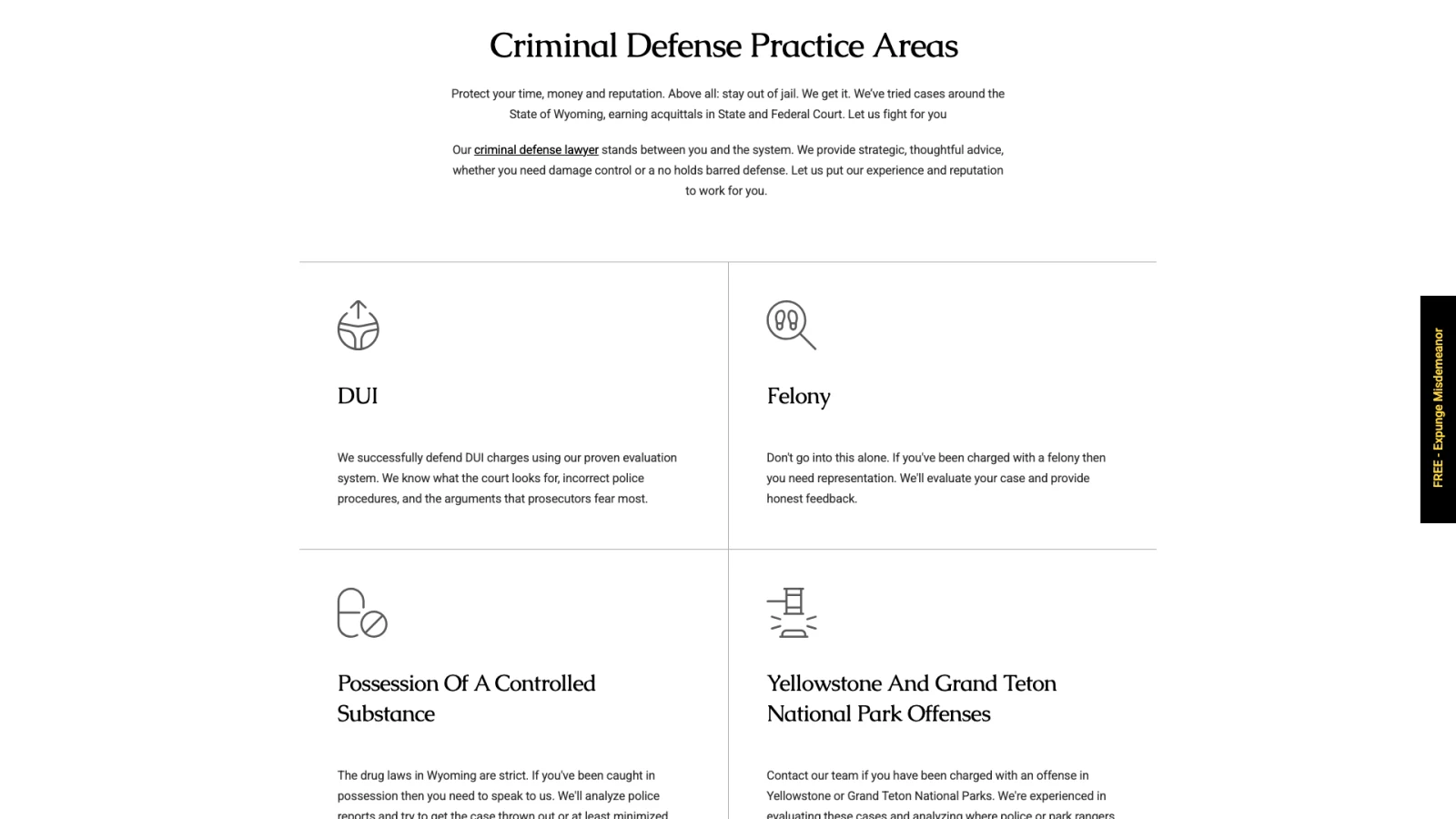
The Freeburg Law website uses content grouping very intelligently. Considering that this business offers a very complex service (and that it covers niche topics on its website), content grouping aids customer movement through the sales funnel by organizing content into clear, logical sections. These help elevate understanding; they reinforce the firm’s expertise. And most importantly, they prevent web visitors from experiencing informational overwhelm that could cause them to give up on converting or form a non-favorable opinion about Freeburg Law.
Source: tetonattorney.com
A Natural Flow That Guides Visitors Down the Page
The final web design psychology hack that can help a layout feel ‘right’ is to prioritize overall page flow over single-focus tactics. Yes, any of the web design strategies covered in this guide work on their own. But a site can be engaging only if it naturally guides visitors down the page.
To ensure smooth progression from the top to the bottom of your website, aim for layout clarity. A clean design, with a strong information hierarchy, engaging visuals, and user-friendly content formatting practices will inevitably provide web visitors with an enjoyable (and outcome-oriented) browsing experience.
What’s important to note is that good UX doesn’t just enhance web engagement and conversion rates. It also reflects on brand reputation. This means that the secret to positioning your home service brand or private educational institution could depend on the usability and flow of your site.
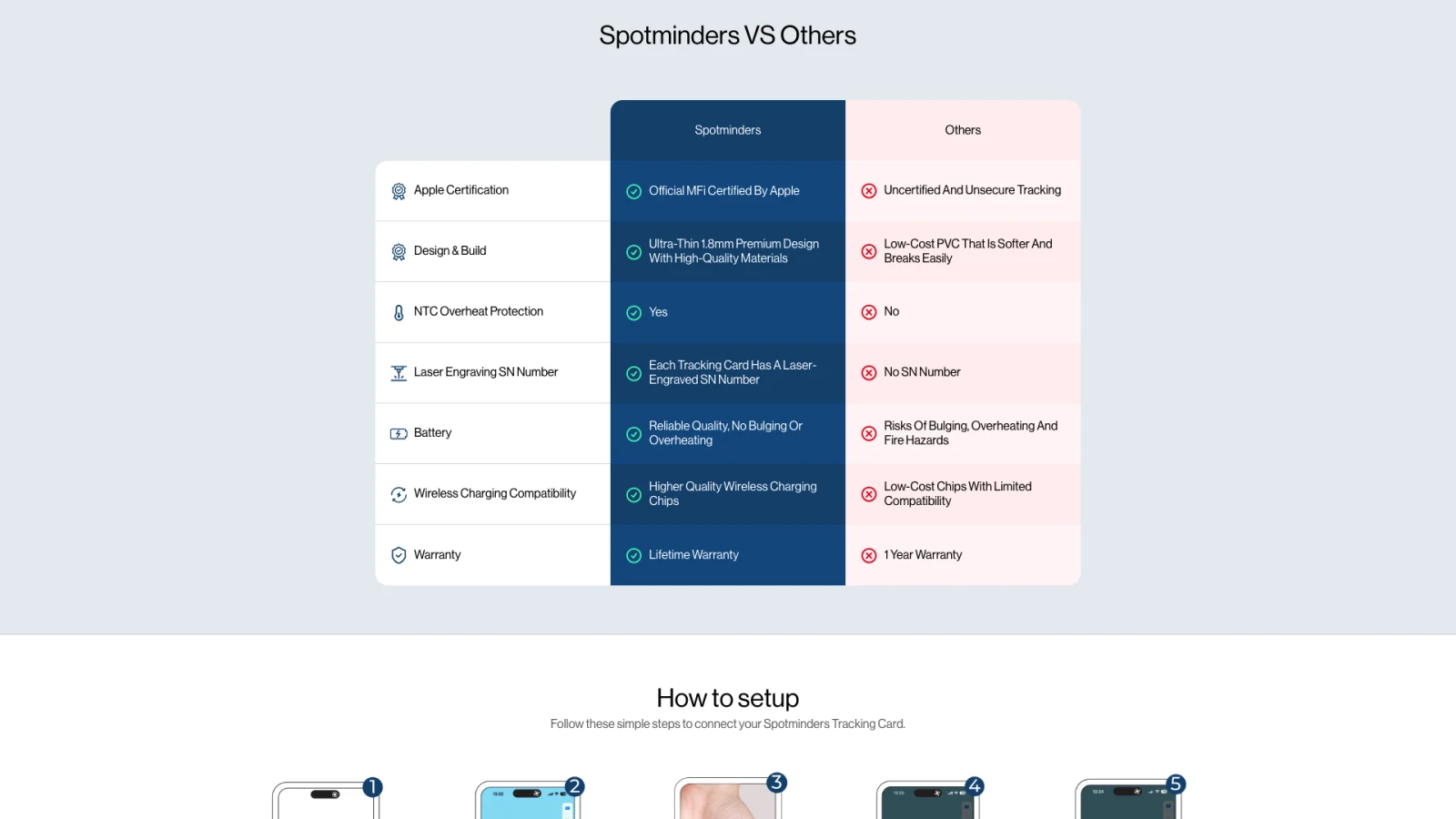
For inspiration on what this can look like, check out Spotminders. This business understands what questions customers might have before investing in its services. So, it addresses these inquiries in the logical order that they appear: starting with benefits, setup processes, competitor comparisons, then moving on to social proof, FAQs, and UGC.
Source: spotminders.com
Final Thoughts
Great web design doesn’t just look good. And it doesn’t just ‘work.’ To truly contribute to your business growth goals, your site has to predict and meet visitors’ needs as they arise.
A user-centric layout rooted in design psychology can help achieve this effect. Naturally, the perfect design approach for marketing your service might differ from the examples listed in this guide. But at the end of the day, any of the principles covered in this article are more than likely to benefit your business.
The next step is clear: take a close look at your website layout. And ask yourself: does it feel right? If it does, then you’re probably good to go. But if you find any area that might benefit from some improvement, then take that opportunity. It might just make the difference you need to unlock serious business growth.