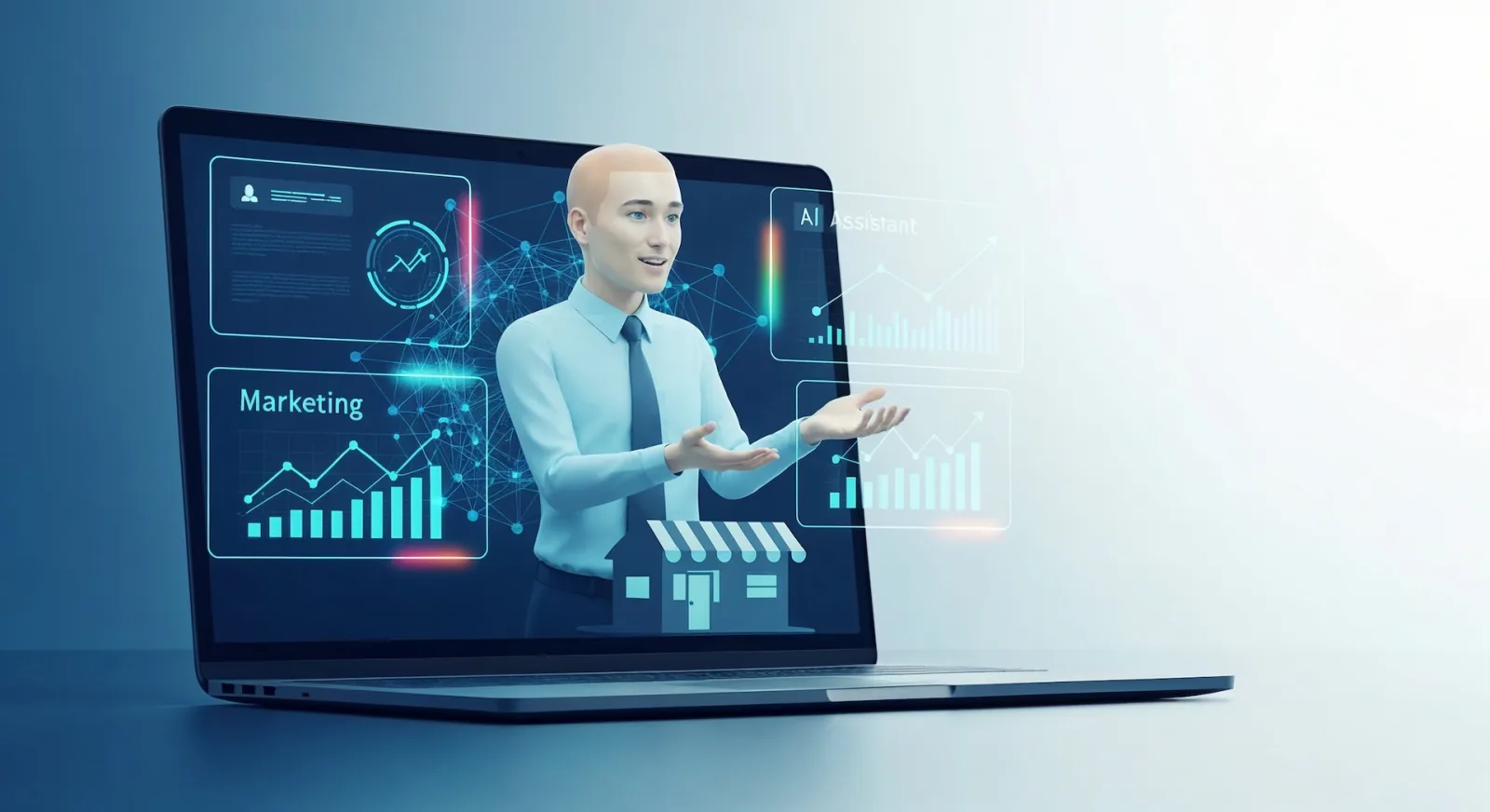
What’s next for small business AI marketing?
Many industries deploy AI, and this shift is already visible in marketing.
According to a survey, adoption of AI tools among small businesses jumped from 39% in 2024 to 55% in 2025, a 41% surge in just one year.
If you run a small enterprise, that number should make you sit up and ask: Are you ready to ride the wave or risk being left behind?
In this article, we’ll walk through the biggest shifts shaping AI marketing for small businesses by 2026, what they mean for you, and how to prepare for and embrace this change.
What’s Changing in AI Marketing for Small Businesses by 2026
AI is becoming an important element for small and medium businesses (SMBs). These businesses are adopting AI for their repetitive daily tasks.
But what exactly is changing?
- Speed and accessibility: Generative AI tools, AI-powered chatbots, automated analytics, and many others are now plug-and-play. Small businesses can access powerful capabilities without large budgets or in-house data science teams.
- The Rise of GEO:Search is shifting from traditional links to AI-generated answers. To stay visible, businesses are turning to a GEO specialist to optimize their content for "AI citations" rather than just blue links.
- Broader use cases: AI has become accessible to everyone. It's no longer reserved for big companies or niche areas. It’s being used across marketing campaigns, customer service, hiring, operations, financial forecasting, and decision support.
- Higher stakes, higher expectations: As adoption of AI increases, expectations also increase. More small businesses are relying on AI for actual growth. Businesses expect better targeting, personalization, and efficiency.
In other words: AI marketing for small businesses is moving from an optional experiment to an essential infrastructure, and in 2026, that shift will become more obvious.
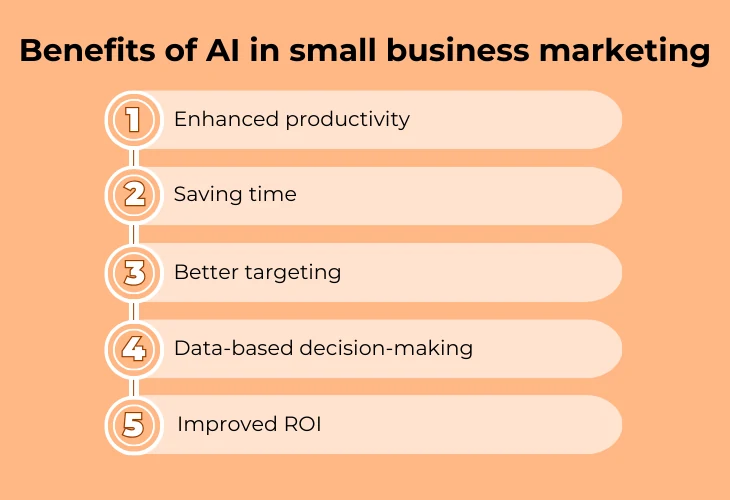
Key AI Marketing Trends Small Businesses Should Watch in 2026
1. Personalized & data-driven marketing at scale
In 2026, every business will be able to personalize its content. They can tailor messages, offers, and content. They can keep their brand voice consistent across all platforms. This is possible because of AI tools that analyze customer behavior in real-time.
Instead of generic email sequences, you’ll be able to personalize messages based on what customers browse, click, or buy.
Action Tip: Start by feeding clean data to your AI chats using tools like Windsor MCP. Even simple things like tagging customers by interests, purchase frequency, or location help AI create more accurate segments and improve campaign performance.
2. Automated content creation and campaign execution
Creating quality content is a long process. You need a team of writers and editors. But AI is here to help. AI drafts blog outlines, generates social posts, and automates email sequences. AI enables you to produce more content faster without compromising your brand voice.
Campaign execution is getting smarter, too. AI tools optimize send times, select audiences, and adjust messaging based on the recipient. Using a visual database software can also help you organize and manage your marketing assets efficiently. To make AI-generated content actually usable, many small businesses rely on structured content collection workflows that ensure information, approvals, and inputs are gathered consistently. Clean, well-organized content makes it easier for AI tools to personalize campaigns and automate distribution without introducing errors.
Instead of spending hours on copywriting or scheduling posts, you free up time to think about strategy, customer relationships, and experimentation. Automating email sequences and using AI-powered tools can also reduce inbox overload, keeping your communications organized and actionable.
Action Tip: Build an AI workflow for content. For example, use AI to draft first versions, refine with your creativity, and automate distribution. This keeps quality high and reduces the production time.
3. Smarter customer engagement & support via conversational AI
Customer conversations are becoming one of the most powerful differentiators for small businesses. AI-driven chatbots and assistants handle FAQs, guide buyers through decisions, and offer personalized recommendations. Saas SEO companies are already leveraging these features and small businesses should also start harnessing them.
This improves customer satisfaction and ensures that no message slips through the cracks, whether it arrives at 3 p.m. or 3 a.m.
What’s shifting is the expectation: customers now want instant and humanlike responses without having to wait for business hours.
Beyond support, AI is also reshaping outbound sales. AI SDRs can automatically prospect leads, qualify them based on behavior and intent, and follow up across email, LinkedIn, and other channels without manual effort. Instead of relying on static sequences, AI SDRs adapt messaging in real time, helping small businesses scale conversations and pipeline creation without hiring larger sales teams. Platforms like AnyBiz are already using AI SDRs to turn engagement data into consistent revenue opportunities.
Action Tip: Start small by automating your top five most common customer questions. As your comfort grows, expand into product suggestions, follow-ups, and feedback collection.
4. Lean & efficient operations
AI is becoming the backbone of small business operations. These tools help optimize ad spend, generate performance reports, or automate repetitive workflows. AI helps your business run leaner and faster. For example, to get email addresses, companies often rely on email finders and they could be AI-powered.
Tasks that once took hours, like analyzing campaign results or adjusting bidding strategies, now take minutes to complete.
The real win is that you save both time and money, which can be redirected into growth areas like product upgrades, new locations, or better customer experiences.
Action Tip: Choose one high-impact task where manual steps add little strategic value (such as data compilation for monthly reports or routine bid adjustments) and automate those steps first. This quick win builds confidence and momentum for deeper AI adoption later.
5. AI-powered predictive analytics for smarter decision-making
By 2026, small businesses won’t just use AI to understand what’s happening; they’ll use it to predict what will happen next. Predictive analytics is emerging as one of the most valuable tools in AI marketing because it turns raw data into forecasts.
Businesses will find answers to questions like which products will trend, which customers are likely to churn, and which campaigns will deliver the strongest ROI.
Instead of guessing your next marketing move, AI models help you anticipate customer needs, seasonal demand shifts, and the ideal time to launch offers. This gives small businesses the kind of foresight that once only enterprise teams with large data budgets enjoyed.
What makes this trend especially powerful is its practicality. You don’t need complex models. Even simple AI tools can show which customer segments are warming up, which campaigns are slowing down, and where your hidden opportunities lie.
Action Tip: Start by enabling predictive features in your CRM or email platform. Focus on one prediction, like identifying customers who haven't purchased recently, and create a tailored win-back campaign. Once you see the lift, expand into product demand forecasting or churn prediction.
How Small Businesses Should Prepare for 2026 AI Marketing Trends
1. Build a clean & centralized customer data foundation
Start by consolidating customer data into a single CRM or marketing platform. Clean up duplicates, update missing details, and create simple labels like “engaged,” “first-time buyer,” or “high-value.” This basic structure will help AI segment customers more intelligently.
As you centralize your customer data, don’t overlook email infrastructure basics. Using a free SPF generator helps you quickly create or validate your SPF record, ensuring your marketing emails are properly authenticated and trusted by inbox providers. This small technical step supports better deliverability and keeps your AI-driven campaigns from being undermined by spam filtering issues.
2. Adopt AI tools gradually instead of overhauling everything at once
The biggest mistake small businesses make is signing up for too many AI tools at once. You don’t need to automate everything on day one.
Choose one workflow to automate first, such as email sequences, social media scheduling, or ad optimization. Focusing on this step can improve email productivity and help your team save time while getting better results. Track how much time you save and how performance improves. Once you see the value, expand it into a second AI feature or tool.
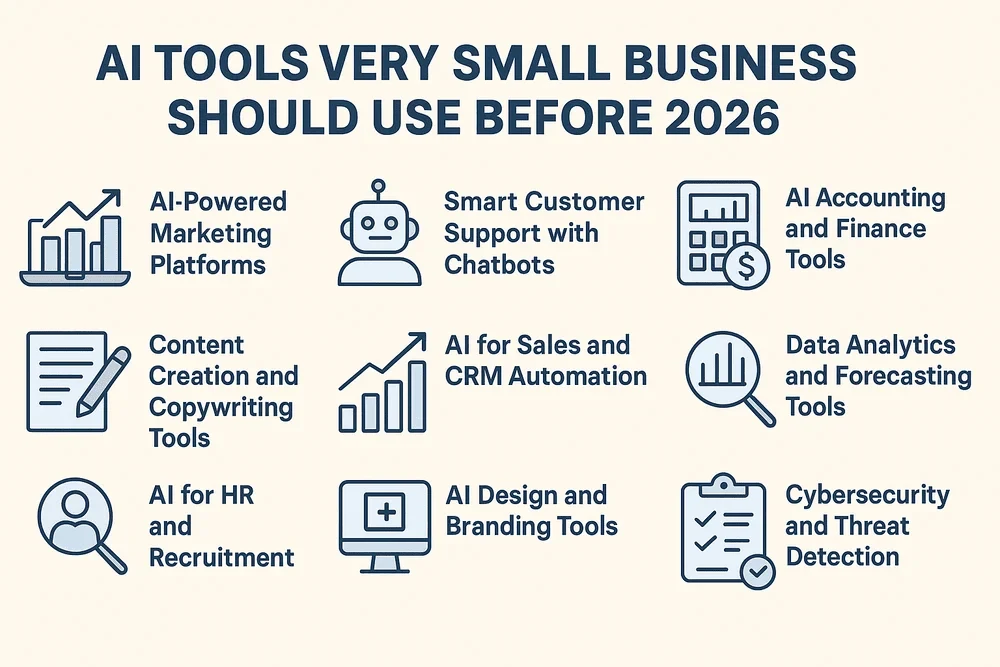
3. Train your team to work alongside AI, not replace their expertise
AI increases your team’s capabilities. Therefore, your team should know how to leverage these tools to improve efficiency.
And that’s where employee training becomes important. Conduct short internal training sessions or share tutorial videos when introducing any AI platform. Assign a team member as the “AI champion” to test features, document best practices, and help others use the tool effectively.
4. Experiment with AI-driven personalization and measure results
Personalization works best when you test different messages, offers, and timing to see what resonates.
Run A/B tests for email subject lines, landing pages, or product recommendations. Use AI reports to see which customer segments respond best, then double down on the winning approach.
5. Use predictive analytics to plan campaigns & anticipate customer needs
Predictive analytics helps you make smarter marketing decisions by forecasting customer behavior and demand patterns.
Turn on predictive features in your CRM or email platform. Start with one prediction, such as identifying customers who may churn soon. Create a targeted re-engagement campaign and measure the lift compared to your usual outreach.
6. Strengthen your ethical and transparent use of AI
Consumers care about how businesses use their data. Update your privacy policy in simple language. Add a short note on your website or forms explaining how customer data supports better recommendations and experiences. Give customers easy opt-out options to maintain trust.
What 2026 Means for Small Business AI Marketing Success
AI marketing is becoming a practical everyday tool that small businesses can use to reach the right customers, personalize experiences, and make smarter decisions.
The key is to start small, stay consistent, and adopt AI in a way that genuinely supports your goals rather than overwhelming your team.
With the right foundation, 2026 will feel like real progress.
If you want to generate high-quality leads through strategic data-driven content, connect with us to get started.