If you’re here, most likely, you’ve already experimented with the fundamentals, from a compelling website design to mouth-opening (and scroll-freezing) social media stories—all basic marketing strategies that are supposed to work. But maybe they are too feeble to attract high-value clients to your brand and service, and perhaps you need to try something more sophisticated or even innovative? And what if you’re targeting the wrong client segment, not high-value but low-value?
Let’s first understand, and then attract and convert high-value service clients with the next-level approaches. Read and follow this guide. It’s basically the “Client Magnetism: The Elite Edition” scenario for service brands.
Who Is a High-Value Service Client?
To put it simply, high-value clients or customers are those who generate the most benefits for businesses. This concerns not merely revenues but also other aspects, such as customer lifetime value, word-of-mouth popularity, and others.
They typically account for 5–20% of the total client base, often referred to as:
- VIP or elite clients
- Priority clients
- High-profile clients
- Platinum or premium members
- Strategic clients
- And so on.
For example:
If you’re in the healthcare business, your VIP client could be a company that has signed a two- or five-year contract with you to provide monthly checkups for employees and has even mentioned you as a reliable partner on social media.
And in the home service industry, a strategic customer could be a homeowner who requires house improvements all year round (a predictable, stable revenue flow), pays on time, and refers your brand to other homeowners.
But, of course, there are more markers. Let’s name the most critical ones.
The Key Characteristic Features of High-Value Service Clients
Higher Spending Potential
High-value customers are high-payers in the first place. They typically spend three to five times more than others on average.
Plus, they tend to order services systematically, making regular (and substantial!) contributions to business profitability.
Higher Loyalty and “Coolness” to Discounts
They aren’t one-timers who order a service once (and disappear for good). They do it repeatedly and eventually become loyal to your service-based business, building long-term relationships with you through:
- Stability
- Reliability
- Trust
- Consistency
- Personalized customer experience
- Ongoing support and guidance
Mind: A high-value service client wouldn’t typically hunt for one-time deals or seasonal discounts either.
For example:
Suppose you’re running a private school and considering education marketing solutions for high-value clients. Compared to others, they are unlikely to get converted by seasonal marketing tricks like early-bird discounts in your K-12 summer-to-fall conversion plan. They seek more “substance” or worth from your offer, not a lower cost.
That’s why you need more advanced practices for attracting high-value service clients consistently, not with a single-shot discount.
Higher Ambassadorship
Win them over once, and they’ll endorse you to others as super-devoted fans. Are you already imagining your brand reputation soaring higher than ever?
When high-value customers are satisfied with the services, they rave and refer. They easily turn into brand advocates who bring new referrals.
For example:
If we peek into the private school business once again, they can eagerly join a parent ambassador program and engage in social media advocacy.
Higher Risk Aversion
High-value clients are greatly averse to taking risks. They don’t jump headlong into buying. They would rather tiptoe first to see service proof and guarantees to avert any kind of risk:
- Financial loss (wasting a large sum of money)
- Reputational crisis
- Time drainage
- Operational disorder
- Relationship-building failure, etc.
It doesn’t mean that they don’t trust you. It just means that their stakes (and investments!) are much bigger.
Higher Expectations
You may argue that customer demands are already sky-high overall.
But—
The higher the client value, the more expectations may be imposed on your service brand:
- White-glove service: Extra care and attention to detail
- Stellar quality: Same-level service excellence every single time
- Premium communication: No vague replies or ghosting. A privileged, VIP treatment with for-their-eyes-only content or insider-only information.
- Smooth process: Hassle-free customer experience from start to finish
For aesthetic practices, cosmetic clinic software can connect booking and follow-up workflows for a more consistent client journey.
Top 5 Attraction Tricks for High-Value Clients in Service-Based Businesses
Find and Qualify High-Potential Leads Automatically with AI
Without exaggeration, artificial intelligence (AI) is one of the most revolutionary strategies, whether in B2C or B2B lead generation and qualification for service providers.
And here are several AI tools you might use to properly identify high-value leads, engage, and convert them into clients:
- Via your website: Leadfeeder, Customers.ai, Pathmonk, ScoreApp
- Via email: HubSpot Sales Hub, Drift Email, Saleshandy
- Via socials or other platforms: Leadspicker AI, LeadIQ (particularly for LinkedIn), Kommo, Devi AI, MadKudu
But then, when it comes to your website, you can turn to AI chatbots to accomplish this task.
For example:
Orkin embedded such a chatbot on the website to qualify and attract high-value service clients through an effective AI-powered pest control marketing strategy.
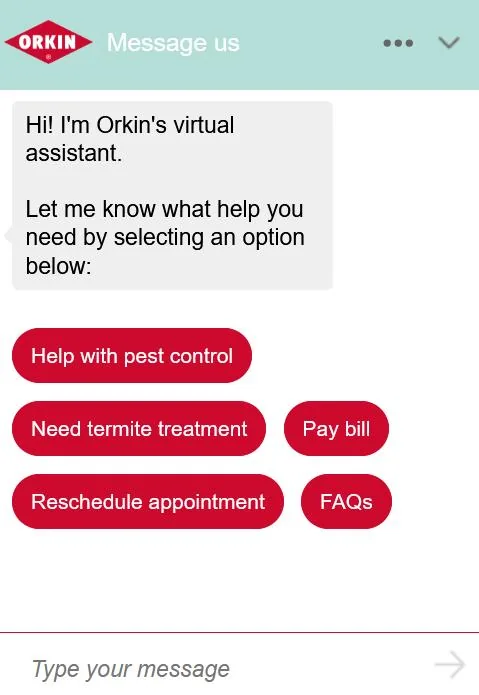
Source: Orkin.com
Want an even more cutting-edge solution?
Pro tip: Use AI-driven tools like Emitrr or eSelf.ai to design a lifelike voice/video assistant that captures high-value customers and guides them smoothly through the sales funnel.
Speak Their Language (Literally!)
Is there any chance you’re missing out on a huge segment of high-value service clients speaking different languages?
If so, Step One is to translate and localize your website.
For example:
Aside from the English version, ITDS developed other website versions to attract high-value clients speaking Polish, Portuguese, and Dutch.
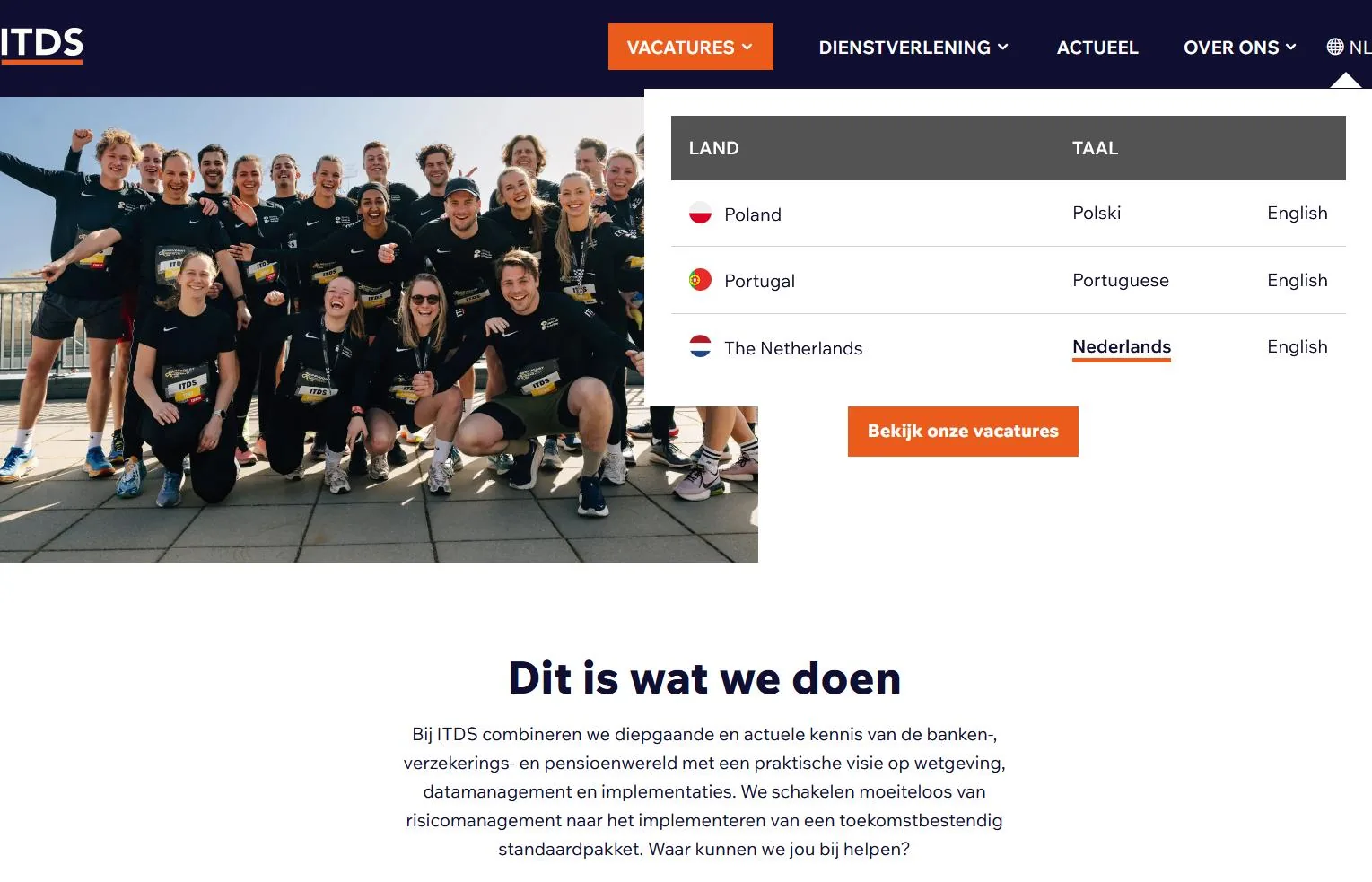
Source: Itds.nl
Then, Step Two would be to create (or AI-generate!) multilingual content for them.
For example:
While targeting French-speaking families living in England, Osbornes Law launched the “French Family Transitions” podcast with a professional attorney and coach answering the most popular questions in the legal field of family law for expats.
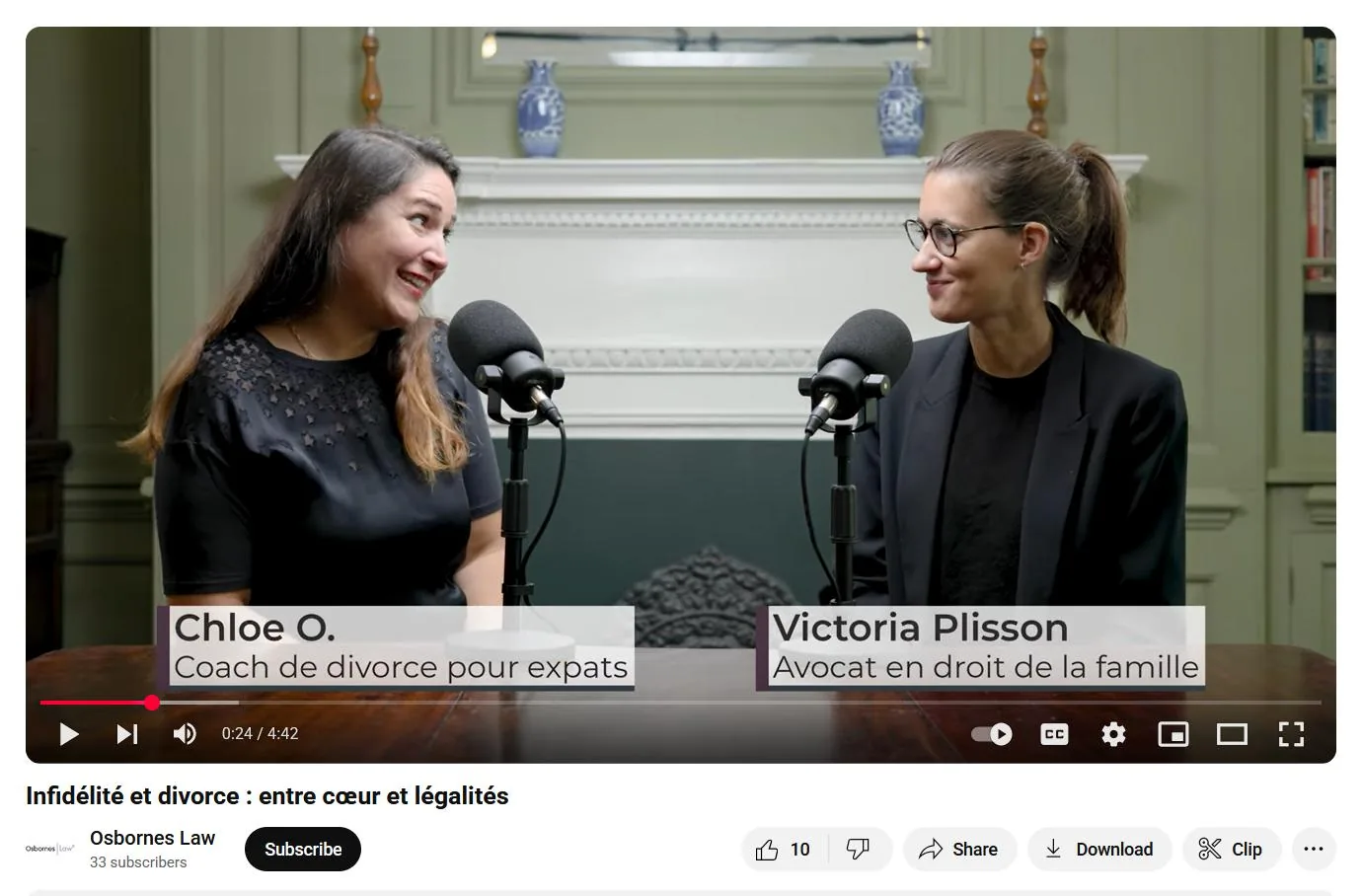
Source: YouTube.com
Pro tip: Turn to AI for multilingual content creation and localization. AI tools like BeLikeNative (for social media posts), Rask.ai (for videos), or Crowdin (for websites and apps) can help you do that in no time.
Create Higher-Value Lead Magnets
Naturally, a valuable lead magnet would be the most powerful attractor of high-value customers. Why? Because it provides the worth and value they expect from brands.
Attractive lead magnets for high-value service clients can be various useful content pieces to give away in exchange for their email addresses and phone numbers:
- Ebooks
- Templates
- Industry reports or whitepapers
- High-ticket case studies
- VIP consultations
- Webinars/roundtables
But then, lead magnets can also help you distinguish high-value from low-value clients. Here’s how. Let’s look at the B2B case.
For example:
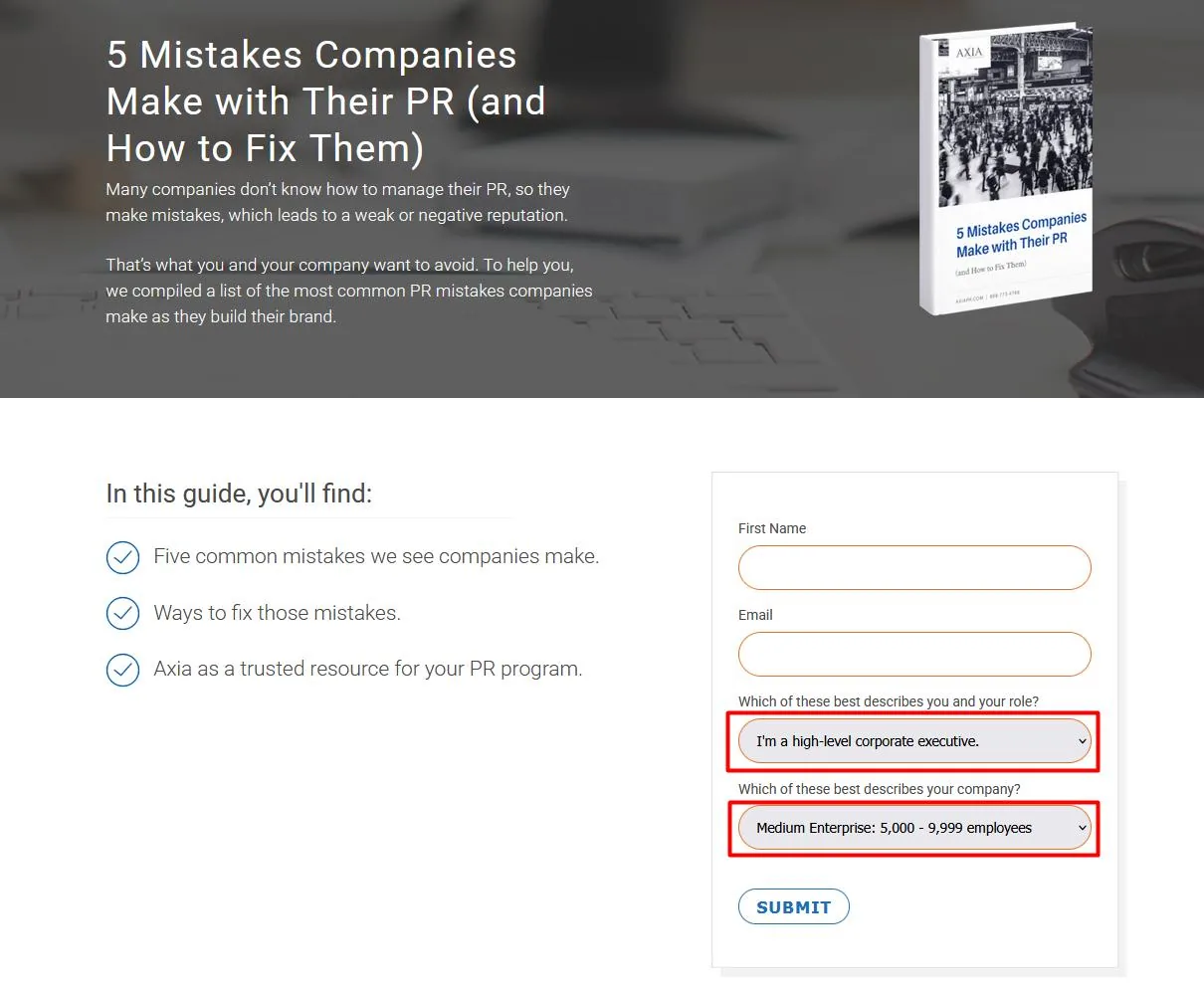
Axia created a downloadable PDF highlighting public relations mistakes to pull quality leads into the sales funnel and single out higher-value clients through firmographic segmentation (based on the corporate role and employee count).
Source: Axiapr.com
Volume Up the Voices of Other Clients Through Audio/Video Testimonials
Let’s be honest—you’ve probably been used to publishing customer testimonials or reviews as texts or images (at best). How about going to the next level and literally amplifying your clients’ voices with audio and video formats?
Note: Video testimonials are even more trustworthy and effective in this contest. According to testimonial statistics, 79% of consumers watched a video testimonial about a company or its product/service before deciding whether to buy.
Audio Testimonials
For example:
If you’re into school marketing, consider recording parent testimonials in audio format to attract higher-value prospects who prefer listening to content on the go.
Or—
If you run a podcast, invite parents to share their positive experiences and add those audio clips to your testimonials page. Why not?
Video Testimonials
For example:
Terminix shares the “I Survived” types of pest control customer stories in the video format: Termite Control Story or Ant Control Story on YouTube.

Source: YouTube.com
Pro tip: When managing online reviews from satisfied clients, gather and pile them under one hashtag for better discoverability and visibility among your potential high-value service clients across social platforms, too.
For example:
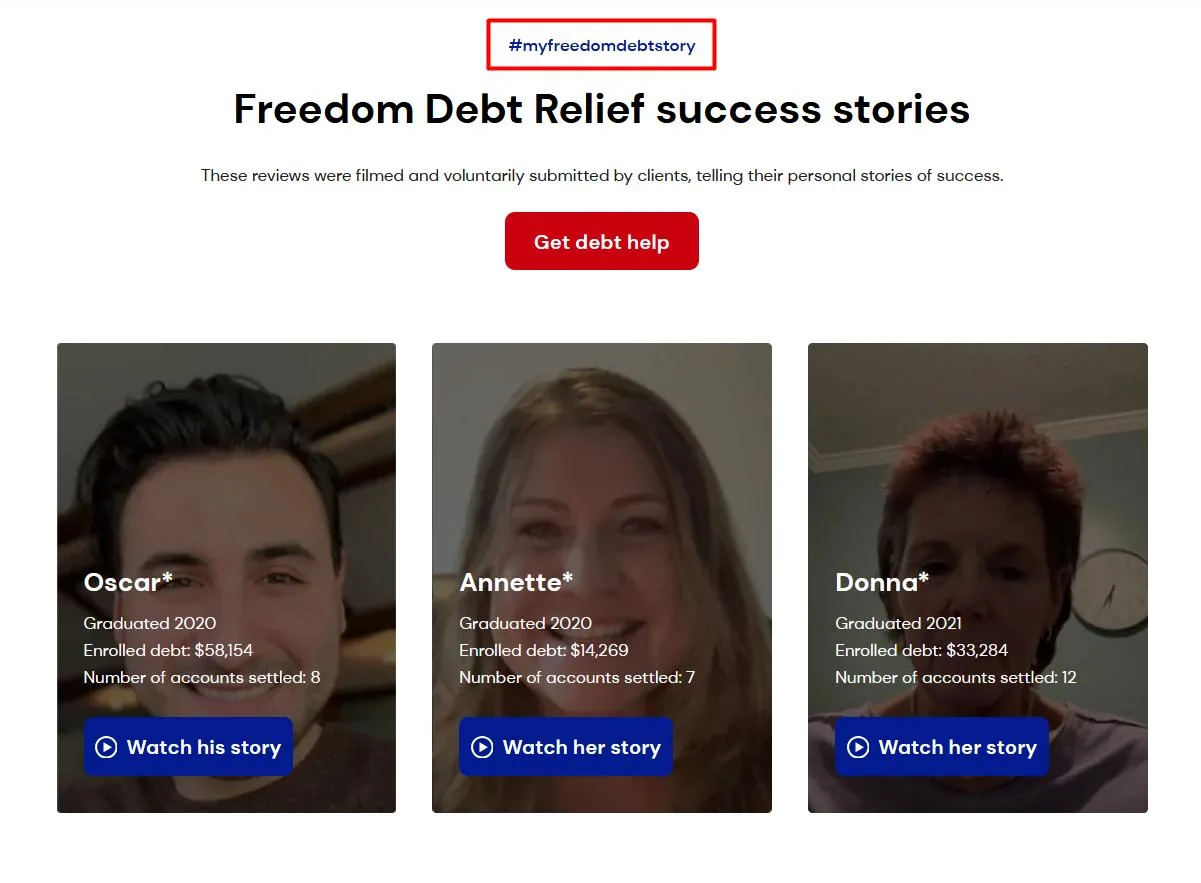
Freedom Debt Relief collects customer testimonials about their financial services under the hashtag #myfreedomdebtstory and repurposes them later on the website.
Source: Freedomdebtrelief.com
Add More Measurable and Numeric Trust Signals
You already know that high-value customers are hard to convince and convert. That’s why you need to create irresistible value propositions for them with believability anchors—measurable and numeric signs—as follows:
- Social proof: “We have 2,357 five-star reviews!” instead of “We have many happy clients.”
- Years of service: “We’ve been proudly serving clients for 23 years” instead of “We’ve been around for a long time.”
- Licenses and certificates: “We’re certified and licensed in all 50 states” instead of “We’re qualified to do the job.”
- Response or service speed: “We typically respond in 5–10 minutes” instead of “We’ll get back to you ASAP.”
- Guarantees: “We save time by 40–50% on average!” instead of “We save much time!”
For example:
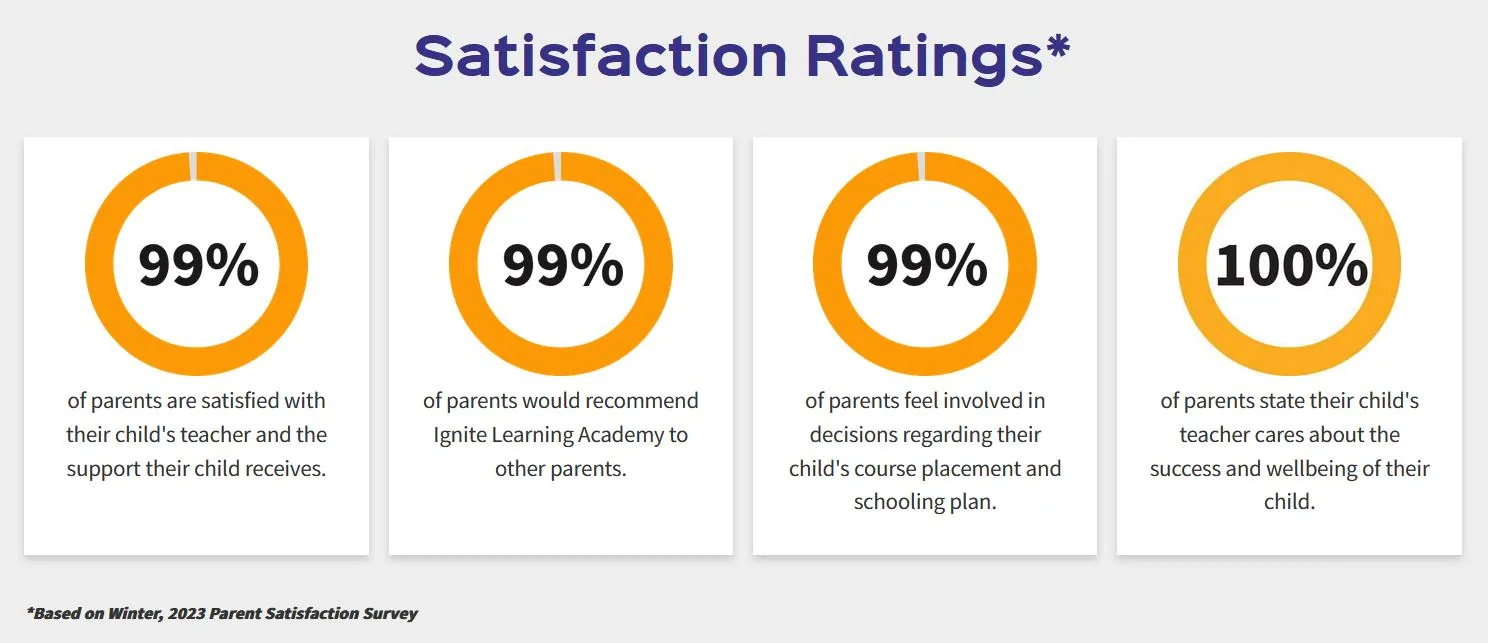
After surveying parents, Ignite Learning Academy indicated satisfaction percentages as social credibility signals on the homepage.
Source: Ignitelearningacademy.com
Pro tip: If you offer services locally, add geo-based trust markers.
For example:
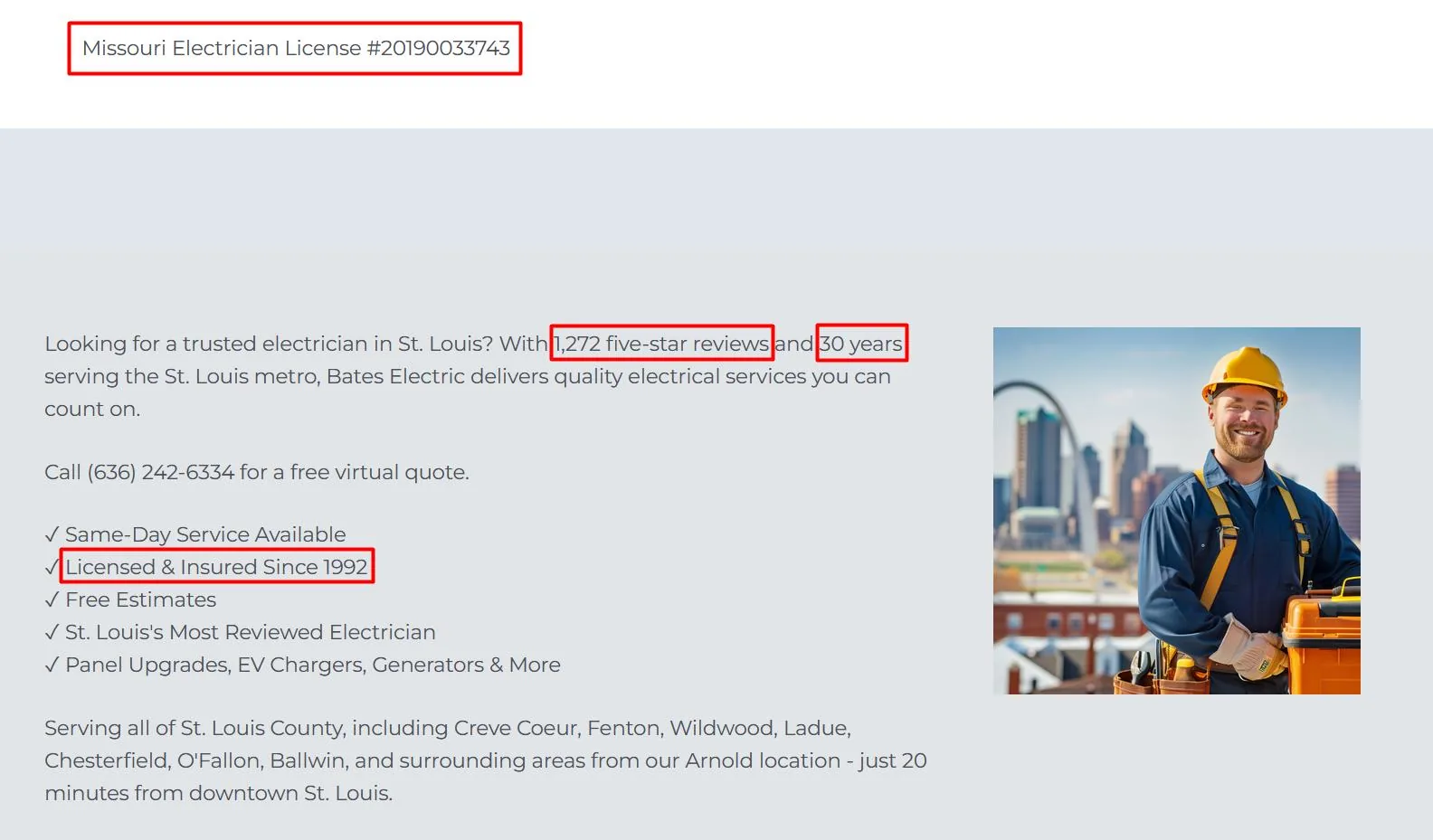
To target high-value clients looking for an electrical contractor in St Louis, MO, Bates Electric mentioned a location-relevant indicator, “Missouri Electrician License #20190033743,” along with other trust signals.
Source: Bates-electric.com
Wrapping Up Your Playbook for Attracting High-Value Service Clients
So, here’s a wrap-up.
High-value clients are much harder to captivate and draw into the sales funnel. Yet, it’s an achievable task if you use more advanced strategies:
- Proper AI tools for lead generation and qualification
- Multilingual marketing
- Appealing lead magnets
- Engaging audio or video testimonials
- Measurable trust indicators
Grab those and head to charming and winning your high-value clients over.