The way people see your business often starts before they ever speak to you, buy from you, or visit your website for long. It starts with your branding. The trouble is, a lot of small businesses don’t realize when something feels off.
Maybe your message is unclear, your visuals don’t quite match, or your business just blends in too easily.
These kinds of branding mistakes are common, but they can be fixed. A few smart changes can make your brand feel more recognizable, more trustworthy, and much more like you.
What Branding Really Means (and Why Most Get it Wrong)
A lot of people hear the word branding and think of logos straight away. Fair enough, that is the visible bit. But branding does more than that. It’s the feeling people get from your business, the tone you use, the way you present yourself, and what they come to expect from you over time.
In Edelman’s 2025 Trust Barometer special report, 80% of people said they trusted the brands they use, which says a lot about the link between branding and customer service. (Source: Edelman)
Small businesses often get this wrong by focusing on the look before the substance. If the message is fussy or the experience feels mixed, the brand ends up being forgettable.
9 Critical Branding Mistakes Small Businesses Make
Even good businesses can get branding wrong, especially when day-to-day priorities keep pulling your attention elsewhere. These common branding mistakes tend to build up quietly, but once you spot them, they’re usually far easier to fix than you might expect.
1. Lack of Clear Brand Positioning and Messaging
A lot of small businesses are not as clear as they think they are. From the inside, everything makes sense because you already know what you do and who you help. From the outside, though, your message can feel vague, generic, or too close to what everyone else is saying. If someone visits your website and can’t quickly tell what makes you different, that’s a real branding issue.
This is one of the most common branding mistakes because clear positioning is what gives your business shape. It tells people who you are, what problem you solve, and why they should remember you. For instance, personal branding real estate agents highlights how niche professionals use sharper messaging to stand out in competitive markets. Without it, your marketing starts to feel flat and forgettable.
One of the best small business branding tips is to strip your message back and make it sharper. Explain what you do in simple language, focus on those you want to reach, and sound different from other businesses in your space.
2. Low-Quality Visuals, Design, and Seeing Branding as Just a Logo
So many small businesses think branding starts and ends with a logo, whereas it’s only a small part. People notice the full picture, your website, social media graphics, packaging, photos, fonts, and colors. If those things look rushed, outdated, or inconsistent, it can make your business feel less credible, even when what you offer is genuinely good.
Low-quality visuals are one of those marketing mistakes that quietly chip away at trust. You don’t need a huge budget or flashy design, but you do need things to look considered and consistent. A blurry image, clashing colors, or a messy layout can leave the wrong impression.
Good branding feels joined up. Your visuals should support your message, not distract from it. Among the most useful small business branding ideas is this one: Stop treating your logo like the whole brand, and start paying attention to the overall look and feel people actually experience.
"Your packaging is often the first physical thing a customer touches. If it doesn't match your brand, you've already lost consistency at a critical moment." — Michael Morar, Elite Custom Boxes
3. Inconsistent Brand Identity Across Platforms and Weak Social Presence
A business can look polished on its website, then feel like a completely different company on Instagram, Facebook, or LinkedIn. That kind of mismatch confuses people more than you might think. Changing your tone from platform to platform, mismatching your visuals, or leaving pages half-abandoned makes it harder for people to trust what they’re seeing.
This is one of those branding mistakes that often slips under the radar. You may still be posting now and then, but if your branding feels patchy, the overall impression is weaker. People notice when one platform feels active, and another looks neglected.
You don’t need to be everywhere, and you don’t need to post every day. What matters is that your business feels recognizable wherever people find you. Make sure your visuals, tone, and key messages are aligned. Also, concentrate on being consistent across the platforms that matter most to your audience.
4. Ignoring Your Target Market and Customer Feedback
It’s surprisingly easy to build your branding around guesswork. You assume people care about one thing when really they care about something else. You focus on what you want to say, not what they need to hear. That gap can make your brand feel off, even if you cannot quite see why.
This is where customer feedback earns its keep. Reviews, messages, comments, and repeat questions can tell you a lot. They show what people notice, what confuses them, and what actually matters when they decide to buy.
A lot of branding mistakes start here. Not with bad intentions, just with not listening closely enough. If you want better results, pay attention to the language your customers use and the problems they keep mentioning. Good branding should feel like it understands people. If it does not, they will move on pretty quickly.
5. Trying to Appeal to Everyone and Copying Competitors
This is where a lot of small brands start to lose their shape. You look around, see what similar businesses are doing, and end up borrowing the same tone, offers, or look. On top of that, you try to speak to everyone, just in case. The result is usually a brand that feels safe, but also easy to ignore.
Copying competitors might seem like the safer move, but it often leads to the same kind of branding failures again and again. If your business sounds like everyone else in the market, people have no real reason to remember you.
You don’t need to please everybody. In fact, trying to do that usually weakens your message. Strong branding has a point of view. It knows who it wants to reach and leans into that. Some of the best small business branding ideas come from being more specific, not more generic.
6. Lack of a Defined Brand Experience Strategy
A lot of small businesses put real effort into how the brand looks, then leave the actual customer experience to chance. That is where things can start to come apart. Your website might look polished, but if your emails feel cold, your process is confusing, or replies take ages, people notice.
Talha Naz, Marketing specialist at Sparx Reader, said: “Branding lives in those moments, too. It’s not only the colors, logo, or tagline. It’s the feeling people get from dealing with you from start to finish. If that experience is messy or inconsistent, the brand starts to feel less convincing.”
This is one of those marketing mistakes that’s easy to miss because it doesn’t always show up straight away. But over time, it affects trust. A clear brand experience means thinking about what customers actually go through and making sure it feels in step with the rest of your business.
7. No Content + Branding Alignment
Some businesses publish plenty of content, but none of it really sounds or feels consistent. A blog article may read one way, social captions another, and email copy something else again. Instead of building recognition, the content starts to feel scattered.
This is one of those branding mistakes that can quietly weaken everything else. Content should reflect your tone, values, and the kind of audience you attract. If it feels random or off-brand, people get a mixed picture of who you are.
Good content does more than bring traffic or keep your pages active. It reinforces your identity over time. That means your topic, tone, and message should all feel like they belong to the same business. If they do not, your branding and your content end up pulling in different directions.
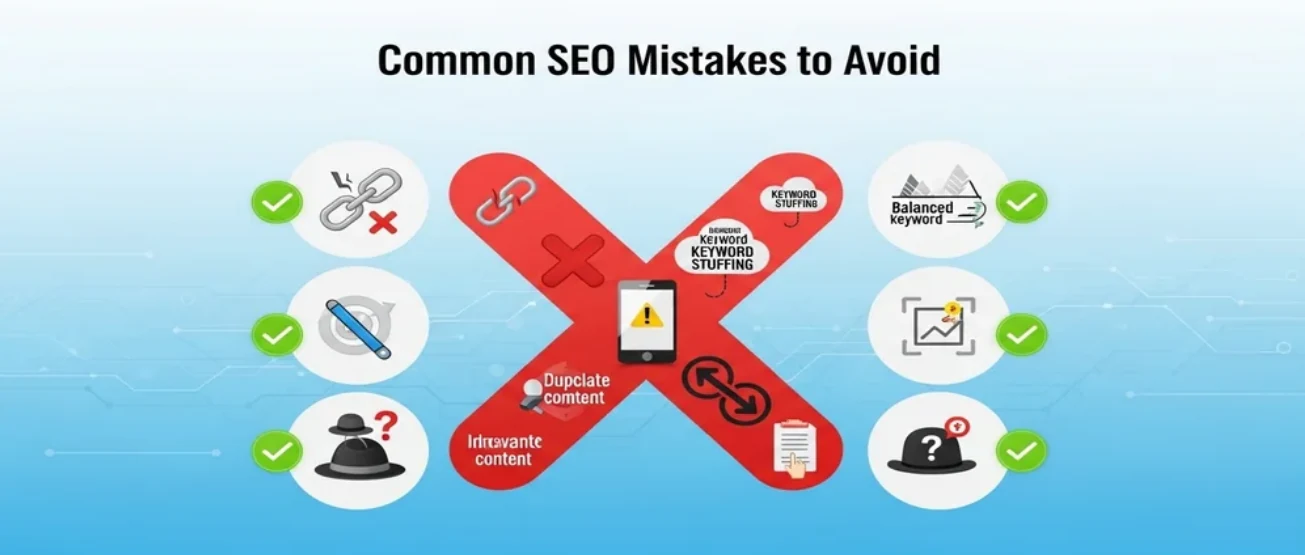
8. Neglecting SEO and Online Visibility
Source: Hatchtechs
You can have a strong brand, a clear message, and a good-looking website, but if nobody finds you online, a lot of that effort goes to waste. This is where branding and search visibility start to overlap more than people expect. Your brand is not only what people think when they see you, but it’s also how easily they can find you in the first place.
A lot of small businesses treat SEO as something separate, but it plays a real part in how visible and credible your brand feels. If your site is hard to find, your pages are poorly written, or your business appears in search results, people may never get far enough to trust you.
Specialists at SmartClick Agency said, “This is one of those marketing mistakes that can hold a SaaS business back quietly. Better visibility helps more people discover your brand, understand what you offer, and remember your name.”
9. Treating Branding as a One-Time Effort
Some business owners think branding is something you sort out once, then leave it alone. You get the logo done, pick the colors, write a tagline, and assume the job is finished. It rarely works like that.
Brands shift over time. Your business grows, your audience changes, and the way you present yourself can start to feel dated if nothing gets reviewed. That doesn’t mean you need a full rebrand every year, but it does mean branding needs attention now and then.
Specialists at Adwordsppcexpert said: “This is one of the more common branding mistakes because it often happens quietly. Things drift. Messaging becomes less clear, visuals stop matching, and the brand no longer reflects where the business is heading. Good branding is not a one-off task. It needs checking, refining, and adjusting as your business moves forward, which is why many companies rely on experienced ppc experts.”
Wrapping Up
A lot of branding mistakes don’t look dramatic at first. They build slowly, then start affecting how people see your business, how well they remember it, and whether they trust it enough to buy.
The good news is that most of these issues can be fixed without starting from scratch. A clearer message, stronger consistency, better visibility, and a bit more focus can make a real difference.
Good branding is not about looking bigger, it’s about making your business feel clear, credible, and recognisable.