Website design and optimization advice is often offered as a set of generalized guidelines. These actions are supposed to work for anyone, regardless of their area of expertise, target audience, or immediate goals.
Applying web design tips without first considering their appropriateness can work. But the more likely scenario is that they simply won’t yield positive outcomes — just like running expensive ad campaigns without a clear strategy.
Of course, some web optimization tactics are recommended for all businesses. This includes mobile and site speed optimization, adherence to accessibility standards, and SEO. Nonetheless, outstanding results demand a far more personalized approach. This is why your website’s design and performance must align with your specific goals.
So, how can you improve your site’s ability to build trust, generate leads, establish authority, and convert new customers? Here are the most important website lessons you need to learn, coming from brands with very different goals.
Local Expertise Creates More Trust Than Generic Marketing
Generic marketing messaging can be effective at building brand and service awareness. And, as a whole, it’s an excellent first step in attracting new clients for your business.
Nevertheless, traditional advertising is far from being enough to drive real conversion outcomes — specifically in sensitive industries.
To encourage potential customers to consider becoming your client, you first need to prove your brand’s credibility. And the best way to do it is to emphasize your local, niche expertise.
John Sells Hilton Head is an excellent example of a website that implements this tactic. This organization’s primary goal is to generate qualified buyer and seller leads in the specific Hilton Head Island geographic market. To maximize the impact of its trust marketing activities in this locality, the brand highlights several factors that make it the best choice for local customers. These include the fact that the business owner is a 7th-generation Gullah Native of the island in question, that he’s been in this business for over 14 years, and that he is very knowledgeable about the island’s history and housing market. This type of trust messaging effectively establishes that John Campbell is the ideal person to help those looking to buy or sell properties in the area. Furthermore, it establishes the entire business’s trustworthiness, positively affecting potential customers’ confidence.
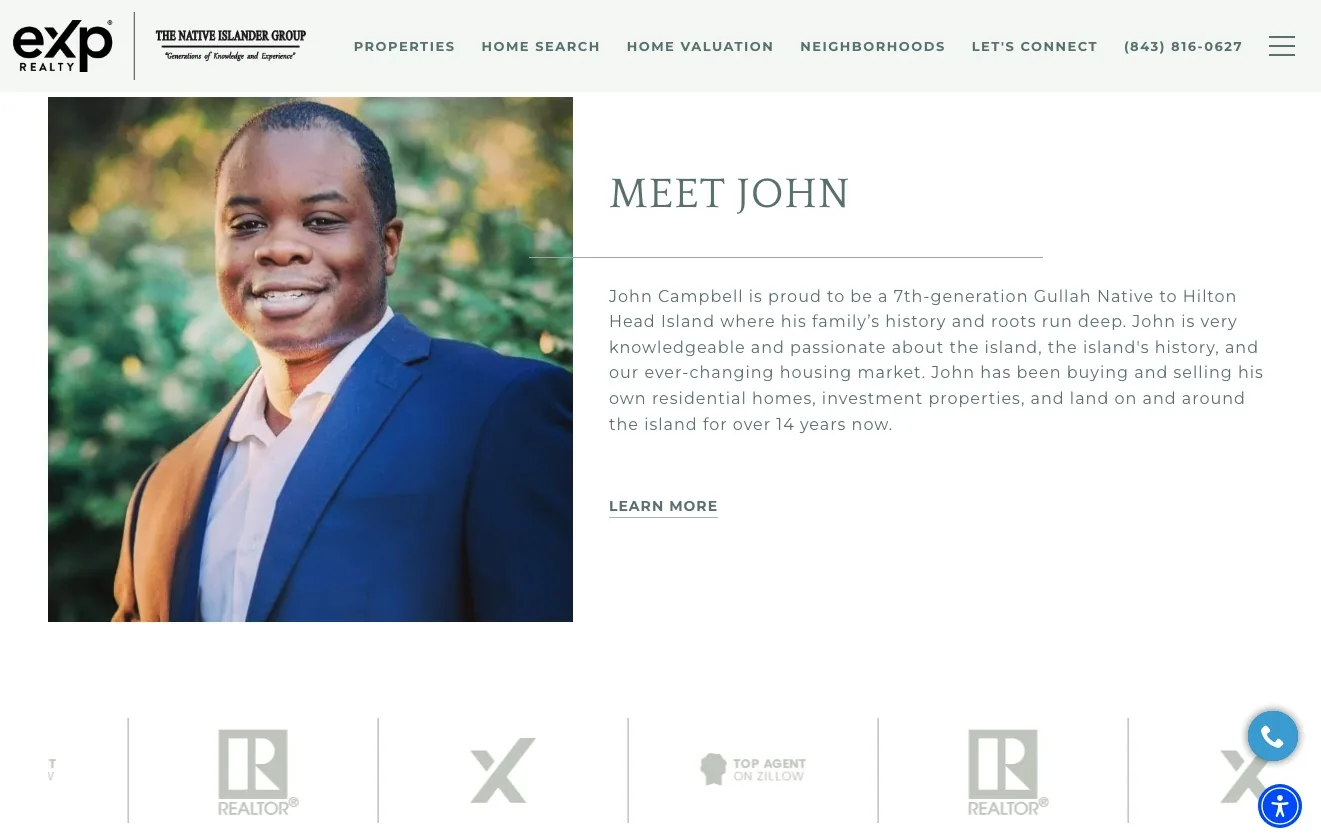
Source: johnsellshiltonhead.com
What’s important about this locality- and niche-centric type of trust marketing is that it applies exceptionally well to most service businesses, but particularly those that operate in distinctive areas.
Because it focuses on how a business can serve a specific community or how it solves regional issues, local expertise-driven trust marketing creates a strong alignment between prospects’ priorities and positions the brand as the ideal answer to their needs, making them much more likely to perceive the business as credible, competent, and trustworthy.
Trust Signals Should Appear Before the Sales Pitch
During the typical buyer’s journey, people generally consider brand credibility before evaluating the services you offer. And that’s not only because consumers want to ensure they get the highest-quality service and best value for their money. It’s also because their conversion intent directly depends on brand trust.
Some businesses attempt to resolve this potential conversion obstacle by pairing value propositions with trust signals. However, in most service industries — particularly those with longer sales cycles or higher perceived risk — the better course of action is to display trust-building elements before making a sales pitch.
You can do this with certifications, credentials, awards, or guarantees. Even standard social proof can work great if it provides sufficient information about the quality and reliability of the services you offer.
One of the best examples of how this should be done in the service industry comes from Two Men and a Truck. This company heavily emphasizes trust signals over sales pitches, and the results are outstanding. In addition to stating that it has completed over 10 million moves, the brand’s website also points out a 96% customer referral rate, 3,000+ trucks on the road, and 400+ locations worldwide. Most importantly, it does all this before even stating what type of moving services it offers. The result of such a trust-prioritizing approach is that web visitors instantly become more receptive to marketing messages after seeing this content. Moreover, their risk perception decreases, making it far more likely that they’ll immediately begin the sales cycle (and may even convert within the first few brand interactions).
Source: twomenandatruck.com
The best way to implement this trust-building tactic on your service business’s website is to identify the specific aspects of your offer that your ideal customers genuinely care about.
Is your audience impressed by a positive customer satisfaction track record? Do they care about the certifications you have? Or is your organization’s legacy that thing that’s most likely to leave a positive impression (and elevate conversion intent)?
Once you’ve identified the type of trust signal that’s most likely to impress and reassure your prospects, you can easily optimize your web presence to highlight these elements — ideally before asking your audience to consider converting into customers.
Let Your Customers Make the Sales Pitch
User-generated content is far more believable and trustworthy than any format of branded messaging. A recent study conducted by Edelman discovered that feedback from people who are not paid by a brand to speak about it is twice as likely to earn their trust as branded content.
That’s why it’s a good idea to have your customers make a sales pitch for your services instead of trying to convince leads to give your business a chance. Sure, it may seem better to compose attractive sales copy that positions your offer in the best possible light. But the authenticity of highly relevant social proof will always outperform branded messaging, which is why it’s such a valuable asset when optimizing your website.
The testimonials and customer validation on Reviews page on SocialPlug website, for instance, effectively sell the brand’s services better than sales copy. They overcome the (understandable) skepticism that’s widely present in the brand’s niche. On top of that, this social proof also significantly boosts buyer confidence by sharing customer experiences and reviews that are highly specific to the brand’s area of expertise and the unique benefits its services offer.
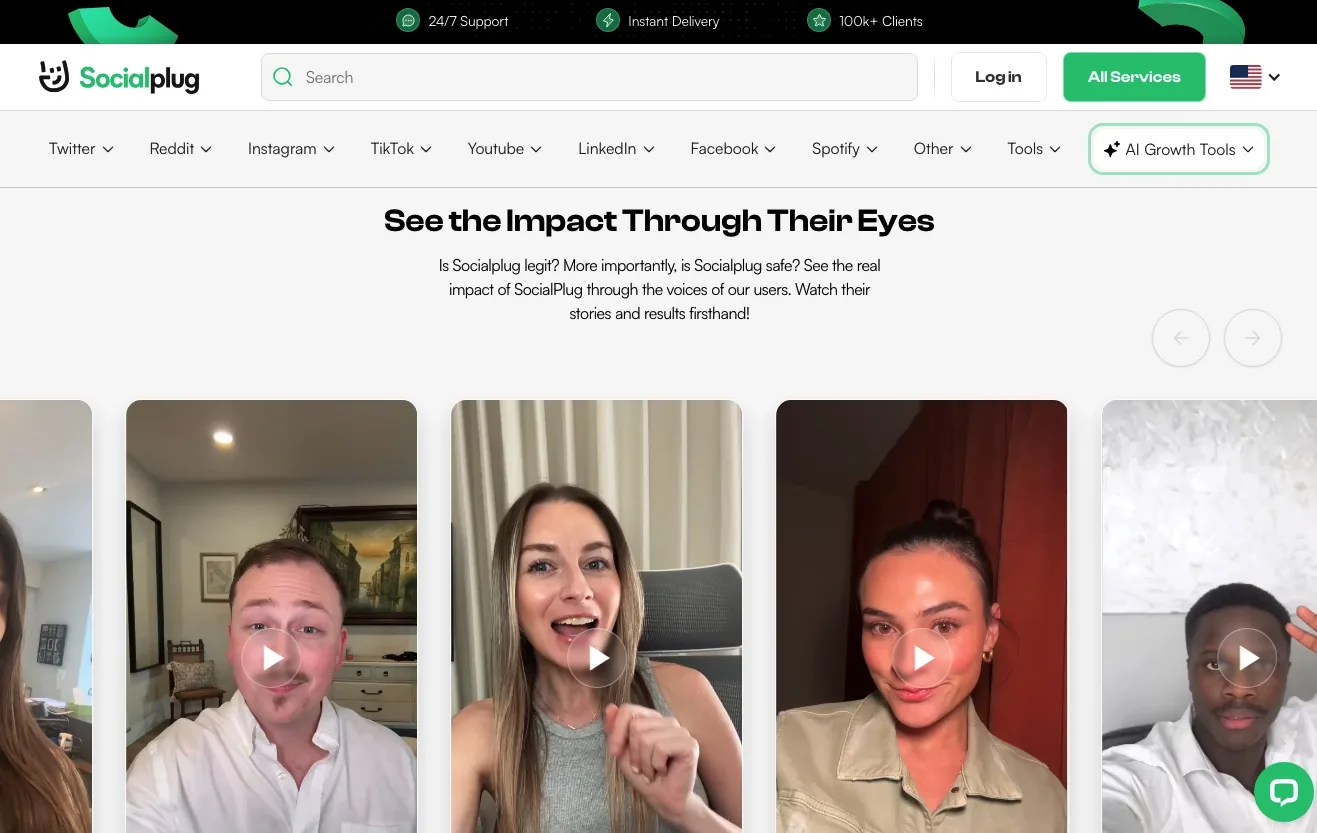
Source: socialplug.io
To adopt this website lesson in your own online presence, however, it’s not sufficient to simply copy Social Plug’s approach. Instead, consider what proof points your industry requires in order to reduce uncertainty. For schools, the best way you can use social proof to make your sales pitch is to have parents testify to your organization’s expertise and dedication to student education. For home service companies, detailed customer reviews tell far more about trustworthiness and expertise than standard certificates or media mentions. And in the B2B sector, the best way to promote your services isn’t to emphasize your ratings. Instead, it’s to publish detailed case studies that will help potential customers understand your processes and visualize the concrete outcomes that your brand’s offer could provide.
Complex Decisions Need Simpler User Journeys
When faced with a complex buyer’s journey, most people back out of making a purchase. They become confused or overwhelmed while trying to comprehend the service in question — a process that’s often referred to as cognitive overload or informational paralysis.
Brands can use several web design and optimization strategies that reduce cognitive load.
Simplifying website copy, prioritizing clarity, introducing information progressively, and using visuals to enhance understanding are all effective ways to accomplish this goal. But the simple truth is that the best way to approach this process will hugely depend on your target industry, audience, and specific goals.
Start in Wyoming is a great example of a website that properly implements this lesson. Seeing as the company’s primary goal is to convert visitors into LLC formation clients, the business takes several steps to achieve this outcome. For starters, it breaks down the complicated process into manageable steps. It outlines who the service is for — helping leads self-qualify. And it provides detailed answers to common questions about forming an LLC, effectively removing most web visitors’ doubts and fears (and encouraging them to move through the buyer’s journey with more confidence).
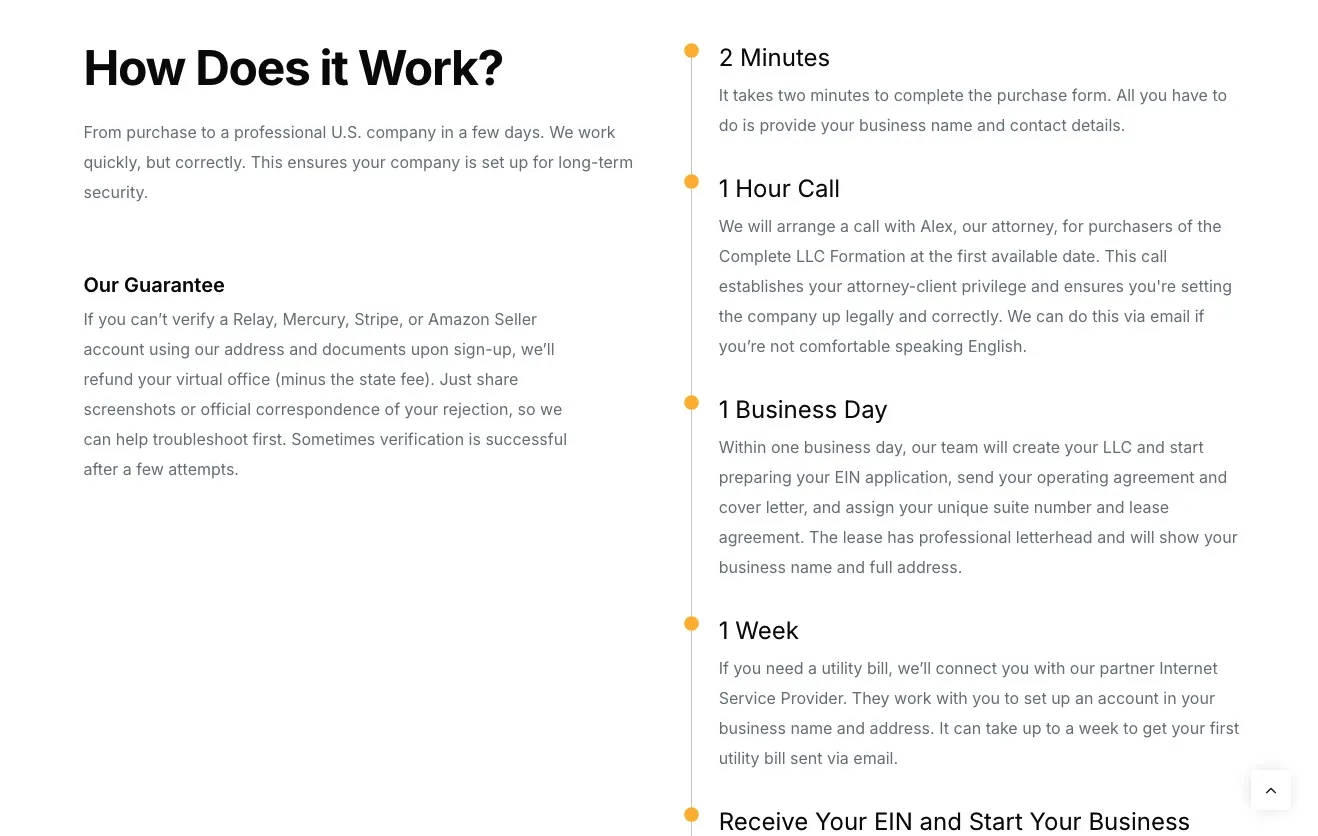
Source: startinwyoming.com
Businesses from different niches can easily adapt and implement this web design strategy by focusing on maximizing service and product understanding.
By describing school administration processes, home service estimate requests, and pest control treatment plans in accessible, easy-to-understand ways, brands can effectively prevent cognitive overload, simplify the user journey, and draw more leads toward the bottom stages of their sales funnels.
Empathy Should Shape the Entire Website Experience
Great websites don’t just aim to appeal to visitors on a rational level. Instead, they have to account for potential customers’ emotions during the buyer’s journey. Not least because most people, subconsciously, allow their feelings to drive their actions when evaluating solutions to their pain points.
An empathetic website experience helps brands position themselves as entities that comprehend and care about prospects’ emotions. It also significantly determines the effectiveness of key on-site messages and calls to action.
CodaPet, for example, understands that one of the top factors influencing its target audience’s likelihood of converting into clients is empathy. If it can support web visitors and provide reassurance and clarity, then it can easily make qualified prospects more receptive to its messaging. Furthermore, employing compassionate emotional marketing tactics like seen on their Minneapolis page can effectively build trust and connection and ease the process of making a time-sensitive decision that’s already inherently difficult.
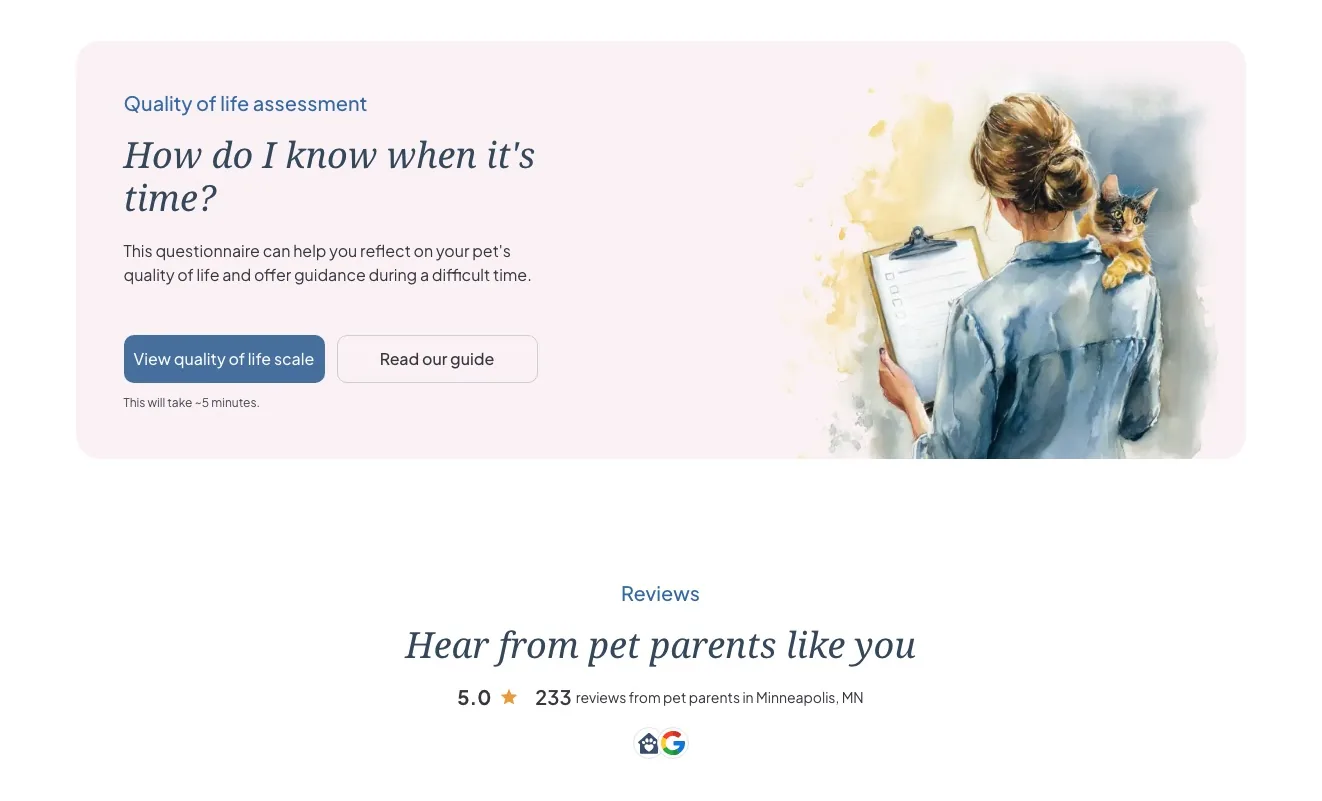
Source: codapet.com
But the thing is, emotional web design isn’t a practice that should be limited to sensitive service categories. Instead, it’s important to comprehend that people require the same amount of understanding and empathy, whether they need urgent repairs, are seeking trusted service providers, or are looking for the best school for their children. Yes, the specific emotions may be different. But every website can benefit from meeting visitors where they are — especially if it does so in a way that highlights its commitment to helping audiences resolve their needs.
Final Thoughts
While each business needs to commit to optimizing its website in a way that aligns with its industry, target audience, and goals, there are still important web optimization lessons to learn from brands operating in completely different fields from yours.
Great web design places the consumer at the center of its design. This approach builds trust and confidence, eases challenging decision-making processes, and encourages emotional connections between brands and their leads.
And while specific applications may vary from industry to industry (or depending on your immediate goals), most of these lessons can be used to support conversion optimization and branding, meaning that they’re a great way to nudge your business outcomes in the right direction.