You can feel it on a campus tour. A parent half-listens to the talking points about class sizes and AP offerings, then leans in when a senior mentions the teacher who stayed late to help her through chemistry. That moment, not the feature list, is what they remember on the drive home. If you market a private or independent school, you already know this instinctively; the hard part is building your marketing around it on purpose. At Cube Creative Design, we help private and independent schools move from feature-pitch messaging to story-driven marketing that families actually act on. This post breaks down why storytelling works, which stories matter most, and how a small admissions and marketing team can put it to work without a film crew or a six-figure budget.

Written By: Hannah Kilpatrick | July 20, 2026
Hannah Kilpatrick Cube Creative DesignHannah Kilpatrick graduated from Western Carolina University in 2021 with a Bachelor of Science in Communication with a Minor in Marketing and a Concentration in Public Relations. She has been around social media since its creation. (Meaning, she was in the first grade when Facebook became available to the general public.) As our very own professional Gen-Z, Hannah is a whiz when it comes to social media creation and paid advertising.
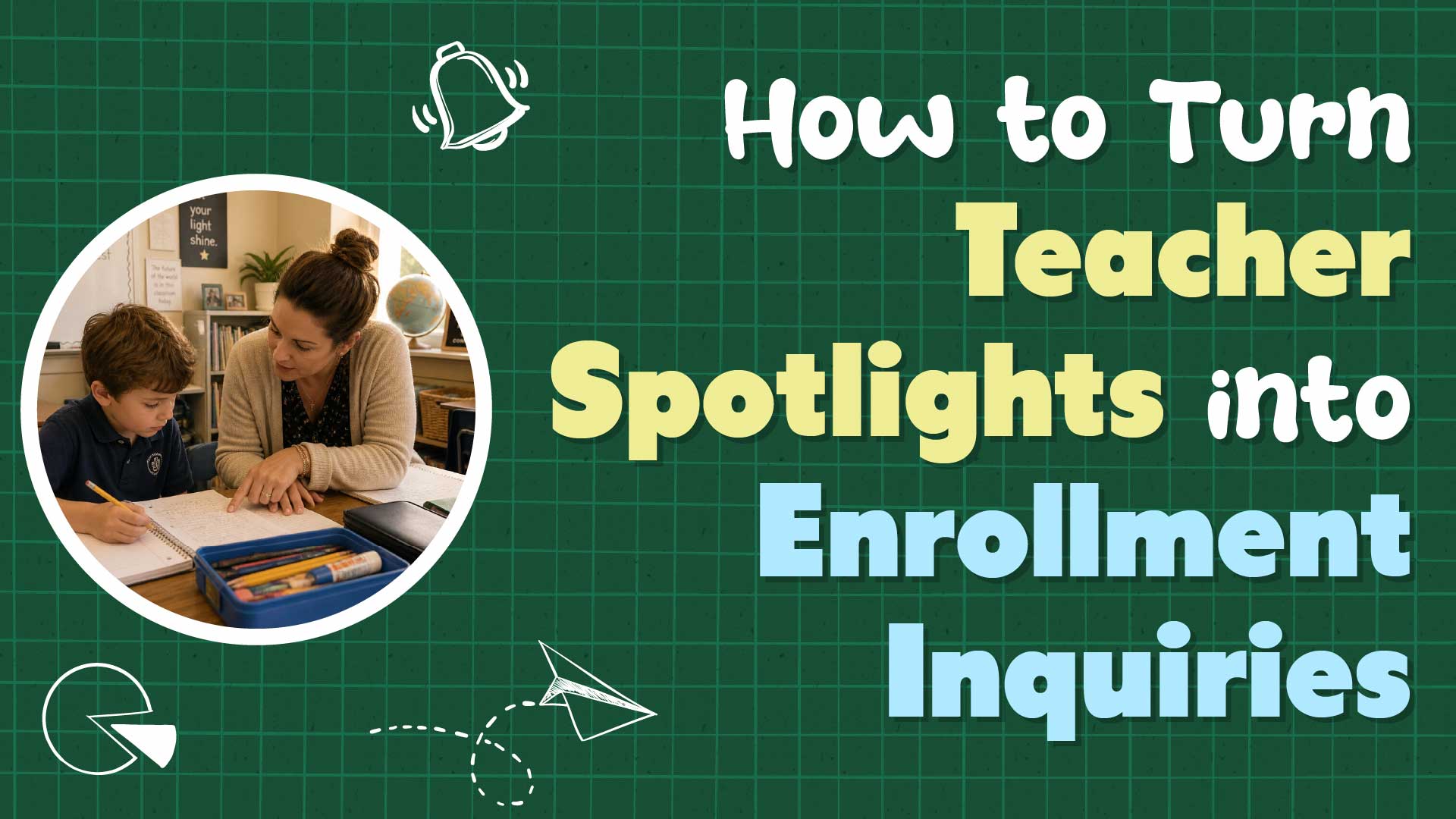
Walk a prospective family through your hallways and watch where they slow down. It is rarely the trophy case or the mission statement on the wall. It is the moment a teacher kneels to a student's eye level, or a staff member greets a kid by name. That is the school families are actually trying to buy, and faculty content marketing is how you put it in front of them. If you lead a faith-based or independent school, your teachers are the reason families stay, and they can be the reason new families come. At Cube Creative Design, we help faith-based and independent schools turn the people who already make their school special into content that earns family trust. This post explains how faculty features work, why families respond to them, and how a small team can produce them without a budget or a film crew.
Written By: Hannah Kilpatrick | July 17, 2026
Hannah Kilpatrick Cube Creative DesignHannah Kilpatrick graduated from Western Carolina University in 2021 with a Bachelor of Science in Communication with a Minor in Marketing and a Concentration in Public Relations. She has been around social media since its creation. (Meaning, she was in the first grade when Facebook became available to the general public.) As our very own professional Gen-Z, Hannah is a whiz when it comes to social media creation and paid advertising.
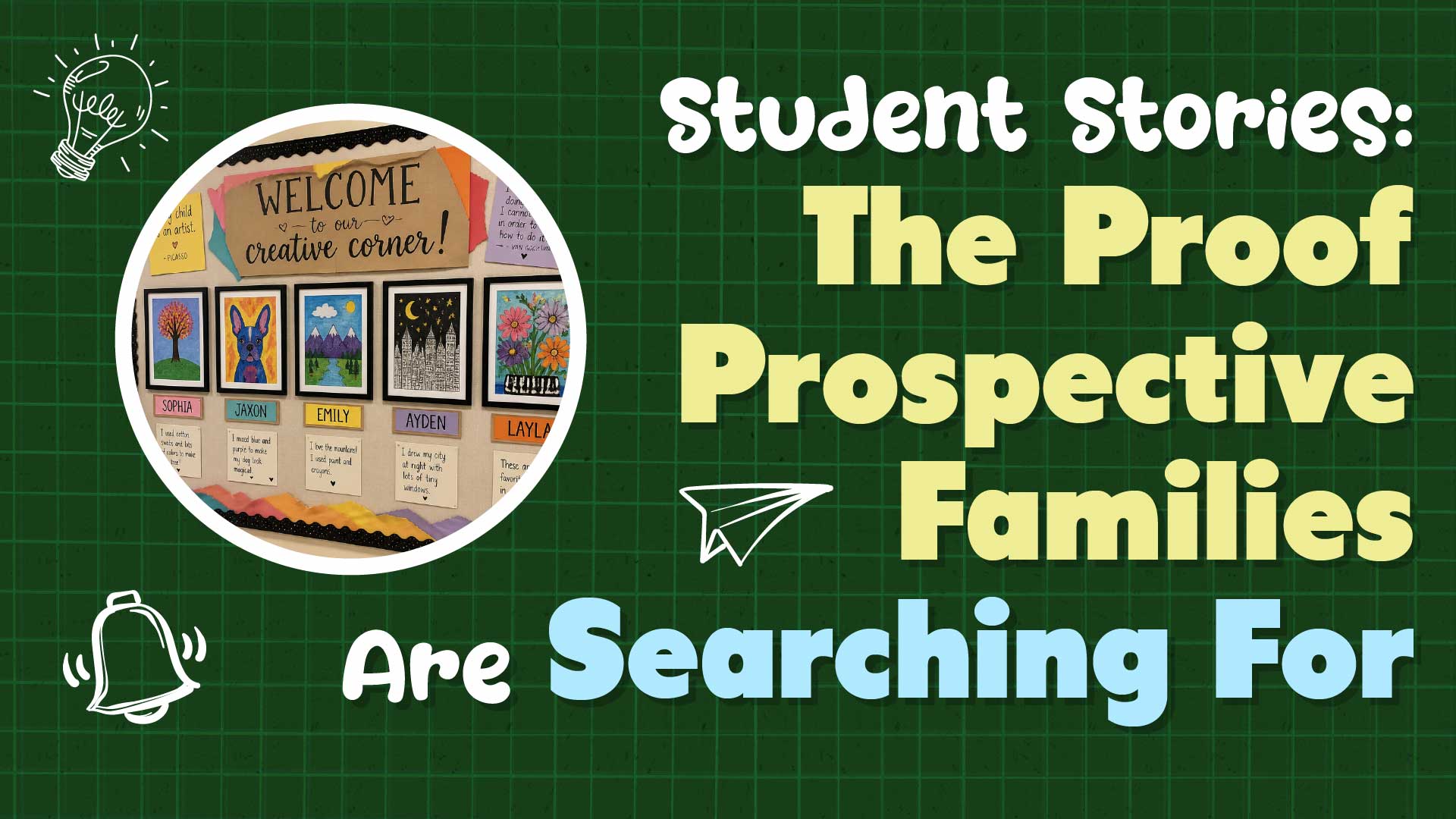
Picture a principal at a faith-based K-8 school of about 165 students. She needs to fill a few open Kindergarten and sixth-grade seats, and her marketing budget has to stretch across everything. The big K-12 schools down the road outspend her on ads. What she has that they cannot copy is a building full of students whose small daily moments tell the real story of the school. Student spotlight content turns those moments into the proof families search for. It is also one of the most practical formats for the schools we work with at Cube Creative Design, including private and independent schools running lean marketing teams. This post covers why it works, the formats worth trying, how to stay compliant with student privacy, and a cadence a small team can keep.
Written By: Hannah Kilpatrick | July 15, 2026
Hannah Kilpatrick Cube Creative DesignHannah Kilpatrick graduated from Western Carolina University in 2021 with a Bachelor of Science in Communication with a Minor in Marketing and a Concentration in Public Relations. She has been around social media since its creation. (Meaning, she was in the first grade when Facebook became available to the general public.) As our very own professional Gen-Z, Hannah is a whiz when it comes to social media creation and paid advertising.
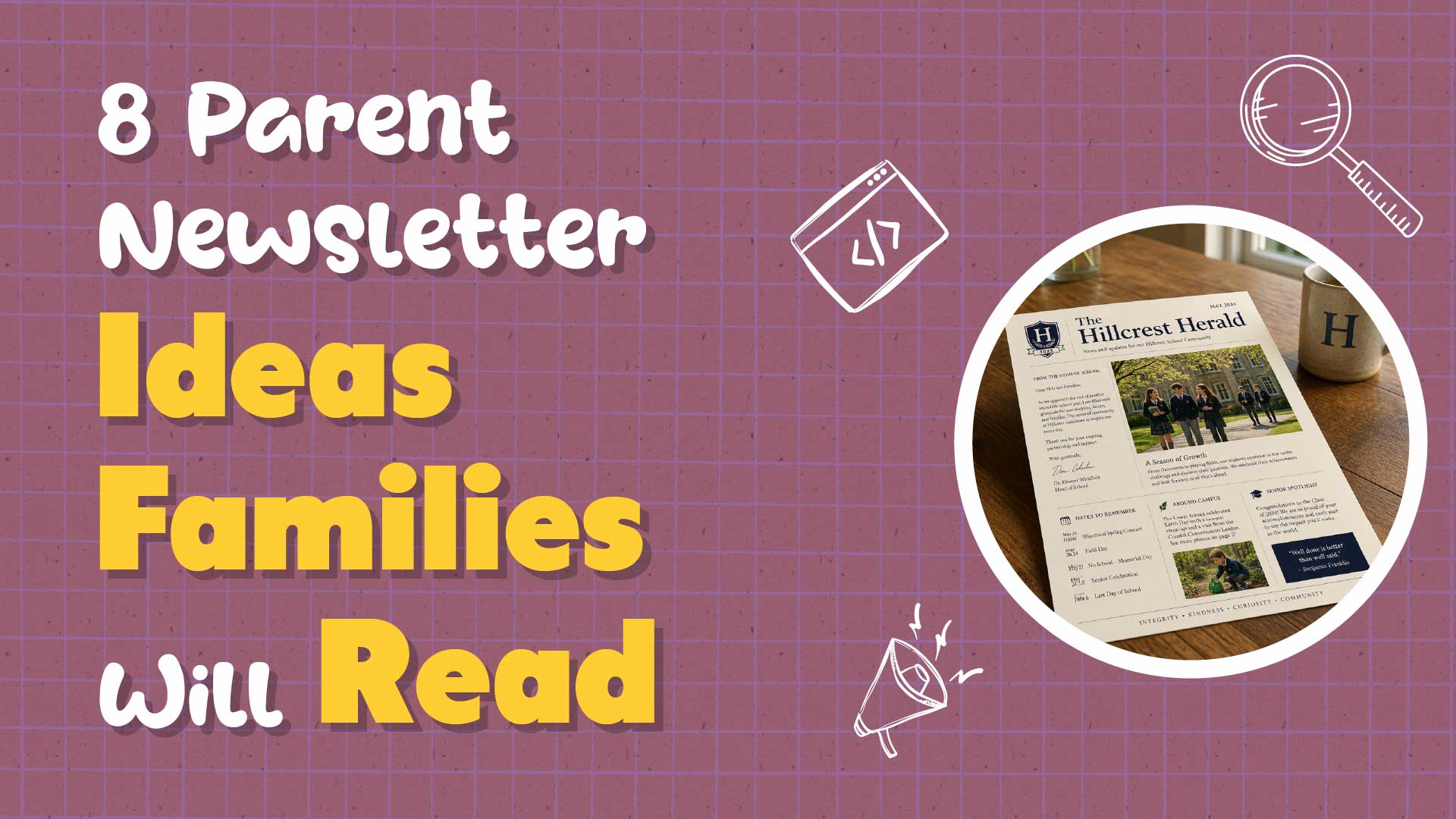
You sat down to write the newsletter, opened a blank template, and stared at it. Last week's went out to every family on the list, and you have no idea how many people actually read it. So you do what you did last time: paste in the lunch menu, the early-dismissal reminder, the spirit-week dates, and a line asking for volunteers. You hit send. Nothing comes back. The week resets, and you will do it again on Friday. That cycle is not a writing problem. It is a content problem, and the right parent newsletter ideas are what break it. The work goes in. The reading should come out too.
A parent newsletter is one of the cheapest and most durable tools a school owns, and at a small faith-based or independent school, it is often the main rhythm of school-home communication. It is the thing families look for each week to feel connected to what is happening inside the building. We work with private and independent schools that have warm communities and committed parents, but send a newsletter that reads like a memo from the office. This post is a menu of parent newsletter ideas built for a small team: eight content sections you can fill every week, why they matter for family engagement, and how to know whether anyone is reading.
Written By: Hannah Kilpatrick | July 13, 2026
Hannah Kilpatrick Cube Creative DesignHannah Kilpatrick graduated from Western Carolina University in 2021 with a Bachelor of Science in Communication with a Minor in Marketing and a Concentration in Public Relations. She has been around social media since its creation. (Meaning, she was in the first grade when Facebook became available to the general public.) As our very own professional Gen-Z, Hannah is a whiz when it comes to social media creation and paid advertising.