Are you tired of watching your pest control company get lost in the sea of competitors online? Do you want to attract more qualified leads and grow your business in today's digital age? Look no further than the dynamic duo of SEO and content marketing.
In a world where your competition ranges from industry giants to "Pete the Pied Piper," it's crucial to stand out and establish your expertise. By optimizing your website for search engines and creating valuable, informative content, you can transform your online presence and reach new heights of success.
But where do you start? How can you effectively implement these strategies to achieve your goals? That's where a marketing agency comes in. With a team of experts specializing in SEO, content creation, and digital marketing, an agency can provide the knowledge, resources, and support you need to take your online presence to the next level.
In this blog post, we'll dive into the importance of SEO and content marketing for pest control companies. We'll explore how these strategies can help you:
- Improve your online visibility and attract more organic traffic
- Establish your authority and build trust with potential customers
- Generate more qualified leads and grow your business
- Save time and achieve better results by partnering with a marketing agency
So, let's get started and unlock the secrets to skyrocketing your pest control company's online success!

Written By: Chad J. Treadway | June 05, 2024
Chad is our Chief Smarketing Officer. He will help you survey your small business needs, educating you on your options before suggesting any solution. Chad is passionate about rural marketing in the United States and North Carolina. He also has several certifications through HubSpot to better assist you with your internet and inbound marketing.
Everyone from homeowners to those working in the property business requires pest control services now and again. Not only are pest control services highly sought-after, but they're also known to enjoy great customer loyalty. After all, how many people do you know who call up a different exterminator every time they spot an unwanted critter in their kitchen? Regarding pest control, customers tend to stick with the business that gets the job done right.
However, with the increasing number of businesses venturing into the pest control territory and the competitive pricing strategies that these businesses employ, it's becoming difficult for local pest control services to retain customers in ways they did before. Therefore, developing a sound marketing strategy to promote your pest control services and increase your revenue is more important now than ever. Think of it as setting traps to lure in new customers. Except instead of mousetraps, you're using targeted ads and compelling content!
When developing a marketing strategy, you’ll first need to consider how involved you want to be. Your involvement will depend on several questions discussed throughout this article.
Written By: Chad J. Treadway | June 03, 2024
Chad is our Chief Smarketing Officer. He will help you survey your small business needs, educating you on your options before suggesting any solution. Chad is passionate about rural marketing in the United States and North Carolina. He also has several certifications through HubSpot to better assist you with your internet and inbound marketing.
Imagine this: A homeowner discovers a pest infestation in their kitchen and immediately turns to social media for a solution. They search for local pest control companies, read reviews, and reach out to a company they found on Facebook for help. This scenario is not uncommon in today's digital landscape, where social media has become a powerful tool for businesses to connect with potential customers and grow their brand.
In today’s digital age, pest control companies are increasingly turning to online marketing strategies to reach their target audience and grow their business. Social media is one of the most effective tools in a modern marketer’s arsenal. Platforms like Facebook, Instagram, and LinkedIn offer unprecedented opportunities to connect with potential customers, build brand awareness, and showcase your expertise.

Written By: Hannah Kilpatrick | June 03, 2024
Hannah Kilpatrick Cube Creative DesignHannah Kilpatrick graduated from Western Carolina University in 2021 with a Bachelor of Science in Communication with a Minor in Marketing and a Concentration in Public Relations. She has been around social media since its creation. (Meaning, she was in the first grade when Facebook became available to the general public.) As our very own professional Gen-Z, Hannah is a whiz when it comes to social media creation and paid advertising.
The pest control industry has experienced significant growth and generated substantial revenue in recent years. According to Allied Market Research, the global pest control market size was valued at $24.6 billion in 2022 and is projected to reach $423.5 billion by 2030, growing at a CAGR of 5.7% from 2023 to 2032. This growth can be attributed to various factors, including increasing urbanization, rising public health concerns, and a growing awareness of the importance of pest control services.
In the past decade, online marketing has become increasingly popular among pest control businesses seeking to expand their reach and attract new customers. Digital marketing techniques such as search engine optimization (SEO), pay-per-click advertising (PPC), social media marketing, and email marketing have proven effective in generating leads and increasing brand visibility.
However, despite the rise of online marketing, traditional offline marketing techniques are experiencing a resurgence in the pest control industry. Many businesses are rediscovering the value of offline marketing methods, which offer several unique advantages over their digital counterparts. These advantages include targeting specific geographical areas, building trust through personal interaction, and cultivating long-lasting customer loyalty.
In this blog post, we will explore the various aspects of offline marketing in the pest control industry, including its benefits and strategies and how it can complement online marketing efforts to create a comprehensive and effective marketing approach.
Written By: Chad J. Treadway | May 22, 2024
Chad is our Chief Smarketing Officer. He will help you survey your small business needs, educating you on your options before suggesting any solution. Chad is passionate about rural marketing in the United States and North Carolina. He also has several certifications through HubSpot to better assist you with your internet and inbound marketing.
Are you tired of seeing your pest control company struggle to attract new customers and generate leads online? Do you feel like your website is lost in the vast sea of search results, failing to capture the attention of potential customers? If you’re nodding your yes head in frustration, you’re not alone. Many pest control companies face similar challenges when it comes to digital marketing.
In today’s digital age, online digital marketing has emerged as a powerful tool for pest control companies to expand their reach, connect with property owners, and drive growth. This dynamic field encompasses a variety of strategies and techniques designed to enhance brand visibility, engage target audiences, and generate meaningful results. From content marketing to search engine optimization (SEO), social media marketing (SMM), and more, pest control companies have a plethora of tools at their disposal to navigate the digital landscape successfully.
This blog post aims to delve into the process and strategies of online digital marketing while shedding light on its positive aspects and potential considerations. We will explore key elements such as content marketing, SEO, pay-per-click advertising (PPC), search engine marketing (SEM), social media marketing (SMM), email marketing, affiliate marketing, mobile marketing, and influencer marketing. Additionally, we will discuss the positive aspects that make digital marketing an attractive avenue for pest control companies, including wide reach, targeted advertising, cost-effectiveness, measurable results, enhanced customer engagement, flexibility, brand building, and diverse marketing options.
While digital marketing offers numerous advantages, it is crucial to acknowledge the potential negative aspects. Pest control companies must effectively navigate privacy concerns, ad blindness, information overload, increased competition, technical challenges, and negative feedback.
By understanding the strategies, positive aspects, and considerations of online digital marketing, pest control companies can leverage the power of digital channels to grow their brand, connect with customers, and achieve their business goals. Let’s embark on this journey into online digital marketing and unlock its potential for your pest control company.
Written By: Chad J. Treadway | May 15, 2024
Chad is our Chief Smarketing Officer. He will help you survey your small business needs, educating you on your options before suggesting any solution. Chad is passionate about rural marketing in the United States and North Carolina. He also has several certifications through HubSpot to better assist you with your internet and inbound marketing.
In the highly competitive world of pest control, your small businesses may struggle to make your mark in the vast digital landscape. Obviously, visibility is the lifeblood of your business, and in today's digital age, search engine rankings largely dictate visibility. The truth is, no matter how compelling your pest control solutions may be, if your website is buried deep in the search results, your business might as well be invisible. This is where search engine marketing (SEM) comes in as the exterminator's exterminator—a strategic tool that can root out the problem of invisibility and place your pest control company in the spotlight where it belongs.
In this comprehensive guide, we'll dive deep into the world of SEM and explore how it can revolutionize your pest control business. From understanding the basics to implementing advanced tactics, we'll provide you with actionable insights and real-world examples to help you dominate your local market and achieve online success.
Written By: Chad J. Treadway | May 13, 2024
Chad is our Chief Smarketing Officer. He will help you survey your small business needs, educating you on your options before suggesting any solution. Chad is passionate about rural marketing in the United States and North Carolina. He also has several certifications through HubSpot to better assist you with your internet and inbound marketing.
Imagine this: You’re Eden, the owner of Green Pest Elimination, a respected pest control company based in Asheville, NC, known for its eco-friendly approach and excellent customer service. You’ve spent months perfecting your website, showcasing your company’s unique offerings, and encouraging potential customers to choose your services. But there’s a problem: your website is painfully slow.
You’ve noticed visitors leaving your site before exploring all the fantastic content you’ve created. You’re worried your slow website is hurting your customer acquisition and damaging your company’s reputation. You’re not alone. In today’s fast-paced digital world, website speed matters more than ever.
As a pest control company owner or marketer, you know that your website is often the first point of contact for potential customers. Ensuring that your website looks great and loads quickly and smoothly is crucial. This is where page speed comes into play.
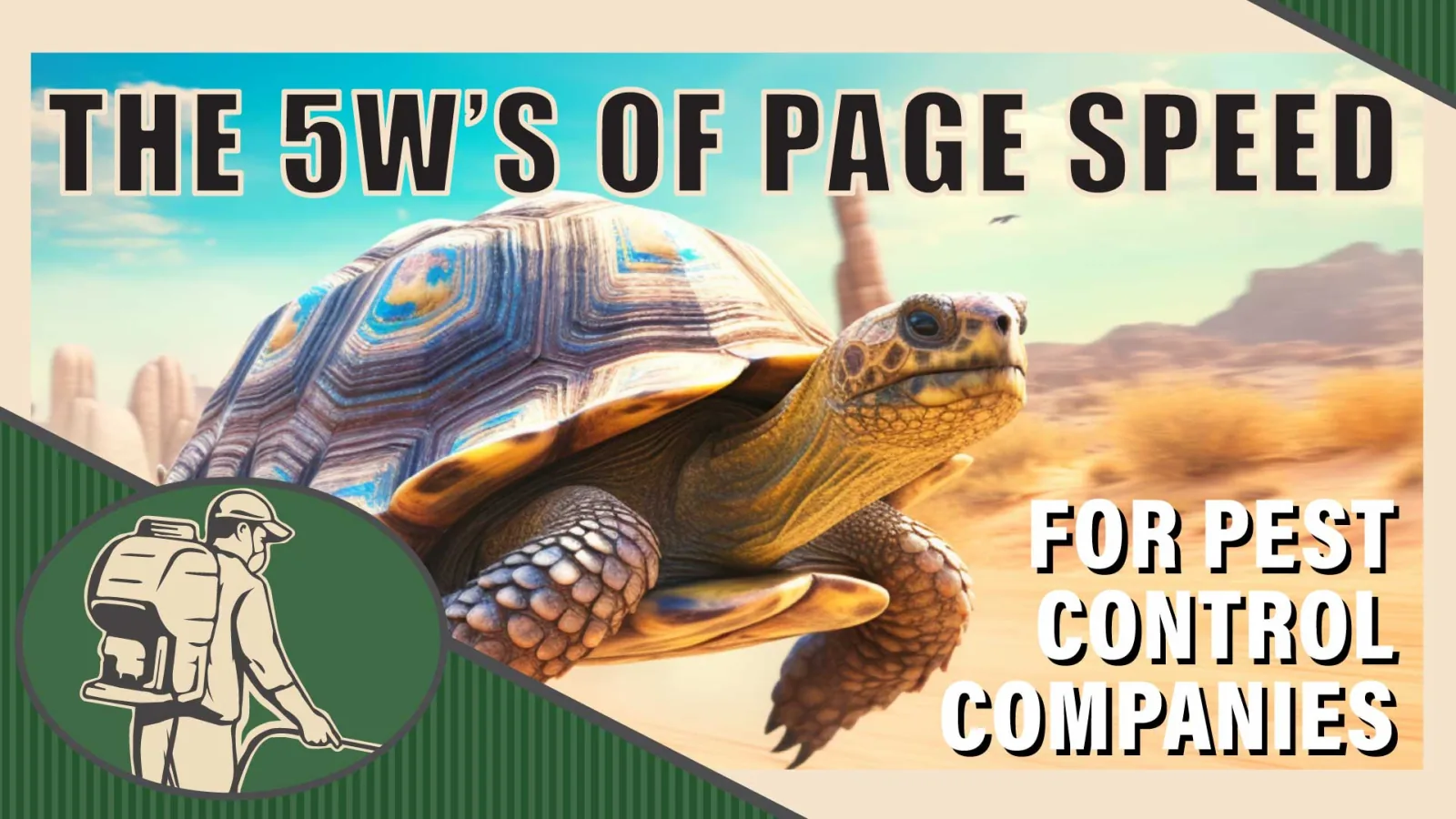
Page speed refers to the time it takes for a web page to load completely. It encompasses various factors, such as server response time, image optimization, and code efficiency. A fast-loading website provides a better user experience and significantly impacts your search engine rankings and overall online visibility.
Now, imagine a homeowner dealing with a pest infestation. They come across your website, eager to learn more about your services and solutions. However, if your site takes too long to load, they may become frustrated and leave before even exploring your content. On the other hand, a website that loads quickly and efficiently will keep visitors engaged and encourage them to discover what makes your pest control company unique.
In this post, I will explain why page speed matters, who needs to pay attention to it, and how you can improve your website’s performance to attract and retain more potential customers. Whether you’re a beginner looking to understand the basics or an experienced marketer seeking advanced techniques, this post has something for you. So, let’s get started on this journey to create a lightning-fast website that leaves a lasting impression on your potential customers!
Written By: Chad J. Treadway | May 08, 2024
Chad is our Chief Smarketing Officer. He will help you survey your small business needs, educating you on your options before suggesting any solution. Chad is passionate about rural marketing in the United States and North Carolina. He also has several certifications through HubSpot to better assist you with your internet and inbound marketing.
Are you a pest control company owner or marketer? If so, you know how crucial it is to have a strong online presence. And one critical factor in optimizing your website is its URL structure. In this guide, we’ll explore the best practices for crafting effective URLs tailored to the needs of pest control websites.
Are you losing potential customers because of poorly optimized URLs? In the competitive world of pest control, a well-structured website is essential for attracting and retaining clients – and it all starts with your URLs.
Written By: Chad J. Treadway | May 06, 2024
Chad is our Chief Smarketing Officer. He will help you survey your small business needs, educating you on your options before suggesting any solution. Chad is passionate about rural marketing in the United States and North Carolina. He also has several certifications through HubSpot to better assist you with your internet and inbound marketing.
As a pest control company owner or marketer, you know the importance of including relevant, high-quality photos on your blog articles, website, and social media posts. Photographs, illustrations, and other visuals can only enhance the appeal of your content.
Regarding content on the web, the general rule is that you should always include at least one image with each post. If your post is longer, you may want to have several.
Images and graphics are not only aesthetically appealing, but they also make your text more interesting to read. They can also assist you with search engine optimization (SEO).
Regarding image optimization for the web, there are three approaches to consider:
- Make your images look good.
- Make your images load quickly.
- Make your images easy for search engines to index.
Most articles on the subject focus on one of these elements or another; however, I will discuss all three in this post.
Written By: Chad J. Treadway | May 01, 2024
Chad is our Chief Smarketing Officer. He will help you survey your small business needs, educating you on your options before suggesting any solution. Chad is passionate about rural marketing in the United States and North Carolina. He also has several certifications through HubSpot to better assist you with your internet and inbound marketing.

Picture this: I'm about to share information that might catch you off guard. Are you ready for it?
Brace yourself for this surprising fact: Many consumers have a growing mistrust of businesses and corporations!
According to a January 2020 report by Marketing Charts, more than 3 out of 4 consumers in the US report a growing mistrust of businesses.
I know, I know. Shocking. However, somehow, pest control companies still create elaborate marketing campaigns that don’t involve their customers.
Now imagine a meeting at our fictional start-up pest control company, Bug Off Pest Control, based in Charlotte. Wendy, the founder and owner, gathered her team to come up with the best ideas for selling their services. I can hear it now.
“Oh, we should talk about our new, more eco-friendly products!”
“What if we get Wendy to talk about the benefits of our services?”
“Or, maybe we just increase our ad spend to get more traffic to the website!”

Some of these suggestions are solid tactics depending on the pest control niche. However, there is a monumental piece they’re not considering—the customer.
You know, the homeowners who hire pest control services and keep the company in business?
What if we were more reserved as pest control marketers and allowed those people to communicate with us more frequently? The possibilities would be endless.
Pest control companies have the opportunity to share their own stories and highlight their unique selling points to the world. The "About Us" page on your pest control website is the perfect place to showcase your history and humble origins. It's also a great platform to promote your brand's strengths to potential employees. However, suppose you're allocating your marketing budget to advertisements or flyers that list the top ten reasons a homeowner should select your service. In that case, you might be missing the mark.
There are countless reasons why customers should be the center of your pest control marketing strategy, and every year, the reasons get louder.
1. Homeowners Trust Other Homeowners and Influencers More Than Pest Control Companies
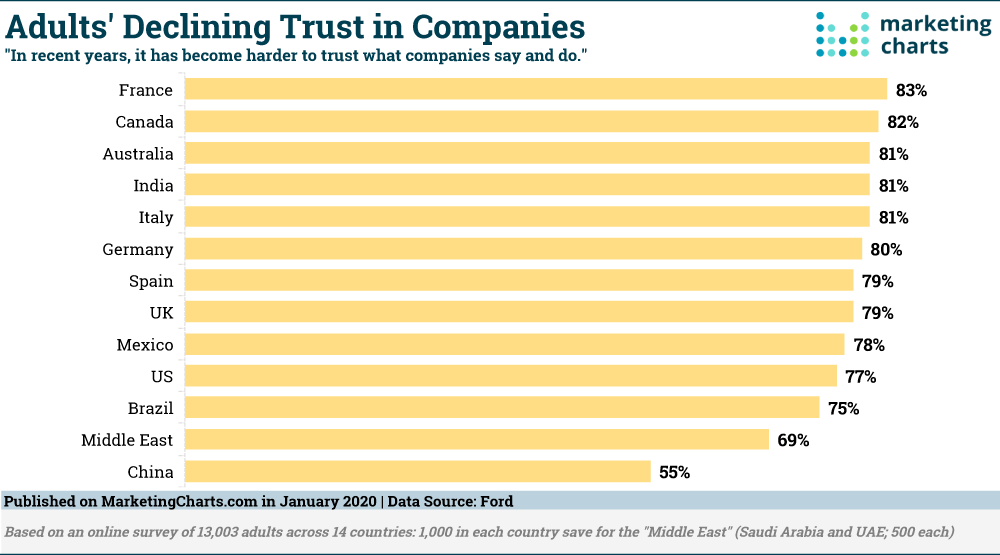
(Image Source: Marketing Charts )
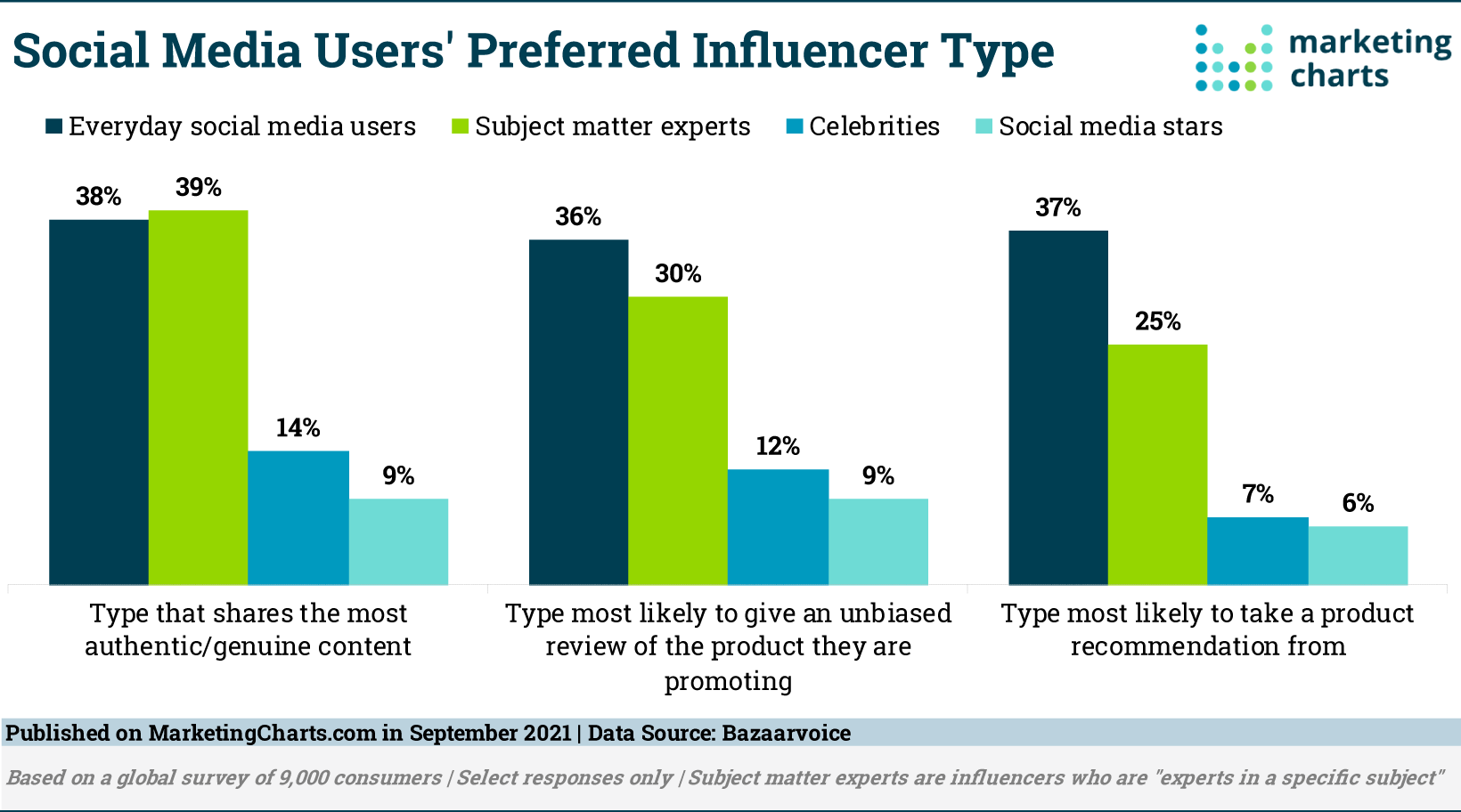
According to the previously mentioned Marketing Charts report, consumers are wary of businesses, including pest control service providers. Therefore, it comes as no surprise that they place more trust in influencers, peers, and even celebrities when seeking recommendations for new services, as indicated by another Marketing Charts report. The success of influencer marketing lies in the fact that influencers cultivate a loyal following of like-minded individuals who come to trust their opinions and recommendations. Followers are more likely to believe that the influencer has personally used the service they are promoting and found it to be provided by a reputable pest control company.
It's important to note that before asking influencers to promote your services online, you should always provide them with sample services and ensure they are delighted with the experience. Customers have a unique perspective on pest control services as the end user rather than the designer or service developer. This puts them in a better position to market services to other homeowners than the company itself.
(Image Source: Marketing Charts )
A customer won’t say how your service led to a 23.33% reduction in pest infestations or the eco-friendly products you just launched. They would talk about the peace of mind they gained or the extra time they could spend with their family because your service made their life easier. They speak from their POV and don’t use all the industry jargon marketers have listed in their go-to-marketing strategy.
2. Successful Pest Control Companies Use Customer-Focused Strategies
I know what you’re thinking. It works because these brands are household names and can take risks with on-brand campaigns that aren’t centered around their value propositions. However, this marketing strategy is sound for any company, including small pest control businesses. Brands like Airbnb, Tesla, and Nike have seen great success by shifting their marketing to a customer-focused strategy.
- Tesla's referral program was wildly successful, leading to one Tesla customer (really an evangelist) referring over 180 people to purchase a Tesla, bringing in $16 million with $0 spent on advertising.
- Nike showcases customer success stories and testimonials in their marketing campaigns, highlighting how their products have positively impacted their customers' lives rather than simply listing product details and features.
- Airbnb launched a successful campaign called "Made Possible by Hosts" that showcased how their services have enabled customers to enjoy unique travel experiences, focusing on the people who use their service.
Let's look at how these strategies can be applied to our fictional pest control companies:
- Bug Off Pest Control in Charlotte, a start-up, could implement a referral program that rewards customers for referring their services to friends and family members.
- Dream Weaver Pest Control in Hickory, an established and growing company, could focus on showcasing customer success stories and testimonials in their marketing campaigns, highlighting how their services have improved their customers' quality of life.
- Green Pest Elimination in Asheville could launch a campaign called "Made Possible by Green Pest Elimination" that showcases how their services have enabled customers to enjoy their homes and outdoor spaces without worrying about pests or harmful chemicals.
- Guardian Pest Services in Raleigh could encourage satisfied customers to leave reviews on popular social media and review platforms. They should also strongly consider ways to enable customers to leave reviews on Google Business Profile within the guidelines by actively seeking out and showcasing customer reviews to build trust with potential customers and improve their online presence.
By focusing on customer experiences and success stories, pest control companies can create more engaging and relatable marketing campaigns that resonate with their target audience.
3. Customer-Focused Marketing Has Long-Term SEO Value for Pest Control Companies
As a pest control company, you might have an About Us page on your website where you can showcase your own accomplishments. But have you considered creating a Customer Reviews page? This page can be titled in various ways, such as Case Studies, Customer Testimonials, or any similar variation. Essentially, it should feature written or video reviews from your customers, highlighting their success stories and satisfaction with your services.
Allowing customers to speak for your pest control brand leads to more user-generated content and increased engagement from your online followers. Adding case studies and reviews to your website can positively impact your local SEO.
Suppose you have video testimonials on your website and/or YouTube. In that case, they can help you rank for relevant pest control keywords in your area. Moreover, when you engage with happy (or even unhappy) customers on social media, you increase your chances of appearing in search engine results pages (SERPs). When these interactions are positive, share them on your channels and find ways to incorporate them into your website for an extra SEO boost.
4. Word-of-mouth Marketing Is Crucial for Small Pest Control Companies
(Image Source: Marketing Charts )
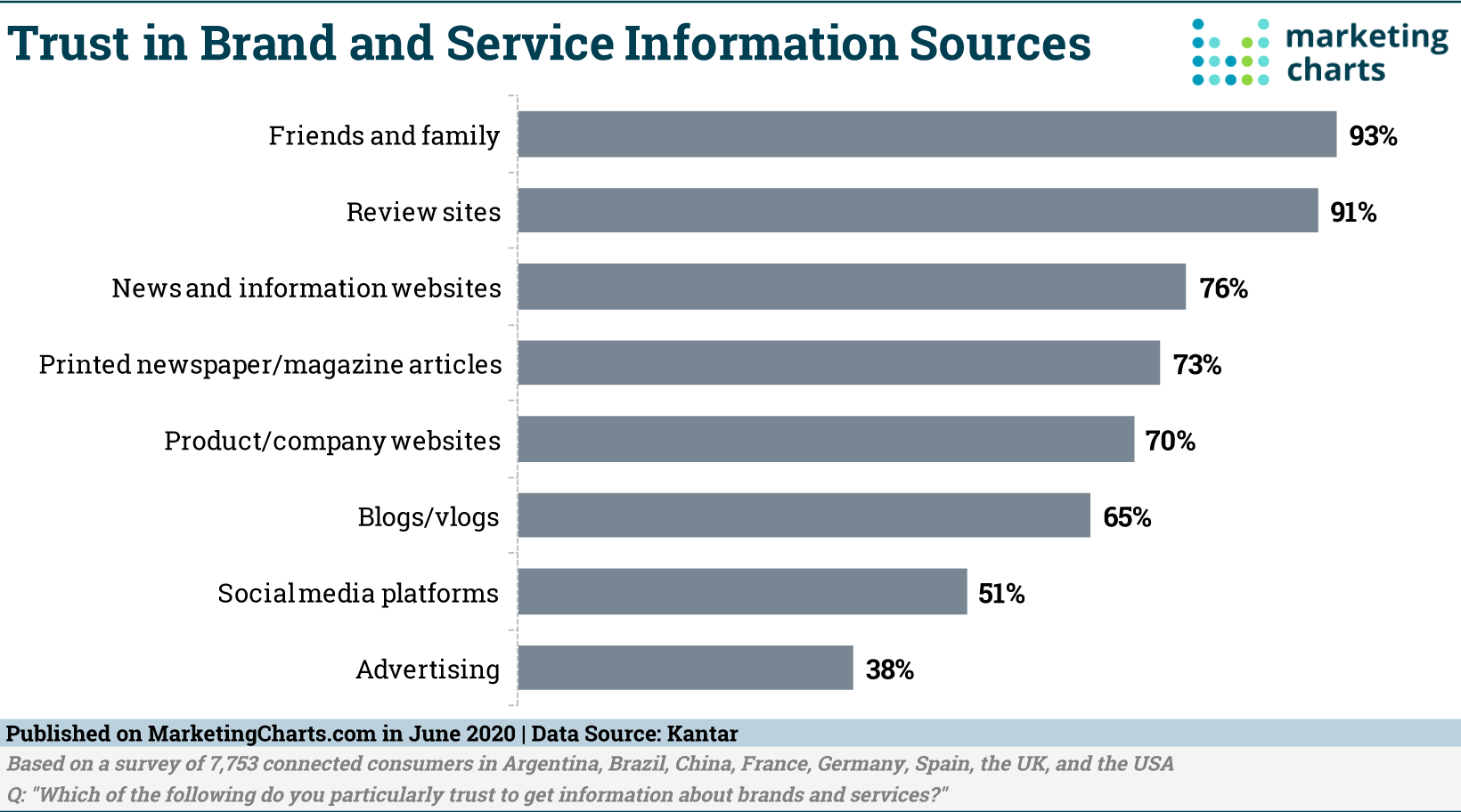
According to a 2020 study by Kantar, over 9 out of 10 people trust their family and friends as reliable sources when choosing a brand or service. The next most trusted sources were reviews and news platforms.
So, what can we learn from this? Aside from marketing ads and campaigns, quality services and effective pest control remain the most crucial factors. Suppose pest control companies want to generate customer stories that lead to emotional marketing and genuinely showcase the impact of their services. In that case, it all starts with providing excellent service.
Every emotion a pest control company elicits in today's digital age will likely appear online, be it good or bad. Aim to create pleasant emotions and raving reviews that can help inspire your next marketing campaign. Instead of focusing solely on your “totally awesome service features,” shift your perspective to “I brought a list of customers doing amazing things with our services. Let’s see if any ideas spark by talking through those.”
Conclusion
As a small pest control company, uncovering and sharing customer stories related to their pest control experiences is key to standing out in your local market. By shifting your marketing strategies to customer-centric, you can build trust, improve your online presence, and ultimately grow your business.
Remember, your customers are your most valuable asset when it comes to marketing. They can authenticate your brand and attract new customers through their experiences and testimonials. Embrace their stories, showcase their successes, and let them be the voice that drives your pest control company to new heights.
Written By: Chad J. Treadway | April 24, 2024
Chad is our Chief Smarketing Officer. He will help you survey your small business needs, educating you on your options before suggesting any solution. Chad is passionate about rural marketing in the United States and North Carolina. He also has several certifications through HubSpot to better assist you with your internet and inbound marketing.
In the world of pest control, the stakes are high, and the last thing you need is to lose valuable leads and appointments due to an underperforming website. Picture it: lost opportunities fluttering about like bats in the belfry, reminiscent of that chaotic scene from the 1989 Batman movie with Jack Nicholson and Michael Keaton. As a dedicated operator in the field, you understand the importance of a strong online presence. Without it, you're essentially leaving money on the table, watching your hard-earned growth seep away. But fear not because in this digital age, there are solutions to corral those elusive leads and guide them seamlessly into sales.
An effective digital presence is imperative for attracting more customers now and in the future. Through refreshing key elements around design, optimization, and technology integration—you can unlock your website’s revenue-generating potential.
This post will walk through essential strategies to overhaul your pest control site around three core pillars: Appealing visual design to capture attention, simplified booking flows to convert interest, and search engine optimization, ensuring you get found.
Written By: Chad J. Treadway | April 22, 2024
Chad is our Chief Smarketing Officer. He will help you survey your small business needs, educating you on your options before suggesting any solution. Chad is passionate about rural marketing in the United States and North Carolina. He also has several certifications through HubSpot to better assist you with your internet and inbound marketing.
Opening a pest control company involves major upfront investments - licensing, equipment, hiring, and more. But how can you expect to stay in business without a steady flow of new customers? Many pest control companies fail to plan for critical marketing expenses needed to transform an unknown startup into an established neighborhood provider.
Are you struggling to attract new clients without overextending your marketing budget? Do you find it challenging to determine the right marketing investment to fuel your pest control company's growth goals? You're not alone. Setting the ideal budget to achieve sustainable growth requires custom insights into your business stage, offerings, and market.

Written By: Adam Bennett | March 27, 2024
Adam is the president and founder of Cube Creative Design and specializes in private school marketing. Since starting the business in 2005, he has created individual relationships with clients in Western North Carolina and across the United States. He places great value on the needs, expectations, and goals of the client.