Building trust — particularly in industries where your prospects don’t have the opportunity to see and try out physical products before making a conversion decision — can be exceptionally difficult. And the fact that people’s trust in most organizations is eroding isn’t helping either.
While research clearly demonstrates that a growing number of people are taking brand credibility and competence into account before committing to a purchase, data also indicates that earning consumer trust has never been as difficult as it is right now.
People no longer rely solely on traditional trust signals to make their buying decisions. Nowadays, they’re taking into account value-based factors and benevolence signals. Furthermore, the economic outlook is making many consumers rethink their spending, driving them to prioritize value-for-money rather than pure quality of service.
So what does this mean for service area businesses trying to establish positive reputations? Well, it demonstrates that they need to identify effective methods to earn customer trust. Content marketing — especially on social media — can be a great method to do this (as well as to build brand awareness). However, for conversion-driving results, brands have to invest in trust-building web design, more specifically, user experience elements that effectively turn web visitors into customers.
So, what’s the best method of designing for trust? And how can SABs employ UX strategies to boost conversions and brand reputation? Read on to find out.
Why Website UX Matters
According to branding and web design experts, how a site looks and performs automatically impacts consumers’ brand perception.
But it’s not just that a beautifully designed, user-friendly website has a higher likelihood of appealing to customers and getting them to convert. Studies indicate that people explicitly don’t want to interact with businesses that are incapable of delivering enjoyable customer experiences online.
According to a 2022 survey, 42% of web visitors decide whether to stay or leave on a website within 10 seconds. And poor UX is one of the top reasons for site abandonments. More specifically, limited payment options, confusing navigation, non-user-friendly layout, and slow load times all harm brand reputation and conversions.
In other words, if you want to even have the opportunity to position your SAB as a credible company in your target area, you have to ensure that your prospects perceive you as a quality-oriented professional from the very first interaction they have with your business. And that first impression is very likely to happen via your website.
Fortunately, numerous web design tactics help build trust. Even more, specific UX strategies can make your online presence more attractive and confidence-building, all the while drawing prospects into your sales funnel and moving them toward a conversion.
So, which of these strategies are the most likely to be worth your while? Here are a few suggestions for high-impact UX design tactics that build trust.
Offer High-Value Freebies That Demonstrate Competence and Benevolence
One of the first things your prospects need to understand about your business is that you’re not just after their money. They need to perceive you as a highly qualified team of specialists who are genuinely invested in helping remove customer pain points.
Naturally, there are many methods to demonstrate competence and user-centricity. Social proof content, for instance, can be a great choice. But if you want your brand to stand out from any other service area business in your niche, you’ll have to look for more advanced tactics for driving trust.
Giving your ideal customers valuable resources for free is an excellent tactic to turn web visitors into customers through trust. Obviously, it shows that your business has expertise. But much more importantly, this approach demonstrates genuine user-centricity by building positive relationships that are much easier to turn into conversions than marketing-oriented messaging.
So, how do you present your audience with this type of content? Well, you could do something along the lines of what Uproas does on this page. This brand utilizes a pop-up window that gives web visitors the opportunity to download three e-books for free. The touch of genius that makes Uproas’s approach stand out? The brand lists the exact cost of each of these playbooks (amounting to more than $4,000), making it practically impossible for web visitors not to perceive them as valuable (and proof of the brand’s competence).
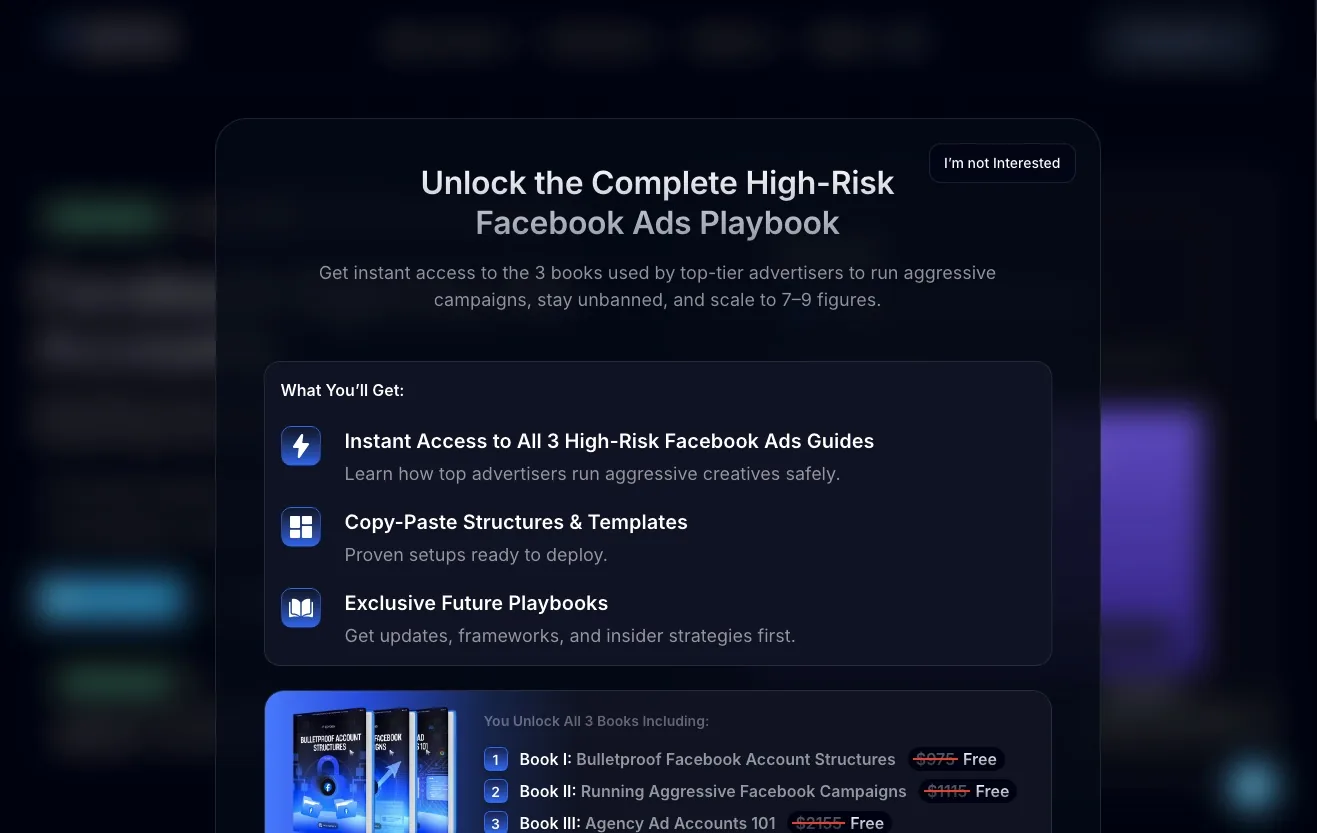
Source: uproas.io
The great thing about this strategy is that it’s easy to adapt to your specific niche.
For instance, if you run a pest control business, why not present potential customers with resources to help them identify which pests they're dealing with? Alternatively, you could provide them with a few easy and safe DIY suggestions for getting rid of those problematic critters.
If you implement these tips, your leads will develop a positive perception of your company and see you as a trustworthy expert. They’ll also see you as user-centric, significantly boosting their chances of calling you the next time they need services related to your area of expertise.
Understand That There’s Strength in Numbers
If you look at why shoppers seek out social proof before making a purchase decision, you’ll find that it’s not necessarily because they don’t have confidence in your brand’s expertise and experience. Many people simply don’t feel competent enough to make a conversion decision they won’t regret later on.
In most cases, this happens when shoppers have uncertainties about their own decision-making ability. In such situations, the easiest way for them to remove their doubts is to follow the actions of others — particularly those who have successfully managed to remove similar pain points.
Social proof is a content format that naturally aids this confidence-boosting process. But it’s not always the right way to quickly communicate trustworthiness. Especially if you’re targeting people who are in the early stages of the buyer’s journey.
In other words, your leads might not be ready to take a deep dive into UGC. Instead, they’ll be looking for quick ways to verify your business as a reliable provider of quality services.
With this in mind, it’s important to find efficient methods to communicate credibility on your website. UX elements like numbers that testify to your brand’s expertise are a good choice, seeing as they communicate key information in a measurable, easy-to-understand way, which is relevant to potential customers.
If you check out Mannequin Mall, you’ll find that this is precisely what the business does in the topmost section of this collection page, where it clearly states that it’s trusted by 500+ big companies, has 1,500+ verified reviews, and has fulfilled over 20,000 orders.
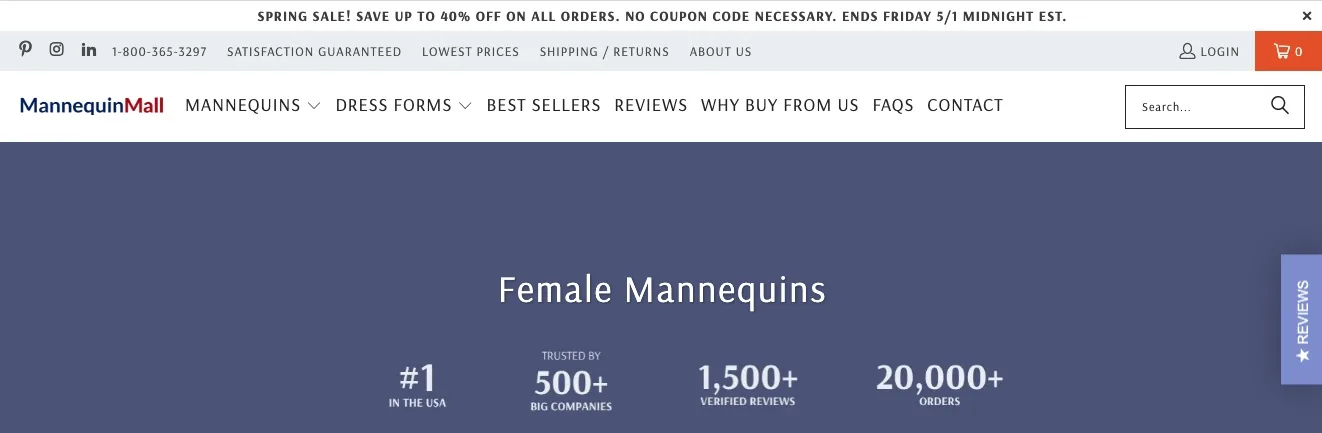
Source: mannequinmall.com
As for implementing this trust-building design tactic for your service area business, you can more or less copy it as is.
Point out the number of customers your business has, the number of years you’ve been in business, or highlight any other number that might help new leads form a positive and trusting opinion about your brand. Sure, it may not become the deciding factor in helping you win new customers. But it’s 100% sure to help in positioning your business as a trustworthy entity in your area.
Use Differentiation Elements to Your Advantage
Survey data consistently shows that the majority of consumers searching for local service providers read reviews before making purchase decisions. But social proof is not the only way they collect pre-purchase information (or the singular format influencing their buyer’s journey, for that matter).
According to a 2026 study from BrightLocal:
- 40% of consumers trust AI platforms for business recommendations
- 42% consider this content to be as credible as traditional social proof
- 82% of consumers read AI-generated review summaries
- 23% are willing to rely solely on the latter to make a decision
What this means is that user-generated feedback is no longer sufficient to help your brand stand out.
Instead, generative engine optimization will play a part in helping your services stand out. Particularly when aiming to earn your target audience’s trust and become their preferred provider.
That’s why you need to identify opportunities to make your service area business stand out. And what better method to accomplish this than through differentiation-oriented design that subtly positions your company as a credible and dependable entity?
By using differentiation elements to show your prospects that you offer more (or better) value than your main competitors, you can boost your chances of turning web visitors into customers. On top of that, you can ensure that AI tools pick up on your brand’s ability to offer extra value for less and maximize your chances of building brand and service awareness through these popular channels.
The best part about this tactic? It can be as easy to implement as using UX design to highlight differentiation elements on relevant landing pages.
For example, check out Asia Patient. This business understands that price is a deciding factor for its target audience. So, it uses a cost comparison table to point out why it is the best option for a number of customers. But in addition to this, AsiaPatient also has its web layout (more specifically, negative space and content chunking) to emphasize the benefits of choosing its services. Besides the 60% to 80% cost savings, these include a high standard of services and the attractive idea of recovering in world-class hotels that cater specifically to medical tourists.
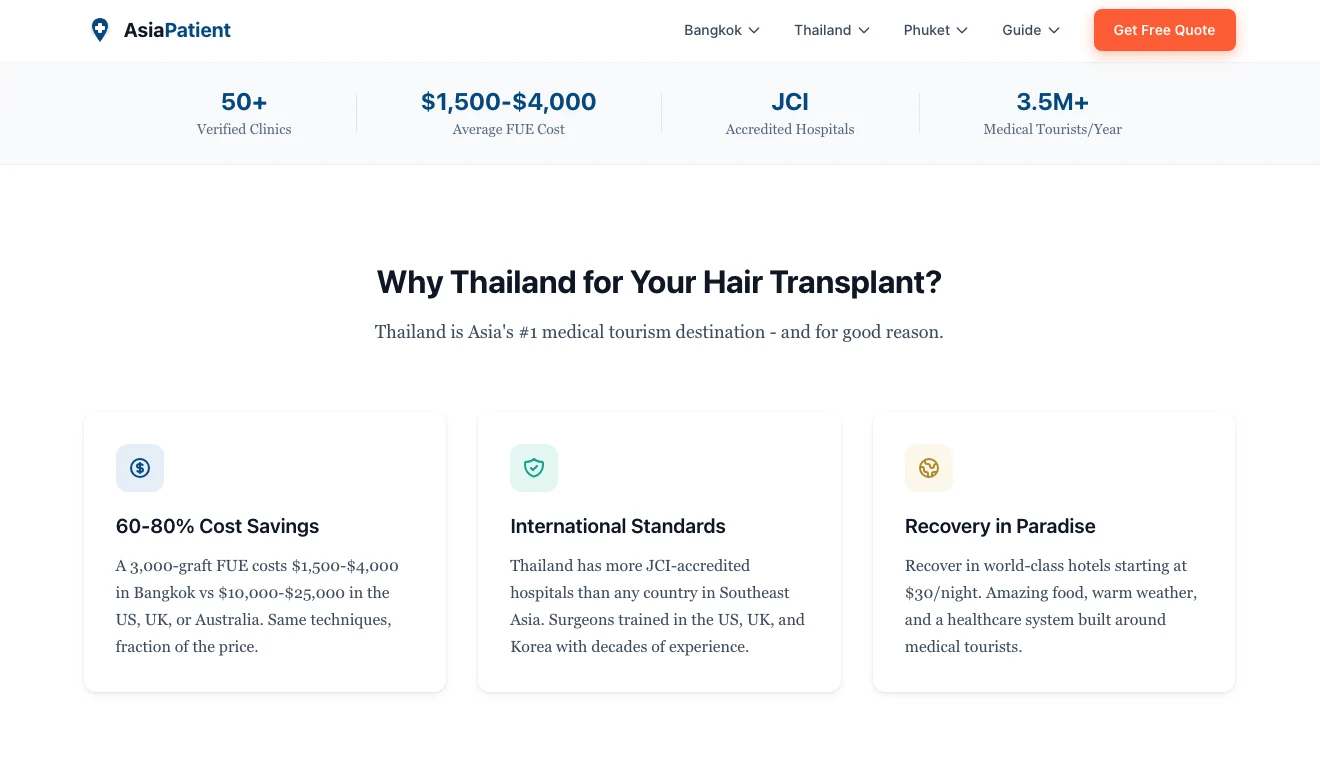
Source: asiapatient.com
But how do you apply this same tactic to your local services business? Simply identify the elements of your service that are most likely to earn your prospects’ trust. Then use UX design to make them stand out — whether you do this through color, layout, negative space, or even UI is entirely up to you and the design direction that best aligns with your company’s visual identity.
Build In-Depth Customer Support and Knowledge Bases
The buyer’s journey does not end once you’ve converted a new client. It continues on into the loyalty phase, which hugely determines your ability to attract new leads and turn them into customers.
Why? Because customer loyalty is far more worthy than acquisition — and not just because it secures a higher customer lifetime value.
Nevertheless, if you’re aiming to use UX design to build brand credibility, earn customer trust, and drive loyalty, keep in mind that today’s consumers expect next-level post-purchase support. And they’re not willing to wait for service when push comes to shove.
So, one of the best things you can do to highlight your brand’s reliability and customer-centricity is to develop customer support and knowledge bases that can assist your clients in (predictable) situations that might come up in the post-purchase phase of their buyer’s journey.
For instance, Drift has a highly detailed Help Center, which answers a variety of customer questions regarding their subscriptions, memberships, billing, etc. Moreover, it uses an AI chatbot on its homepage, which is a quick way for customers to get help in situations where they need basic assistance.
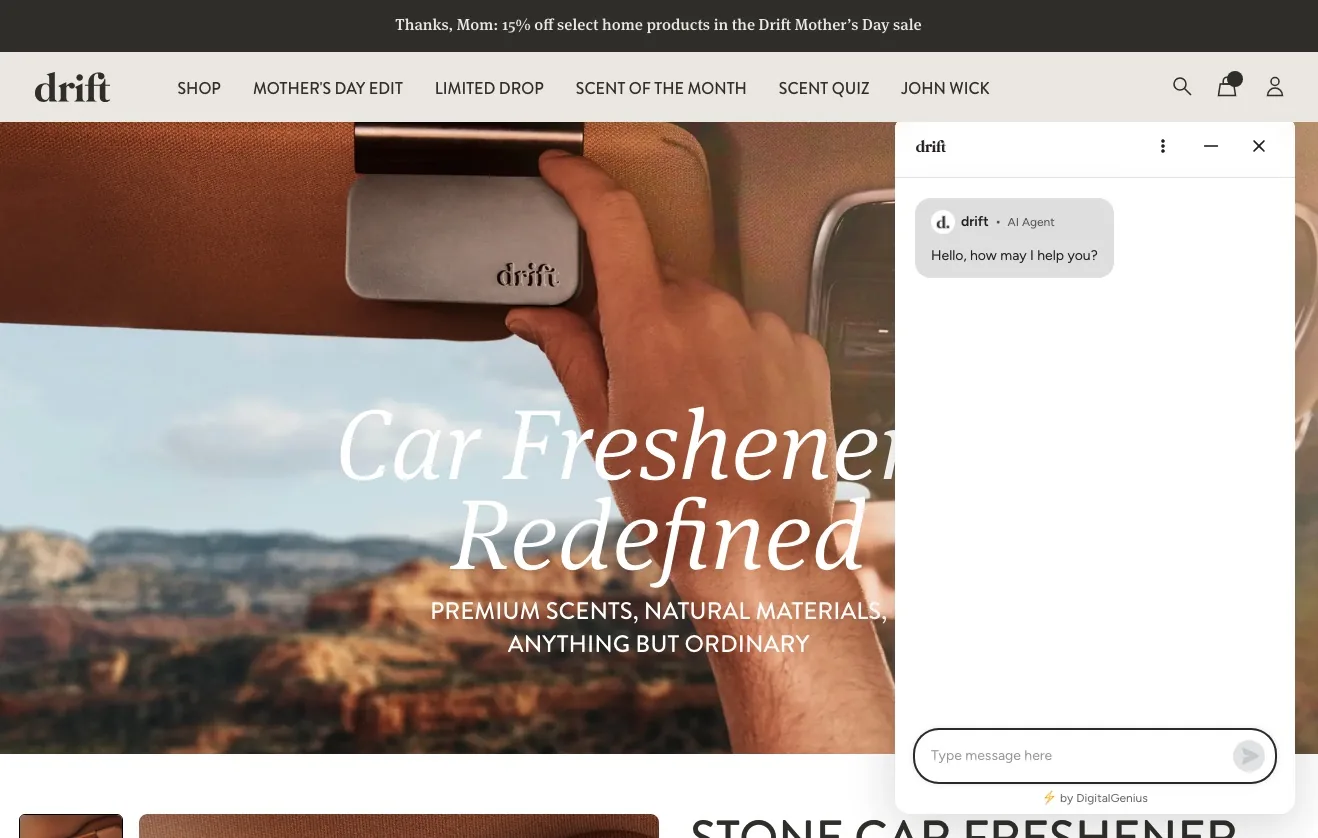
Source: drift.co
And the best part? You can easily adapt this UX design strategy to your service area business’s needs. Identify your existing customers’ most common questions. Write detailed answers that can help them resolve their main concerns. And create easy-to-access contact points to ensure they can get in touch with your team in case they need more professional guidance or advanced assistance.
Enable Uploading UGC with Customer Reviews
Lastly, when it comes to designing for trust, remember that no format of branded content can ever be as trustworthy as UGC. Sure, this may complicate your road toward earning your customers’ confidence. But if you know what you’re doing, it can actually become the UX design tactic that cements your brand’s reputation as a dependable SAB.
If you look at some of the latest findings from SearchRank, you’ll see that UGC is almost 10 times as credible as influencer content. 60% of shoppers find it to be more authentic than any other form of marketing. And 50% of consumers consider brands that use UGC to be more trustworthy than businesses that don’t.
With this in mind, one of the most effective UX design tactics you can implement to boost your brand’s credibility is to create systems that invite your audience to submit photos and videos with their reviews, then automatically highlight that feedback on relevant landing pages.
This is precisely what businesses like Sewing Parts Online do in their Reviews sections, like on this product page, where testimonials with photos get automatic ‘Featured’ status.
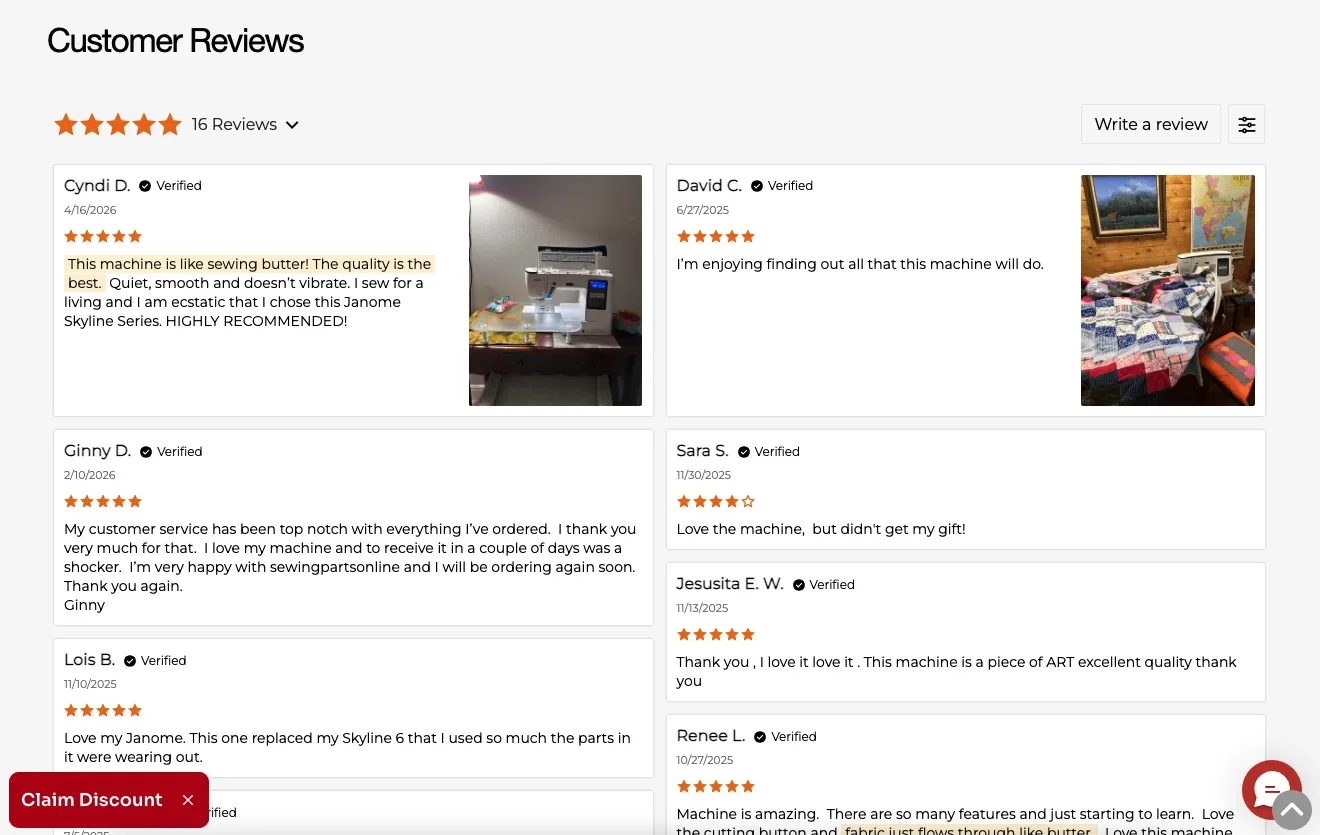
Source: sewingpartsonline.com
As for applying this tactic to your service business, it can easily work as is. However, if you want to stand out — particularly in niches like pressure washing, landscaping, or pet grooming — consider encouraging your customers to include before and after photos with their reviews, as these are an amazing method of highlighting the quality of your services and giving new leads a better idea of what they can expect from your brand.
Final Thoughts
Great UX design doesn’t have to be complicated to help you earn your ideal customers’ trust. But it has to focus on meeting your prospects’ needs — especially in situations where they need to determine whether your business is the right entity to remove their pain points.
The five tactics described in this guide are an excellent strategy toward building brand credibility — particularly for service area businesses. Of course, there’s always more you can do to boost your brand’s reputation. So don’t hesitate to invest in your online presence, showcase customer-centricity, and explore opportunities to make digital brand interactions more enjoyable. Sure, these activities may not seem like much in terms of converting more clients. But at the end of the day, they’re what’ll push the needle in the right direction, allowing your company to stand out as the best service provider in your area.