As a home services business, you know the importance of generating leads. You need to stand out to customers who require maintenance, repairs, or renovations by employing the right marketing strategies, such as SEO, social media, and content marketing, so that you can capture their attention in a competitive market. But here’s the thing: you don’t want to attract just any leads, but high-quality leads that are more likely to become paying customers.
To achieve this goal, it’s essential to target the right audience with customized solutions, and a landing page is your ticket to making every marketing effort count.
In 2026, landing pages for home service professionals will shift towards enhanced user experience through simplicity and speed, AI-driven customization, and more trustworthy social proof. There will be an increase in dynamic content adapted to users by considering factors such as behavior and location, while clear CTAs and accessible design will remain essential factors that will help drive conversions. In this blog, we explore why a landing page is an absolute must for your home service business, and also take a look at the landing page trends for 2026, so continue reading.
Why is a good landing page so important for your home services business?
A landing page is an excellent way to ensure that your target audience is engaged. It is the first impression that a prospect experiences when visiting your website after discovering you through ads, so it should definitely look impeccable, because just like people judge a book by its cover, they will do the same with the landing page for your business. Knowing this, you want to ensure that whenever someone browses your landing page, they see relevant content.
But there’s another notable reason why home service businesses need landing pages: it can considerably enhance your marketing efforts by helping your venture rank higher in search results, provided that it matches users' queries. However, it’s worth noting that many factors will determine whether your landing page is attractive enough, and it’s also essential to stay ahead of landing page best practices, so that you will drive conversions. In 2026, home service professionals like you need to focus on building credibility through social proof and clear value propositions, while also ensuring that every single element included in the landing page supports your marketing efforts.
In what follows, we will delve into the trends and strategies that will help you create a compelling landing page in 2026, so check them out to boost your own marketing campaigns.
Headlines that focus on AI-driven personalization and value-first messaging
When visiting your landing page, people will first notice the headline, so it's essential to keep it as relevant and attractive as possible. The headline should capture the essence of your business, and it should be SEO-friendly in order to help you achieve long-term results for your home service company.
Besides SEO guidelines, you should also ensure that you include at least one USP (unique selling proposition) that you want to emphasize about your business, as this will attract people who may want to hire you for their home improvement projects. 2026 is all about AI-driven landing pages, which means the headlines are adapted based on user data, such as behavior and location to maximize conversions. There’s also a focus on simplicity and clarity, alongside value-first messaging, ensuring visitors can easily connect with your brand. Rather than simply stating your services, the headline you incorporate on your landing page should clearly explain how you solve customers’ problems. Keep in mind to avoid clutter, and stick to a clean, simple design, as this is what will work best and result in fulfilling user experience.
Visuals with interactive elements and clean aesthetics
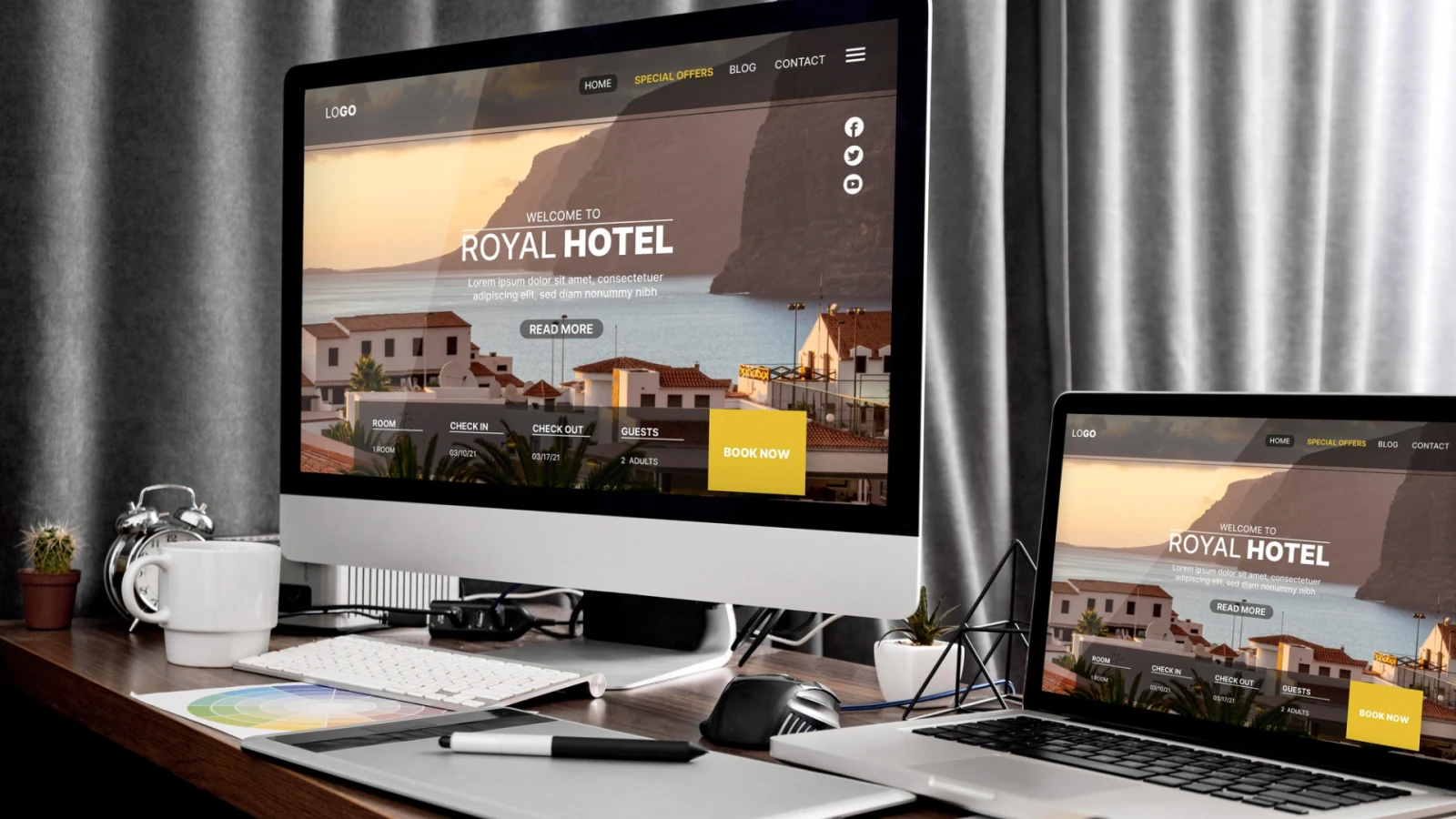
There’s a reason why they say a picture is worth a thousand words. The importance of visuals in landing pages cannot be overstated, as incorporating the right images can convey a great deal about your home service. Use visuals that are relevant to your service and offer, and focus on creating an emotional connection, as this will leave a lasting impression on users and make them more likely to engage. In 2026, there is a focus on interactive elements, such as playful cursors or animations, as well as simplicity, using negative space and clean lines that draw attention to CTAs and other essential content. Plus, you are encouraged to break from traditional rigid grids and embrace asymmetrical layouts for a stronger visual impact.
To make things easier, consider using a landing page builder, which provides drag-and-drop functionality and pre-made templates, allowing you to create visually appealing landing pages without coding. This tool provides access to customizable visual elements, enabling you to upload your own visuals or utilize the built-in media options. The best part is that you can see changes in real-time as you build the page, providing immediate feedback on your design.
Social proof that goes beyond simple testimonials
Social proof is extremely important throughout the customer journey, as it boosts credibility, and lowers decision-making uncertainty, so it’s not surprising that it will remain a crucial element for landing pages throughout the next year. However, rather than focusing on simple testimonials, it will incorporate more authentic forms, such as user-generated content, visual social proof and real-time engagement.
According to the principle of social proof, individuals tend to conform to popular actions, believing that’s the correct behavior. As they see others having positive experiences, they will feel more confident about their own experience, decreasing the perceived risk of a purchase. However, in the era of AI-generated content, it’s essential to focus on authentic trust signals, like verified reviews, and case studies, because these will help customers perceive you as reliable. Notably, video testimonials from customers will be much more effective compared to text alone, as visual content has a stronger emotional impact. Keep in mind to place social proof strategically throughout the landing page, after the value proposition and leading to the CTA, as this will help reinforce trust.
Action-oriented and visually compelling CTAs
When discussing how to create a landing page that converts in 2026, we obviously cannot overlook CTAs, which are among the most essential elements to include. A potential customer shouldn’t stop at what the landing page says – they should be moved to do something – for example, contacting your business for a consultation about how you can best support them. In 2026, the focus will be on leveraging AI and automation, and providing convenient options, among other aspects.
A CTA is one of the best leading generation strategies, but it needs to be done right, highlighting urgency, and be as clear as water, leaving no room for confusion about what prospects should do next. For example, you could implement a CTA like “Get a Free Quote” or “Request a Consultation.” It’s essential to offer proactive service subscriptions and maintenance plans, which you can promote through targeted CTAs that encourage loyalty and recurring revenue. At the same time, your CTAs should emphasize transparency by leading to detailed service descriptions, clear pricing, as well as technician qualification information, which will ultimately build trust.
Contact forms designed with mobile users in mind
This may be evident, but it’s worth pointing out its importance. When creating a landing page for your home services business, incorporate a contact form that allows prospects to fill out their information, making it easier to access qualified leads. However, you should prioritize contact form optimization, which means minimizing form fields, and requiring only the most essential information to boost completion rates and ensure data security compliance. At the same time, in 2026, contact form trends will focus on AI integration, with forms using AI to pre-fill user information by considering factors like previous interactions, location, and browsing history, thus resulting in a more seamless experience. Landing pages that are not optimized for smartphones will hurt your traffic and rankings, so a mobile-first design will be paramount. Form fields and buttons should be easy to tap using a finger, and there should be a lot of spacing around clickable elements on the page.
More often than not, those who leave information for you to contact them are interested in your services, and they are likely to hire you for an upcoming home improvement project. To make the process seamless, make sure that users can easily locate the contact form. Ideally, you should place it above the landing page’s fold, so that users won’t have to scroll to leave their information. The more convenient you make it for them, the higher the chances of acquiring a new lead.
The bottom line
As a home services business, you need a landing page to convert visitors into leads and get a higher return on investment compared to sending visitors to a general homepage. Landing pages enable highly targeted messaging and clear, strong calls-to-action, meeting prospects where they are on their journey and confirming that they have arrived at the right place.
By leveraging these digital marketing strategies for home service pros in 2026, you are essentially increasing your chances of engaging customers in a seamless and effective way and guiding them towards action. In a competitive home services market, a compelling landing page can be the edge your business needs to grow steadily and sustainably, ensuring all your efforts ultimately pay off.
Cover Photo by Lauren Mancke on Unsplash