
Content repurposing means taking something you've already created and turning it into new formats or adapting it for different channels. It's like cooking a big batch of chili on Sunday that becomes tacos on Tuesday and nachos on Thursday. Same ingredients, different meals!
When audiences jump between platforms and attention spans keep shrinking, repurposing helps you get more mileage from your best ideas without sacrificing quality. Done right, it's one of the most reliable ways to boost the return on content you've already invested in.
Thus, this page tackles what you need to know about content repurposing. As a digital marketer for small businesses, find out how to repurpose your content across various online channels. Read on to learn how to maximize your return on investment (ROI).
Understanding Content Repurposing and Its Key Benefits
Content repurposing is exactly what it is…reworking pieces of content into new formats and reusing them for different channels.
This means you give strong ideas a second (or third) life instead of reinventing the wheel. That way, they reach more people in the way they like to consume content. Indeed, it's an efficient and low-stress way to stretch your best work even further!
How do you go about repurposing content? Quick example: Take a popular blog post and spin it into a LinkedIn carousel, a 60-second YouTube Short, a newsletter segment. One idea, multiple touchpoints. It's that simple and easy!
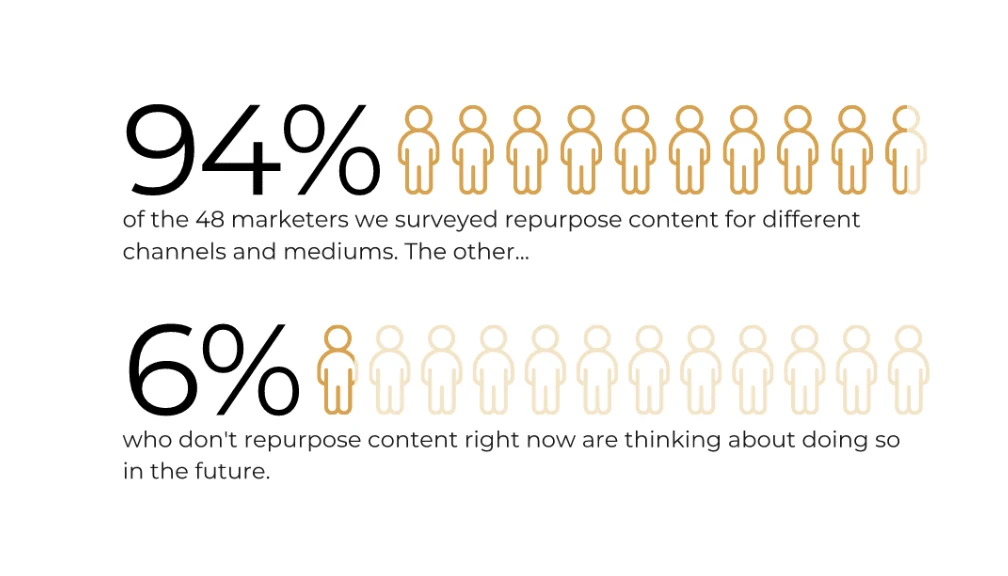
The good news? Nearly 95% of marketers repurpose content for different channels, and the remaining 6% plan to do so in the future. When asked how they do this, the vast majority (almost 70%) turn content pieces into infographics, while 65% transform them into video clips. See the common methods used for repurposing content below:
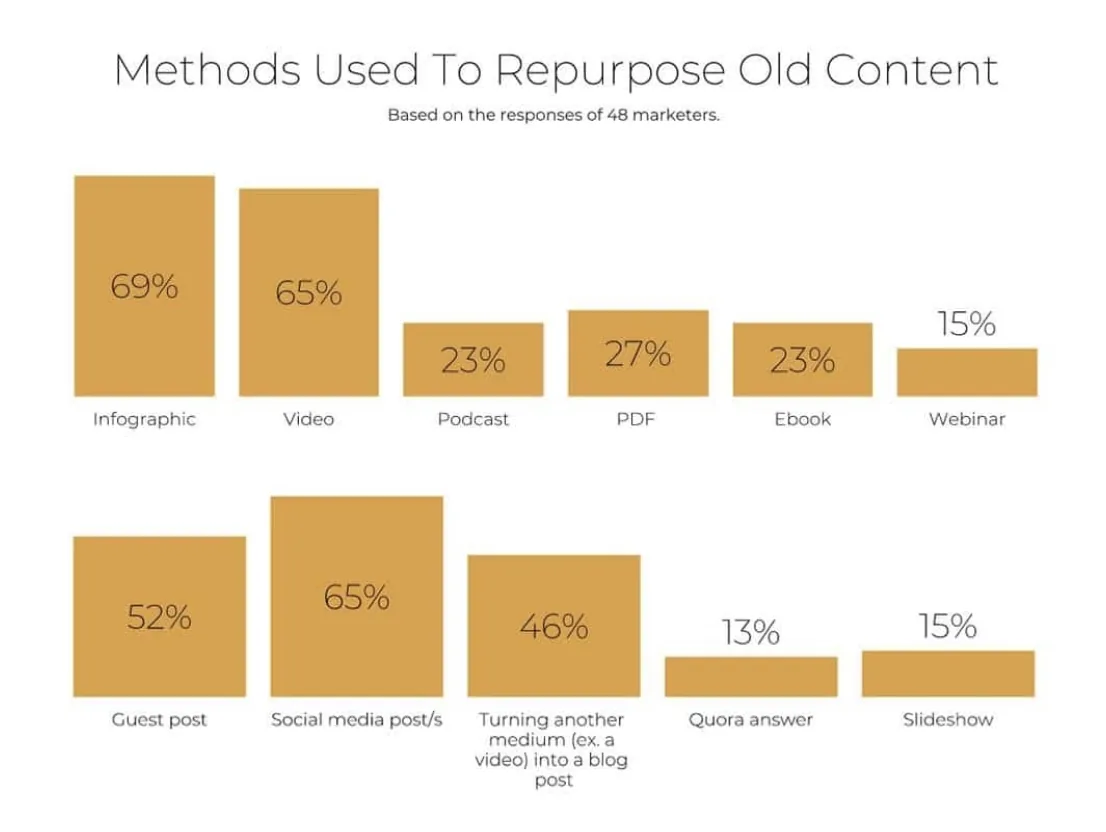
But why is there a need to repurpose your content? For all you know, it delivers several concrete benefits:
- It reaches people where they hang out, whether that's YouTube, LinkedIn, podcasts, or email, to build trust online.
- It cuts production time and costs since you're building from existing material.
- It keeps your messaging consistent across channels.
- It boosts SEO through related content without duplicating pages.
- It fills content calendars and creates sales materials without constant brainstorming.
Learn from Grant Aldrich, Founder of Preppy. They invest in content repurposing by reworking the resources they use for online certification. They treat existing content as a renewable resource, rather than a one-time project.
Aldrich says, "Your best-performing content already connects with people. Figure out why it worked, then adapt that core value across different formats and channels. One successful piece can seed an entire content ecosystem."
Step-by-Step Guide to Smart Content Repurposing
Repurposing content gets easier when you follow a clear and organized system. Think of it like using contract management software, where having a streamlined workflow reduces guesswork and keeps everything moving smoothly.
The steps below walk you through a simple process to turn your existing content into fresh, high-impact assets across multiple channels. Here's how:
1. Start with content inventory
Before remixing anything, take stock of what you have. A content audit reveals the hidden gems and the consistent performers. It also uncovers those pieces that need updating. Here's how to run a quick audit:
- Gather all your assets in one place. Some of these content assets you might have include blog posts, videos, whitepapers, webinars, slide decks, podcasts, email series, landing pages, social threads.
- Pull performance data from each platform. Consider using GA4 for web traffic, Search Console for organic performance, YouTube Studio for video stats, podcast analytics, social platform insights.

- Tag content by categories. Organize these pieces of content according to theme, target audience, funnel stage, and whether it's evergreen or time-sensitive.
- Flag outdated pieces you can refresh: You can do so by incorporating content with things, such as new stats, case studies, screenshots, and/or examples.
Jeffrey Zhou, CEO and Founder of Fig Loans, recommends measuring content performance and crunching the numbers to optimize results. He believes these numbers tell the real story.
Zhou suggests, "Look beyond surface metrics. Time on page, scroll depth, and social shares show which pieces actually connect. Those engagement signals point to your best repurposing candidates."
2. Spot high-performing content
The next step is to focus on your top performers first. Based on your content inventory, which pieces perform better and convert more? With that being asked, look at:
- GA4 metrics: Factor in key performance indicators (KPIs), such as engaged sessions, conversion rate, average engagement time.
- Search Console data: Review data insights showing pages with strong impressions and clicks.

- Social content: Opt for those social posts with more likes and shares, as well as high saves and watch completion.
- Email copies: Go for those email messages that drive high clicks and more responses.
Remember: Content that solves specific problems and/or consistently attracts search traffic makes the best foundation.
3. Pick the right digital channels
It's crucial to choose the most appropriate digital channels for your repurposed content. Why? Each platform has its own style and audience expectations. Take the following content pieces, for instance:
- Long-form video works on YouTube.
- Short vertical clips fit Instagram Reels, TikTok, YouTube Shorts.
- Visual explainers and infographics do well on Pinterest and LinkedIn.
- Industry insights and thought leadership thrive on LinkedIn and in newsletters.
- Tutorial content suits YouTube and webinars.
- Audio clips work for podcasts and LinkedIn audio events.
As such, match the channel to your audience's habits. Case in point: If buyers research on YouTube before booking demos, invest in video. If they're active on LinkedIn, start there.
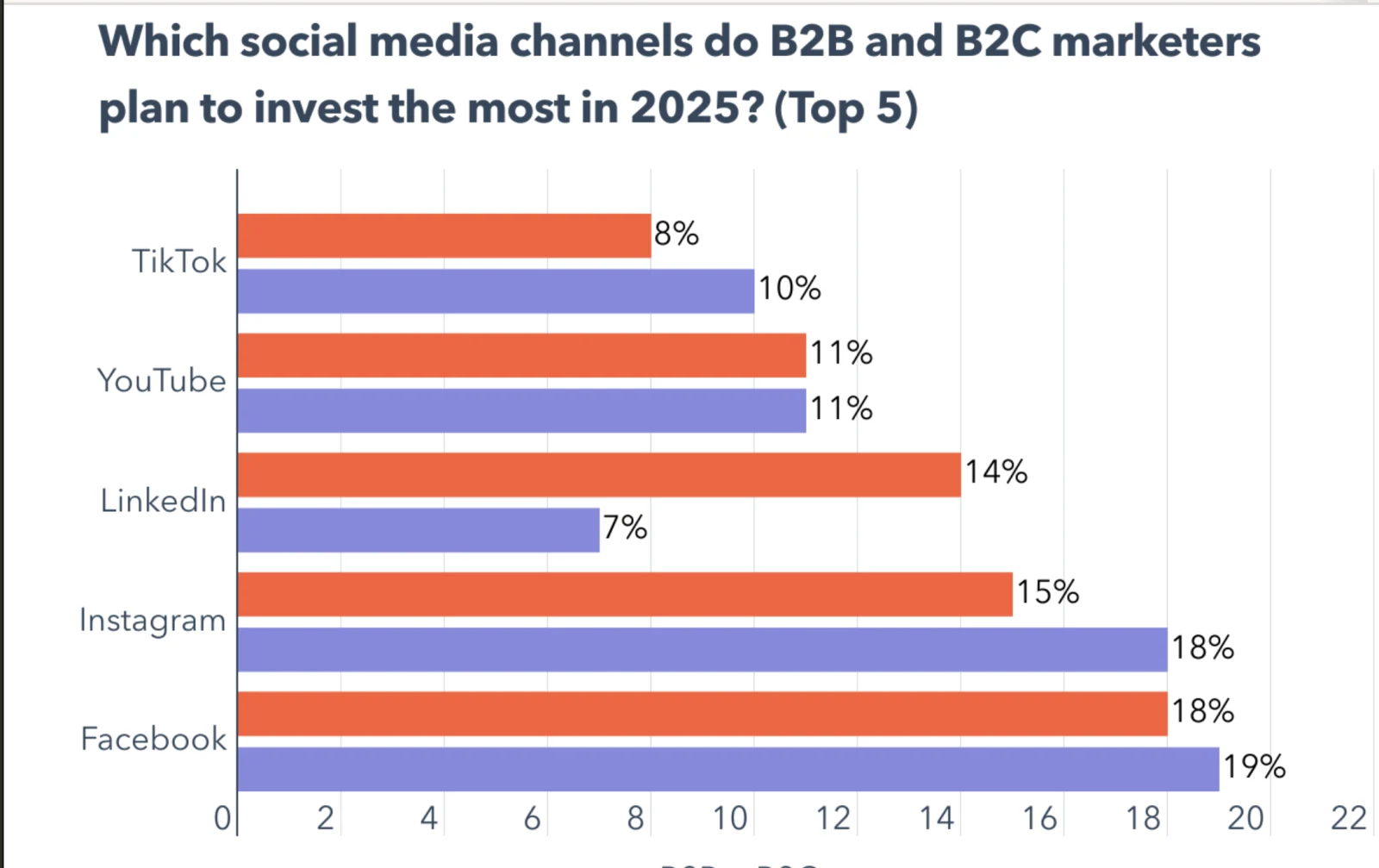
There are various online channels for content publishing. These could be websites, blogs, emails, social media. Just remember the top channels marketers are investing in this year for your content repurposing (see below).
4. Match content pieces with different formats
Straight copy-paste rarely works. Each format needs its own approach. So, you have to align your reworked pieces of content with various formats. But how do you go about doing so? Look at these examples:
- Blog to podcast: Pull the main points into a 10-minute episode. Add a personal story at the start and maybe bring in a guest for perspective.
- Whitepaper to webinar: Teach the framework live with audience Q&A, then clip the best moments for your social media marketing.
- Webinar to blog series: Break the session into 3-4 focused articles with supporting visuals. Create an FAQ from chat questions.
- Case study to sales sheet: Extract key outcomes, add before/after visuals, include a customer testimonial.
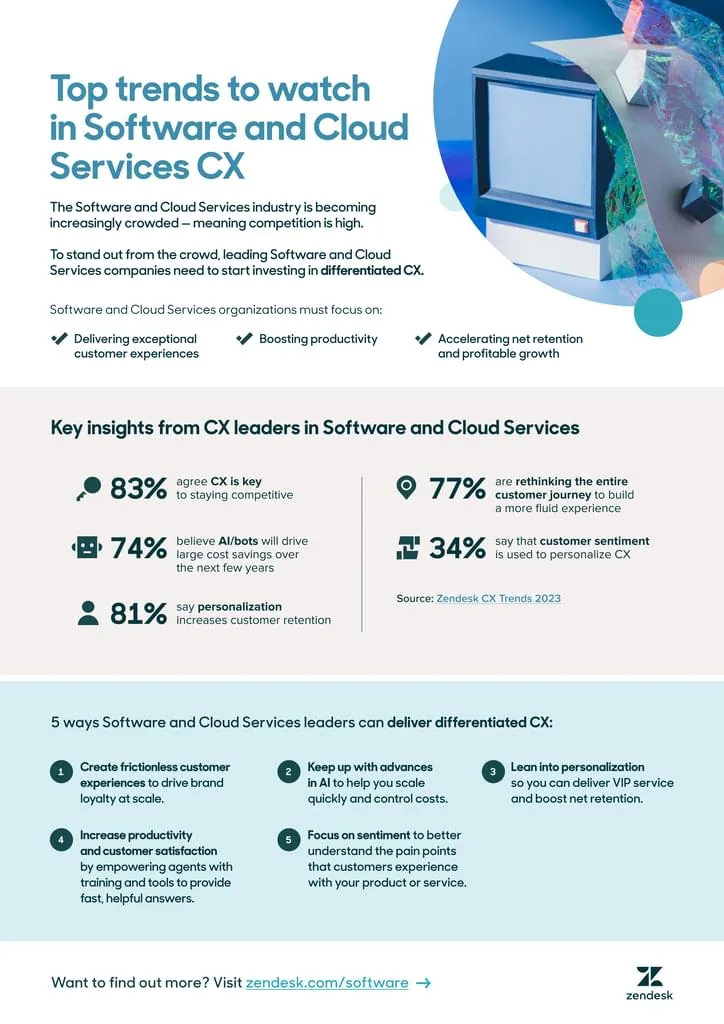
- Research report to infographic: Pick 5-7 compelling stats and tell a visual story. Take a look at this Zendesk infographic from a software and cloud CX report.
Paul McKee, Founder of Reading Duck, suggests aligning the repurposed content with the format. He sees format adaptation as translation, not transcription.
McKee shares, "Every format speaks its own language. A blog post needs a complete reimagining to work effectively as a video or audio. Consider how people actually consume content on each platform and adjust accordingly. That's what it takes to repurpose based on the channel and format itself."
5. Optimized reused content for SEO
There's no denying the intersection of SEO and content marketing. As such, give each repurposed piece its own optimization:
- Research keywords fresh for each format and platform, using related terms to avoid competing with yourself
- Update statistics, examples, and visuals to current versions
- Add contextual internal links and calls-to-action based on buyer stage
- Include captions and transcripts for accessibility and search visibility.
- Apply structured data where relevant (FAQ, HowTo schemas). See Google's guide for reference:

- Follow Google's people-first content principles to maintain quality.
Wang Dong, Founder of Vanswe Fitness, emphasizes the impact of content repurposing on search engine optimization (SEO). He sees it as a ranking multiplier, so he advises optimizing repurposed pieces for SEO.
Dong mentions, "You get multiple shots at ranking for related keywords without duplicate content issues. Fresh optimization plus proven content creates powerful ranking opportunities. That's why it's best to invest in content repurposing as part of your on-page SEO tactics."
6. Use tools and resources for efficiency
The future of content marketing requires AI and other modern technologies. However, choose tools that fit your team size and budget. Remember, simple workflows beat complex systems.
Below are tools and platforms you can use for your content repurposing:
Content audit and planning:
- Notion or Airtable for organizing inventory and workflows
- Google Analytics 4 + Search Console for finding top content and tracking results
Writing, design, and formatting:
- Figma for reusable visual templates
- Canva or Adobe Express for social graphics and infographics
Audio and video:
- Descript for editing audio/video and creating transcripts
- CapCut or Adobe Premiere Pro for video editing and captions
- Headliner for social audiograms
SEO and research:
- Ahrefs or Semrush for keyword research and content gaps
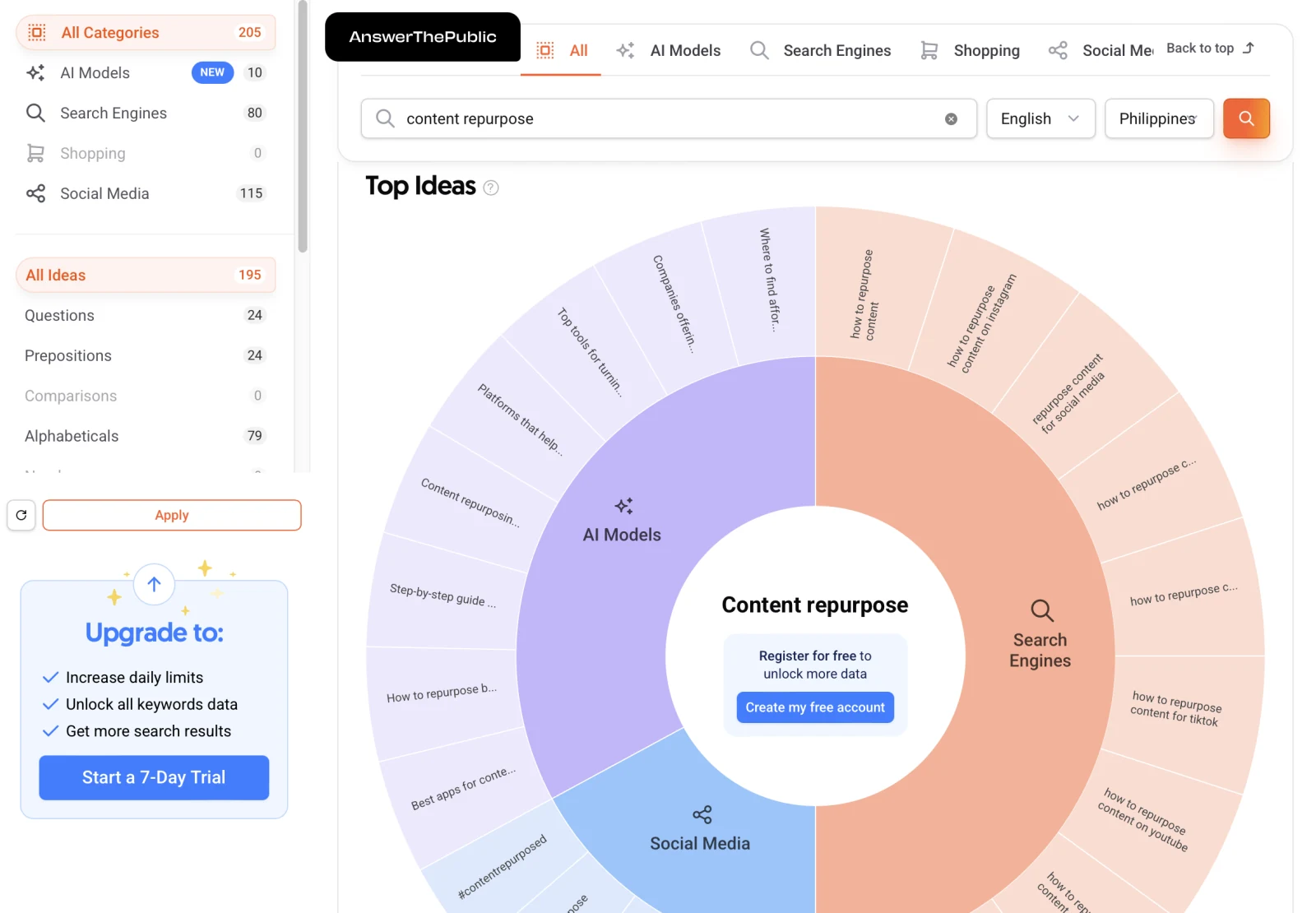
- AlsoAsked or AnswerThePublic for finding related questions
Social scheduling and distribution:
- Hootsuite, Buffer, or Later for multi-platform scheduling
- Mailchimp, ConvertKit, or Beehiiv for email newsletters
Documentation and QA:
- Loom for recording process vide
- Grammarly for consistency checks
7. Know what to avoid in content repurposing
Content repurposing can be tricky. You might commit some grave mistakes that could compromise your traffic, visibility, engagement, and conversion. So, watch out for these pitfalls:
- Letting marketing automation do all the work. Tools help, but they can't replace human judgment.
- Copy-pasting between platforms. A blog post won't work as a 30-second video without major changes.
- Publishing stale content. Old statistics and broken links destroy credibility.
- Creating duplicate content. This competes for the same search terms.
- Forgetting to measure results. Always use UTM tags and set success metrics upfront.

Take it from Ryan Beattie, Director of Business Development at UK SARMs. He has his fair share of managing a content team. He's seen what happens when they rush the process.
Beattie nudges, "People treat repurposing like copy-paste when it needs fresh editing and platform-specific tweaks. Bad repurposing hurts your brand faster than posting nothing. So, take ample time to plan and optimize your pieces of content."
Wrapping Up
Smart content repurposing entails auditing what you have, identifying winners, adapting them thoughtfully, and tracking the results. Treating strong ideas as renewable resources builds a content engine that saves time and multiplies results.
Ready to start? Spend an hour reviewing your top 20 pages or posts. Pick three pieces worth repurposing, choose one new format for each, and plan distribution for the next two weeks. Small steps create momentum.
Need help building a repurposing system or running a content audit? We work with teams on exactly these challenges. Contact Cube Creative Design to discuss your situation, or ask for our Content Repurposing Audit Worksheet to get started on your own.