
Though blogging was once primarily a vehicle for people to share stories and opinions from their personal lives, it has become an important part of marketing and relationship building for small businesses.
Effective blogging can help you build trust with potential customers and provide an extra level of customer service for your existing clients. It is also an important tool for generating new content for SEO and social media. In this article, we will discuss five reasons blogging is vital for small businesses.

Written By: Adam Bennett | April 30, 2017
Adam is the president and founder of Cube Creative Design and specializes in private school marketing. Since starting the business in 2005, he has created individual relationships with clients in Western North Carolina and across the United States. He places great value on the needs, expectations, and goals of the client.
You have probably seen a small business that impressed you for doing well despite its location. We have all also seen businesses open and thought to ourselves, "I hope they make it, but that building is cursed." In some industries, location is everything. Though your location on the internet is not necessarily important, the principle remains, you want your small business to be visible to your potential clients.
Written By: Adam Bennett | January 26, 2017
Adam is the president and founder of Cube Creative Design and specializes in private school marketing. Since starting the business in 2005, he has created individual relationships with clients in Western North Carolina and across the United States. He places great value on the needs, expectations, and goals of the client.
Entrepreneurs and small business owners are notorious do-it-yourselfers. Without the backing of major corporations, we need be able to create things and handle our own issues. However, there are some tasks to which we need to trust professionals.
Your website is your greatest marketing asset. There are over 3.5 billion google searches every day. Many of those inquiries are regarding services in your industry. The visibility and usability of your website are essential for Google's search engine to recognize your company as the answer to questions your potential clients are asking.
In 2017, to make the most of your website's potential, we encourage you to trust your greatest marketing asset to a professional. In this article, we have compiled four reasons to hire a professional to design and build your company's website.
1. Your Website Should Attract New Viewers to Your Business
A business website provides you with an opportunity to tell the story of your company to a broader audience. Contrasting a website with a billboard or magazine ad:
| A billboard reaches a limited audience | A website reaches a broader audience |
| A billboard offers limited message space | A website allows you to tell your full story |
| A billboard’s appeal is limited by viewers need | Website viewers visit for solutions to problems you help solve |
| A billboard is available for a limited time | A website is available for as long as the internet exists |
If you purchased a series of billboard ads, you would expect them to be visible in your service area. If your company services in western North Carolina, you would not be happy to find you were paying for your billboard to be displayed on Rte. 66 in Arizona. Similarly, you want your website to attract views from potential clients. Search Engine Optimization is a key part of ensuring your website is displayed when people search Google. Moz defines it as:
A marketing discipline focused on growing visibility in organic (non-paid) search engine results…[encompassing] both the technical and creative elements required to improve rankings, drive traffic and increase awareness in search engines.
Professional web designers and builders should have SEO in mind when developing your company’s website. Website visibility is an ongoing process, so we recommend working with a local web designer who can tell your company’s story in a way that reaches the right audience.
2. Your Website Should Retain Visitors
According to Hubspot, the average time a person spends on a website is about 15 seconds. It is important to capture the attention of your audience in a short time. The look and feel of your site should coordinate with the information your clients need to know. This means your website should be designed with both UX (user experience) and UI (user interface) in mind.
In other words, your website’s functionality is as important as its appearance. Your web developer should design a website that prominently features the information most likely to capture your potential clients and retain their attention for more than fifteen seconds.
3. Your Website Functions as a Second Front Door
For small business owners, relationships and building trust with potential clients is key. We believe that if people will walk through the front door, we can take care of them. Your website is like a second front door for your company, a means by which you can make a great first impression. Furthermore, your website helps you begin to build trust with potential clients by telling your story and meeting their needs.
4. Your Website Should Have Great Content
Content is the king and it is increasingly working its way to the forefront of all digital marketing strategies.
Your website’s content is as important as its design. Google’s goal is to match its users with the content most relevant to their inquiries. Google has a complicated algorithm in place that measures a number of factors including, but not limited to:
- Web design
- Mobile friendliness (responsive design, loading size, etc.)
- Relevancy of content to search
- Freshness of content
- Links to content

In other words, if your website is designed with the best practices, and your content is relevant to your current and potential clients, your website will be rewarded by ranking well for related searches. That means your content should be well-written, engaging, and targeted to the people who are most likely to become your clients.
2017 is a great opportunity to resolve to maximize your website’s effectiveness sand profitability by trusting it to the professionals. If you would like to know more about what we can do toward that end, contact us.

Written By: Chad J. Treadway | January 03, 2017
Chad is our Chief Smarketing Officer. He will help you survey your small business needs, educating you on your options before suggesting any solution. Chad is passionate about rural marketing in the United States and North Carolina. He also has several certifications through HubSpot to better assist you with your internet and inbound marketing.

Design trends come and go. While some trends we can happily salute as they leave (anyone remember the "Rachel" hairstyle?), some trends bring great visual interest. This is especially true for businesses, where design trends can help set businesses apart. The following slides were presented at the PRIMA NC conference held at A-B Technical Community College in Asheville, NC.
Written By: Adam Bennett | September 15, 2016
Adam is the president and founder of Cube Creative Design and specializes in private school marketing. Since starting the business in 2005, he has created individual relationships with clients in Western North Carolina and across the United States. He places great value on the needs, expectations, and goals of the client.
We all have horror stories of service providers and lackluster customer care. Whether it be in a retail operation or the mail service, there are times when you have to dig in your heels as a customer in order to get a fair shake.
So what happens when you, as a customer, may be the one causing issues? Service providers also have horror stories of clients whom they deem “toxic” or a nightmare.
At Cube Creative Design, we pride ourselves on the best in customer service and experience. Rather than “dump a toxic client” like some industry publications suggest, we work through issues and get our clients the best possible outcome and solution for their business or organization.
How can that process flow smooth as buttah? Here are a few tips that will help service providers, especially design services, get you the solution you need and want as quickly as possible:
Expect Good Work to Take Time
Ever heard the saying that you can choose two qualities for work at the expense of the third: good, fast or cheap? Good and fast isn’t cheap; Fast and cheap isn’t good; Good and cheap isn’t fast. This is especially applicable to design work. Expecting a designer to put aside time management priorities or project planning shouldn’t be the norm, and it isn’t reasonable to expect it on a constant basis. So everyone is on the same page, consider asking up front what the project timeline should be. What might delay the project? How should delays be addressed by the designer and by your organization?
Set A Path and Don’t Back-track
One of the hardest things for a designer to do is read a client’s mind. When clients don’t know exactly what they want or need, it can cause infinite revisions. Don’t force designers to make wild stabs in the dark. Clear goals and clear expectations set a good path for both the client and the designer. When giving feedback, be specific and give examples when possible. Rather than “it just doesn’t pop,” you could say something like “this color isn’t bold enough” or “the font seems too thick, let’s try something thinner.” This leads us to…
Don’t Let Too Many Cooks in the Kitchen
“Design by committee” is a real problem. It masquerades as getting input from stakeholders or making sure the right people are looped into the decisions, but it can set off an endless cycle of revisions and lead even the best intentions down a tangential path to Timbuktu. Design by committee slows down the design process by preventing works in progress from being finalized because not only do different folks have differing opinions, but also because trying to nail down feedback from a range of people can be time consuming in itself. One of the worst things a client can do is loop in a new opinion during the middle of the design process.
Before a project begins, set a small group (2-3 people) who will champion the project. Have those people collaborate on a game plan before design work starts so everyone involved has a clear expectation of where they should be headed. Instead of wandering through design wilderness, your design sherpa can then get you from start to finish as painlessly as possible!
Don’t Get Personal
The focus of any design should be the end user. What would your customer or client need or want to see from any design that would implore them to seek out more information or make a connection with your organization? Personal color and font choices should have very little place in the design process. There are scientific explorations into the psychology of color and heat maps and eye-tracking studies into the best structures for websites. Allow your designer use that knowledge to make your business succeed. It is always OK to provide feedback that uses your personal perspectives on work, but try to put yourself in the point of view of a client and how they would view it.
With clear expectations and clearer communication, the design process can be an exhilarating ride that invigorates your excitement for your business or organization’s purpose and vision.
As we approach the midpoint of 2016, it has become quite clear that social media are a viable marketing platform for business. As we discussed earlier, social media shouldn’t take the place of a well-designed website. However social media can be a great way to interact with customers and build brand loyalty.
So what are some social media trends in 2016? How can you take advantage of social media trends for your business?

Facebook, Twitter, SnapChat, Vine, YouTube, LinkedIn, Google+, FourSquare, Yelp, Gryzzl (OK, that one is fictional): there is always something new to remember. It may seem easier to avoid jumping on the train and instead take a nap in the train station. Or it may be tempting to use these free social platforms to market your business and neglect a proper website.
As endless as the platforms may seem, there is a good middle ground to successfully market your small business online. You just have to view social media platforms as what they are: a marketing tool to reach out to potential and current customers and bring them to your business.
Last summer I went on vacation and wanted to secure the house in my absence. To do this, I got a sticky note and wrote “do not enter” and stuck it on my front door. Satisfied with all of my assets being properly secured, I left for a week out of state. When I returned I couldn’t figure out why my house had been ransacked. They even took my peanut butter!
Does that story sound completely ridiculous? Likely. Are you doing the exact same thing when you pick an insanely easy-to-crack password? You bet.

Who doesn’t have a Gmail account? Google’s popular email service is no longer only for personal email. The folks at Google offer Google Apps, which gives you all the features of Gmail, but with your own domain name.
Huh? So imagine I have a pet sitting service called See Spot Sit, and I use a Gmail account to handle all communications for this pet sitting service business. Perhaps the email is something like SeeSpotSit@gmail.com. My business picks up and I now have a super awesome website, SeeSpotSit.com. I want to look really legit, and I hear that using email from my domain name can help me gain that legitimacy. Adding email through my web site hosting service can be, frankly, ghetto. Email services are typically an afterthought for many web hosting companies. So I sign up for Google Apps for Business. Now I can have email accounts like YoDawg@SeeSpotSit.com or LeashLover@SeeSpotSit.com, and they all run with the same gears and cogs that power Gmail.
Perhaps the most important piece of real estate you can own is your domain name. It is the address at which every potential customer will find you, and it can have huge implications on your marketing strategy.
If you’re going to spend the money to brand your business – and yes, you should spend the money to brand your business – it seems logical that you could then use that branding across different media platforms, right?
Right! However there are some caveats to consider. When done well, cross-platform branding can make your business look and perform well. Done inappropriately, it can cripple your business potential.
Let’s start at the beginning. Your business brand, according to Entrepreneur, is your promise to your customer. It conveys what can be expected and how your business is different than others. It isn’t just a logo or a color scheme. It is your business “voice,” from the tone of written communication to visual images.
Here are five tips to successfully translating your print brand to an online brand.
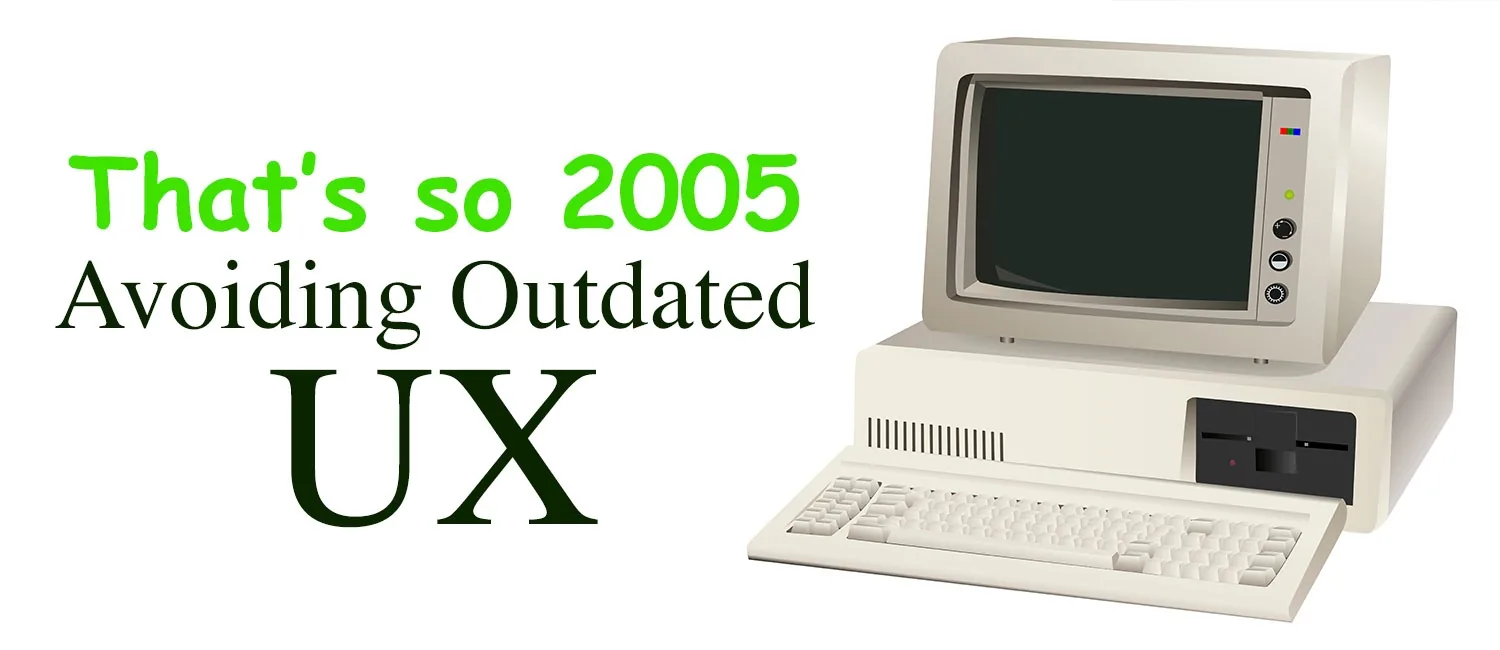
The internet is a relatively new contraption in technology terms. It has really only been popular with the masses for around 20 years. As any teenager will tell you, being cool 10-20 years ago, or even 3-4 years ago, does not translate to today’s sense of cool.
Right now you’re probably thinking one of two things: “Who cares? I don’t need to be trendy.” Or “I want to be trendy but I don’t want to reinvent my website every 2 years!”
If you aren’t ready for a full overhaul of your website, perhaps consider updating some telltale signs of age: