"My phone should be ringing more." As a home service provider, you've probably thought this while watching competitors with half your experience book jobs you should be getting. Why? Because 88% of consumers who perform a local search on their smartphone visit or call a business within 24 hours.
When a homeowner's basement is flooding at midnight or their AC dies during the summer's worst heatwave, they're not methodically researching who has the most experience—they're calling the first trustworthy service provider they can find online. If that's not you, you're losing thousands in potential revenue every month.
The good news? By fixing just five critical mistakes in your online business listings, home service providers like you typically see a 30-40% increase in qualified leads and a 24% improvement in conversion rates within just 60 days—all without spending an extra dollar on marketing.
Let's dive into these five business listing mistakes that are silently costing you money—and exactly how to fix them today.
Mistake #1: Inconsistent Information Across Platforms
Picture this: A homeowner with a flooded basement frantically searches for emergency home services. They find your business on Google, but when they call the listed phone number, they reach your old voicemail from three years ago. Meanwhile, your Yelp listing shows a completely different phone number. Congratulations—you've just lost a customer who needed immediate help, and they're already calling your competitor.
Inconsistent business information isn't just annoying—it's a profit killer for home service providers. When your address, phone number, hours, or service areas differ across platforms, you're actively driving customers away.
The Real Cost: According to BrightLocal, 63% of consumers would lose trust in a business after seeing mostly negative written reviews. For home service businesses, where trust is everything, that's a death sentence.
ROI Impact: Home service businesses that maintain consistent NAP+W information (Name, Address, Phone, Website) across all platforms see an average 25% increase in call volume and a 30% reduction in misdirected calls. For a typical contractor, this can translate to 5-10 additional service calls per month—potentially $3,000-$7,500 in additional revenue.
Implementation Steps:
- Create a master NAP+W document containing your correct Name, Address, Phone, Website, hours of operation, and service areas
- Choose your approach:
- DIY Method: Manually update each business directory yourself (time-intensive but free)
- Service Aggregator: Use a listing management service that pushes your information to multiple platforms (costs $30-100/month but saves significant time)
- Prioritize these platforms (in order of importance):
- Google Business Profile
- Yelp for Business
- Bing Places
- Apple Maps
- Facebook Business
- Set quarterly audit reminders to review all listings, with special attention to seasonal changes in service hours or emergency availability.
Bottom Line: Your business information must be consistent not only across different platforms but also across different devices. Today's homeowners might search for emergency services on their desktop during the day but use their smartphone after hours. According to research, 57% of local searches are conducted on mobile devices. Implementing responsive, multi-device design ensures that your contact information, service hours, and emergency availability are clearly visible regardless of the device your potential customer is using.
Mistake #2: Neglecting Your Google Business Profile
If your Google Business Profile isn't optimized for home services, you're essentially hiding from the 46% of all Google searches that have local intent. When homeowners search "emergency plumber near me" or "same-day home repair," Google's local pack results dominate the screen—and businesses with incomplete profiles rarely make the cut.
For home service providers, your Google Business Profile isn't just another listing—it's your most powerful lead generation tool. Yet many contractors and service providers treat it as an afterthought.
ROI Impact: Home service businesses with fully optimized Google Business Profiles receive 3-5x more profile views than incomplete listings. Research from Birdeye shows that a properly optimized Google Business Profile can increase website clicks by 35% and direction requests by 70% for local businesses. For home service providers, this directly correlates to increased service calls and revenue.
Home Service-Specific Features You Should Be Using:
- Service Area Specifications: Precisely define neighborhoods you serve, crucial for service-based businesses without storefronts
- Business Attributes: Highlight emergency services, 24/7 availability, or same-day appointments
- Service Categories: List every specific service you offer, not just general categories
- Booking Button: Enable direct appointment scheduling for routine maintenance services
- Q&A Section: Pre-emptively answer common questions about your service guarantees and availability
Implementation Steps:
- Log in to Google Business Profile at business.google.com
- Complete the "Info" section first:
- Add all phone numbers (office and emergency line)
- Set accurate hours (including after-hours availability)
- Define precise service areas by city or ZIP code
- Add services individually: Don't just list "Plumbing" - break it down into "Emergency Plumbing," "Drain Cleaning," "Water Heater Installation," etc.
- Upload high-quality images:
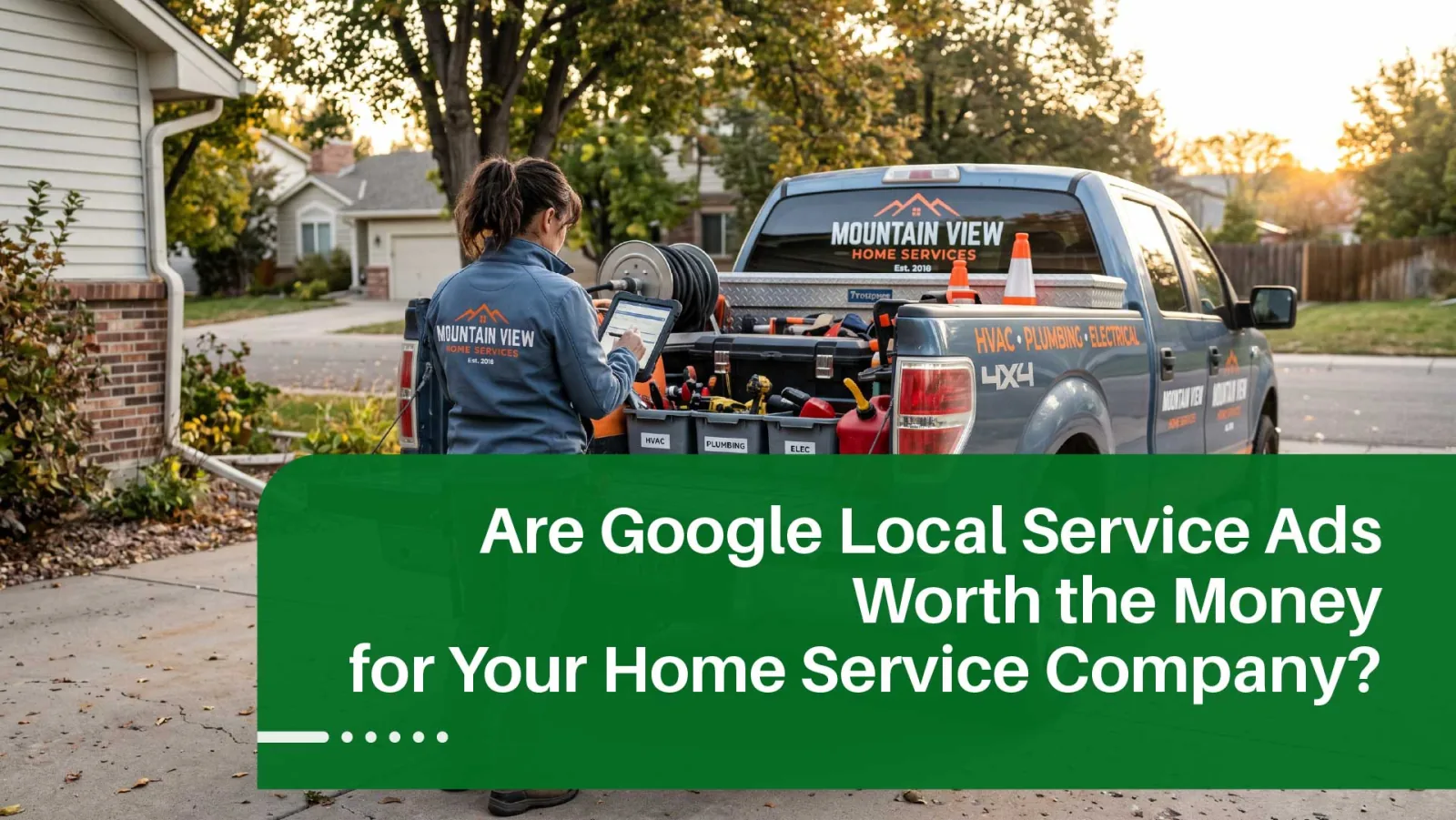
- Your service vehicles with clear branding
- Staff in uniform (individual and team photos)
- Before/after project photos (at least 10)
- Your physical location (if applicable)
The Seasonal Strategy: Update your Google Business Profile seasonally to highlight relevant services. Emphasize gutter cleaning in the fall, HVAC maintenance before summer, and emergency repair availability during storm seasons.
Mistake #3: Mishandling Customer Reviews
In the home service industry, reviews aren't just nice to have; they're the digital equivalent of word-of-mouth recommendations that have traditionally driven this business. When someone invites you into their home to fix, clean, or renovate their personal space, trust is non-negotiable.
Yet many home service providers either ignore reviews entirely or handle them so poorly that they actually damage their reputation further.
The Review Reality: BrightLocal's Local Consumer Review Survey found that 87% of consumers read online reviews for local businesses—a number that continues to grow year over year. For home service businesses, where average job values are higher than retail or restaurants, the impact of reviews is even more pronounced.
ROI Impact: According to a study by SOCi, home service businesses that respond to reviews within 24 hours see a higher conversion rate from profile views to contacts. Additionally, research shows that businesses with 50+ Google reviews earn significantly more revenue than businesses with fewer than 10 reviews. For a mid-sized home service business, this could represent $100,000+ in additional annual revenue.
The Home Service Review System:
- Create a follow-up sequence: Send a review request 24-48 hours after completing a service, when customer satisfaction is highest
- Respond strategically to negative reviews: Address complaints about response times, quality, or pricing with specific solutions, not generic apologies
- Highlight your expertise: When responding to reviews (good or bad), demonstrate your knowledge without being condescending
- Showcase before/after results: Encourage customers to include project photos with their reviews
Implementation Steps:
- Set up automated review requests through your CRM, scheduling software, or a dedicated review management platform
- Create review request templates for different service types:
- Emergency repairs (emphasize response time and problem resolution)
- Maintenance services (focus on thoroughness and prevention)
- Installation projects (highlight quality and longevity)
- Establish a review monitoring system with daily checks and response protocols.
- Train your team on how to naturally ask for reviews at the completion of service.
Remember: When responding to reviews, you're not just addressing that one customer—you're showing hundreds of potential customers how you handle feedback.
Mistake #4: Poor Local SEO Implementation
Local SEO for home service providers goes far beyond simply claiming your Google Business listing. Your potential customers are searching with increasingly specific terms: "bathroom remodeling contractor with same-day estimates" or "emergency water damage repair near downtown."
If your local SEO strategy isn't capturing these service-specific, location-specific searches, you're missing the most valuable leads.
ROI Impact: Home service businesses that implement comprehensive local SEO strategies report an increase in organic traffic and lead quality. For a typical home service provider, effective local SEO can generate 15-25 additional qualified leads per month without increasing ad spend—potentially adding $10,000-$20,000 in monthly revenue.
Home Service Local SEO Essentials:
- Service Area Pages: Create dedicated pages for each neighborhood or service area you cover
- Structured Data Markup: Implement LocalBusiness and Service schema to help search engines understand your offerings
- Mobile Optimization: Ensure your site loads quickly on mobile devices—critical for emergency service searches
- Local Content Strategy: Develop content addressing specific local home service needs (e.g., "Winterizing Colonial Homes in [Neighborhood]")
Implementation Steps:
- Research local keywords specific to your services and areas:
- Use Google Search Console autocomplete feature
- Review "People also ask" questions
- Check competitor rankings with tools like SEMrush or Ahrefs
- Create or optimize your website structure:
- Homepage optimized for primary service + city
- Individual service pages for each core offering
- Area pages for each neighborhood you serve
- Implement technical SEO elements:
- Add schema markup using Schema.org's LocalBusiness and Service types
- Ensure mobile page speed is under 3 seconds
- Fix all broken links and crawl errors
Tech Implementation Tip: According to Google's research, 76% of people who conduct a local search on their smartphone visit a business within 24 hours. For home service providers, this often translates to immediate job opportunities—but only if your mobile presence is optimized.
Bottom Line: Service area pages aren't just about listing neighborhoods you serve; they're conversion tools that demonstrate your expertise in specific communities. These locally-focused pages not only improve your local SEO rankings but also build trust with homeowners who see that you understand the unique challenges of their specific community.
Mistake #5: Subpar Visual Representation
In the home service industry, visual proof of your work quality isn't optional—it's essential. Yet many contractors and service providers either use no images in their listings or, worse, use poor-quality photos that actually diminish trust.
The impact of high-quality images isn't just theoretical—it's backed by hard data. According to research conducted by Google, business listings with photos receive 42% more requests for driving directions to the business location and 35% more clicks through to the business website.
ROI Impact: Home service businesses that add at least 10 high-quality images to their Google Business Profile see an increase in website clicks and a significant increase in direction requests. For service providers, this directly translates to more job opportunities and higher conversion rates. Companies that include before/after project photos report closing rates higher than those who don't.
Visual Content That Converts for Home Services:
- Before/After Project Galleries: Show dramatic transformations from actual client projects
- Team Photos in Branded Uniforms: Humanize your service while reinforcing professionalism
- Equipment and Vehicle Images: Demonstrate your investment in professional tools
- Video Walkthroughs: Create simple videos explaining common home maintenance issues
- 360° Room Scans: Particularly effective for cleaning services and renovation projects
Implementation Steps:
- Audit your current visual content across all platforms
- Create a prioritized shot list of images you need:
- Your service vehicles with visible branding
- Staff in uniform (individual and team photos)
- Tools and equipment specific to your trade
- 5-10 before/after project photos
- Establish visual standards:
- Good lighting (natural light when possible)
- Consistent framing and composition
- Clean, uncluttered backgrounds
- Proper resolution for online use
Pro Tip: Caption all images with service-specific keywords. "Kitchen remodel featuring custom cabinetry and quartz countertops" works better than "Recent project" for both customer engagement and SEO.
Industry-Specific Platforms: Beyond Google
While Google Business Profile should be your primary focus, home service businesses need a strategic presence on industry-specific platforms that cater directly to homeowners seeking services.
ROI Impact: Home service providers who maintain optimized profiles on both general and industry-specific platforms report more leads than those focusing solely on Google. Research indicates that consumers typically check 3-5 different platforms before selecting a home service provider, making a multi-platform strategy essential.
Key Industry-Specific Platforms Comparison:
|
Platform |
Best For |
Typical Cost |
Lead Quality |
Implementation Priority |
|---|---|---|---|---|
|
Angi (formerly Angie's List) |
Established businesses with strong reviews |
15-20% of job value |
High |
High |
|
HomeAdvisor |
New businesses seeking volume |
$15-60 per lead |
Medium |
Medium |
|
Thumbtack |
Service providers with availability-based pricing |
Pay-per-quote system |
Medium |
Medium |
|
Houzz |
Remodeling and design services |
Free to $200+/month |
Very High |
High (for relevant services) |
|
Nextdoor |
Hyperlocal services requiring trust |
Free to minimal |
Very High |
High |
Implementation Best Practices:
- Start with the platforms most relevant to your specific service (HVAC, plumbing, electrical, etc.)
- Complete profiles 100% - partial profiles perform significantly worse
- Use different tracking phone numbers on each platform to measure performance
- Respond to inquiries within 5 minutes - response time directly correlates with conversion
- Maintain consistent pricing and service descriptions across all platforms
Strategy Note: While industry-specific platforms can be valuable lead sources, they often charge per lead or take a percentage of jobs. Calculate your customer acquisition costs carefully, and consider limiting your investment in paid platforms until you've maximized your free Google Business Profile.
Competitor Analysis Framework for Home Service Providers
Understanding how your business listings compare to local competitors provides crucial insights for improvement. Use this simple competitive analysis framework to identify opportunities and weaknesses in your online presence.
ROI Impact: Home service businesses that regularly benchmark against competitors report being able to identify and capture market gaps, resulting in an average 23% increase in service calls after implementing improvements based on competitive analysis.
6-Point Comparison Template:
|
Comparison Factor |
Your Business |
Competitor 1 |
Competitor 2 |
Competitor 3 |
Action Items |
|---|---|---|---|---|---|
|
Google Review Count/Rating |
|||||
|
Services Listed |
|||||
|
Photo Quality & Quantity |
|||||
|
Business Hours & Availability |
|||||
|
Response Time to Inquiries |
|||||
|
Special Offers/Promotions |
Implementation Steps:
- Identify your top 3 local competitors for each primary service you offer
- Complete the comparison template using their Google Business Profile, website, and directory listings
- Analyze gaps and opportunities:
- Where do competitors excel that you don't?
- What unique services or guarantees do you offer that aren't highlighted?
- Which competitor has the strongest visual presentation?
- Create an action plan prioritizing the most significant competitive disadvantages.
Strategic Advantage: Rather than simply matching competitor listings, look for opportunities to differentiate. If all competitors offer "same-day service," consider offering "same-hour emergency response" or "guaranteed 30-minute arrival windows."
ROI Calculator: The Business Listing Value Formula
Understanding the potential return on investment from optimizing your business listings helps prioritize this often-overlooked aspect of digital marketing. Use this simple framework to estimate the value of improved listings for your home service business.
Home Service Business Listing ROI Calculator:
- Current Monthly Lead Count: _________ (from all online sources)
- Average Job Value: $_________ (your typical service ticket)
- Current Conversion Rate: _________% (percentage of leads that become customers)
- Expected Improvement: 35% more leads (conservative industry average)
- Potential Additional Monthly Revenue:
- Current Monthly Revenue = Leads × Conversion Rate × Avg. Job Value
- Improved Monthly Revenue = (Leads × 1.35) × Conversion Rate × Avg. Job Value
- Additional Monthly Revenue = Improved Revenue - Current Revenue
Example Calculation:
- Current: 50 leads × 30% conversion × $300 average job = $4,500/month
- Improved: (50 × 1.35) × 30% × $300 = $6,075/month
- Additional Revenue: $1,575/month or $18,900/year
Implementation Note: Most business listing optimizations require only time, not significant financial investment. This creates an extremely favorable ROI for home service businesses of all sizes.
Conclusion
The difference between struggling home service businesses and thriving ones often comes down to digital fundamentals. While your competitors are wasting money on flashy advertising campaigns, you can gain a significant market advantage by simply getting your business listings right.
Remember the five critical areas:
- Maintain consistent information across all platforms
- Fully optimize your Google Business Profile for home services
- Implement a systematic approach to customer reviews
- Develop a home service-specific local SEO strategy
- Invest in a quality visual representation of your work
Additionally, don't overlook the importance of industry-specific platforms, competitive analysis, and calculating the true ROI of your listing optimization efforts.
The best part? Most of these improvements cost nothing but time and attention to implement. Before investing in expensive marketing campaigns, make sure you're not sabotaging yourself with poor business listings.
Successful home service businesses make regular business listing audits a cornerstone of their digital strategy. Implement a quarterly comprehensive audit of all your online listings, with additional spot-checks during seasonal transitions when your service offerings change.
Ready to transform your online presence and stop losing customers to easily fixable mistakes? Contact me for a personalized business listing audit that will identify exactly where your home service business is missing opportunities.
Frequently Asked Questions
How Often Should Home Service Businesses Update Their Listings?
At a minimum, conduct a quarterly audit of all business listings. However, update your Google Business Profile immediately when any of these change: phone numbers, service hours, emergency availability, seasonal services, or service areas. Home service businesses should also adjust their listings to highlight seasonally relevant offerings (gutter cleaning in fall, HVAC maintenance before summer, etc.).
Which Business Directories Are Most Important for Home Service Contractors?
While Google Business Profile should be your primary focus, home service businesses should also maintain accurate listings on:
- Yelp for Business (particularly for emergency services)
- Angi (formerly Angie's List)
- HomeAdvisor
- Thumbtack
- Nextdoor
- BBB (Better Business Bureau)
Industry-specific directories like Houzz (for remodeling) or ServiceTitan may also be valuable depending on your specific services.
How Can I Encourage Customers to Leave Reviews After Service Calls?
Create a systematic approach that includes:
- Mentioning reviews at the completion of service when satisfaction is highest
- Sending a follow-up text or email with direct review links 24-48 hours after service completion
- Training technicians to ask satisfied customers directly
- Offering a small discount on future maintenance services in exchange for honest feedback
- Creating physical leave-behind cards with QR codes linking directly to your review profiles
Should I Create Separate Listings for Different Service Areas?
Generally, no. For most home service businesses, creating one strong Google Business Profile and properly defining your service areas is more effective than managing multiple listings. However, if you have physical offices in different locations, each should have its own listing. Just ensure the business name follows Google's guidelines (e.g., "ABC Home Services - [Location]") and that contact information is unique to each location.
How Do I Handle Seasonal Service Changes in My Business Listings?
Update your Google Business Profile and other key listings quarterly to highlight seasonally relevant services. Use Google Posts to announce seasonal offerings or special maintenance packages. Update your business description to emphasize currently relevant services (snow removal in winter, air conditioning maintenance in summer). For major seasonal shifts, consider updating your primary category if your focus changes dramatically (e.g., from "Landscaping Service" to "Snow Removal Service").
What's the Best Way to Monitor the ROI of My Business Listing Improvements?
Implement these tracking methods:
- Use unique phone numbers for different listing platforms to track call sources
- Create custom UTM parameters for website links from each platform
- Ask new customers how they found your business (and record this data)
- Compare lead volume and conversion rates before and after listing improvements
- Set up Google Analytics goals to track website visitors from business listings to contact form submissions