Is your school's blog actually filling classrooms, or just filling space on your website?
In the competitive landscape of K-12 private education, your school's website has evolved from a static digital brochure into the primary nexus of communication, brand-building, and—most critically—student recruitment. At the heart of this transformation lies the school blog—a dynamic tool that, when wielded with strategic precision, becomes the engine driving enrollment and community engagement.
Let's face it: for most private school marketing directors, you're accountable for measurable outcomes while operating with resources that would make corporate marketers laugh (or cry). Whether you're a one-person marketing department at a small faith-based school or part of a dedicated team at a prestigious independent academy, the challenges remain remarkably similar:
- Time Constraints: You're juggling website updates, social media, events, print materials, and a dozen other responsibilities.
- Budget Limitations: Your marketing budget might be anywhere from $5,000 to $250,000, but it's never enough.
- Resource Disparities: You're competing with both public schools with taxpayer funding and elite private schools with endowments.
- ROI Pressure: You need to justify every hour and dollar spent by showing a direct impact on enrollment.
Self-Assessment Question #1: What percentage of your new enrollment inquiries currently come directly from your blog content? If you don't know, that's your first opportunity for improvement.
Understanding and executing a sophisticated blog strategy is no longer optional; it's a fundamental imperative for institutional growth and sustainability. As Jon Buscall aptly puts it, "Content marketing is a commitment, not a campaign." Schools that invest strategically in content marketing see a greater return compared to paid advertising, with blog-driven inquiries converting at higher rates than that of other channels.
The decision-making journey of today's prospective parents, particularly Millennials who are projected to be parents to 80% of children by 2035, begins online long before they ever request a tour or speak to an admissions officer. According to recent Niche research, 79% of parents use school search and review platforms as their preferred online research tool when comparing schools, and nearly one-third make their first contact by attending a school event rather than filling out an inquiry form. A strategic blog is the single most effective platform to meet these research-focused parents during this critical discovery phase.
However, a significant gap exists between the strategic intent of school leadership and the operational reality of their marketing departments. While over half of school heads view digital marketing as "very important," a stark 37% of private schools report having zero full-time marketing and communications employees, according to data from the National Association of Independent Schools (NAIS). This resource deficit creates a cascade of challenges, leading to an inability to execute complex strategies and, crucially, a failure to measure effectiveness.
"Actually, talk to your customers. Use the language that they use. Talk about the things they talk about. Never feed salad to a lion," advises content marketing expert Jay Acunzo. This is precisely what an effective school blog does—it speaks directly to parent concerns in their language, not in educationese.
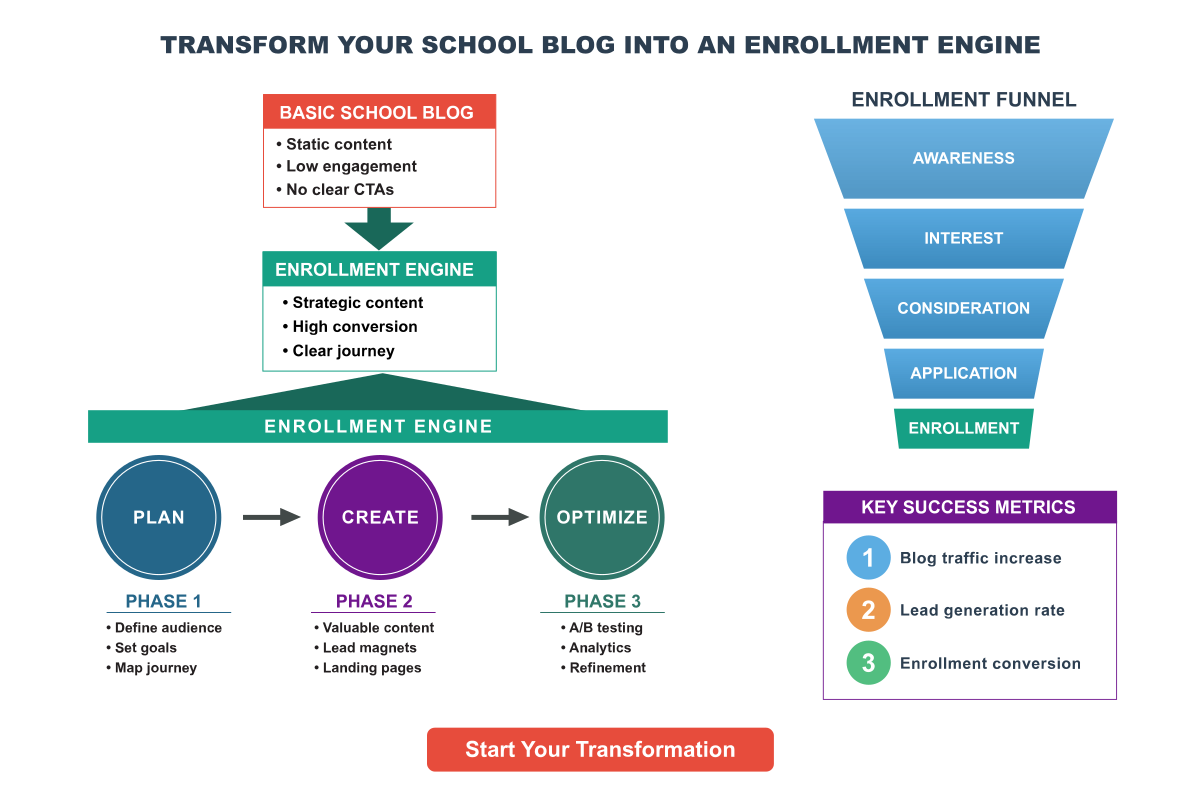
This article provides the strategic framework to close that gap. It details how to transform a school blog from a peripheral communications channel into a powerful, measurable asset that generates organic traffic, captures qualified inquiries, and nurtures families through the entire enrollment funnel.
Part I: The Architectural Blueprint - Strategic Content Planning
Key Takeaways
- Shift from school-centric announcements to parent-centric resources
- Build a topic cluster model with pillar content and supporting articles
- Develop a keyword strategy based on parent search behavior
- Create a sustainable content calendar aligned with the admissions cycle
- Establish clear author guidelines to maintain quality and consistency
A successful school blog is not just a random collection of announcements and event recaps (though there's a place for those). It's a meticulously planned content architecture designed to establish authority, attract the right audience, and guide prospective families on their journey.
Foundations of Authority: Topic Selection and Category Structure
The first step in building a strategic blog is to shift the content paradigm from school-centric news to parent-centric resources. While announcements and event recaps have their place, they're ephemeral. Truly effective blog content is evergreen, addressing the timeless questions and concerns of prospective families using content planning tools and analytics to guide your strategy.
This distinction is crucial: "Blogs should be timeless, news should be now." The core of the strategy is to answer the questions that keep parents up at night, thereby building trust and establishing the school as a valuable, empathetic expert.
"Content builds relationships. Relationships are built on trust. Trust drives revenue," says Andrew Davis, author and keynote speaker at Monumental Shift. For private schools, where the "purchase" is both financially and emotionally significant, this trust-building function of content is absolutely essential.
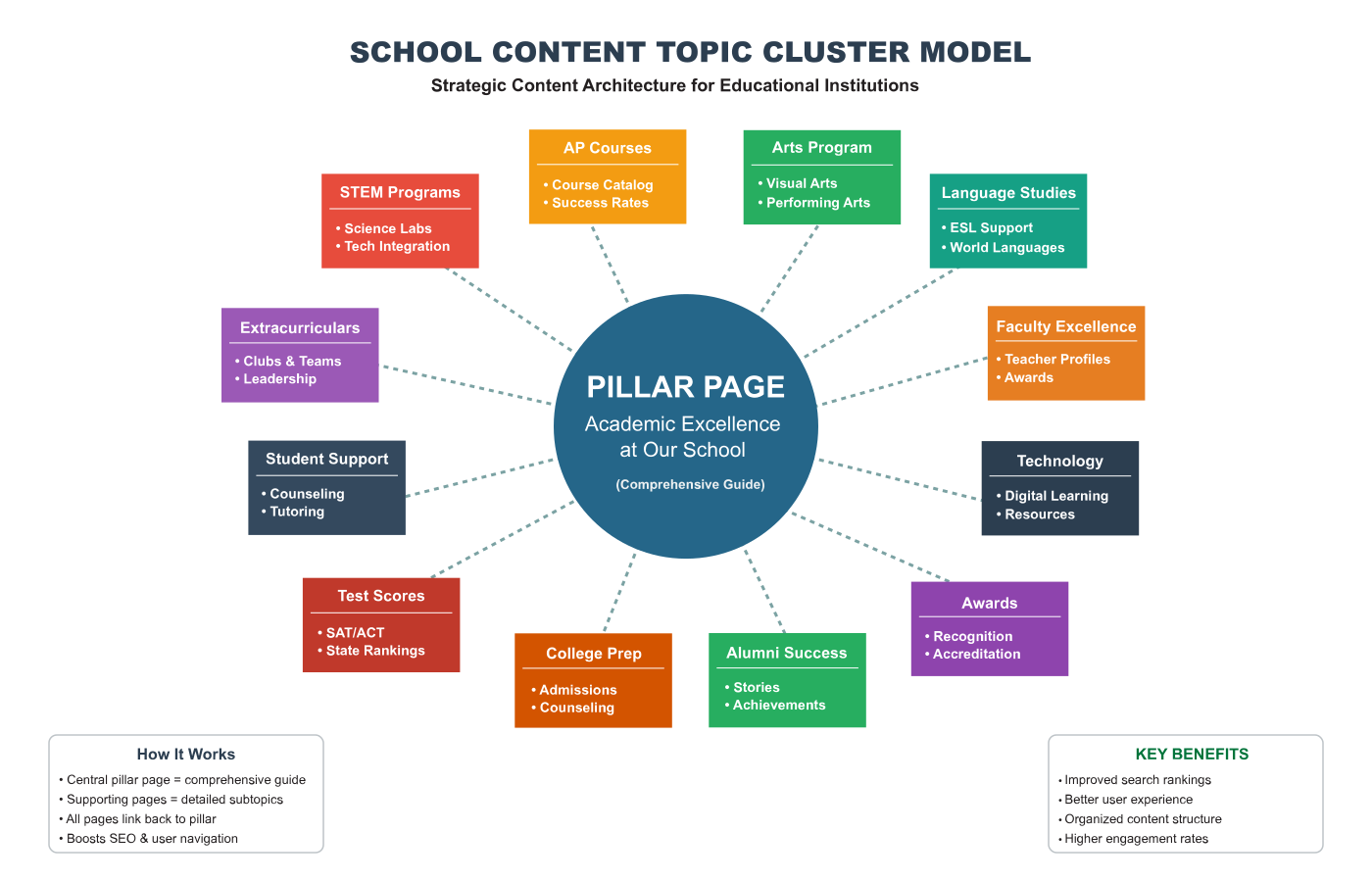
To achieve this, schools must move beyond random posts and adopt a "topic cluster" or "content hub" model. This advanced SEO strategy involves creating a main "pillar" page that provides a broad overview of a core topic—such as "The Benefits of a STEM-Focused Education"—and then surrounding it with multiple "cluster" posts that delve into specific subtopics, like the school's robotics club, its middle school math curriculum, or profiles of alumni in tech fields. This structure helps improve your search visibility and establishes your school as an authority on these topics.
Furthermore, the blog's categories should be structured to align with the distinct phases of the parents' enrollment journey. A proven framework organizes content into four key categories:
- Attract & Engage: Content for families in the initial awareness phase, exploring broad educational concepts.
- Recruit & Convert: Content for families actively comparing schools and seeking specific program information.
- Nurture & Enroll: Content for families who have applied or been accepted, designed to reinforce their decision and build community.
- Retain: Content for current families that continually reaffirms the value of their investment and fosters loyalty.
Self-Assessment Question #2: Which stage of the enrollment journey is currently underrepresented in your blog content? (Attract, Recruit, Nurture, or Retain)
Education-Specific Keyword Research: The Foundation of Discoverability
Keyword research is not merely an SEO task; it's a powerful form of market research that provides direct, unfiltered insight into the priorities and anxieties of prospective parents. While a school marketer might assume parents are searching for broad terms like "best private schools in [city]," data often reveals a more nuanced reality.
High-Value Education Keywords for K-12 Private Schools
Here's a starter list of high-performing keywords with significant search volume and relevance to private school marketing:
Keyword Phrases
- private school scholarships
- private vs public school
- private school near me
- montessori vs traditional education
- how to afford private school
- private school interview questions
- benefits of private education
- private school financial aid
- private school admissions process
- best age to start private school
- single-sex education benefits
- private school vs homeschool
- private school student-teacher ratio
- preparing child for kindergarten
- private school test scores
- is private school worth the cost
- private school extracurricular activities
- private school application essay tips
- religious education benefits
- how to choose the right private school
High search volumes for long-tail queries such as "how to afford private school," "benefits of single-sex education," or "private schools for students with dyslexia" indicate the true, top-of-mind concerns of the target market. A strategic blog must be built upon this data, shifting its focus from school-centric announcements to parent-centric solutions.
Effective SEO requires using various keyword types rather than focusing on a single category, such as:
- Short-Tail Keywords: Broad, 1-2 word phrases (e.g., "private school") that are highly competitive.
- Long-Tail Keywords: Longer, more specific phrases (e.g., "best private school for arts in downtown Chicago"). These have lower search volume but much higher conversion intent and are crucial for voice search and AI-driven queries.
- Local Keywords: Phrases that include a geographic location (e.g., "K-8 independent school near me"), which are vital for attracting local families.
- Problem-Solution Keywords: Phrases that indicate parents seeking solutions to specific concerns (e.g., "private schools for gifted children with ADHD").
For faith-based institutions, keyword research reveals that parents often search for specific terms like "values-based education benefits," "faith formation in schools," and "religious education + character development." Create content that addresses how your faith tradition informs your educational approach while still using inclusive language that appeals to families who may not share your specific denomination but value character formation and moral education.
Understanding Search Intent to Create Targeted Content
Effective keyword research goes beyond identifying what parents are searching for—it requires understanding why they are searching. Each query is driven by one of four distinct types of search intent:
- Navigational Intent: Users looking for a specific page or resource (e.g., "St. Mary's tuition," "Parker School application form"). These searches indicate a user who already knows your school and is seeking specific information. While not primary blog content, ensure your site structure makes these pages easily accessible.
- Informational Intent: Users seeking answers, explanations, or educational content (e.g., "how to prepare a child for kindergarten," "benefits of STEM education"). These queries represent the primary opportunity for blog content, as they allow you to demonstrate expertise while capturing parents early in their decision process.
- Commercial Intent: Users comparing options or researching before making a decision (e.g., "private vs. public school pros and cons," "Montessori vs. traditional education"). These comparison-focused searches present an opportunity to position your school favorably against alternatives while appearing objective and helpful.
- Transactional Intent: Users ready to take action (e.g., "schedule private school tour," "apply to St. Mary's Academy"). Blog content addressing transactional intent should always include clear calls-to-action linking directly to relevant admissions pages.
The Cadence of Connection: Building a Sustainable Content Calendar
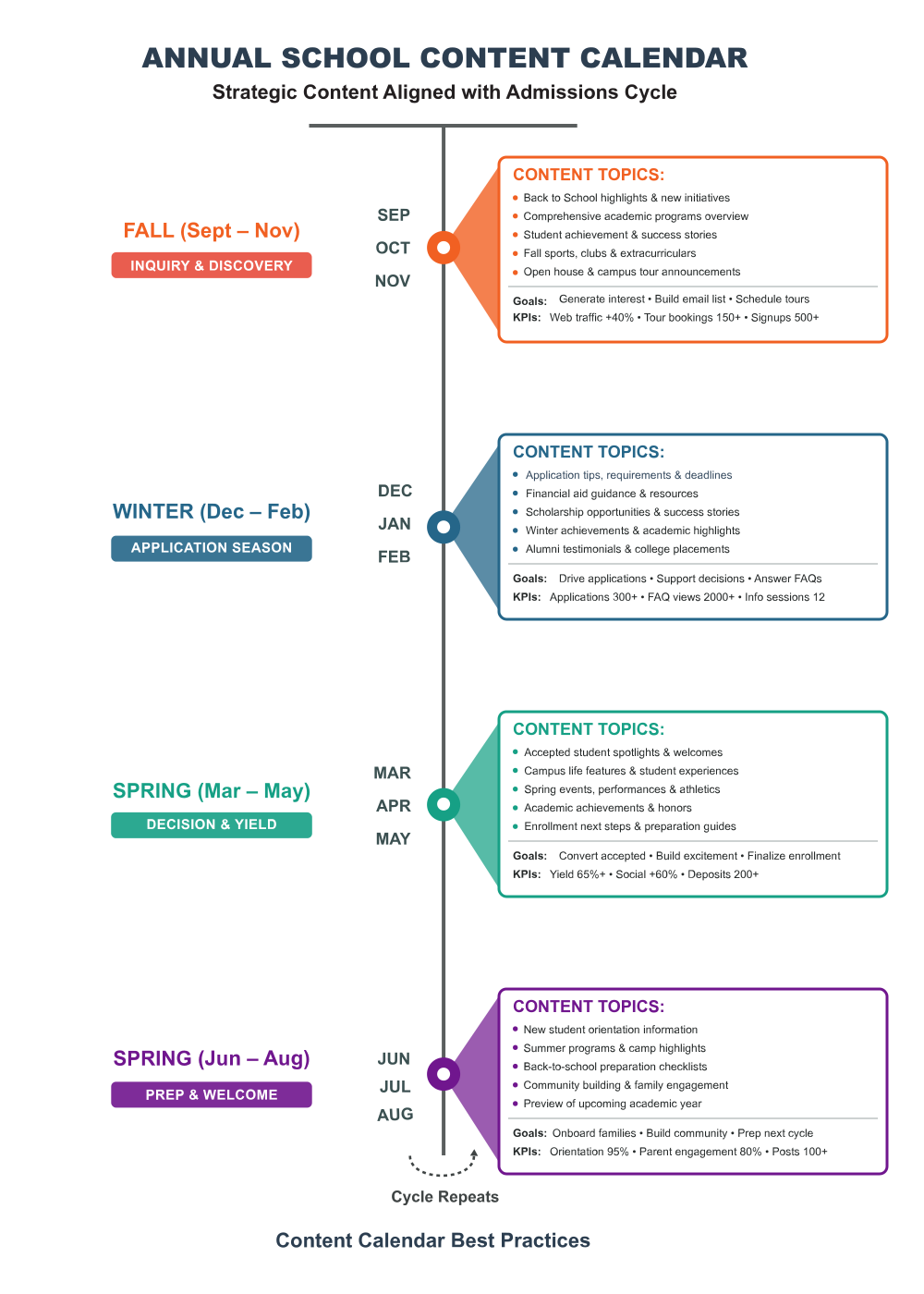
A content calendar is the operational tool that transforms strategy into execution. It provides a roadmap for consistent content creation, ensuring that blog posts are timely, relevant, and aligned with the overarching goals of the admissions and academic cycles.
Determining a realistic posting frequency is crucial for sustainability. Benchmarks vary by school size and resources, with a common recommendation being 1-2 posts per month for small schools, 2-4 for medium schools, and 4-8 for large schools. To remain competitive in search rankings, a more ambitious goal is to publish at least one in-depth blog post of 1,100 words or more per week.
To prevent the blog from becoming overly promotional (nothing makes parents click away faster than feeling like they're reading an advertisement), adopt a balanced content mix rule. We recommend these popular models:
- The 4-1-1 Rule: For every six posts, four should be educational and valuable pieces that help the audience, one should be a "soft promotion" (like sharing a relevant article from another source), and one can be a "hard promotion" (focused on enrollment or an event).
- The 70-20-10 Rule: This model suggests that 70% of content should be original, value-driven material; 20% should be shared content from other thought leaders (which builds credibility); and 10% can be promotional.
- The "They Ask, You Answer" Model: Developed by Marcus Sheridan, this approach transforms frequently asked parent questions into comprehensive content. Focus on five key categories: Cost/Tuition, Problems/Challenges, Comparisons, Reviews/Rankings, and Best Fit considerations. Schools using this trust-building approach report increased qualified inquiries and faster enrollment decisions.
When planning your calendar, align content with the admissions cycle. For example, August-October should focus on welcome and back-to-school content, while November-April should support the peak application and decision phases with content on academic excellence and what makes the school unique.
For more insights on content strategy and distribution approaches that avoid promotional fatigue, see our article on School Content Marketing Myths: Top 5 To Stop Believing Now.
Sample Annual Content Calendar for Private Schools
|
Month |
Admissions Phase |
Content Focus |
Example Topics |
|---|---|---|---|
|
August |
Awareness |
Back-to-School |
|
|
September |
Awareness |
Academic Excellence |
|
|
October |
Interest |
Community & Culture |
|
|
November |
Interest/Application |
Financial Value |
|
|
December |
Application |
Student Experience |
|
|
January |
Application/Decision |
Program Differentiators |
|
|
February |
Decision |
Parent Experience |
|
|
March |
Decision/Yield |
Student Outcomes |
|
|
April |
Yield |
Community Impact |
|
|
May |
Yield/Retention |
Year-End Celebrations |
|
|
June |
Retention |
Summer Engagement |
|
|
July |
Retention/Planning |
Looking Ahead |
|
Need a customizable content calendar template? Download our free template specifically designed for private school marketing directors.
Right-Sizing Your Blog Strategy: Resource Allocation for Schools of All Sizes
Let's be honest—not every school has a dedicated communications team with videographers and content specialists standing by. Your blog strategy needs to match your resources, not some idealized version of what corporate content marketers do.
For One-Person Marketing Teams (Budget Under $10K/Year)
If you're essentially a one-person marketing department (which is true for nearly 1 out of 3 private schools, according to NAIS), focus on these high-impact, low-resource activities:
- Publish Strategically: Aim for quality over quantity with 1-2 substantial posts monthly
- Leverage Internal Content Creators: Implement a simple system for collecting content from:
- Faculty (one assigned contributor per department, rotating monthly)
- Student projects (work with teachers to identify standout assignments that can be repurposed)
- Parent testimonials (create a simple form for submissions)
- Create Templates: Develop 3-4 repeatable post templates that can be easily populated
- Focus on Evergreen Content: Create comprehensive guides that remain relevant for years
- Use Free Tools: Utilize Google's suite of free tools (Search Console, Analytics, Trends) for keyword research and performance tracking
Time Management Tip: Block 2 hours weekly for blog management rather than trying to find a full day monthly.
For Small Marketing Teams (Budget $10K-$50/Year)
With limited staff but some budget flexibility:
- Establish a Content Committee: Create a cross-departmental team that meets monthly to plan content
- Develop a Hub-and-Spoke Model: Create quarterly "pillar" content pieces (1,500+ words) supported by shorter related posts
- Invest in Semi-Professional Media: Budget for professional photography 2-3 times yearly to create a library of authentic school images
- Consider Freelance Support: Hire a content writer familiar with education for 2-4 high-impact pieces annually.
- Implement Basic SEO Tools: Subscribe to an entry-level SEO platform for keyword research and performance tracking.
Efficiency Tip: Create a "content capture system" where marketing staff regularly attend school events with a standardized questionnaire to gather content on the spot.
For Dedicated Marketing Departments (Budget $50K+/Year)
For schools with more substantial resources:
- Develop a Comprehensive Content Strategy: Create detailed persona-based content journeys
- Implement Advanced Analytics: Use CRM integration to track content effectiveness through the entire enrollment funnel
- Invest in Quality Multimedia: Budget for professional video, photography, and possibly podcast production
- Consider Agency Partnership: Work with an education-focused marketing agency for strategy development and execution support.
- Explore Paid Content Distribution: Allocate budget for promoting high-performing content through targeted channels.
Advanced Strategy: Implement A/B testing for headlines, calls-to-action, and content formats to continuously optimize performance.
School-Specific Application: Montessori Schools
Montessori schools can leverage their unique educational approach by creating content that explains concepts like "prepared environment," "sensitive periods," and "follow the child" in accessible language. Use your blog to help parents understand how Montessori principles foster independence and love of learning. Consider creating a glossary of Montessori terms that ranks for parents searching "what is the Montessori method" or "Montessori vs traditional education."
Content Creation Processes: Efficient Workflows for Busy Educators
One of the biggest challenges for school marketers is gathering content from busy faculty and staff. These practical workflows will help you create a sustainable content creation process without overwhelming your colleagues.
1. Streamlined Faculty Contribution System
The Challenge: Teachers and administrators are already overworked—adding "blog writing" to their list often results in missed deadlines or abandoned projects.
The Solution: Implement a "15-Minute Interview" process:
- Schedule a 15-minute recorded interview (voice or video) with the faculty member
- Prepare 3-5 specific questions in advance related to their expertise
- Record the conversation (with permission)
- Transcribe using a tool like Otter.ai
- Edit the transcript into a blog post in the faculty member's voice
- Send for quick approval before publishing
Pro Tip: Create a rotating "Faculty Feature" series where each department contributes once per semester, making it a predictable and manageable commitment.
2. Student Content Collection Pipeline
The Challenge: Student work can make for authentic, compelling content, but collecting and preparing it for publication is often disorganized.
The Solution: Create a systematic "Content Scout" program:
- Identify one "content scout" teacher in each division (Lower, Middle, Upper School)
- Provide a simple criteria checklist for identifying publication-worthy student work
- Create a digital submission form for teachers to easily upload student work and parental permission forms
- Establish a monthly submission deadline aligned with your content calendar
- Develop a standard editing template for transforming student work into blog content
Template Example: "From the Classroom: [Project Name]" with standard sections for project overview, student reflection, and teacher perspective.
3. Efficient Visual Content Workflow
The Challenge: Visual content significantly increases engagement but is often overlooked due to time constraints.
The Solution: Implement a "Capture Kit" system:
- Create 2-3 "content capture kits" (smartphone with stabilizer, basic instructions, shot list template)
- Train administrative assistants and department heads on basic photo/video collection
- Establish a tagged central repository (Google Photos, Dropbox) where all staff can upload visual content
- Schedule monthly "visual content days" where a designated staff member is responsible for capturing images
- Create templates for standard visual content: "Day in the Life," "Classroom Spotlight," "Campus Scenes"
Quick Win: Train older students as "visual journalists" who receive service hours or class credit for documenting school life.
Ensuring a Consistent Voice: Establishing Author Guidelines
To maintain brand consistency and quality, especially when leveraging content from various internal authors like faculty and staff, a clear set of author guidelines is essential. These guidelines ensure that every post, regardless of who writes it, reflects the school's professional standards and strategic messaging.
Key components of effective author guidelines include:
- Tone and Voice: Clearly define the school's personality. Is it formal and traditional, or innovative and energetic? Provide examples of "write this, not that" to illustrate the desired tone.
- Audience Focus: Remind all contributors that they are writing for prospective parents, not their academic peers. This means avoiding educational jargon and explaining concepts in a clear, relatable manner.
- Formatting for Readability: Online reading habits differ significantly from print. Mandate the use of clear H2 and H3 headings for sections, bulleted or numbered lists for key points, and short paragraphs (2-4 sentences) to enhance scannability.
- Call to Action (CTA): Every blog post must have a purpose. Guidelines should instruct authors to conclude their post with a clear next step for the reader, such as "Learn more about our science curriculum," "Download our application checklist," or "Schedule a virtual tour."
Part II: The Content Canvas - Crafting Articles That Resonate and Convert
Key Takeaways
- Showcase faculty expertise through parent-focused educational content
- Develop authentic student success stories with a clear narrative arc
- Create behind-the-scenes program highlights that differentiate your school
- Implement a strategic visual content plan with consistent quality standards
- Use varied content formats to engage different learning styles and preferences
Once the strategic plan is in place, the focus shifts to creating the content itself. A successful school blog features a diverse portfolio of article types designed to showcase the institution's strengths from multiple angles.
Educational Insights and Expert Perspectives
A private school's most valuable and unique asset is the intellectual capital of its faculty and leadership. The blog serves as the ideal platform to transform this internal expertise into external thought leadership, building immense credibility with prospective families who are seeking the best educational environment for their children.
Effective formats for showcasing this expertise include:
- "How-To" Guides for Parents: These articles provide tangible value by offering expert advice on common parenting and educational challenges. Topics might include "How to Foster a Love of Reading at Home," "A School Counselor's Guide to Navigating Middle School Social Dynamics," or "5 Ways to Support Your Child's Executive Functioning Skills."
- Expert Interviews and Q&As: Featuring interviews with school leaders, department chairs, or college counselors on timely educational issues establishes the school as an authoritative voice. A Q&A with the Head of School on the role of AI in the classroom or an interview with the Director of College Counseling on changes to the SAT can generate significant engagement.
As Peter Drucker wisely observed, "The aim of marketing is to know and understand the customer so well that the product or service fits him and sells itself." When your school's experts address the exact challenges parents are facing, enrollment becomes the natural next step rather than a hard sell.
School-Specific Application: College Preparatory Schools
For college prep schools, your blog can establish authority by creating content around college admissions trends, standardized testing strategies, and showcasing your college acceptance results in context. Develop a series where your college counselors explain changes to admissions policies at different types of universities, or create data-driven posts analyzing your graduates' college retention and graduation rates compared to national averages.
Student Success and Community Stories
While data points like college acceptance lists are important, they lack the emotional resonance that drives decision-making. The most powerful way to demonstrate a school's impact is through authentic storytelling.
A truly effective success story follows a clear narrative arc: it introduces a student, outlines a challenge or a goal, details their journey of growth, highlights the specific ways the school's faculty and programs supported them, and concludes with their tangible success. Authenticity is paramount; using direct quotes from the student and focusing on the process of growth, not just the final outcome, makes the story relatable and believable.
Research from the University of St. John Fisher College confirms that student-authored blog content not only improves student writing skills but also creates powerful, authentic marketing material that resonates with prospective families. This academic study found that blogging in the classroom resulted in increased student motivation, strengthened writing skills, and engagement in an authentic activity with a real-world audience.
Similarly, research by Khoroshilova, Svetlana & Kostina, Ekaterina, for the Education Resources Information Center (ERIC) demonstrates that student-run multimedia blogs significantly improve students' professional and social competencies, including communication, critical thinking, time management, and creativity. When prospective parents see these skills in action through student blog posts, they gain tangible evidence of your educational approach's effectiveness.
Ann Handley's advice to "Make the customer the hero of your story" finds perfect application here—your students and their growth journeys become the heroes, with your school as the trusted guide that empowered their success.
Self-Assessment Question #3: How many of your blog posts feature authentic student voices and experiences versus administrative announcements? What's your current ratio?
Visual Content Strategy for Student Stories
Visual elements significantly enhance the impact of student success stories and community narratives. An effective visual content strategy includes:
- Video Testimonials: Short (60-90 second) authentic videos of students sharing their experiences in their own words. These can be simply produced with a smartphone and basic editing software.
- Before-and-After Projects: Visual documentation of long-term student projects, showing the progression from concept to completion.
- Photo Essays: Series of high-quality images with captions that tell a visual story about community events, service learning, or classroom experiences.
- Student Artwork and Portfolios: Digital showcases of student creative work, demonstrating the outcomes of arts education.
- Infographics: Visual representations of student achievement data, college acceptance statistics, or learning outcomes.
Dynamic Program Highlights
The viewbook and website can only provide a surface-level overview of a school's offerings. The blog allows for a deep, "behind-the-scenes" dive into the signature programs that truly differentiate the institution. This content answers the critical question in a prospective parent's mind: "What does learning actually look like at this school?"
Instead of simply stating that the school has a robotics program, a dynamic blog post could feature an interview with the faculty advisor, a video of the team's robot in competition, and quotes from students about the skills they've learned. This multi-format approach brings the program to life.
An even more powerful strategy is to empower students to become the storytellers. A "Single Project Blog" format could follow a group of seniors through their capstone project, from initial research to final presentation. This provides an authentic, first-person account of learning in action and serves as powerful evidence of the school's academic rigor and student engagement.
Research on managing brand image in schools by Dinko Jukić concludes that a school's identity and culture are foundational to its brand. Since the image is closely related to service providers (i.e., teachers and staff), employees are both promoters and creators of the brand. This underscores the importance of using your blog to feature faculty and staff voices to build an authentic and compelling brand image.
School-Specific Application: Arts-Focused Schools
For schools with strong arts programs, your blog provides the perfect platform to showcase student creativity. Create a recurring "Artist Spotlight" series featuring student work with accompanying artist statements. Develop content around the creative process, featuring time-lapse videos of art being created, or interviews with visiting artists. Use your blog to demonstrate how arts integration enhances learning across all subjects, with specific classroom examples.
Content Scoring Rubric: Evaluating Your School Blog Posts
Use this scoring system to evaluate existing content and guide the creation of new posts:
|
Criterion |
1 Point |
3 Points |
5 Points |
|---|---|---|---|
|
Audience Alignment |
Generic content not targeted to a specific audience |
Generally appropriate for parents but not persona-specific |
Precisely targets specific parent personas and their concerns |
|
SEO Optimization |
No keyword strategy or optimization |
Basic keyword usage, but inconsistent |
Strategic keyword placement in title, headers, and content |
|
Formatting & Readability |
Dense text blocks, few headers |
Some formatting, but still text-heavy |
Clear hierarchy, scannable format with strategic use of bullets, bold text |
|
Visual Elements |
No images or poor-quality stock photos |
Basic images but limited variety |
Multiple high-quality, authentic visuals (photos, infographics, videos) |
|
Call to Action |
No clear next step for readers |
Generic CTA (e.g., "contact us") |
Strategic, specific CTA aligned with enrollment funnel position |
|
Authenticity |
Generic content that could be about any school |
School-specific but lacks a distinctive voice |
Features authentic voices (students, teachers) and a unique perspective |
|
Value Delivery |
Primarily promotional content |
Some helpful information mixed with promotion |
Primarily valuable, helpful content that addresses parents' questions |
|
Shareability |
Low engagement potential |
Moderately interesting but lacks share triggers |
Highly shareable with emotional appeal or practical utility |
Scoring Guide:
- 35-40 points: Exceptional content that drives enrollment
- 25-34 points: Solid content with room for strategic improvement
- 15-24 points: Basic content requiring significant enhancement
- Under 15 points: Content requiring complete overhaul or replacement
Want to have your content professionally evaluated? Request our content audit service for a comprehensive review and strategic recommendations.
Effective Visual Elements for Blog Posts
The visual components of your blog posts are critical to engagement, with posts containing relevant images receiving more views than text-only content. Here's how to strategically incorporate visuals:
- Header Images: Every post should begin with a high-quality, relevant featured image (1200 x 630 pixels minimum) that captures attention and communicates the topic visually.
- In-Text Visuals: Break up long text sections with relevant images every 300-400 words. These can include:
- Authentic classroom photos (not stock images)
- Student work samples
- Infographics illustrating key concepts
- Pull quotes formatted as images
- Embedded social media posts
- Visual Hierarchy: Use design elements to guide the reader's eye:
- Colored section backgrounds for key takeaways
- Icons to denote different types of information
- Consistent heading styles with visual elements
- Boxed "expert insights" with faculty headshots
- Mobile-Optimized Visuals: Ensure all images are responsive and maintain quality on smaller screens, where 70% of parent browsing occurs.
Part III: The Science of Discovery - A Robust SEO Strategy for Visibility
Key Takeaways
- Implement foundational SEO best practices for each blog post
- Optimize for "Position Zero" featured snippets to maximize visibility
- Build a strategic internal linking structure to guide user journeys
- Use schema markup specific to educational organizations
- Monitor and adjust strategy based on performance metrics
Creating exceptional content is only half the battle; ensuring that it is discoverable by prospective families is the other. Search Engine Optimization (SEO) is the science of increasing a website's visibility in search engine results.
Foundational SEO: On-Page and Technical Optimization
Every blog post must be optimized at a foundational level to be understood and favored by search engines. This involves both on-page elements and technical elements.
A practical on-page SEO checklist for each blog post should include:
- Keyword Optimization: The primary target keyword should be naturally incorporated into several key locations: the page title (ideally at the beginning), the URL, the main H1 heading, at least one H2 subheading, and within the first 100 words of the article.
- Meta Descriptions: While not a direct ranking factor, the meta description is the 155-character "advertisement" for the post that appears in search results. It must be compelling, include the focus keyword, and end with a call to action to encourage clicks.
- Image Optimization: All images should have descriptive alt text. This text, which describes the image for visually impaired users and search engines, should include the target keyword where relevant.
The HOTH's technical SEO checklist outlines that, beyond individual posts, the blog's technical foundation must be solid, including:
- Mobile-Friendliness: The website must use a responsive design that adapts to all screen sizes. With 6 or 7 out of 10 parents researching schools on mobile devices, mobile optimization is no longer optional—it's essential.
- Page Speed: Site speed is a critical ranking factor. Pages should load quickly, with the Largest Contentful Paint (LCP) occurring within 2.5 seconds. For school blogs, this often means optimizing image sizes, implementing lazy loading, and minimizing unnecessary scripts.
- Security (HTTPS): The entire site must use HTTPS encryption. This has been a confirmed ranking signal since 2014 and is essential for user trust.
- Schema Markup: Implementing educational-specific schema markup (structured data) helps search engines better understand your content. For schools, useful schema types include:
- EducationalOrganization for the school itself
- Course for academic programs
- Event for open houses and admissions events
- Article for blog posts
- Clean URL Structure: URLs should be simple, readable, and keyword-rich. For blog posts, implement a structure like domain.com/blog/category/post-title rather than using parameters or ID numbers.
- XML Sitemap and Robots.txt: Ensure proper configuration of these technical files to help search engines find and index all important pages while avoiding duplicate content. Your sitemap should be automatically updated when new blog content is published.
School-Specific Application: STEM-Focused Schools
For STEM-focused institutions, create content that explains complex scientific concepts in accessible ways for parents without technical backgrounds. Develop blog posts showing real examples of student projects in robotics, coding, or engineering, complete with process photos and student reflections. Target keywords like "hands-on STEM learning," "project-based science curriculum," and "preparing for tech careers" to attract parents specifically interested in strong STEM education.
Achieving "Position Zero": The Strategy for Featured Snippets
In modern search results, the most coveted placement is the "Featured Snippet"—the answer box that appears at the very top of the page, often called "Position Zero." These snippets command a significant share of clicks and are foundational to being included in Google's AI Overviews.
The importance of featured snippets cannot be overstated: research from Kinsta found that they receive 8.6% of all clicks, while another study showed that getting a featured snippet can increase CTR by 677.6% for a given keyword. This represents a massive opportunity for schools to gain visibility and authority.
The key to capturing a featured snippet is to make it incredibly easy for Google to find and extract a direct answer to a user's query. The strategy involves:
- Targeting Question-Based Keywords: The blog post should be structured around a question that prospective parents are likely to ask (e.g., "How does financial aid work at a private school?").
- Employing the "Answer First" Method: Immediately following the heading that poses the question (formatted as an H2 or H3 tag), provide a direct, concise answer in a single paragraph of 40-50 words.
- Using Strategic Formatting: Structure the content in the format Google is most likely to pull for a snippet. For "how-to" or process-related questions, use numbered or bulleted lists.
Kinsta's research on featured snippets shows that websites that earn these coveted positions can see their organic traffic increase by as much as 30%.
Building Authority: Internal Linking
A sophisticated internal linking strategy does more than just help users navigate a website; it creates a curated journey for the prospective parent while simultaneously building the site's authority with search engines.
Internal links are the threads that weave individual blog posts into a cohesive narrative, guiding users and search engines through the site's structure, establishing a hierarchy of information, and distributing ranking power ("link equity") to the most important pages.
Best practices for a strategic internal linking structure include:
- Use Descriptive Anchor Text: The clickable text of a link should clearly indicate the content of the destination page (e.g., "explore our middle school curriculum") rather than generic phrases like "click here."
- Link Deeply: Prioritize linking to specific, relevant blog posts and program pages rather than repeatedly linking to the homepage or main contact page.
- Ensure Contextual Relevance: Links should feel natural and add value to the reader's experience by providing additional, related information.
- Reinforce Content Silos: Crucially, all "cluster" posts within a topic cluster should link back to their main "pillar" page. This reinforces the thematic relationship and signals deep expertise to Google.
Internal Linking as a Funnel Progression Strategy
Perhaps the most powerful application of internal linking for schools is as a deliberate enrollment funnel progression tool. Each link serves as a strategic pathway guiding prospective parents toward conversion:
- Awareness Stage: A parent might first discover your school through a high-level informational blog post addressing a broad educational concern (e.g., "Benefits of Project-Based Learning for Elementary Students").
- Consideration Stage: Within that post, strategic internal links guide them to specific program pages demonstrating how your school implements this approach (e.g., "See how our 3rd-grade inventors' fair puts project-based learning into action").
- Decision Stage: These program pages then include natural links to relevant admissions content (e.g., "Join us for an upcoming elementary school open house").
This intentional pathway transforms a collection of isolated articles into a guided journey that naturally moves families from initial research to active consideration. By analyzing user paths through your content, you can identify and optimize these critical progression points.
Activating Your Blog as a Strategic Asset
The evidence is clear: a strategically executed blog is the most powerful tool in the modern K-12 private school marketer's arsenal. It is the engine for building trust with a discerning parent audience, the platform for showcasing a school's unique value proposition, and the most effective mechanism for achieving sustainable, measurable growth in organic traffic and qualified inquiries.
The framework detailed in this article provides a comprehensive roadmap. The core strategies can be summarized as follows:
- Plan with Purpose: Develop a content architecture built around parent pain points and the rhythms of the admissions cycle. Use advanced keyword research not just for SEO, but as a market research tool to understand what families truly care about.
- Create with Authenticity: Craft a diverse portfolio of article types that showcase the school's intellectual capital, tell compelling human stories of student success, and provide a dynamic, behind-the-scenes look at the programs that define the student experience.
- Optimize for Discovery: Implement a robust, multi-layered SEO strategy that covers foundational on-page and technical elements, targets high-visibility featured snippets, and uses a sophisticated internal linking structure to build authority and guide the user journey.
Measuring Your Blog's Impact: A Structured Framework
To demonstrate ROI and continually refine your strategy, implement a structured measurement framework that tracks these key metrics:
|
Metric Type |
Specific Measures |
Benchmarks |
Tools |
|---|---|---|---|
|
Traffic Growth |
|
|
|
|
Engagement |
|
|
|
|
Conversion |
|
|
|
|
SEO Performance |
|
|
|
|
Content Effectiveness |
|
|
|
Self-Assessment Question #4: Which of these metrics are you currently tracking for your school's blog? What tools would you need to implement a more comprehensive measurement system?
CRM and Analytics Integration: The Missing Link
While most schools have basic analytics installed, research reveals a troubling gap: only 20% of school marketers have a plan to use their analytics software to measure success against yearly objectives, and a mere 39% use a customer relationship management (CRM) tool to track prospect interactions. This disconnection between content performance and enrollment outcomes creates a critical blind spot. Learn how to unlock your private school's potential with CRM to close this gap.
The most effective measurement approach integrates your blog analytics with your admissions CRM system to create a complete picture of the parent journey:
- UTM Parameter Tracking: Append unique tracking parameters to all blog post links shared across channels to identify which content attracts prospects.
- Form Integration: Ensure all lead capture forms are properly integrated with both analytics and CRM systems to maintain attribution through the entire funnel.
- Custom Conversion Segments: Create custom segments in your analytics to track behavior patterns of users who eventually convert to inquiries.
- Multi-Touch Attribution: Implement a model that gives appropriate credit to multiple content touchpoints in the parent journey, not just the last interaction before conversion.
- ROI Calculation: Develop a formula that connects content costs (creation time, promotion) with enrollment value to demonstrate true return on investment.
For technology implementation details and specific platform recommendations, see our guide on The 5 Best Digital Marketing SAS Platforms for Private Schools.
For progressive schools using alternative models (Waldorf, Reggio Emilia, etc.), your blog serves as an educational platform to help parents understand your approach. Create content that clearly explains how your methodology differs from conventional education, with specific examples of learning activities and outcomes. Use your blog to address common misconceptions about your model and showcase long-term benefits that may not be immediately visible to parents unfamiliar with your approach.
Content Repurposing: Maximizing the Value of Your Blog
To maximize the efficiency of your content creation efforts, implement a strategic repurposing plan that extends the reach and impact of each blog post:
- Email Newsletters: Extract key insights from blog posts to feature in parent and prospective family newsletters.
- Social Media Content: Create 5-7 social media posts from each blog article, featuring quotes, statistics, and visual elements.
- Admissions Materials: Repurpose blog content into printable guides, handouts, and presentation slides for open houses and tours.
- Video Content: Transform key blog topics into short video segments for YouTube and social media.
- Internal Communications: Adapt blog content for faculty newsletters to keep internal stakeholders informed and aligned.
For a comprehensive guide to content distribution strategies that maximize your blog's reach, see our article on Private School Content Distribution Strategies: Amplifying Your Message.
Unlike paid advertising campaigns that cease to deliver value the moment the budget is spent, a high-ranking, evergreen blog post is a long-term institutional asset. It is a digital ambassador that works 24/7, attracting and nurturing right-fit families for years to come.
Implementation Roadmap: Your 90-Day Action Plan
Ready to transform your school's blog? Here's a step-by-step implementation plan you can start today:
1. Foundation Setting and Securing Buy-In (Weeks 1-2)
- Audit existing blog content for performance and alignment with strategy
- Identify 3-5 primary keyword themes based on parent search behavior
- Set up proper analytics tracking with conversion goals
- Create a simple content calendar template aligned with your admissions cycle
- Conduct a comprehensive SEO audit to identify technical opportunities
- Prepare a data-driven presentation for leadership with competitor analysis
- Document current baseline metrics to demonstrate future progress
2. Content Production System (Weeks 3-4)
- Develop writer guidelines for faculty and staff contributors
- Create 3 templates for your most common post types
- Identify and recruit your first content contributors
- Draft your first pillar content piece (1,500+ words) on a core topic
- Develop a focused pilot program targeting one specific enrollment goal
- Conduct brief training sessions for staff and student contributors
- Create simple standard operating procedures for content approval
3. Publication and Optimization (Weeks 5-8)
- Publish and promote your pillar content
- Create 2-3 related "cluster" posts linked to your pillar content
- Optimize technical elements (mobile responsiveness, page speed, schema)
- Implement an email capture strategy within blog posts
- Establish a content review committee to maintain quality and alignment
- Document early wins and share with stakeholders to build momentum
- Train key personnel on basic analytics interpretation
4. Measurement and Refinement (Weeks 9-12)
- Analyze first-month performance data
- Adjust content strategy based on engagement metrics
- Develop a content repurposing workflow
- Create a monthly reporting template to demonstrate ROI
- Present initial results to leadership with recommendations for expansion
- Implement changes based on user behavior analysis
- Plan next quarter's content calendar based on performance data
Need help implementing this plan? Schedule a free 30-minute strategy call to discuss your school's specific challenges and opportunities.
For the school marketing director, principal, or administrator tasked with demonstrating results and justifying resources, the path forward is clear. Activating the blog as a strategic asset requires a deliberate and data-informed approach, but the return on investment—measured in enrollment, retention, and brand strength—is unmatched by any other marketing tool at your disposal.
Take the first step today: Download our School Blog Strategy Starter Kit with templates, checklists, and a customizable content calendar to jump-start your strategic blog implementation.
Additional Resources
- National Association of Independent Schools - A primary resource for research, best practices, and publications like Independent School magazine, which offers insights into trends affecting private schools.
- Association of Independent School Admission Professionals (AISAP) Blog - Offers professional development and resources, including the AISAP52 Blog, which features articles on marketing to specific demographics like Millennial parents and messaging academic rigor.
- Google's SEO Starter Guide - The official documentation from Google on SEO best practices, providing foundational knowledge for any school marketer.
Frequently Asked Questions
How often should our school publish new blog content?
Posting frequency depends on your resources and goals. For smaller schools with limited staff, aim for 1-2 quality posts monthly. Medium-sized schools should target 2-4 posts monthly, while larger schools with dedicated marketing teams can aim for 4-8 posts monthly. The key is consistency rather than volume—it's better to publish one exceptional post monthly than several mediocre ones weekly.
Which staff members should contribute to our school blog?
Your blog benefits from diverse voices across your school community. Key contributors include: administrators (for vision and leadership perspectives), teachers (for classroom insights and educational expertise), department heads (for program deep dives), students (for authentic experiences and projects), admissions officers (for enrollment process guidance), and college counselors (for secondary school/college preparation advice). Establish clear writer guidelines to maintain consistent quality and tone across contributors.
How can we measure the effectiveness of our school blog?
Track both quantitative and qualitative metrics to evaluate your blog's performance. Key metrics include: organic traffic growth (month-over-month increases to blog content), engagement metrics (time on page, bounce rate), conversion rates (how many readers take action like requesting information or applying), search engine rankings for target keywords, and direct attribution (asking new families how they found your school). Integrate your blog analytics with your admissions CRM system to create a complete picture of the parent journey, allowing you to track which content leads to actual enrollment.
Should our blog focus more on current families or prospective families?
Your blog should strategically serve both audiences with a weighted approach. Allocate approximately 70% of content to prospective family interests (educational philosophy, program highlights, student success stories, admission process guidance) and 30% to current family needs (classroom spotlights, upcoming events, parent resources). This balance recognizes that prospective families are your primary growth audience while acknowledging that current families are both retention targets and your best word-of-mouth marketers. The content calendar should align with both the admissions cycle and the academic year to serve both audiences effectively.
How can our school blog compete with larger schools that have more marketing resources?
Smaller schools can compete effectively by focusing on quality over quantity and leveraging their unique strengths. Develop a content niche aligned with your school's distinctive programs or philosophy. Prioritize long-form, in-depth content (1,500+ words) on specific topics rather than attempting to cover everything. Leverage your authentic community voices—student-written content, teacher expertise, and parent testimonials provide genuine perspectives that no amount of marketing budget can replicate.
What's the best way to optimize blog headlines for both SEO and reader engagement?
Effective school blog headlines must balance keyword optimization with emotional appeal. Start with your target keyword (ideally at the beginning), then add elements that trigger curiosity or promise specific value. For example, rather than "Our Math Curriculum," use "How Our Singapore Math Approach Builds Problem-Solving Skills That Last a Lifetime." Keep headlines under 60 characters for search engines while ensuring they clearly communicate the benefit to parents. Test different headline formats to see which generate the most clicks and engagement from your target audience.