
Social commerce is shopping that happens right inside social platforms. People discover a product in a post or livestream. They ask a question in the comments or send DMs. They check out without ever leaving the app.
A decade ago, we were experimenting with "buy" buttons. Today, we've got fully shoppable feeds, in-app storefronts, live shopping, and creator-driven product drops on platforms most of us open before breakfast.
As we hit 2026, social commerce isn't a side channel. It's a daily habit for millions of people and a serious revenue driver for businesses of every size.
Social commerce has changed the game for local businesses—more reach and lower friction. It gives them a chance to bring their signature personal touch online. Think of what's changed and what's working, not to mention where small, local brands can win right now.
Learn more about the state of social commerce in 2026 and beyond. As a local business, read on to prepare for the challenges and opportunities it brings.
The Growth of Social Commerce in 2026–and Beyond
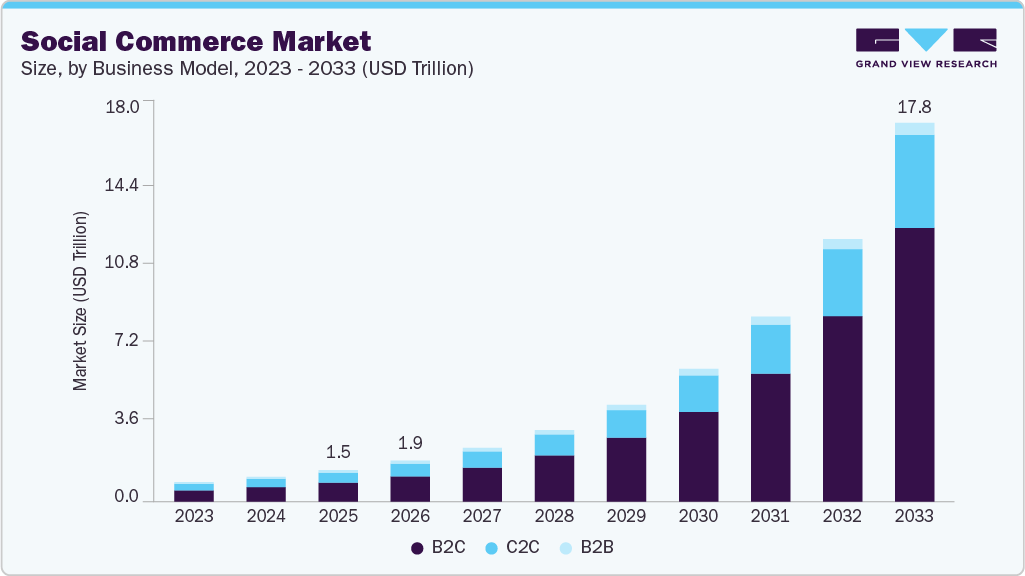
The trend lines have been clear for years. The worldwide social commerce market is projected to grow from $1.5 trillion in 2025 to $17.8 trillion by 2033 at a 37.4% compound annual growth rate (CAGR). This market growth is due to the integration of social media channels into the daily consumer behavior and buying journey.
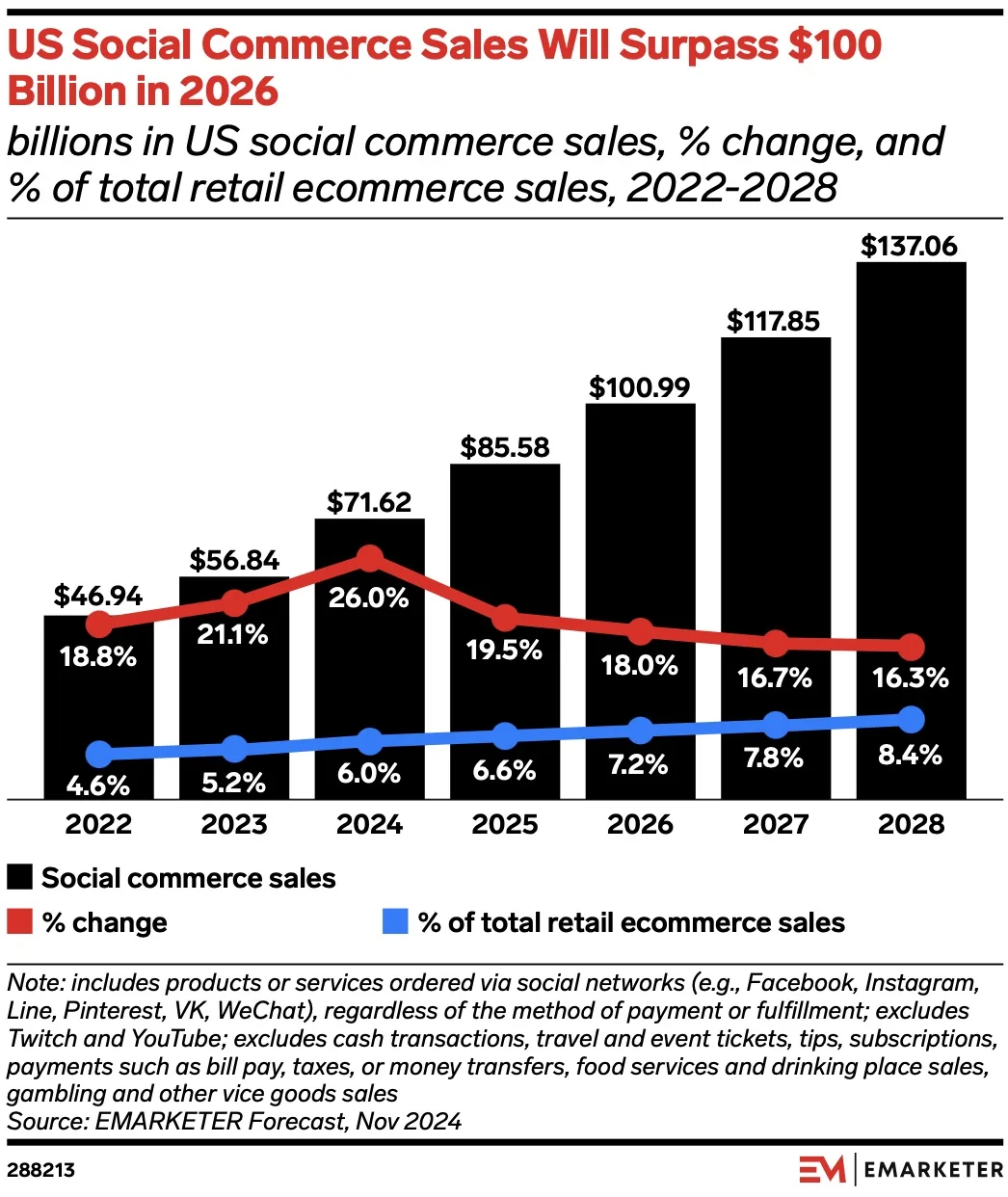
In the U.S., eMarketer has tracked steady double-digit growth in social commerce sales through the mid-2020s. It showed that platform investments and consumer familiarity pushed adoption higher year after year. By 2026, the U.S. social commerce sales will exceed $100 billion.
Mobile shopping runs on phones now. People scroll, check, compare, and purchase in a few taps.
Short-form videos like TikTok and Reels turn product discovery into a fast, visual conversation. Think of comments and DMs closing the gap between "that looks cool" and "it's on the way." People follow people. Recommendations from creators and real customer stories beat polished ads more often than not.
Suppose you’re running a rental business in the real estate industry. If you’re wondering where to advertise your vacation rental for direct bookings, you can do so primarily via your website. However, social media can be your go-to place for direct marketing or selling.
Why not? Social media platforms have made checkout simpler:
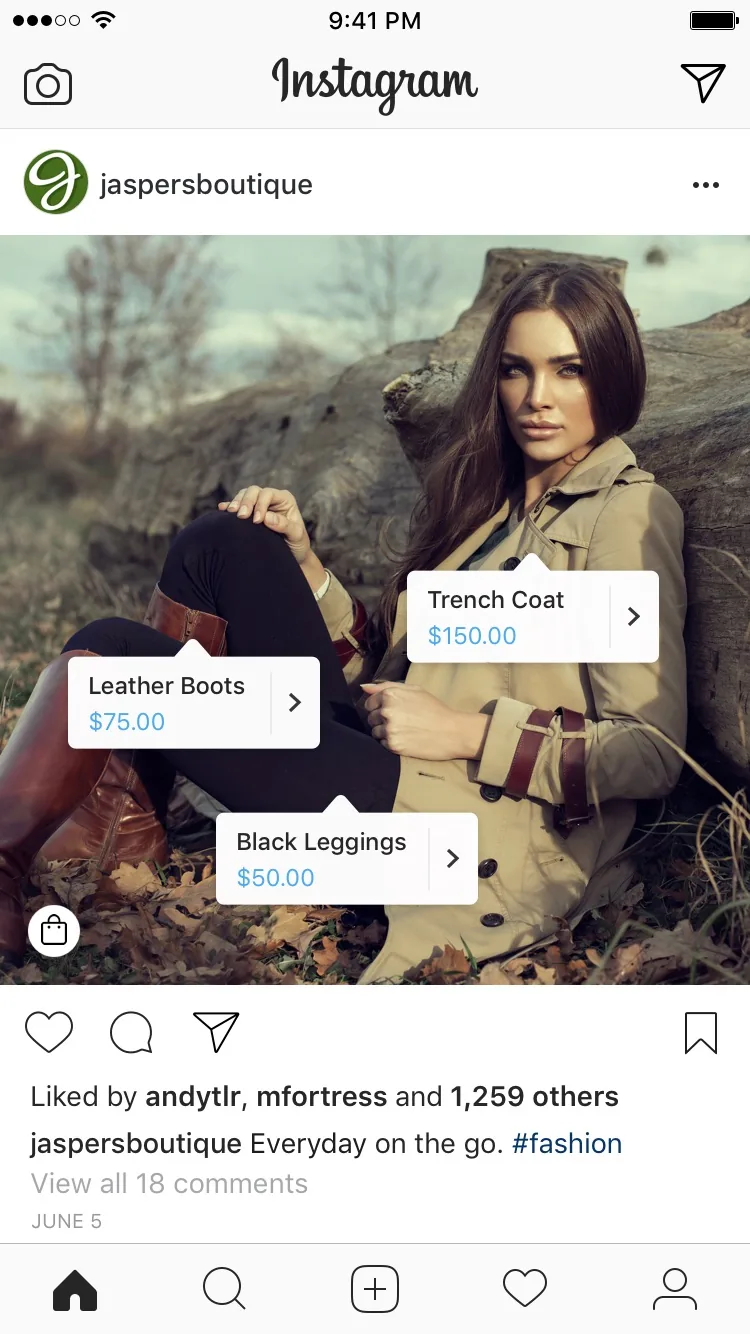
- Instagram: Instagram Shopping lets brands tag products in posts and Reels and offer in-app checkout in supported regions.
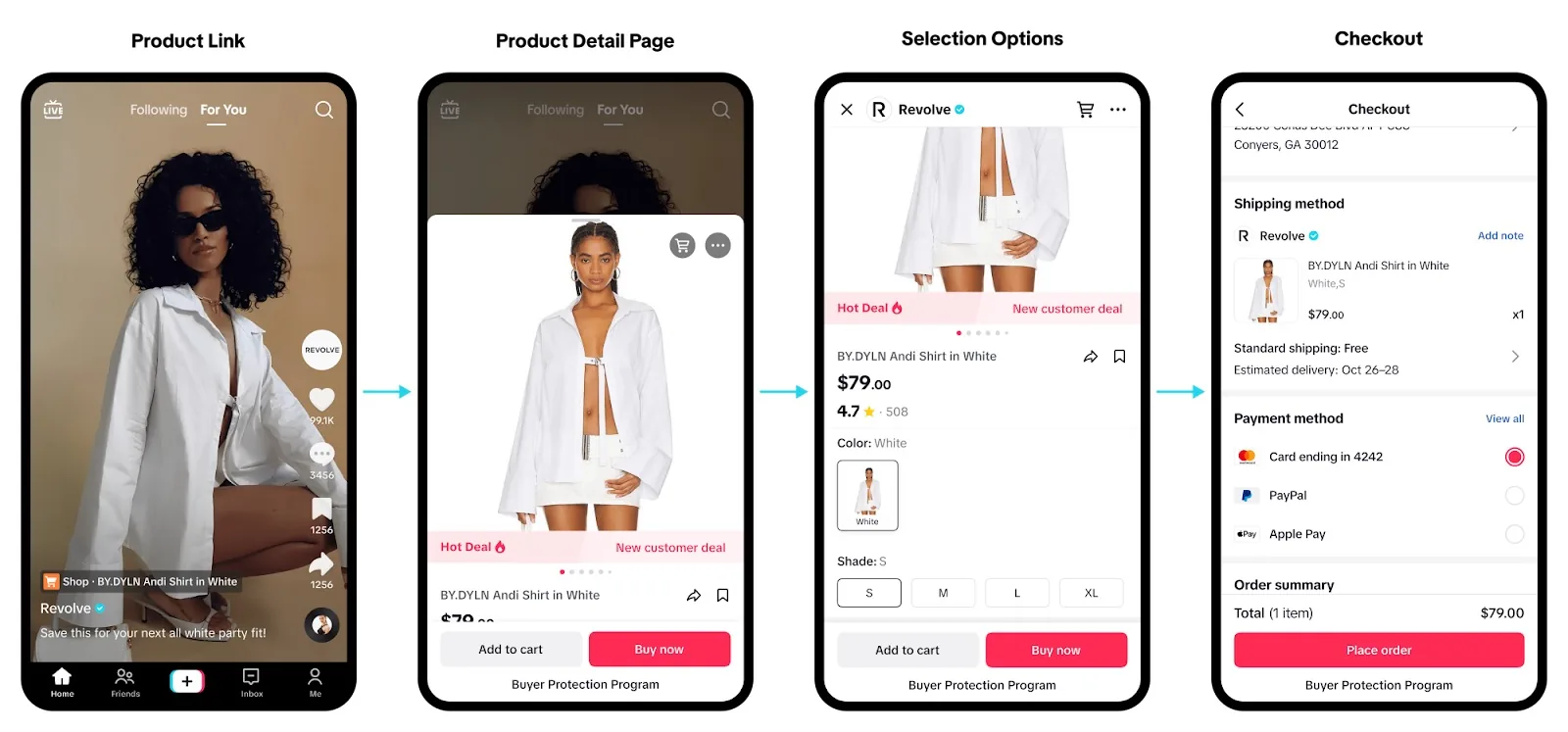
- TikTok: TikTok's U.S. rollout of TikTok Shop in 2023 normalized in-feed and live shopping for millions of users.
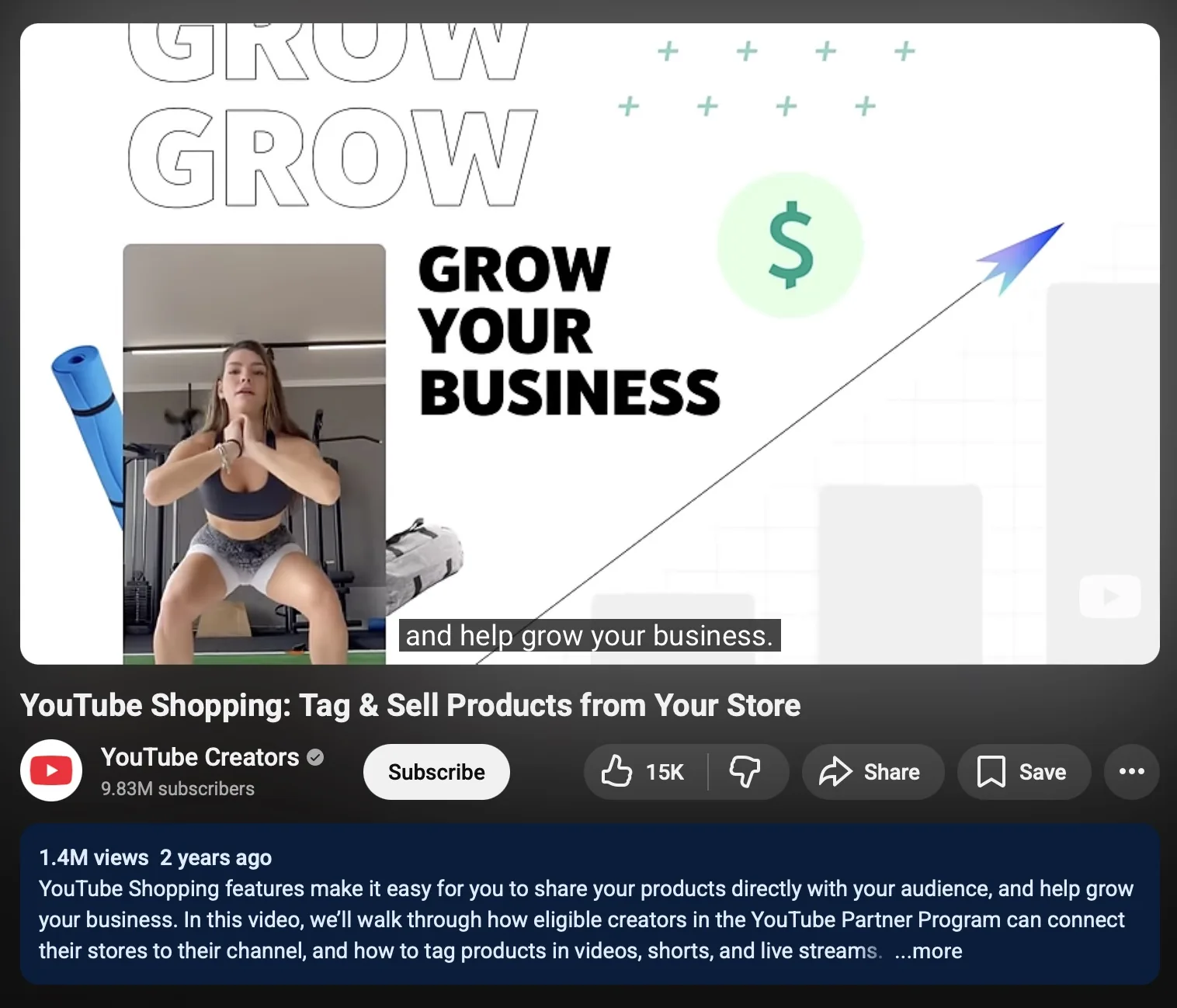
- YouTube: YouTube shopping built product tagging and partnered commerce features right into creator workflows.
Messaging commerce has taken off, too:
- WhatsApp: WhatsApp Business catalogs and chat-based selling have become everyday tools in many regions.
- Facebook/Instagram: Messaging features on Instagram and Facebook make it simple to answer questions and close sales in the same thread.
Take it from Samuel Charmetant, Founder at ArtMajeur. He has his fair share of experience advertising original artwork pieces on social media. Take a glimpse of their Instagram page below:

Charmetant says, "Social platforms have evolved into full-scale marketplaces where discovery, engagement, lead generation, and purchase happen in seconds. Local businesses now have direct access to customers who are already engaged and ready to buy. The key is meeting them where they already spend their time."
Local Business Challenges and Opportunities in Social Commerce
Local businesses across industries are finding new ways to connect and sell through social platforms. Like social media strategies for private schools, pest control, plumbing work, and HVAC services, the opportunity is clear, but so are the challenges.
To succeed, businesses need to understand both the demands and the advantages of social commerce.
Addressing common challenges
Social commerce offers strong opportunities, but it also comes with real operational and strategic challenges. So, before diving in, understand what you’re up against.
Let’s say you’re running a newly established K-12 private school. You might start with SEO, PPC advertising, content creation, and email marketing for schools.
But as a newly opened local business, Facebook advertising and Instagram marketing for K-12 private schools can also play a key role, especially in social commerce.
Still, it’s crucial to understand the challenges that come with it. Here are common challenges local businesses face in social commerce:
- Content workload: Posting consistently, filming short videos, replying to DMs, and running live sessions adds up fast.
- Operational complexity: Setting up shops and syncing inventory can feel overwhelming at first.
- Platform volatility: Features evolve, and algorithms change. Marketplaces may take a cut of sales.
- Policy uncertainty: Policies can move without much warning.
- Fulfillment pressure: When sales spike, packaging and delivery have to keep up.
Practical solutions:
- Pick one primary platform to start, then repurpose content to others later.
- Batch-create content one afternoon a week.
- Keep a running list of FAQs and turn each into a quick video.
- Start with a tight product set (say, your top 10) and get the logistics right.
- Use low-cost tools for scheduling, captions, and shipping labels.
- Connect your POS, if possible, to avoid overselling.
- Define simple metrics:
- Response time in DMs
- Clicks to product pages
- Add-to-cart rate
- Return rate
Learn from Andrew Scheidt, General Manager at Central Air Heating, Cooling & Plumbing. He maintains a Facebook page to advertise his heating and cooling, and plumbing services, as well as engage with both prospects and clients. However, he’s aware of the social commerce challenges he’s faced as a local business, so he's found a way to navigate them.
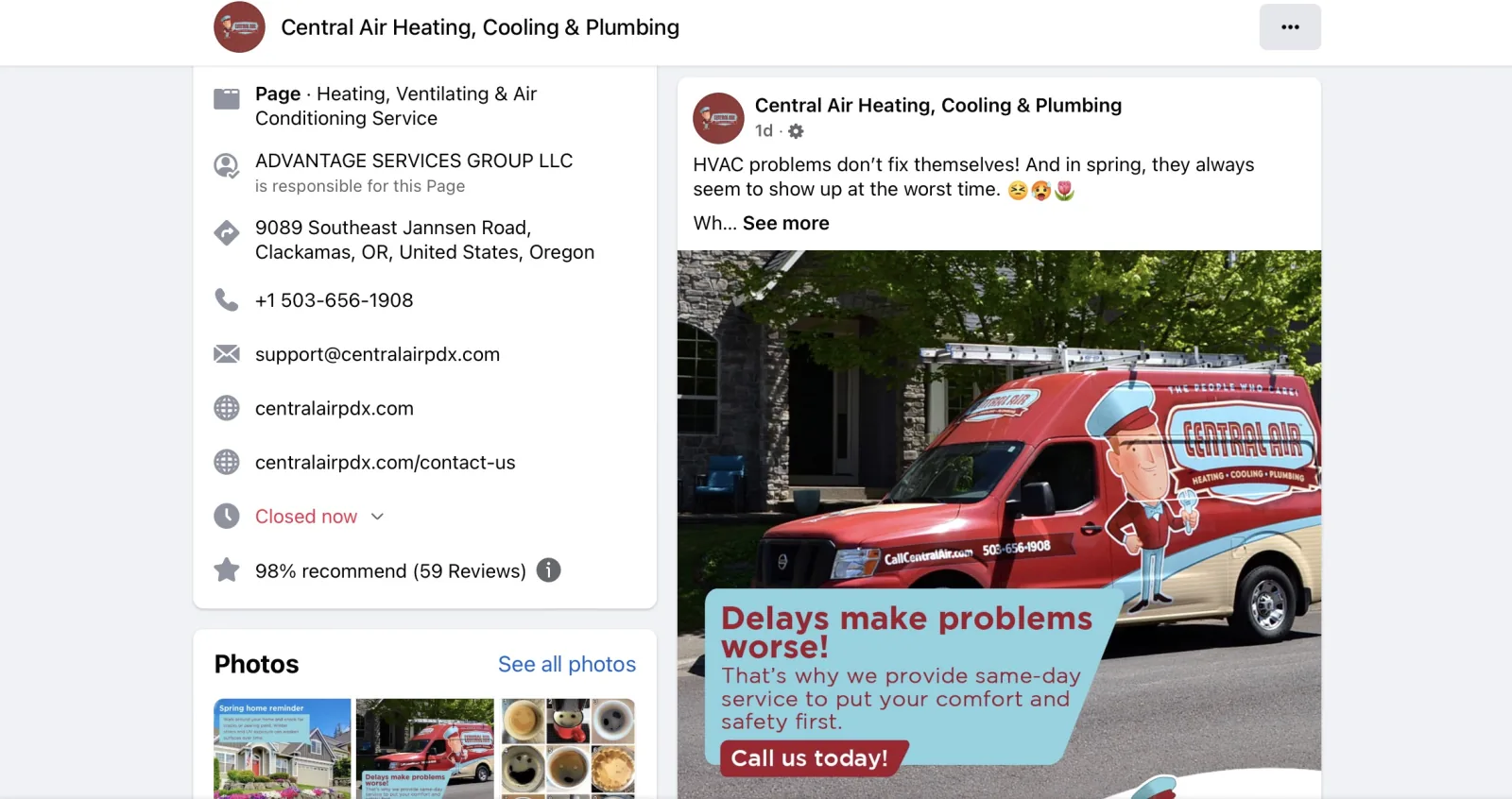
Scheidt explains, "The biggest mistake local businesses make is trying to be everywhere at once. Start with one platform where your customers already engage. Master that before expanding. A focused approach with limited resources beats spreading yourself thin across multiple platforms."
Creating business opportunities
While social commerce comes with challenges, it also opens up new ways for local businesses to grow and compete. With the right approach, even small brands can turn everyday interactions into real sales opportunities.
Here’s how to create opportunities for your local business:
Make your best sellers instantly buyable:
- Set up an in-platform shop and tag products in posts and videos. Keep inventory synced so customers can buy in a few taps.
- Turn questions into conversions:
- Keep DMs open
- Answer quickly
- Share short videos that show rather than tell
Go local with intent for social commerce:
- Use local marketing tactics like geotargeting, location tags, and local hashtags to reach nearby shoppers.
- Share pick-up options and delivery windows. Micro-influencers and loyal patrons often outperform big names in terms of authenticity per dollar.
- Incentivize user-generated content (UGC) with a simple prompt and a clear hashtag.
- Time-bound formats work, too. Limited drops, live demos, seasonal bundles create urgency and turn casual scrollers into buyers.
Ryan Beattie, Director of Business Development at UK SARMs, capitalizes on social media to create business opportunities. He also promotes his selective androgen receptor modulators (SARMs) products on X, Facebook, and YouTube.
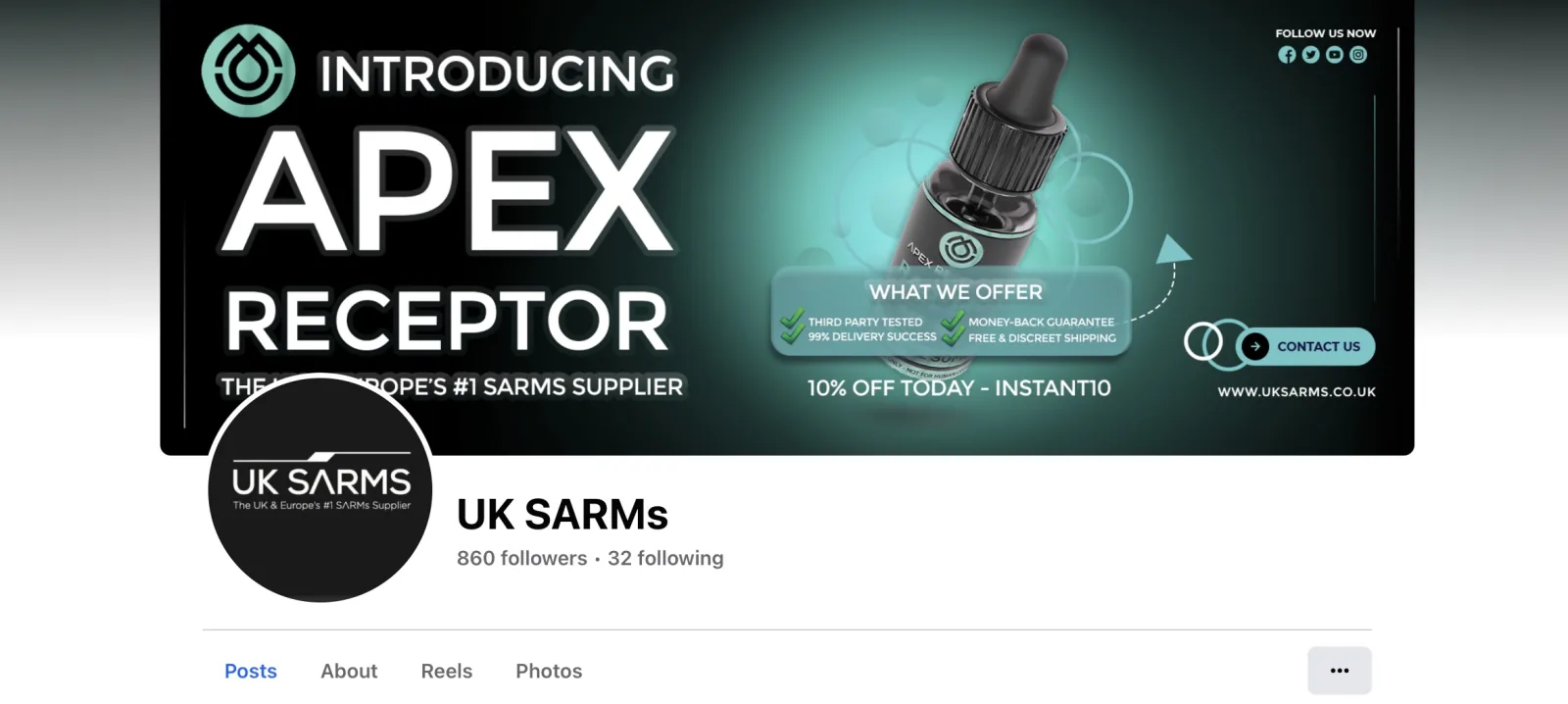
Beattie shares, "Getting started with social commerce wasn’t easy, especially in a regulated space like SARM products. But once we found our footing, it opened up new ways to educate customers and build trust.
He adds, “Through platforms like X, Facebook, and YouTube, we’re able to reach a wider audience, answer questions in real time, and connect with people who value transparency and quality. That direct engagement has made a big difference in how we grow our business online."
How To Employ Social Commerce as a Local Business
Getting started with social commerce doesn’t have to be complicated. With the right mindset and a few clear priorities, it becomes much easier to manage and scale.
As part of a broader multi-channel marketing strategy for small business growth, a focused, step-by-step approach can help turn social platforms into consistent sales channels. Here’s how:
1. Find your strongest format
If you're great on camera, do weekly live demos or how-tos. If you love staging, lean into short, polished Reels or TikToks. Remember, consistency beats complexity.
Every product post should have a tag and a clear call to action (CTA). More importantly, add one benefit in plain, simple language. Show the product in use, not just on a shelf.
2. Use comments and DMs as your sales floor
Save replies for common questions. Offer quick comparisons and fit guides. Link directly to checkout.
Likewise, co-host a live with a neighboring business. You can also bundle complementary items or swap features for shared audiences.
Lastly, work with micro-influencers and creators by offering store credit, affiliate links, or a small commission. Track results and double down on what works.
3. Turn great service into repeat sales
Fast, friendly responses turn one sale into repeat business. Create a simple returns process and pin it to your profile.
Also, capture emails or SMS opt-ins with a low-friction offer. That way, you're not fully at the mercy of algorithms.
4. Run small tests and scale what works
Test a small campaign and measure engagements and conversions. For instance, feature three products with daily short videos and product tags for two weeks.
Keep what works and cut what doesn't. Then, move forward a little stronger each cycle.
Future Trends in Social Commerce
Social commerce is evolving fast, and staying ahead means understanding what’s coming next. That's why you have to keep your sales and marketing running and adjust. This is how home service companies survive and thrive in tough times.
The trends shaping 2026 offer both opportunities and challenges for local businesses. Here’s what to keep up with:
Trend 1. AI and AR moving from novelty to expectation
AI helpers in DMs and comments will answer product questions and recommend bundles based on what someone just watched or asked. Meanwhile, AR try-ons and previews are moving from "nice-to-have" to expected in many categories, from eyewear to home decor.
By 2027, virtual try-ons and AI shopping assistants will be standard features available to businesses of any size. Local retailers who embrace these tools early
will build stronger connections with tech-savvy consumers who expect immersive shopping experiences."
Trend 2. Search, video live shopping getting smarter
Optimizing captions and on-screen text for how people actually search on Facebook, Instagram, TikTok, and YouTube will matter more than before.
Live shopping will get a more integrated checkout and better replay shopping. It will offer creator co-hosting that feels like a local trunk show, just online.
Trend 3. Privacy and compliance taking center stage
The FTC's updated Endorsement Guides reinforce disclosure requirements for influencers and affiliates.
In the EU, the Digital Services Act pushes platforms to increase transparency and accountability regarding ads and content.
And with third-party cookies phasing out in Chrome, first-party data and consent will be more important for measurement and retargeting.
Final Thoughts
Social commerce in 2026 is crowded. However, it’s creative and workable for local businesses.
For one, the big platforms have made it far easier to set up shop and sell products right where people spend their time. On the flip side, consumers are comfortable buying through posts, videos, lives, and DMs, often guided by the voices they trust most.
Yes, there are hurdles, such as time, tools, fees, and fulfillment. However, they're manageable with a focused approach.
Start with one platform, one reliable content format, one clear way to measure success, and adjust as you learn. Keep your customer conversations at the center: Pick a platform your customers already use, launch a small social storefront with your top products, run a two-week shoppable content test.
With all these key steps, you'll learn fast. Ultimately, you might be surprised by how quickly that personal touch you're known for in-store translates online.
Ready to start with your social commerce? Partner with Cube Creative for your small business digital marketing tactics on social media channels. Get in touch with an expert today!