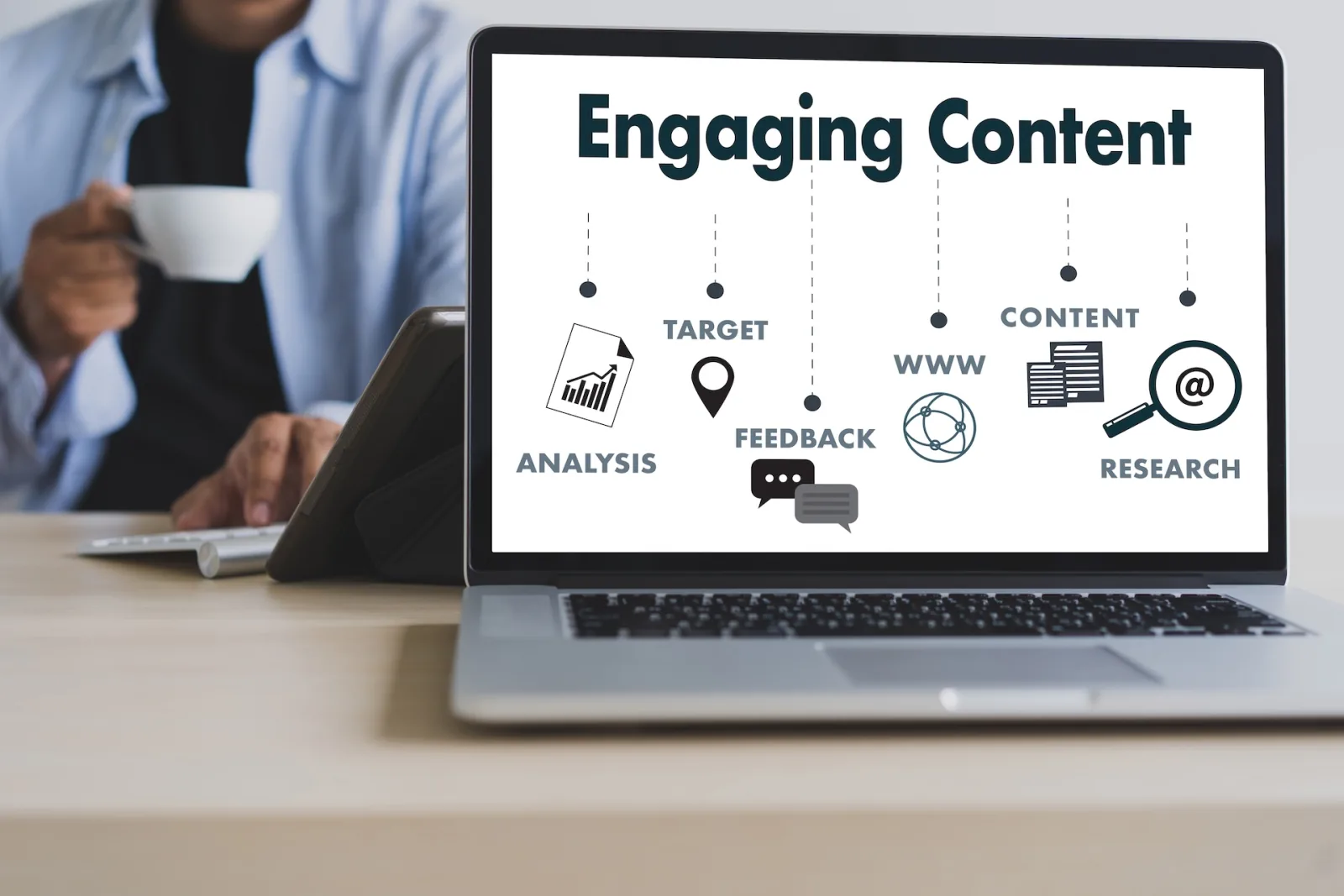
Content that gets people's attention, keeps them interested, and gets them to act is what every business wants. But what if you could write content that people will wish to read next instead of just responding to what's hot right now? That is where content marketing that predicts comes in. It means using data, AI, and thoughtful planning to guess what your audience will want and need, and then making content ahead of time to make sure you're always relevant.
Read on as we go into the meaning, significance, best practices, new trends, examples, potential problems, and immediate ways of integrating predictive content marketing into your content strategy.
What Is Predictive Content Marketing?
Data and statistics are used in predictive content marketing to guess what topics, formats, and messages will do well soon. It's not guesswork; it's using patterns in things like search trends, audience behavior, engagement metrics, past content success, and more, often with AI or predictive models, to plan content that meets the requirements of individuals in the future.
It's like driving with GPS instead of taking off without plans. You figure out where people are going (their problems, hobbies, and questions) and then make content that gets them there before they get there. You won't have to constantly follow trends; instead, you'll be able to see them coming.
Why predictive content marketing is important
Here are a few of the essential advantages that predicted content offers. These are derived from business reports, research, and case studies.
More connection and engagement
Audience members see information that is related to what they want to see. Tailored content, which is based on topics that individuals are already interested in, results in increased clicks, a longer time on the page, improved shares, and greater loyalty. People trust you more when they think you can read their minds (or are close).
Higher ROI and conversions
When you make content that meets people's wants before they know they have them, the time it takes from exposure to conversion is usually shorter. Leads don't have to look through boring pages; they land on something useful, making it faster to choose. Many marketers say they get a better return on their content investment using predicted content.This ROI is enhanced when predictive content is paired with instant delivery channels. For example, BotSpace allows brands to automatically send campaigns via WhatsApp and Instagram DMs, shortening the gap between interest and conversion.
Use of resources effectively
Predictive content helps you put your time and money where they will be most useful instead of wasting them on content that doesn't work. You can make better plans, avoid mistakes, and get the most out of content types, outlets, and times.
More satisfied and loyal customers
People feel understood when they see personal, useful, and relevant material, even if they haven't asked for it. That makes an emotional connection, encouraging people to return, subscribe, or buy again.
Being one step ahead of the competition
Most of the time, brands that use prediction methods benefit over their competitors. You become an authority if you spot a new interest or medium before a lot of other people do. As there is more content, being early gives you a better chance to rank in search results, get suggested, or get known on social networks.
Important Parts of Predictive Content Marketing
A lot of things need to be in place before you can do predicted content marketing well. What they are are the parts.
#1. Data Collection and Previous Performance
Find out what people have done, like what videos they've watched, what keywords they've searched, and which blog posts they've read the most. Use content success dashboards, analytics tools, and social media insights. The trends can be seen in the past.
#2. Understanding and dividing your audience
Figure out who you're writing for. Divide them into groups based on interests, actions, and demographics. What are they having trouble with? What do they like to talk about? What kinds of material (articles, videos, and infographics) do they want to read?
#3. Identifying and following trends
For new questions, look at search trends, keyword volumes, social listening, content platforms, or communities. Google Trends, social media tools, keyword tools, and trend reports are some of the tools that can help. This helps you see what subjects might get popular soon.
#4. Tool for Prediction and AI Models
Use tools that can help you guess what will happen. These could be built-in analytics, add-ons, or specialized tools for predictive marketing. They use machine learning to find trends that people would miss. Simple models like time series and regression work sometimes, while more complex AI models help other times.
#5. Strategy and planning for content
Set up a content calendar based on the things you know people will want to read about. Figure out what kinds of content your readers will like. Plan for sources like your blog, email, social media, video, and more. If training video is part of your plan, consult this shortlist of Corporate training video production companies to scale production without sacrificing quality. At this stage, content distribution is just as important as content creation by deciding how, when, and where your predictive content gets delivered ensures it reaches the right audience at the right time.
#6. Behavior triggers and personalization
When personalized content is added, predictive content works even better. Set off content based on user behavior; for example, someone who reads several posts about "budget travel" might be sent a content suggestion about future affordable vacation spots. Someone who looks at winter fashion might find items about early winter trends.
#7. Feedback Loops and Continuous Testing
There is no such thing as a perfect first time. Try different formats, titles, and angles for your material. Check what works, keep up with what's popular, and make predictions more accurate. Test different versions of your content, get comments from users, and watch which ones get the most attention.
New Trends in Content Marketing Based on Prediction
Predictive content marketing is changing very quickly. These new directions and tools are making it what it is now-
Fast customization of information
With content that changes or adapts based on how users interact, more brands are moving away from static segmentation. For example, as a person browses, content ideas change in real time.
Content made by AI based on predictive insights.
AI can be used to make drafts, content plans, or even whole pieces of content based on what it thinks will work. Editing by humans is still essential, but AI helps with scaling. There are AI tools trained on cloud GPUs serve faster results.
Cross-Channel Information Sharing
People interact with each other on websites, social media sites, chat apps, and email, among other mediums. Consistent user experiences can be made with the help of predictive models that keep track of behavior across all media.
This personalization trend extends beyond content to AI in customer experience, where predictive models anticipate customer needs across all touchpoints.
Voice Search and Projection of Conversational Search
With voice search and assistants like Siri and Alexa, content has to be made more question- or conversational-style friendly. Predictive data helps figure out what kinds of questions people are likely to ask in the near future.
Visual and Video Content Trend Prediction
The most popular types of material will likely not just be written words, but also videos, infographics, and short videos like reels and shorts. Brands use methods that predict what will work to choose what video topics or pictures to use.
Ethics, privacy, and clear data use
While gathering more information about people's actions, privacy rules become very important. People want things to be clear. More and more, predictive content marketers are aware of the need to get permission, protect privacy, respect data limits, and not be creepy.
What you need to do to get your business started with predictive content marketing.
Are you planning to do this yourself? To start, here are some valuable steps.
Step 1: Get your existing information together.
Start with the data you already have, like analytics, social insights, and reports on how well your content is doing. Look at the material that did well and not so well in the past.
Step 2: Find Key Signals or Audience Behaviors
What steps do users seem to take that can predict engagement or conversion? Like how long someone reads, how many pages they look at, how many times they come back, what they search for, and what they share.
Step 3: Select or Create a Predictive Tool
You can buy a tool that can make predictions, or you can use Google Analytics, Excel, or a business intelligence (BI) tool to come up with simple models. If your size is bigger, look for platforms that can predict and automate things with AI.
Step 4: Use forecasts to plan your content.
Make a content calendar with early content, evergreen content, and trend content based on what you think people will be interested in or what themes you think will be popular. Stay flexible so you can make changes if your expectations change.
Step 5: Customize and Schedule Content
Personalization can help you send relevant content, like site pop-ups, email drip campaigns, and social media ideas. and direct mail through direct mail companies. Initiate events based on behavior.
To maximize the results of these personalized campaigns, it’s essential to ensure that the email addresses being used are valid. Using an email checker tool helps maintain list quality, improves deliverability, and ensures predictive content reaches the right audience without the risk of bounces or spam traps.
Step 6: Testing, measuring, and repeating
Try out different headlines, formats, and platforms with A/B testing. Track things like time on page, interest, bounce rate, and conversion rate. Get input to improve your guesses.
Step 7: Make Sure Data Is Used Ethically
Always tell your viewers what information you gather and how you plan to use it. To build trust, make sure that privacy rules are followed, such as local laws like GDPR or other appropriate privacy rules.
Examples and Case Studies
It helps to put theory into practice. Here are a few examples of predictive content marketing that really work.
The marketing team looks at social search trends and how people use their site with predictive analytics. They see that people over 30 are becoming more interested in "plant-based skincare." They put out a complete guide on "Plant-based skincare routines for mature skin" before anyone else, and it gets a lot of searches and shares, which brings them traffic and backlinks.
As part of their email approach, another brand used predictive content. Based on a user's browsing past, they divide them into groups of those who are likely to buy but haven't yet. Then, they send those groups personalized content like bestsellers, user stories, or tips. The result increased views and clicks, which led to faster conversions.
Platforms for technology, like marketing automation tools or content recommendation engines (like those from HubSpot, Adobe, etc.), use content topics, styles, or headlines to predict how well they will do. Content teams can use these tools to find out which topics or types of content (like video vs. blog) will work best for different audiences.
How to Deal with Common Problems
There are a lot of good things about predictive content marketing, but there are also some problems. You can avoid these problems if you know about them.
|
Challenge |
Why It Happens |
How to Overcome |
|---|---|---|
|
Poor data quality |
If data is incomplete, inconsistent, or not tracked correctly, predictions will be wrong |
Clean your data; standardize tracking; ensure proper analytics setup |
|
Over-reliance on tools |
Tools are helpful, but they can’t replace human context or creativity |
Integrate human and tool insights; critically evaluate projections |
|
Bias in predictive models |
Models may reflect past biases or overrepresent specific segments |
Monitor and audit model behavior; ensure diversity in data |
|
Resource investment |
Setting up predictive systems may need time, skills, and cost |
Start small; use pilots; train team; leverage existing platforms |
|
Privacy / Ethical concerns |
Users may feel data collection is intrusive |
Be transparent; use opt-ins; anonymize; comply with laws |
Trends and predictions for the next few years
- Predictive content personalization will get faster, changing content on demand as people interact with it.
- Voice and visual search will change the types of material people look for, so brands that start optimizing early will have an advantage.
- For each audience, AI will help figure out which types of material (video, podcast, article, infographic) will work best.
- It will be common for tools to offer cross-channel predictive attribution, which connects how well material performs across web, email, social, and other channels.
- Using AI in an ethical way will set you apart; brands that do a good job with privacy and awareness will win followers.
Wrapping It Up
A lot of people use the term "predictive content marketing," but it's quickly becoming an essential part of any content plan that wants to stay current. You can make content that doesn't just react to what's happening now, but also predicts what your audience will wish to next by using past data, predicting tools, and audience behavior.
Pick a few predictive signs from your data to start, then build content around them, see what works, and keep improving. You can verify if your content is human-written using GPT0 for better quality control. Not only will you reach more people, but your information will also seem more useful, timely, and relevant. Keep up with the latest technology to stay competitive.