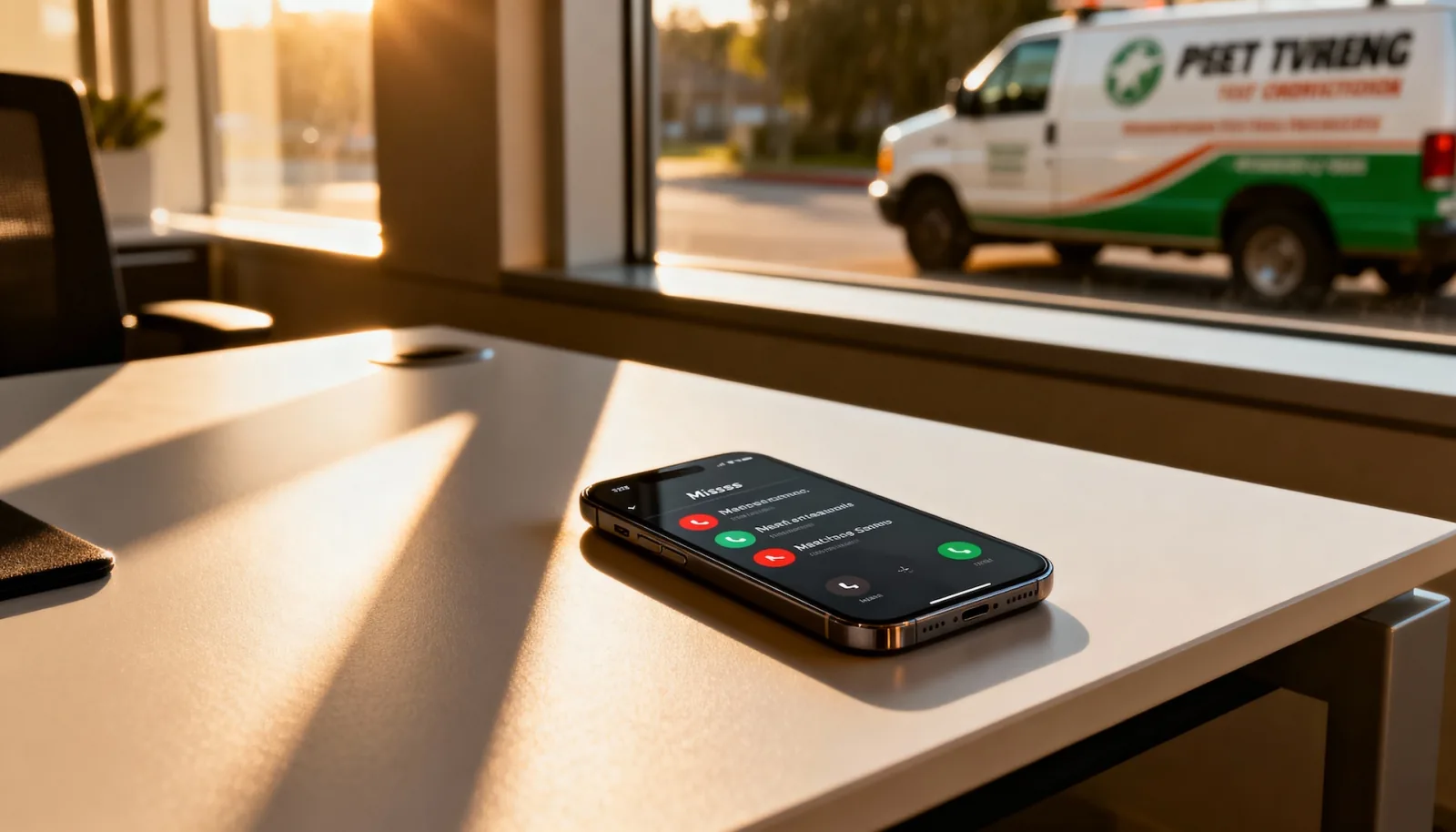
In most small pest control businesses, missed calls don’t feel like a serious problem. Phone rings while technicians are on field; owners are driving between locations, or someone is wrapping up paperwork at the end of the day.
The assumption is simple: if the customer really needs help, they will call again.
But customers never or very rarely call back. Because they are reacting to something urgent that needs immediate response from your business. This is why missed calls in pest control businesses are often the biggest hidden reason for low revenue, small customer base, and declining reputation.
Pest Control Customers Call During High-Stress, High-Urgency Moments
Pest control is not a research-first service. If someone is calling you for pest control, they don’t usually compare multiple providers over several days. They are calling because something doesn’t feel right at that particular moment.
There must be ants on the kitchen counter, scratching in the attic, or termites near the foundation. And all this leads to health concerns, property damage, and embarrassment. In that moment, the customer isn’t looking for best explanations, they are looking for reassurance.
This urgency makes your responsiveness an essential part of the service itself.
In addition, when your pest control business receives a call, your potential customer expects few specific things, such as:
- Confirmation that someone is available to help.
- A sense that the problem is understood and taken seriously.
- Clear guidance on what will happen next.
You should understand that these expectations are emotional, not technical, and must be handled with empathy and urgency. And meeting will build customer trust in home services and missing them will create doubt, regardless of your excellent technicians and strong reviews.
Missed Customer Inquiries Are the Most Expensive Type of Lost Opportunity
Every missed call in pest control represents a customer who has already chosen another service provider. This is very different from a website visitor or someone casually browsing ads, because when a customer calls a pest control business:
- They are already aware of the problem.
- They are actively looking to book your service.
- They are usually ready to schedule your services.
All this makes missed calls costlier than a business realizes. These are not low-intent leads. These missed calls were your near-ready jobs that disappear without any warning.
Furthermore, here are some common scenarios which increases missed calls in pest control increases:
- Calls come in while technicians are onsite and unable to answer.
- Phones ring while someone is under a house, in an attic, or on a ladder.
- Calls arrive during driving time between jobs.
- After-hours calls directly to voicemail and never gets answered within mean time.
From a business owner’s perspective, all these situations are normal part of field-based work. But from a customer’s perspective, the reason doesn’t matter. And this is how missed customer inquiries quietly turn into lost revenue.
Most Pest Control Businesses Miss 30 – 50% of First-Time Calls
For small pest control companies without dedicated office staff, missing a large portion of inbound calls is more common than most business owners realize. Sometimes, the missed calls can reach up to 30-50% of the total calls.
In addition, most of these missed customer inquiries are between 9:30 AM to 12:30 PM and 3:30 PM to 5:30 PM.
These are the peak hours when technicians are busy, and customers are calling in advance to get work done that day or early on the next one. Also, these timings are the exact moments when customers are least patient.
Here’s what happens immediately after a missed call in pest control business:
- Customers call your business.
- The phone rings out or goes to voicemail.
- Customer immediately looks for another option and calls them.
- If that company answers, an appointment is scheduled.
You lose revenue and a long-term customer due to slow response time in customer service.
In pest control business, every customer counts and you can’t take the risk of losing them due to missed calls. The companies who are preventing missed calls and focusing on customer experience are SMBs that actually grow.
Why Missed Calls for Pest Control Almost Never Call Back
Many pest control business owners believe that they can recover the lost opportunities. But transforming this assumption into reality is quite a task because neither do the owners have time to call back and nor the customers.
In such scenarios, customers interpret that the company is not available. Also, they assume future communication will be just as difficult because pest control problems feel urgent, and customers are unwilling to chase a business that feels hard to reach.
Moreover, when a call is not answered, customers rarely think:
“They’re probably just busy”
Instead, customers think:
- “They might not be taking new jobs”
- “Let me call another service provider quickly”
- “Scheduling will probably be a headache”
- “If something goes wrong, I won’t get help quickly”
Like these assumptions, there can be a “n” number of other possibilities that shape the entire home services customer experience before any service begins.
Slow Response Time in Customer Service Is as Damaging as Missed Calls
In pest control, customers are dealing with discomfort and fear, and they want to feel relief quickly. When you call back hours later, it often feels responsible for the business side. However, it often comes too late to matter.
A slow response time in customer service creates frustration instead of reassurance. By the time your callback happens, customer has often:
- Already booked with another pest control company.
- Lost urgency and interest.
- Mentally cross your business off the list.
As a result, the delay in callback feels like indifference and hampers the financial metrics that matter for client retention.
Why Missed Calls in Pest Control Business Are Not Prioritized
One of the main reasons that missed calls continue to hurt businesses is that they don’t create visible problems. There is no complaint, no negative review, and no direct feedback about that.
The pest control businesses remain busy, and revenue feels normal. Meanwhile, potential customers quietly choose competitors who answer quickly.
Here’s what business and customer assume or experiences:
| What the business assumes | What the customer experiences |
| “They didn’t call back” | “They didn’t answer” |
| “We were just busy” | “They’re unreliable” |
| “No big loss” | “I won’t recommend them” |
The assumptions from the business side and experience at customer’s end create the gap, which allows the problem to persist unnoticed.
How To Prevent Missed Customer Inquiries in Pest Control Business
To prevent missed calls in the pest control business, you need strong first-call experience answering services, that can acknowledge the customers and ensure consistent quality.
In addition, it must ensure that:
- The customer’s call was noticed.
- Customer’s issues and required service were clarified.
- Customers are aware of what the next steps will be.
This will help you improve the home services customer experience and build customer trust.
Furthermore, here some practical rules that small and medium pest control businesses can follow:
- You should prioritize new calls over non-urgent tasks.
- Callbacks must happen within a clearly defined time window, such as within 30 minutes or an hour.
- You must not ignore any inquiry, even briefly.
- Document everything and analyze reports quarterly and annually.
Implementing and maintaining all these practical tips can be difficult for a business. That’s why it’s recommended to avail of home services call center solutions. The experts are available at your convenience with a customized answering workflow to help your business grow.
Wrap Up
Pest control customers don’t stop calling back because of bad service. They stop calling back because they never heard back from you. When you don’t return to missed calls, you don’t lose a customer, you lose business value, reputation, and a long-term revenue generation opportunity.
For small pest control companies, fixing this problem starts with recognizing when calls are missed, why customers don’t wait, and how quickly trust disappears. Because in the modern pest control business, the job doesn’t begin when you reach the door. Now, it begins when you respond promptly to that ringing phone.