
Modern businesses face massive competition in the market. Consumers have become very savvy and think nothing of spending hours researching and evaluating their options before purchasing. For this reason, brands have to work tirelessly to make themselves stand out.
A study from McKinsey & Company revealed that over 75% of consumers are willing to switch brands when presented with a compelling alternative, highlighting the need for crafting a unique selling proposition that knocks the competition out of the park. (Source: Researchgate)
In this guide, we’ll introduce the concept of a unique selling proposition, compare it with a value proposition, share some tips on creating a unique selling proposition of your own, and finish up with some killer USP examples.
What Is a Unique Selling Proposition?
A unique selling proposition, or USP, is a unique selling point that sets your brand or product apart from the competition. It’s a tool that’s popular with salespeople and marketing experts for communicating the key factors that set a brand or product apart.
Simon Brisk, Cofounder of Click Intelligence said, “A compelling USP must communicate your brand’s values, differentiate it from others by highlighting what you stand for, and show how it benefits your customers.”
When writing a unique selling proposition, a good place to start is by asking yourself, “What does my business/product offer that's different from my competitors?”
Before we share some USP writing tips, let’s examine the difference between a unique selling proposition and a value proposition, two concepts that are often confused.
Unique Selling Proposition vs Value Proposition
It’s not uncommon for people to think that a unique selling proposition and a value proposition are the same thing. Yes, they are both marketing terms that businesses use to differentiate themselves from their competitors, but there are some key differences.
A USP:
- Highlights the unique features or benefits of a product or service
- Is usually a short and catchy phrase
- Tends to focus on one specific feature/benefit
- Communicates a strong message to customers about what makes a product different
A value proposition, on the other hand:
- Focuses on how your product or service can solve your customer’s pain points
- Explains how you can provide more value than other available options
- Is often broader in scope as it relates to overall company goals, brand identity, and core values
How to Write a Unique Selling Proposition
So, you want to write a unique selling point but don’t know where to start. Your first step should be identifying your target audience and what’s most important to them. The next step is to research your competitors and see what they’re doing.
Before crafting your USP, one further step is to identify your weak and strong points, and what makes your business stand out. Now you’ve got all the information you need to help answer the question of how to write a unique selling proposition.
Let’s take a closer look at the steps you need to take when writing a unique selling point.
Identify the Right Customers for Your Business
Your USP must appeal to the right audience for it to be compelling. Since you won’t be attractive to everyone, focus on the audience most likely to benefit from your business.
Targeting a narrow audience allows you to customize your message better, which is bound to make it more appealing.
Customized messages make the most impact and get the real engagement. If you can hit that mark, your customers are more likely to trust you to understand their needs.
Research Your Competitors
Source: aha.io
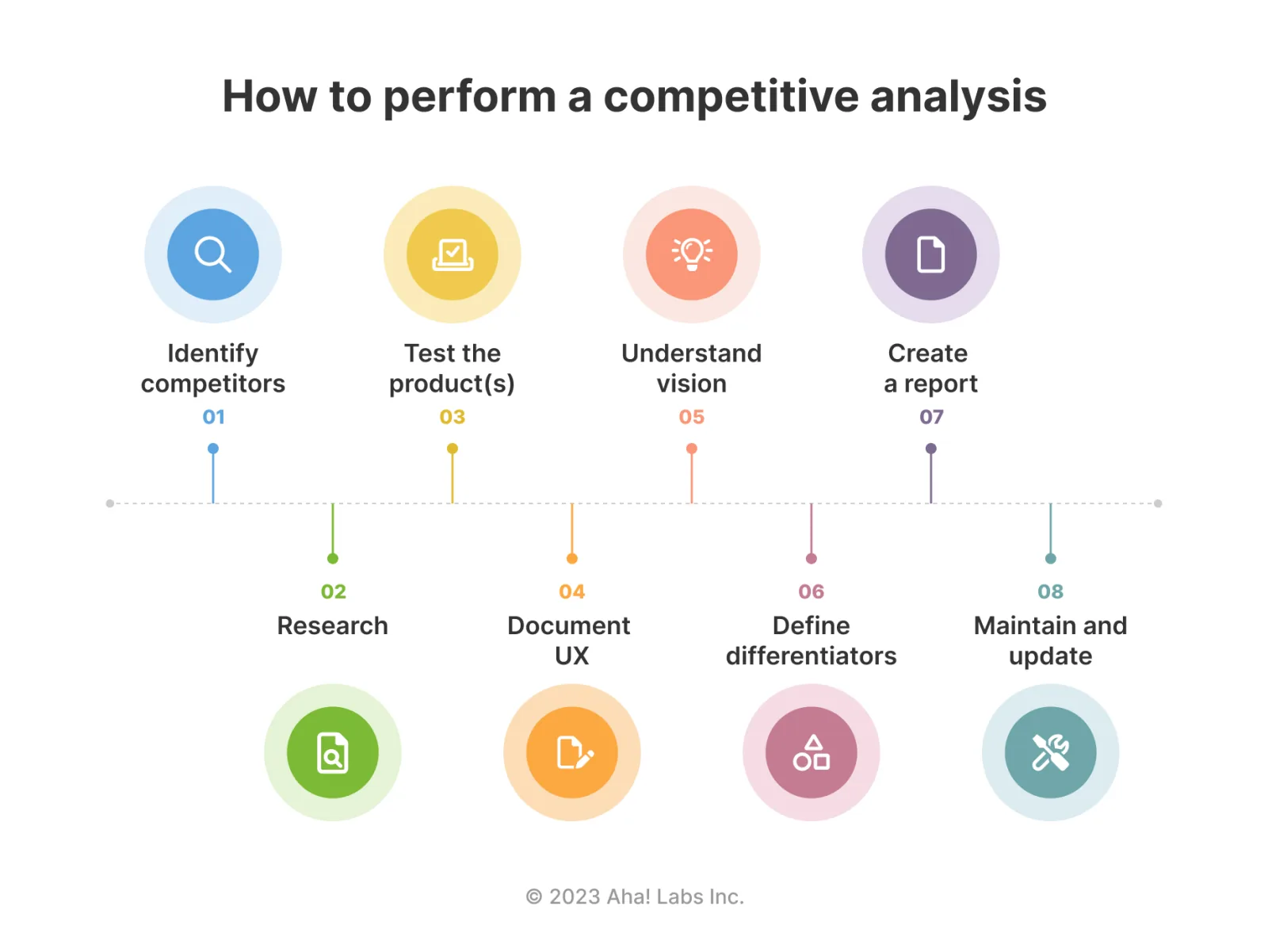
To help you determine what makes you unique, you must know what your competitors offer. Do your research and find out their USPs. Think about how you can introduce your brand or products differently.
While it may be tempting to denigrate a competitor, avoid this approach, as it rarely succeeds. Instead, emphasize what your brand offers instead of highlighting the faults of others.
One great example of this in play is the shoe brand Christian Louboutin, which communicates its status instantly with its signature red sole. The brand wanted to create chic and luxurious evening shoes and hit upon an instantly recognizable, unique selling proposition.
Identify your Strong and Weak Points, What Makes you Unique
Your USP should include the strengths and benefits of your product/ brand that distinguish it from the competition. It's time to do some deep analysis and identify what's good and what needs more work
“One of the easiest ways to assess your strengths and weaknesses is to consider customer feedback”, said Justin Watkins, Founder of Battle Born Injury Lawyers. “What’s being said about your business? Both positive and negative comments have a role to play in your strategy.”
Another option is to do a SWOT analysis. SWOT stands for “Strengths, Weaknesses, Opportunities, and Threats,” and it helps you better understand your business. Remember to compare your business with your competitors in order to define what makes you unique.
Write Your Statement
Now that you’ve done the crucial research, it’s time for the fun part. Draft an initial statement, test it, and refine it to ensure it resonates with your target audience.
When drafting your initial statement, concentrate on the following elements, making your USP compelling and succinct.
- Identify what makes your USP stand out in your market.
- Write a USP that also resonates with your target audience.
- Make sure your USP is clear and concise, as this is more effective in marketing materials.
- Consider consulting a marketing consultant for new ideas to help create a strong, unique selling proposition.
Evaluate All Variations Carefully Before Making Your Final Choice
Once you've drafted some initial USP statements, testing their effectiveness using various methods is vital. You can refine them based on the feedback you get from your evaluations
How can you gauge the impact of your USPs? Using social media marketing, surveys, and A/B testing will highlight how they influence customers to make a purchase or get support. Tweak your USPs based on the results you get.
Include it in your Marketing Strategy
Once you’ve created your unique selling proposition (USP), it’s time to incorporate it into your marketing strategy. Why not start with your website, as it provides plenty of options for including your USP? For example, you can use it in landing pages, pop-up notifications, or content around your USP.
“In today’s digital-first world, your unique selling proposition must be backed by performance. If your site is slow or unreliable, even the best USP won’t convert. Continuous monitoring helps ensure that your promise aligns with user experience — and that builds trust faster than any slogan,” said Simon Rodgers, CMO at WebSitePulse.
Social media channels are another option for concisely displaying your USP. One important thing to remember is to be consistent across all channels so you don’t confuse your audience.
You can monitor its progress using the following metrics:
- Conversion rate
- Click-through rate
- Engagement rate
- Retention rate
- Referral rate
- Bounce rate
What to Avoid When Defining Your USP
When you write your USP, it’s more than just a marketing tactic. It’s a reflection of your identity and values. There are some common mistakes that businesses make, weakening their message and failing to make themselves stand out.
- Being too vague: You must be very specific when you write a USP. Avoid writing broad statements that could apply to any business. For example, “We provide excellent customer service” is too general. It's better to focus on what makes your customer service unique, such as personalized support or fast response times.
- Overcomplicating the USP: A USP must be clear, easy to understand, and straightforward. Fill it with jargon or make it too complex, and your audience will forget it, and it won't make an impact. Concentrating on communicating value is a brief sentence or a few concise words.
- Focusing solely on price: Competing on price alone is very risky. The lowest price is bound to be very attractive for your customers in the short term, but it’s unlikely to build long-term loyalty. Instead, focus on other aspects like quality, added value, or the overall experience.
- Ignoring what your customers want: Your unique selling point should reflect what your customers need and want, not just what you offer.
- Not maintaining a consistent message across all platforms: Your USP should be clear and consistent across all platforms, including your website, social media, or physical store.
- Creating a superficial USP: Customers will see through your USP if you make it superficial. Instead, it must reflect what your brand stands for and be deeply rooted in your company’s core values.
- Partnering with companies or suppliers that don’t share your values: Thanks to the internet, customers can find information about a company with just a few clicks. If you profess to be a green company, but partner with a polluter, your customers are bound to find out.
- Failing to update your USP: Your USP may work when you write it, but it might no longer resonate when the market evolves. Competitors might be offering new things, and customers' needs might change. Reviewing and adjusting your USP will help it stay relevant.
5 Examples of Unique Selling Propositions
So, we’ve helped you define your unique selling proposition. Now, it’s time to share some examples of companies that have leveraged their USPs to achieve success.
The following examples of unique selling propositions show how a unique approach and a strong USP can lead to brand growth and standing out in the marketplace.
1. “We’re number two. We try harder.” - Avis
The effectiveness of this USP comes from transforming a weakness into a sign of positivity. It’s convincing customers that it will give its all to move up. And has managed to express it in six short words.
2. “Love your beverage. Or let us know, we’ll make it right.” - Starbucks
With this USP, Starbucks is tapping into what all coffee lovers expect: a drink tailored to their tastes. While the brand is not the cheapest or the most luxurious, it’s transformed into the world’s most popular coffee chain.
3. “Sheer driving pleasure.” - BMW
With this USP, BMW shows that it knows what it's good at and communicates the message effectively.
4. “Making commerce better for everyone.” - Shopify
Shopify uses this USP to draw attention to the fact that it offers all the tools a business needs to be successful.
5. “When it absolutely, positively has to be there overnight.” - FedEx
FedEx used this slogan from 1978 to 1994, and it helped the company set itself apart from other delivery and shipping services. Why was the USP effective? Because it focused on the customer, not the business, and promised that packages would arrive on time. While this might not be revolutionary, it stood out in 1978.
Wrapping Up
A well-crafted, unique selling proposition isn't just a catchy tagline. It's a strategic statement that tells customers exactly why they should choose you over the competition. By identifying your target audience, analysing your competitors, and clearly communicating your strength, you can develop a USP that grabs attention and builds long-term loyalty.
Remember, the best USPs are simple, specific, and rooted in what your customers truly value. Avoid generic promises, stay authentic to your brand, and make sure your USP shines across every touchpoint.
When done right, a unique selling proposition becomes more than a marketing tool. It becomes the heartbeat of your brand.