
If you’ve ever looked at your website analytics and felt slightly unsure what any of it really means, you’re definitely not alone. Most business owners get told they need “more traffic” or “better rankings,” but those numbers don’t matter much on their own.
What really counts is whether people actually do something after they arrive on your site. Do they stay? Do they click anything? Do they buy anything? That’s where conversion metrics come in. They act a bit like checkpoints; small signals that show you how real visitors behave instead of how you think they behave.
When you understand these signals, making improvements becomes a lot less guesswork and a lot more clarity.
Benefits of Tracking Conversion Metrics
Tracking conversion metrics gives you a clearer sense of how your digital efforts are performing.
This can also include evaluating QR code ROI if you use scannable touchpoints to drive traffic or actions. You’ll see which pages encourage visitors to take the next step and which ones quietly push them away. It also helps you catch problems early, before they become bigger and more expensive.
Conversion Rate Metrics You Should Track
With so many people online today, over 73.2% or 6.04 billion individuals worldwide, there’s a huge opportunity to reach the right audience, but competition is high, too. (Source: Statista) Relying on data instead of assumptions helps you spend your time and marketing budget more wisely. This is something marketers repeatedly practice and fine-tune, especially those trained through a Performance Marketing Course where analysing these numbers becomes second nature.
There are lots of different numbers you could track, but the following are the ones that tend to reveal the most about how people behave on your website and how they respond to your offers.
Average Time Spent on Site
Average time spent on site is exactly what it sounds like: how long people stick around. Although it’s a simple metric, it usually reflects visitor interest far more honestly than traffic numbers alone.
For example, if you publish a post that brings in loads of clicks, but visitors leave within 10 seconds, it’s a clear sign that the headline was stronger than the content.
If time on site is low, it could mean slow loading, confusing text, or simply that the visitor didn’t find what they expected. When it’s high, people are generally reading, scrolling, and paying attention.
Gradually improving this number often leads to better conversions because people tend not to buy from websites they don’t engage with.
Cost Per Acquisition (CPA)
CPA tells you how much it costs to get one new customer. That includes advertising, marketing efforts, creative work, and pretty much anything you’ve invested in to encourage someone to buy.
It’s not uncommon for business owners to think their ads are “doing well” until they calculate CPA and realise they’re practically paying customers to take interest.
When CPA is high, it’s usually a sign that your targeting might be off or your landing page doesn’t convince visitors quickly enough. When CPA is low, it means you’re attracting the right people at a reasonable cost.
Comparing CPA across different platforms (Google, Facebook, Instagram, and others) helps you see which channels are worth continuing and which ones need a rethink.
Click-Through Rate (CTR)
CTR measures how often people click your links after seeing them. It’s often the first hint that your message is landing, or not. For example, if you run an ad that gets lots of impressions but hardly any clicks, something about it isn’t catching attention. It might be the headline, the image, the audience, or even the timing.
You might only have to change a single line in an email and then watch CTR double the next day. Sometimes it’s that small.
High CTRs usually indicate interest; low CTRs mean it might be time to test new ideas or adjust your messaging.
Email Subscribers
An email list is one of the few things you actually own as a business, which is why tracking your subscriber count matters. If your list keeps growing, your sign-up incentives and forms are doing their job. If growth stalls, the offer might not feel valuable, or the form might be hiding somewhere no one notices.
Try moving a newsletter sign-up box one scroll higher, and see what difference it makes to subscribers in a week.
Placement matters more than people realise. The quality of your email marketing subscriber list is important too, so it’s worth keeping an eye on open rates and unsubscribe rates alongside the raw count.
CTA Conversions
CTA conversions measure how many people take action when they click a button. This might be “Get a Quote,” “Download,” or “Book a Call.” Small changes often influence this number much more than you expect.
For instance, swapping a vague button like “Submit” with something clearer like “Send Me My Quote” can instantly help people understand what will happen next.
“If CTA conversions are low, consider whether your page sets up the action clearly, whether the button text makes sense, or if the button is simply too far down the page. Tweaks here can make a big difference”, said Georgi Todorov, Founder at Create&Grow.
Customer Lifetime Value (CLV)
CLV estimates how much money one customer brings in over the entire time they buy from you. This metric shows how valuable repeat business can be. Sometimes a customer buys once and disappears forever; other times, they become loyal buyers who come back again and again. The second type is where CLV becomes incredibly helpful.
If CLV is low, it may mean customers don’t feel supported after their first purchase or that your follow-up emails don’t give them enough reason to return. Improving customer experience, even small things like better onboarding or personalized recommendations, can lift CLV more than you’d expect.
Social Media Engagement Metrics
Social media engagement includes comments, likes, shares, clicks, saves, and even subtle actions that show interest. These numbers help you understand whether your posts are connecting with people or just filling space.
It’s not uncommon for posts with modest reach to outperform larger ones simply because they trigger more genuine interaction.
A high engagement rate usually means your content feels relevant or helpful. Low engagement usually suggests you might need to shift topics, experiment with formats, or rethink your posting schedule.
Engagement also influences how social platforms decide which posts to show more often, so higher engagement gives your brand a wider reach.
Form Conversions
Form conversions measure how many visitors complete a form. I think everyone has clicked away from a form at some point because it asked for too much information. Visitors usually want quick, simple forms that don’t look like a marathon.
“Reducing unnecessary fields, adding simple explanations, and highlighting the value they get in return all help increase this number. When form conversions improve, your lead generation becomes stronger without needing extra traffic, which is always a bonus,” said Jay Jangid, CMO at Pulse of Strategy.
In many cases, form submissions count as micro conversions rather than full macro conversions, especially if your business relies on steps like quotes, consultations, or onboarding. Keep an eye on how micro conversions flow into macro conversions (like actual sales), which helps you figure out where your funnel is strong and where people are drifting away.
Bounce Rate
Bounce rate shows the percentage of people who arrive on your site and leave after viewing just one page. It can feel discouraging when this number is high, but it’s not always bad. Sometimes people find exactly what they came for on a single page and leave satisfied.
However, consistently high bounce rates across core pages can signal a problem. Maybe the content doesn’t match the search intent. Maybe the design is confusing.
You might be able to lower bounce rate on several pages simply by rewriting the introduction to match what visitors were actually expecting.
Cart Abandonment Rate
Cart abandonment happens when people add items to their cart but leave without buying. E-commerce sites deal with this constantly. Common reasons include unexpected shipping costs, a multi-step checkout, or the absence of preferred payment options.
You might be able to reduce abandonment significantly by offering guest checkout instead of forcing people to make an account. Small changes, clearer cost breakdowns, simpler forms, and faster loading can bring customers back who were only moments away from buying.
Return On Ad Spend (ROAS)
ROAS measures how much money your ads earn compared to what you spend on them. It’s one of the most straightforward ways to see whether your campaigns are profitable.
A good Return on Ad Spend means you’re reaching the right audience with the right message. When ROAS drops, something needs adjusting. It might be your targeting, your creative, or the landing page experience.
Comparing ROAS across different platforms helps you focus your budget where it works best. Over time, this can significantly increase the return on your advertising spend.
Customer Churn Rate
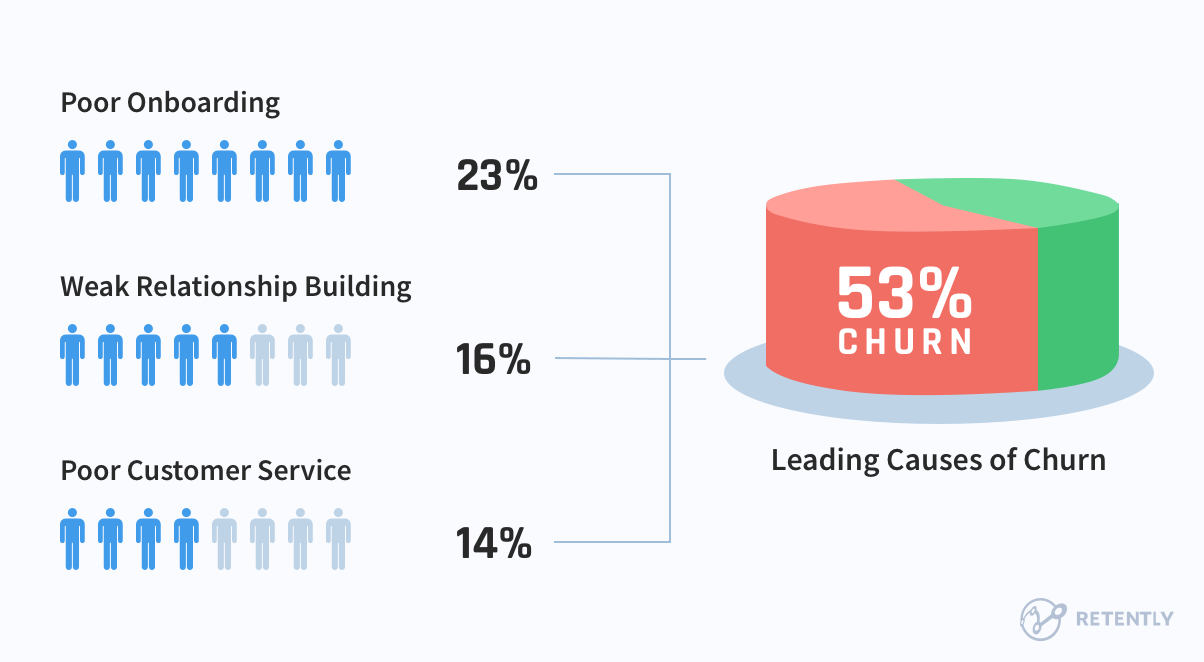
Source: Retently
Customer churn rate measures how many customers stop buying from you over time. If churn rises, it’s often a sign that something’s not clicking after the initial purchase.
Sometimes the issue is product value; sometimes it’s poor communication or slow support. Regularly viewing this number helps you understand where the gaps might be. Reducing churn strengthens your long-term revenue and lowers the need for constant new customer acquisition.
Session Duration / Average Time On Page
These metrics show how long visitors stay on specific pages and throughout your site. When visitors spend more time reading, clicking, and scrolling, it usually means the content is connecting with them. Shorter times suggest that the content might be too thin or not what the visitor expected.
Updating headlines, restructuring content, and adding clearer navigation can help. Tracking these metrics over time helps you understand how changes affect user behavior.
Conversion Rate Optimization Tools
There are plenty of tools that help you analyze and improve user behavior. Google Analytics gives you a broad view of traffic and interactions. Hotjar and Microsoft Clarity offer heatmaps and recordings so you can see where people click and where they hesitate. A/B testing tools like Optimizely or VWO let you compare different versions of a page to see which one performs better.
Himanshu Chhimpa, Head of SEO at Tagshop AI, said: “Newer AI-powered solutions are also emerging, such as an AI twin generator that creates hyper-realistic digital doubles or avatars from just a short video of the user, helping brands personalize experiences and simulate user interactions more accurately.”
Using a combination of these tools helps you understand what’s happening behind the scenes and make smarter decisions.
Wrapping Up
Conversion metrics give you practical insights into how people use your website and respond to your marketing. Instead of relying on assumptions, you get real signals that show what’s helping and what needs attention.
When you pay attention to the right numbers, you gradually build a stronger website and a smoother customer experience. And in most cases, small changes such as tweaking a headline, simplifying a form, or clarifying a CTA, can make a surprising difference.
Use the metrics in this guide to improve your results and build more confidence in your digital strategy.