
Did you know that a lack of technical expertise is one of the biggest things holding small businesses back? According to PayPal’s 2024 Business of Change report, 59% of small business owners say it’s a major barrier to growth. And it shows, nearly half of Canadian online small businesses haven’t grown at all over the past three years.
But here’s the good news: building technical skills doesn’t have to be overwhelming. Yes, it takes some time and effort, but if it’s the one thing standing between you and growth, isn’t it worth exploring?
One of the simplest and most effective ways to start? Link building for small businesses. It helps drive organic traffic, boost your credibility, and improve visibility without blowing your marketing budget. In this article, we’ll explore how link building services for small businesses support growth and share 10 tactics especially tailored to smaller companies.
The Role of Link Building in Small Business Success
Link building is the process of getting other websites to link back to yours. These backlinks are online word-of-mouth. The more high-quality, relevant links you have, the more trustworthy and authoritative your site appears. That’s why investing in a small business link building service is one of the smartest digital moves you can make.
Search engines use backlinks to:
- Discover new web pages
- Understand what your page is about
- Decide how trustworthy and valuable your content is
But it’s not just about SEO. Link building services for small businesses boost a brand’s visibility, build trust with an audience, and bring in valuable referral traffic from other sites. For small businesses trying to stand out in crowded markets, these digital connections can be the key to moving from invisible to impossible to ignore.
10 Tactics for Effective Link Building in Small Businesses
When you’re running a small business, every marketing move has to count. Your link building strategy is no exception. The good news? You don’t need a massive team or a huge budget to achieve results.
1. Local Link Building
If your business serves a specific city, town, or neighborhood, local link building should be at the top of your SEO checklist. It’s all about getting backlinks from websites that are relevant to your area – local directories, community blogs, news outlets, and nearby partners.
Here we analysed Legacy Plumbing’s backlinks. As you can see, one of the links was published on the local news website in Dallas.
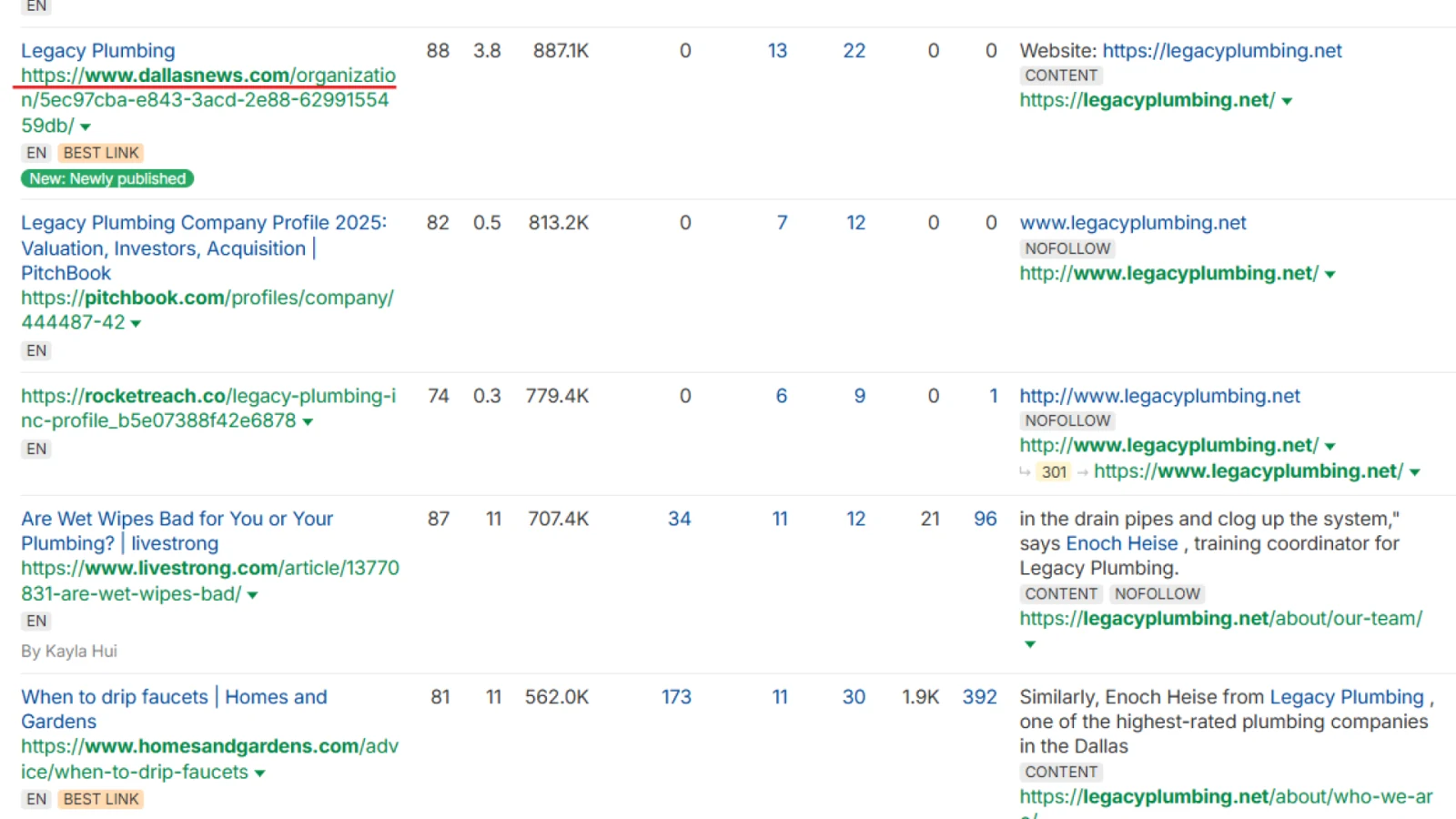
These local links help search engines understand where you operate, which improves your visibility in local search results and on map listings. It makes it easier for people in your area to discover and choose your business over the competition.
1.1 Local Directories
Start by registering your business on trusted local directories, they are free and easy to implement. These listings not only improve your online visibility but also give you high-value backlinks that help search engines verify your business location and credibility. Registering on directories helps nearby customers find and trust your business faster.
Here are a few directories to start with:
Google Business Profile
Go to google.com/business and sign in with your Google account. Enter your business details (name, address, phone number, website, hours, etc.) and verify your business.
Yelp for business
Visit business.yelp.com/ and click “Verify my free listing.” Fill in your business info and create an account. Yelp may call or email you to verify.
Bing Places for business
Head to bingplaces.com, select “New User,” and follow the steps to add your business.
After you have filled those, look for niche directories in your field (e.g., TripAdvisor for travel) or area. Search “[your industry/area] + directory” to find relevant sites, then follow their registration instructions.
1.2 Local News Sites
Getting featured in local news is one of the most effective ways to earn high-authority backlinks and build trust in your community.
Example: a local winery hosted an event and sent out info about it to local news sites.
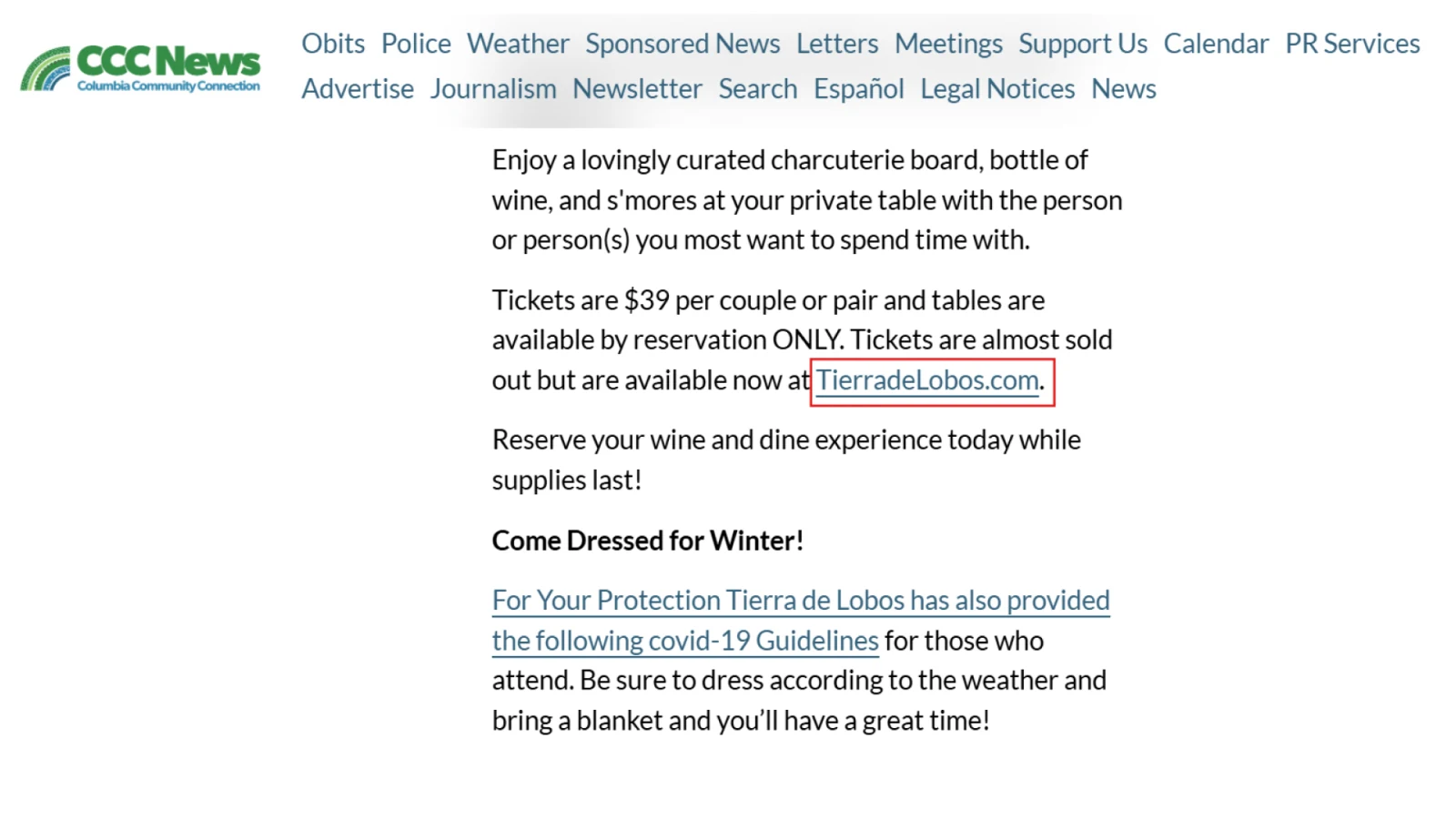
You don’t need to be the PR guru; just focus on sharing stories that are relevant and meaningful to your area:
- Engage in community activities. Sponsor a local event, support a charity, host a workshop, or participate in neighborhood cleanups. Local media love covering stories that highlight community involvement.
- Send out press releases. Share announcements about business milestones like grand openings, expansions, awards, or new hires. Keep it newsworthy, brief, and send it directly to local journalists or media.
- Build relationships with local reporters. Follow them on social media, comment on their work, and introduce yourself by email. A warm connection increases your chances of getting covered when you pitch a story.
Once your business is mentioned in an article, ask if they can include a link to your website. Many will do it automatically, especially if it adds value for readers.
1.3 Collaboration with Local Businesses
Teaming up with nearby businesses can lead to easy, natural backlinks, strengthen your presence in the local community, and expand your audience. You don’t have to create a full-on "Wicked" marketing campaign, these collaborations don’t have to be complicated. A few simple ideas can go a long way:
- Co-promotions – run a joint discount or bundle offer (e.g., a café and a nearby bookstore offering a “coffee + book discount” deal and vice versa). Both businesses can promote it on their websites and social media, linking to each other for increased visibility.
- Blog mentions – write a blog post featuring your favorite local partners and ask them to do the same. For example, a local gym could highlight nearby healthy food spots, and those businesses could reciprocate.
- Shared events – host a local market, charity event, or small business fair together. Promote the event on your websites and social media, naturally linking to each other in the process.
1.4 Connect with Local Schools and Organizations
Partnering with local schools, non-profits, and community groups is an overall win: you earn trustworthy backlinks from respected local domains while positioning your business as a socially responsible part of the community.
- Sponsor a school event or sports team. Offer to help fund jerseys, supplies, or event materials. Most schools will list their sponsors on their website, often with a link to the business.
- Collaborate with non-profits. Provide a donation, volunteer your team’s time, or co-host a fundraiser. Many non-profits publicly thank partners on their websites and social media.
- Offer educational resources or workshops. If your business has expertise (e.g., finance, health, design), propose a free class or resource for students or community members. These initiatives often get featured on partner websites or local news.
2. Social Media Links
While links from social media platforms like Facebook, Instagram, LinkedIn, and X (Twitter) don’t directly influence your SEO rankings, they support your broader link building small business strategy. Social media increases the visibility of your content, putting it in front of a larger audience.
Types of social media links to leverage:
- Profile links: add your website link to your bio on all platforms.
- Post links: share new blog posts, product pages, or resources.
- Group and community posts: participate in local or niche Facebook and LinkedIn groups with helpful content that links back to your site (no spam, please).
- Influencer collaborations: partner with local influencers or micro-creators who can share your content and drive exposure.
3. Analyze Competitor Backlinks
By analyzing your competitors’ backlink profiles, you can uncover proven sources of links and spot patterns in their link building strategies.
Use SEO tools like Ahrefs, Semrush's backlink checker, or Moz to see:
- What websites are linking to your competitors?
- What kind of content is attracting those links?
- Which anchor texts (the clickable words) are being used?
- How diverse and natural is their link profile?
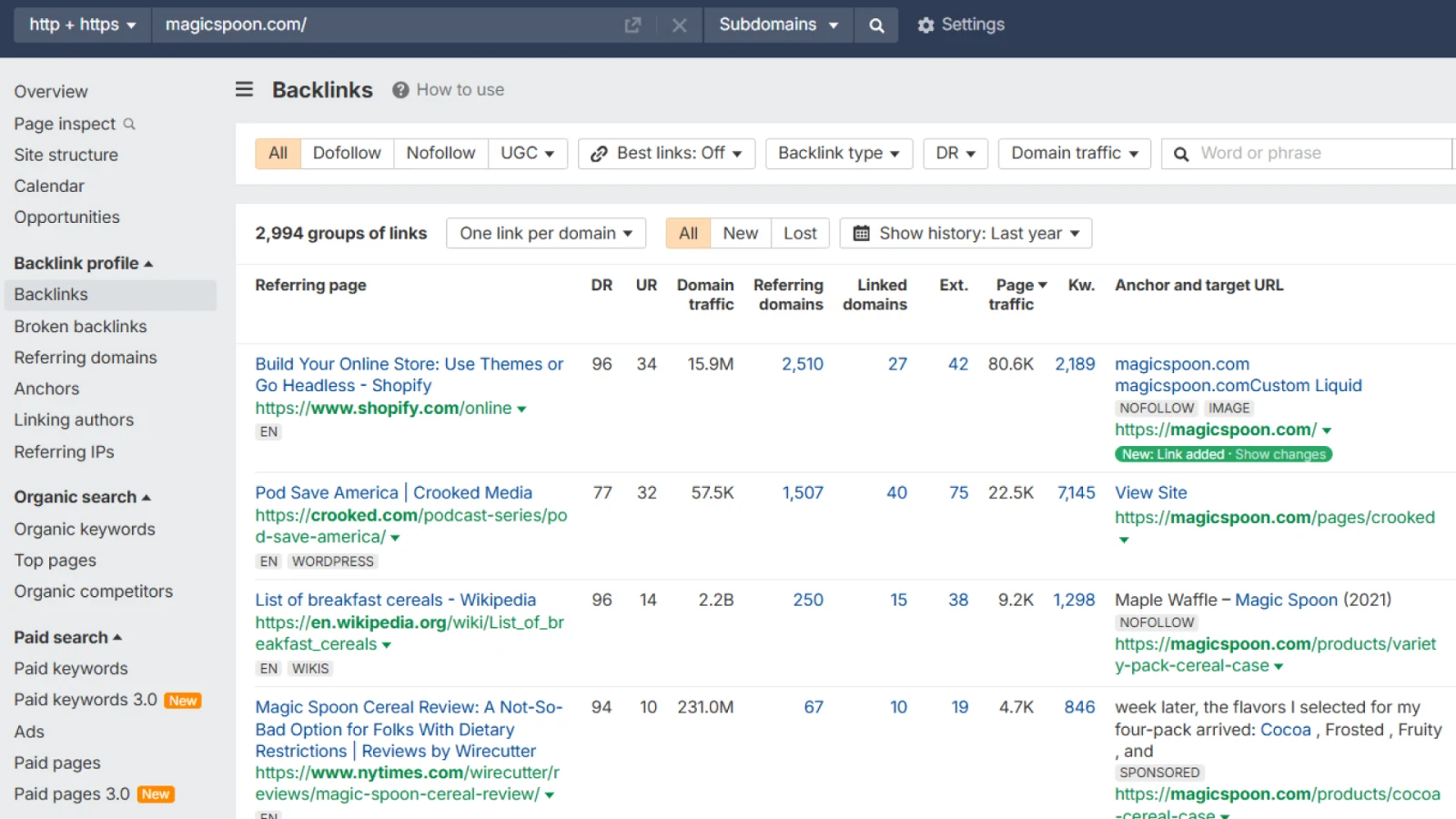
For example, if you’re competing with a brand like Magic Spoon, you can study where their backlinks come from, such as food blogs, health sites, or lifestyle media. You might notice they’re getting links through reviews, listicles, or guest posts. That gives you a clear idea of where and how to promote your site.
4. Guest Posting
Guest posting means writing valuable articles for blogs or websites in your niche. In return, you receive a backlink to your site, either in your author bio or naturally within the content. However, the benefits extend far beyond the link itself.
Publishing guest posts on reputable sites helps position you as an expert in your field. It introduces your brand to new audiences who already trust the platform you're featured on, making them more likely to check out your business. If you prefer a hands-off approach, consider working with a guest post provider who manages everything from content creation to securing placements
And to show you how guest posting works in action, here’s another example to inspire you.
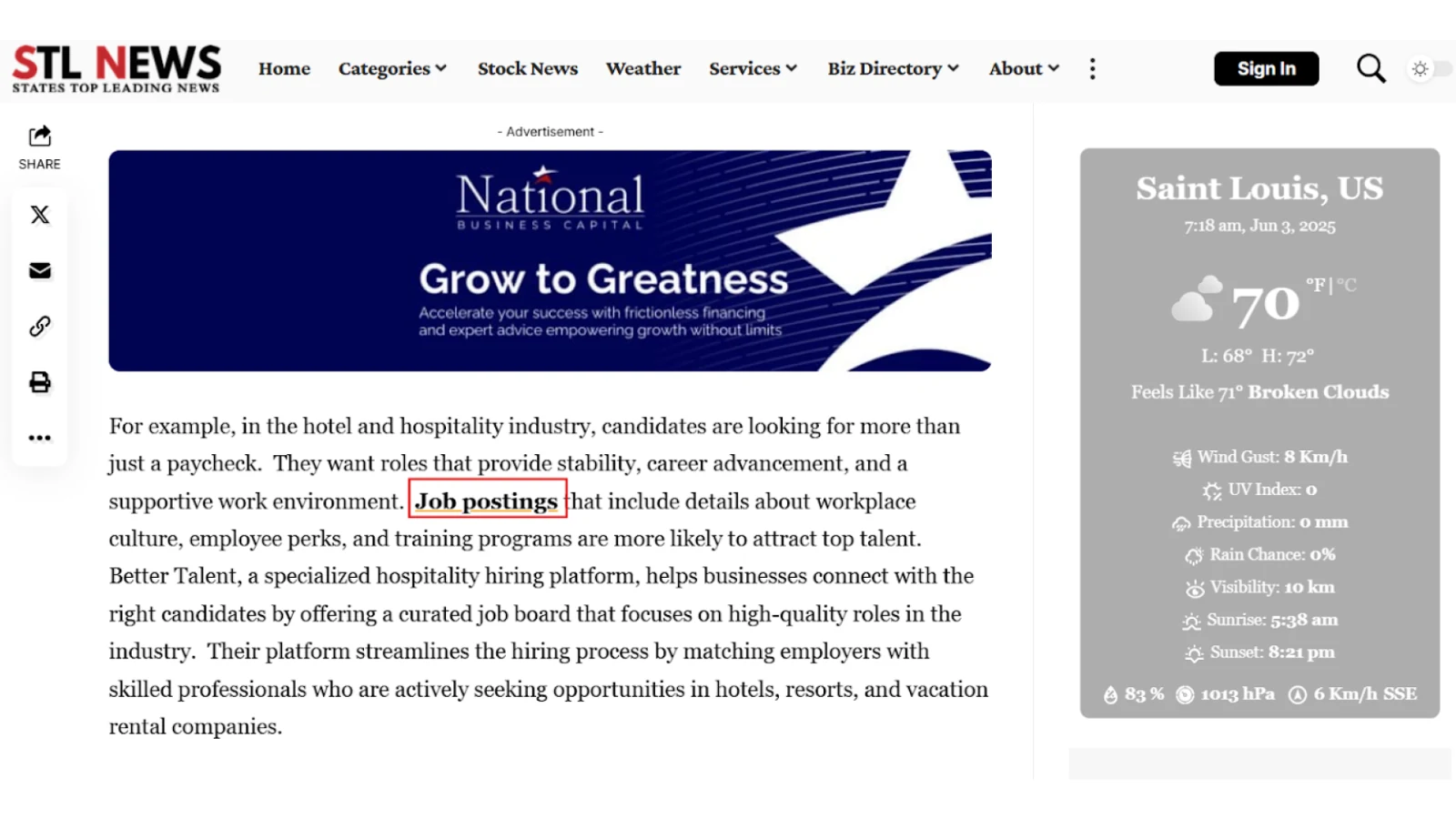
How to become a guest post author?
- Research niche blogs – look for websites that accept guest contributions and share content relevant to your industry.
- Pitch useful topics – propose ideas that solve real problems or answer common questions in that niche. Don’t pitch an article if its topic has already been covered by the site.
- Provide genuine value – write high-quality, original content that reflects your knowledge and experience.
"Publishing articles on websites with a strong online presence helps build a reputation in your field. It introduces readers to your knowledge, making them more likely to view you as a credible source. It also shows search engines that you regularly share helpful information in your area, which is an essential factor in how they assess your expertise and trustworthiness. Over time, this kind of exposure can improve both your personal brand and your website’s performance in search results."
Roman Suslo, founder of Wmlinks.net
5. Unlinked Mentions
Sometimes, blogs, news sites, or forums have already mentioned your business or brand name without including a clickable link to your website. These are called unlinked mentions, and they’re one of the easiest link building strategies for small businesses you can act on.
To monitor them, use tools like Google Alerts or Brand24. When you find one without a backlink, reach out to the website owner or editor and ask if they could add a link to your site. Engaging in strategic forum posting can also help identify unlinked mentions and create opportunities to build backlinks where your brand is already being discussed. Since they already know your brand and chose to mention it, the chances of them agreeing are quite high.
6. Content and Blog Creation
Publishing high-quality, helpful content on your own website is one of the most sustainable ways to earn backlinks. Think about writing how-to guides, infographics, case studies, original research, or even tools and templates. Anything that provides real value to your target audience can make the cut. When your content is genuinely useful, others will naturally reference and link to it in their articles, blog posts, or resource pages.
For example, a small accounting firm might publish a detailed tax checklist for freelancers, while a local gym could share a beginner-friendly workout guide. Content like this gets shared, cited, and linked to over time.
7. Use Proof of Work to Gain Backlinks
To earn organic backlinks, share real-world proof of your impact: case studies, success stories, client testimonials, or detailed project results. When you highlight how your business solves problems or delivers value, others are more likely to reference and cite your work.
For example, a digital marketing agency that shares a case study showing how they helped a local business triple its sales might be referenced by industry blogs, business forums, or other companies showcasing best practices.
You can publish this content on your website, blog, and social media, increasing its visibility and encouraging organic mentions from clients, partners, and even journalists looking for success stories.
8. Niche Edits
Niche edits, also known as contextual link insertions, involve reaching out to website owners and offering to add a link to your relevant content within an article they’ve already published. This strategy focuses on inserting your backlink into existing, indexed, and often already-ranking content.
Because the article is already live and established in search engine results, your link benefits from that authority almost immediately. To make it work:
- Find high-quality articles relevant to your niche.
- Make sure your content truly adds value to the piece.
- Send a personalized pitch explaining how your link enhances the article for readers.
Many link building services for small businesses include niche edits in their offerings because they deliver fast SEO results.
9. Broken Link Building
Broken link building is a smart and mutually beneficial strategy. You find broken (non-working) links on websites in your niche and offer your relevant content as a replacement.
Here’s how to do it:
- Use tools like Ahrefs’ Broken Link Checker or Check My Links (a Chrome extension).
- Identify links pointing to pages that no longer exist.
- Create or find existing content on your site that closely matches the topic of the dead link.
- Reach out to the website owner or editor, pointing out the broken link and suggesting your content as a helpful replacement.
Most site owners appreciate having broken links brought to their attention, and if your content fits, they’ll likely link to it.
10. Creating and Taking Part in Podcasts
Whether you host your own podcast or appear as a guest on someone else’s, podcasts are a powerful way to build backlinks and boost your brand.
Most podcasts include links to guest websites, resources, or social media in their show notes, which are often published on platforms like Spotify, Apple Podcasts, or the podcast's website. These notes act like blog posts – search engines index them, and they pass link equity.
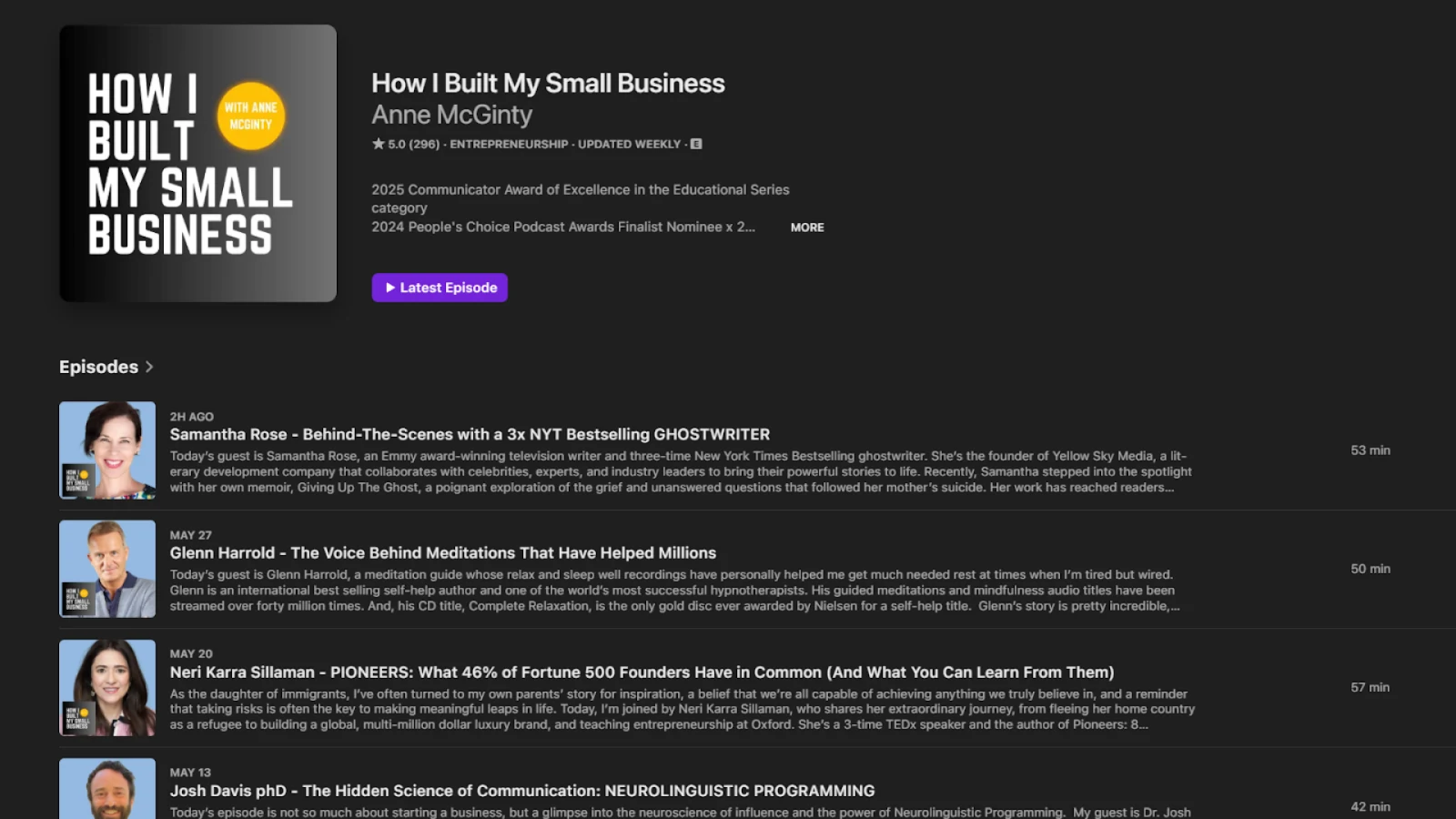
Start by reaching out to niche podcasts in your industry or area. Many are open to guest pitches, especially from small business owners with a story to tell.
What Not to Do in Link Building for Small Businesses
Link building is a powerful tool, but only when done right. If you’re a small business trying to grow your online presence, it’s tempting to look for quick solutions. The problem is, not all links are good, and some tactics can hurt more than help. Here are a few common mistakes you’ll want to steer clear of:
Buying spammy links
It might sound like a fast way to climb the rankings, but purchasing backlinks from low-quality or irrelevant sites is a risky move. Google’s algorithms are smart, and getting caught using shady link schemes could get your site hit with a ranking penalty that’s hard to bounce back from. Not worth it.
Over-automating your outreach
Tools can help you scale, but if you’re sending out hundreds of templated emails with no personalization, don’t be surprised to end up in the spam folder. People like to feel like they’re talking to a real person, not a bot. Taking the time to customize your message shows respect and gets better results.
Using irrelevant backlinks
Just because a site agrees to link to you doesn’t mean it’s the right fit. Backlinks should come from websites that are contextually relevant to your business or industry. Otherwise, search engines may get confused about what your business is actually about. And that can weaken your SEO rather than strengthen it.
Posting on non-relevant directories or platforms
Submitting your business to every directory under the sun might seem like a good idea, but if those sites aren’t reputable or related to your niche, they won’t help much and could even send the wrong signals to Google. Stick to platforms your audience uses and trusts.
Conclusion
Link building might seem complex at first, but for small businesses, it’s one of the most accessible and cost-effective ways to improve visibility, build credibility, and attract the right audience. By focusing on those strategies and professional link building services for small businesses, even with limited resources, you can compete in search results. With consistent effort and a focus on quality over quantity, link building can be a long-term growth engine for your online presence.