
Picture this: It's peak termite season, and your phones are ringing off the hook. You need to update your website's emergency contact information immediately because your main technician is handling the overflow. You contact your marketing agency, and they tell you it'll be "2-3 business days" for a simple text change. Meanwhile, your competitor down the street is already capturing those urgent calls.
This scenario plays out more often than you'd think in the pest control industry. What many business owners don't realize is that their marketing platform isn't a partnership—it's a rental agreement with hidden costs that can trap your business for years.
You built a successful pest control business by owning your equipment, your trucks, and your customer relationships. But do you actually own your most important marketing asset? If you're working with agencies using proprietary platforms, the answer might surprise you—and cost you thousands when you try to leave.
Industry analysis suggests that pest control companies using proprietary marketing platforms often face significantly higher switching costs than those using industry-standard systems. Some businesses report extended transition periods when changing providers, particularly when attempting to recover access to advertising accounts and digital assets. This reveals what many business owners learn too late—some marketing partnerships are structured more like rental agreements than true ownership.

Written By: Chad J. Treadway | October 07, 2025
Chad is a Partner and our Chief Smarketing Officer. He will help you survey your small business needs, educating you on your options before suggesting any solution. Chad is passionate about rural marketing in the United States and North Carolina. He also has several certifications through HubSpot to better assist you with your internet and inbound marketing.
Picture this: It's Monday morning, and your phone should be ringing with service calls, but instead, you're hearing crickets. Your competitor down the street just landed another big job while you're wondering why your perfectly good business seems invisible online. Sound familiar? Well, grab your tool belt because we're about to fix this SEO situation – and trust me, this renovation is going to be more satisfying than finally finding that level you lost three jobs ago.
The digital landscape for home service businesses has shifted dramatically in 2025, and if you're still playing by the old rules, you're essentially trying to fix a smart home system with a hammer. "96.55% of content gets no traffic from Google" (Source: Ahrefs) and "Google receives around 7 billion searches per day worldwide, which equates to around 81,000 times per second" (Source: Worldometers). The competition for visibility has never been fiercer.
But here's the good news: while your competition is still figuring out these new rules, you're about to get the inside scoop on what actually works now. These 20 strategies will help you dominate your local market, build lasting customer relationships, and grow your business in the AI-driven search era.
Written By: Chad J. Treadway | October 07, 2025
Chad is a Partner and our Chief Smarketing Officer. He will help you survey your small business needs, educating you on your options before suggesting any solution. Chad is passionate about rural marketing in the United States and North Carolina. He also has several certifications through HubSpot to better assist you with your internet and inbound marketing.

While the National Association of Independent Schools reports that 83% of private schools credit word-of-mouth as their most effective marketing channel, most are missing the strategic window when those conversations actually happen: the holiday season, when families have time to research and discuss their children's educational future. This reality makes developing a comprehensive private school marketing strategy more critical than ever.
Picture this: It's December 26th. Your campus is quiet, your staff is on well-deserved vacation, and your phone isn't ringing with tour requests. Meanwhile, across town, affluent families are gathered around their kitchen tables with laptops open, researching schools for next year's applications. They have time, mental bandwidth, and motivation to dive deep into their options. The question is: Will your school be part of that critical conversation?

Written By: Adam Bennett | October 06, 2025
Adam is the president and founder of Cube Creative Design and specializes in private school marketing. Since starting the business in 2005, he has created individual relationships with clients in Western North Carolina and across the United States. He places great value on the needs, expectations, and goals of the client.
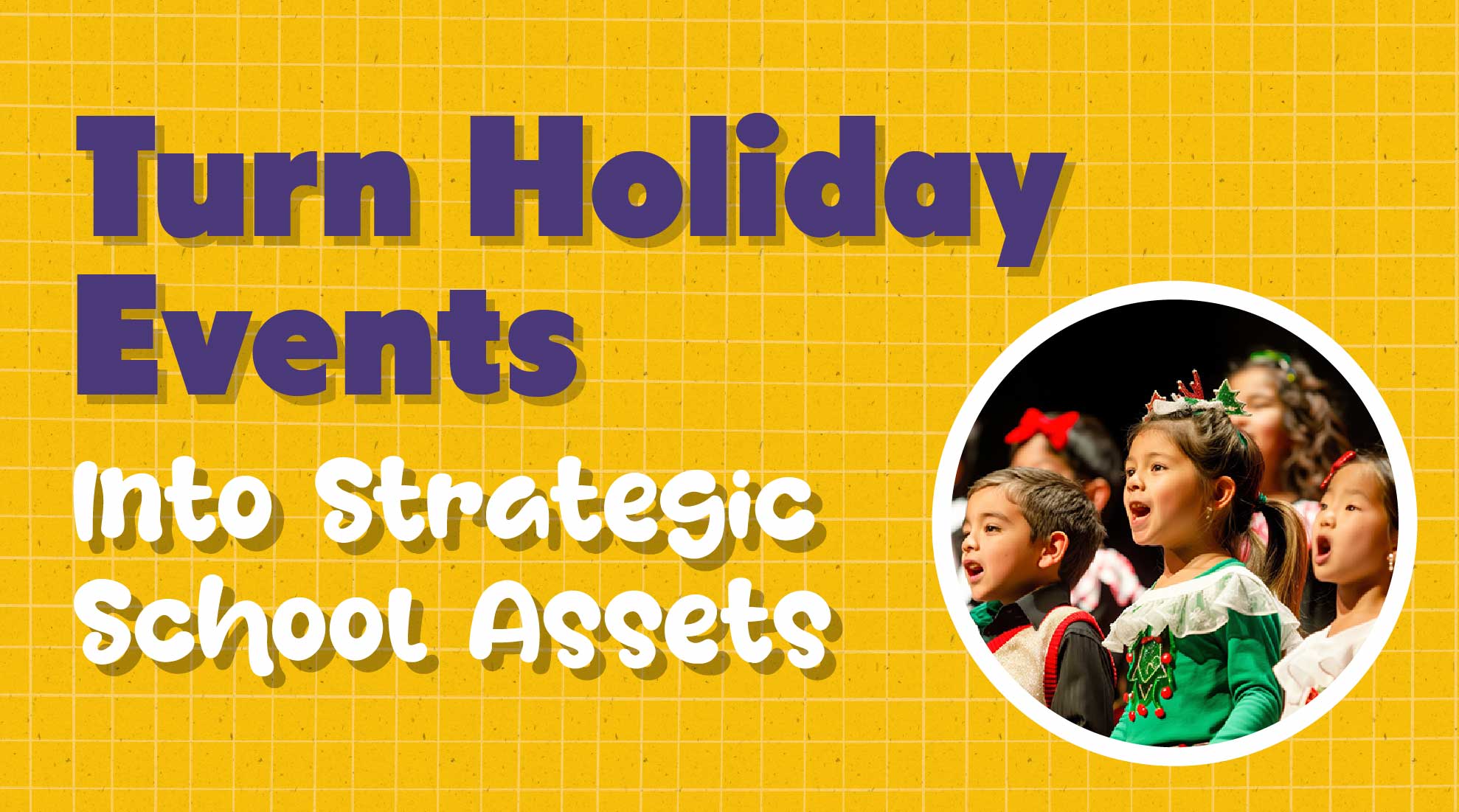
Ah, the holiday season at your private school. The cheerful chaos of Winter Concerts. The frantic last-minute preparations for the annual fundraising gala. The slightly-too-warm gymnasium full of parents recording their children's performances with shaky camera work that would make Blair Witch directors proud.
If you're like most private school leaders, you view these seasonal events as a mixed blessing—wonderful traditions, sure, but also logistical nightmares that consume staff time and energy.
But what if I told you that you're sitting on an untapped goldmine?
Most schools make the critical mistake of treating holiday events as mere operational tasks—nice-to-have social gatherings that keep tradition alive but drain resources. They plan these events in departmental silos (marketing does the Fall Festival, advancement handles the gala, and academics manages the concerts) without a unified strategy, missing the tremendous opportunity these moments present.
It's time for a paradigm shift: Holiday events aren't just calendar fillers—they're powerful strategic platforms that, when approached correctly, can drive enrollment, build your community, express your brand values, and fuel your fundraising efforts.
This post will show you exactly how to transform your holiday events from obligatory traditions into strategic assets that deliver measurable returns. No fancy consultants required—just a smarter approach to what you're already doing.
Written By: Adam Bennett | October 06, 2025
Adam is the president and founder of Cube Creative Design and specializes in private school marketing. Since starting the business in 2005, he has created individual relationships with clients in Western North Carolina and across the United States. He places great value on the needs, expectations, and goals of the client.