Healthcare facilities represent one of the highest-value commercial verticals in pest control — and one of the most intimidating. Most operators won't touch them. The compliance requirements alone scare them off: Joint Commission standards, hazardous materials documentation, staff training records, infection control protocols. The stakes feel astronomical. One cockroach spotted during a survey audit isn't just an operational problem; it's a reputational disaster that could affect accreditation status.
Here's the thing: that fear is exactly what gives established pest control companies a competitive advantage. Healthcare facilities are desperate for pest control partners who understand compliance as thoroughly as they understand pest removal. They need operators who can market themselves as compliance experts first and pest service providers second. For pest control companies positioned to handle complexity, healthcare represents a vertically-focused growth opportunity with significantly higher contract values and longer client retention than standard commercial pest control.
This post walks through why healthcare is different, what buyers actually want, and how to market your company to win these accounts.

Written By: Adam Bennett | March 24, 2026
Adam is the president and founder of Cube Creative Design and specializes in private school marketing. Since starting the business in 2005, he has created individual relationships with clients in Western North Carolina and across the United States. He places great value on the needs, expectations, and goals of the client.
A plumbing contractor in Charlotte spent six months building her local brand before she realized something: three out of four people calling to ask about her services mentioned they were interested in water-saving fixtures. She hadn't marketed that angle. They'd found it themselves.
That contractor discovered what market data has been quietly saying for a few years: homeowners aren't just willing to pay for eco-friendly services—they're actively seeking them out. The National Association of Home Builders reports that 9 out of 10 homebuyers prefer a home with energy-efficient features that lower energy costs. Research from Optimove's 2023 consumer survey found that 70% of consumers consider buying from environmentally responsible companies important when making purchase decisions.
If you're a home service business owner offering any kind of green option—energy-efficient HVAC installs, low-flow plumbing, water-conserving landscaping, integrated pest management, or organic lawn care—you've got a built-in marketing advantage. Homeowners want what you're offering. The question isn't whether to market eco-friendly practices. It's how to position them so potential customers find you instead of the contractor down the road.
This post covers why homeowners care about green services, what they're actively searching for, and how to make eco-friendly practices the centerpiece of your company's marketing strategy.
Why Homeowners Care About Eco-Friendly Home Services
Homeowners choose eco-friendly services for three reasons: lower utility bills, environmental responsibility, and long-term property value. Understanding these motivations shapes how you market your services.
Lower Energy Costs Drive the Decision
A homeowner upgrading from a 15-year-old HVAC system to an ENERGY STAR-rated unit can see significant annual savings on cooling and heating. That's not a philosophical choice; that's a spreadsheet decision. The same logic applies to water-saving plumbing fixtures. A family with low-flow toilets and showerheads can meaningfully cut water usage, reducing both water and sewer bills. Over five years, that's real money—the kind homeowners notice in their monthly statements.
Environmental Responsibility Matters More Than You Might Think
Research from Today's Homeowner shows that a significant portion of homeowners feel motivated by sustainability concerns when upgrading their homes. They're not making a sacrifice for the environment; they're making an investment that pays them back while reducing their carbon footprint. That's a win-win they feel good about.
Property Value Increases When Homes are Green
Data from an American Home Shield survey reveals that 77% of homeowners believe green homes will retain their value better than traditional homes, with green homes commanding an average purchase price of $359,000 compared to $240,000 for conventional homes.. A homeowner knows that eco-friendly upgrades improve both their immediate lifestyle and their long-term investment.
These aren't soft motivations. They're hard business reasons. That's why homeowners search for eco-friendly options in the first place.
What Homeowners Are Searching For Right Now
Search volume tells the real story. Look at what people are actually typing into Google, and you'll see your opportunity.
Energy-efficient HVAC Searches are Surging
Search interest for "energy-efficient HVAC systems" continues to climb. Homeowners aren't casually wondering about efficient air conditioning. They're actively looking to upgrade. They want to know about SEER2-rated systems, heat pumps, smart thermostats, and how much they'll save. If your HVAC company markets those solutions, you're answering a question people are already asking.
Water-saving Plumbing is Top of Mind
Search volume for "low-flow plumbing installation" continues to rise. Add searches for "water conservation" and "leak detection," and you're looking at a growing market of homeowners researching plumbing upgrades specifically for sustainability and savings. This is an easy win for plumbing contractors offering these services—you just need to make sure people can find you.
Sustainable Landscaping and Pest Control Queries are Increasing Too
Homeowners search for "organic lawn care," "integrated pest management," and "sustainable landscaping" with regularity. The data shows that people want to know about alternatives to traditional chemical treatments. If you offer these services, your ideal customers are literally searching for what you do.
The practical insight: your potential customers are actively searching for the exact services you offer. You're not creating demand. You're capturing demand that already exists. Your job is visibility.
How to Market Eco-Friendly Practices: Four Strategies
Strategy 1: Lead with the Economics, Not the Environmentalism
The mistake most home service companies make is leading with environmental benefits. They say things like "We care about the planet" or "Sustainable practices are our mission." That's nice, but it's not what sells. What sells is the financial benefit.
When you market energy-efficient HVAC systems, lead with the savings: "Our ENERGY STAR-rated systems reduce cooling costs by $400-$500 annually." That's real money. The environmental benefit is a bonus that comes with the financial advantage.
The same approach works for plumbing: "Low-flow fixtures reduce water usage by 30%, cutting your monthly water and sewer bills." And for landscaping: "Organic soil amendments improve drainage and reduce watering frequency, lowering your monthly water bills by 20-30%."
In your marketing messaging, put the dollar amount first, the environmental benefit second. Homeowners want to know how eco-friendly practices put money back in their pocket. Give them that information prominently, and they'll choose your company over one that only talks about "going green."
Strategy 2: Highlight Long-Term Savings in Every Quote and Proposal
Eco-friendly services cost more upfront. A high-efficiency HVAC system costs more than a standard unit. Low-flow fixtures cost more than regular fixtures. Integrated pest management takes more time than spray-and-pray chemical treatments.
Counter that price concern by showing the long-term savings in every customer interaction. In your proposal, include a simple table:
Standard HVAC System vs. Energy-Efficient HVAC System:
- Standard unit: $3,500 installed, $125/month average cooling cost
- Energy-efficient unit: $4,500 installed, $75/month average cooling cost
- 10-year savings: $6,000 (even after the $1,000 premium)
Or for plumbing:
Standard Fixtures vs. Low-Flow Fixtures:
- Standard toilets/showerheads: $800 installed, $50/month water/sewer cost
- Low-flow fixtures: $1,200 installed, $35/month water/sewer cost
- 5-year savings: $700 (even after the $400 upgrade premium)
When customers see that the eco-friendly option actually saves money over time, they choose it. The environmental benefit seals the deal, but the numbers make the sale. Include these comparisons in every quote you give.
Strategy 3: Optimize Your Google Business Profile and Content Marketing for Green Service Searches
Your Google Business Profile is where customers find you when they search "energy-efficient HVAC near me" or "low-flow plumbing installation." Optimize for these specific searches:
Update your service descriptions to include eco-friendly terminology. Instead of "Air conditioning repair," use "Energy-efficient HVAC repair and installation, including SEER2-rated units and smart thermostat setup." Instead of "Plumbing services," use "Water-conservation plumbing, including low-flow fixture installation and leak detection."
Add eco-friendly keywords to your Google Business Profile content. Create posts about seasonal maintenance tips for energy efficiency. Share before-and-after photos of eco-friendly installations with the customer savings highlighted. This gives your profile both visibility and credibility.
Create short blog posts or content marketing pieces that answer the questions homeowners are actually searching for. "How much can you save with energy-efficient HVAC?" "What are low-flow fixtures and how much water do they save?" "Does organic pest control work as well as chemical treatments?" These posts pull organic search traffic and position your company as the knowledgeable expert.
Strategy 4: Feature Customer Results and ROI in Your Marketing
Homeowners respond powerfully to proof. Show them real customers who saved real money.
If a customer saved $400/year with an energy-efficient HVAC system, get their permission to use that story. Create a brief case study: "Sarah upgraded her 2002 HVAC system to a SEER2-rated unit. Her cooling bills dropped from $120/month to $75/month. Over 10 years, she'll save $5,400."
If a plumbing customer saved on their water bill, quantify it. "The Johnson family installed low-flow fixtures throughout their home. Their water bill dropped from $85 to $60. At that rate, the $1,200 upgrade pays for itself in under two years."
Feature these results in your ads, on your website testimonials, and in any sales conversations. Prospective customers believe other customers' results more than they believe marketing claims. Show them the money, and they'll become your next client.
Why This Matters for Growing Service Companies
If you're Sarah, the marketing coordinator at a growing HVAC, plumbing, or landscaping company, eco-friendly practices represent an enormous opportunity. Your target customers—homeowners concerned about both their budgets and their impact—are actively looking for these services. You're not inventing a market. You're tapping into one that already exists.
The contractors who win are those who market eco-friendly practices not as an afterthought or a nice-to-have, but as a central business strategy. They lead with savings. They show long-term ROI. They optimize for the searches homeowners are already making. They prove the value with customer results.
That's not complicated. It's just a different angle from what most service companies emphasize. And it's an angle your customers are actively searching for.
Conclusion: Eco-Friendly Services Are a Competitive Advantage, Not a Trend
Homeowners are seeking eco-friendly home services—energy-efficient HVAC installs, water-conserving plumbing, sustainable landscaping, and integrated pest management. The demand is real, measurable, and growing. The search volume is there. The customer preference is documented.
The companies winning in this space aren't doing anything complicated. They're simply making eco-friendly practices visible in their marketing. They lead with financial benefits, not environmental ideology. They show long-term ROI in every proposal. They optimize their online visibility for the searches homeowners are making. They feature customer results and real savings.
If your company offers any kind of green service, you have a built-in marketing advantage. The only question is whether you're capturing the customers who are already looking for what you offer.
Ready to build your marketing strategy around eco-friendly practices? Contact me to discuss how to position your services for the homeowners who want them.
Frequently Asked Questions
How Do I Know If My Target Customers Care About Eco-Friendly Services?
Start with your own customer data. Review the last 20-30 customer conversations. How many mentioned energy efficiency, water conservation, or environmental concerns? If the number is more than a few, your customers care. You can also search Google Trends for eco-friendly keywords in your industry and service area. If search volume is climbing, demand exists. The simplest test: ask your existing customers in a follow-up survey why they chose your company. Include a question about eco-friendly practices. You'll get direct feedback about what matters to your audience.
Is Eco-Friendly Marketing More Expensive Than Traditional Marketing?
No. Marketing strategy is free; execution costs money. You're not paying more to emphasize eco-friendly practices—you're just changing what you emphasize. Your Google Business Profile optimization, blog content, and proposal templates cost the same regardless of whether they highlight green services or other benefits. The ROI is actually higher because you're marketing to a defined audience (people actively searching for these services) rather than broadcasting to everyone.
What If My Company Offers Both Eco-Friendly and Standard Services?
That's fine. Market the eco-friendly option to customers who search for it, and the standard option to those who prioritize cost or convenience. Your customer segments have different priorities. Sarah, the homeowner who installs energy-efficient HVAC, is willing to spend more upfront for long-term savings. Mike, with limited cash flow, might prefer the cheaper option despite higher operating costs. You can serve both by clearly positioning both options and letting customers choose based on their values and budgets.
How Long Does It Take to See Results from Eco-Friendly Marketing?
SEO and organic visibility take 3-6 months to show meaningful results. Google Business Profile optimization and local search improvements typically show results within 30-60 days. Customer word-of-mouth from eco-friendly installations compounds over time. If you implement all four strategies (economics-first messaging, ROI proposals, Google Business Profile optimization, and customer results), you should see increased call volume from eco-conscious homeowners within 60-90 days.
How Do I Track Whether Eco-Friendly Marketing Is Actually Working?
Ask new customers: "How did you find us, and why did you choose our company?" If eco-friendly practices come up in 3 out of 10 new customer conversations, you know your eco-friendly marketing is working. You can also tag phone numbers or web forms to track which keywords bring in calls, and segment your customer database by reason for choosing your company. Google Ads and local search advertising also provide direct attribution data showing which eco-friendly keywords drive phone calls and bookings.

Written By: Chad J. Treadway | March 24, 2026
Chad is a Partner and our Chief Smarketing Officer. He will help you survey your small business needs, educating you on your options before suggesting any solution. Chad is passionate about rural marketing in the United States and North Carolina. He also has several certifications through HubSpot to better assist you with your internet and inbound marketing.
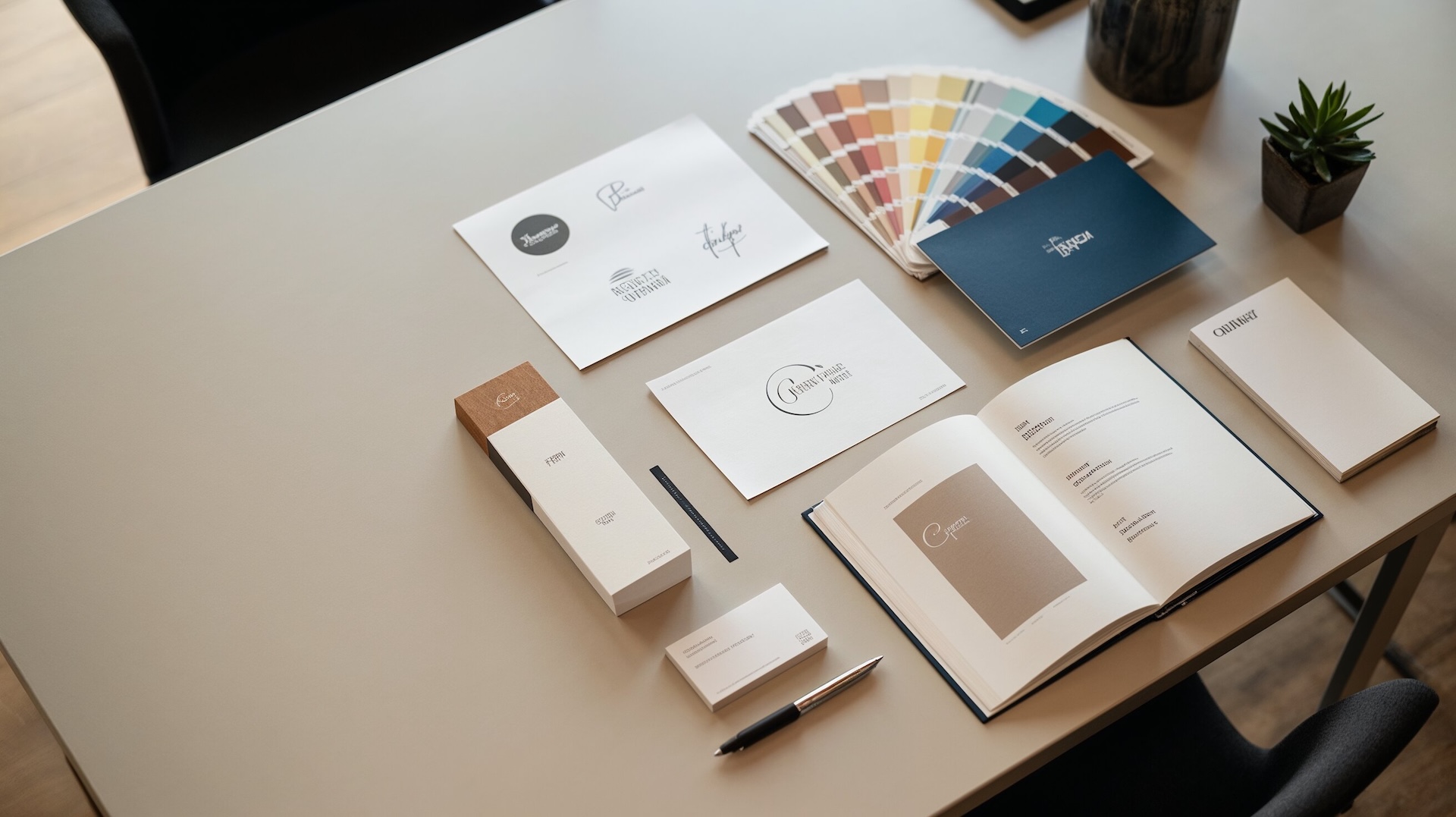
Your product might be excellent. Your offer might be clear. But if your brand does not communicate who you are and who you serve, growth stalls before it starts.
Founders often underestimate how much strategic branding contributes to business momentum. It is not about having a nice logo. It is about creating a consistent identity that earns trust, attracts aligned clients and gives a business room to scale.
The agencies and studios below work specifically with founders, consultants and small business owners who need more than visual polish. They need strategic clarity.

Not every technology investment delivers what it promises, and chatbots have a complicated history in that regard. Early deployments frustrated more visitors than they helped, and many businesses that tried chatbots in their first generation came away with the impression that the technology was not ready for real-world use. That impression is now significantly out of date.