 use Joomla\CMS\Uri\Uri;
With over 9 out of 10 consumers using search engines to find local pest control services, SEO visibility has become the #1 driver of customer acquisition and lead generation for providers in North Carolina and the surrounding states.
This comprehensive guide will provide you and your pest control company with the exact SEO strategies needed to tap into the power of organic searches and unlock their revenue potential.
According to Smart Insights, Claiming the top spot on page 1 of Google for industry-specific phrases can dramatically boost click-through rates by over 500%. They also calculated that 68.7% goes to the first three positions. Compare that to the top four ad positions, which only see an average click rate of 6%. SEMrush says that websites ranking organically for multiple keywords see conversion rates up to 5 times higher than sites buried on later search engine results pages.
Pest control companies like yours can rapidly multiply their qualified lead pipeline by learning SEO best practices, such as researching keywords, optimizing for technical site enhancements, and building local citations and partnerships.
Whether looking to outrank competitors targeting your area, efficiently convert visitors from natural search, or simply futureproof lead generation as search behavior evolves, this guide has you covered. Competing today means owning your digital real estate. Committing to continually honing organic visibility and website discoverability establishes brands as go-to authorities when customers search to make buying decisions.

Written By: Chad J. Treadway | February 20, 2024
Chad is our Chief Smarketing Officer. He will help you survey your small business needs, educating you on your options before suggesting any solution. Chad is passionate about rural marketing in the United States and North Carolina. He also has several certifications through HubSpot to better assist you with your internet and inbound marketing.
In the booming pest control industry, competition is fierce to gain new customers and grow market share. With an estimated market value of over $26.2 billion in the US alone, there is immense potential for companies that can effectively set themselves apart. (Source: Statista). However, more than simply offering quality services is required. Businesses must have a strategic marketing plan to attract new leads, convert them to customers, and foster brand loyalty.
With a solid marketing strategy, even reliable pest control providers can quickly stay caught up in the curve. As consumer behaviors and technologies rapidly evolve, companies that fail to adapt their outreach and messaging risk becoming invisible to modern customers. On the other hand, those that make marketing a priority are poised for substantial growth and profitability. Today's companies dominating market share have invested heavily in comprehensive digital marketing campaigns, innovative brand building, and customer-focused initiatives.
Developing an impactful marketing strategy may sound daunting to some pest control companies, especially small or medium-sized operations with limited staff and marketing budgets. However, any business can dramatically bolster its reach and conversion rates by following proven tips and best practices tailored to the industry. This guide will explore essential marketing approaches for pest control companies looking to expand their customer base and exceed their growth goals.
Written By: Chad J. Treadway | February 20, 2024
Chad is our Chief Smarketing Officer. He will help you survey your small business needs, educating you on your options before suggesting any solution. Chad is passionate about rural marketing in the United States and North Carolina. He also has several certifications through HubSpot to better assist you with your internet and inbound marketing.
Gaining new neighborhood customers is imperative for local pest control businesses to expand. Implementing targeted digital strategies makes it easier for nearby prospects to discover and connect with your services when needing solutions. This blog covers four key areas to focus your local marketing efforts for growth:
- Local SEO to improve visibility for searches like “pest control near me”
- Paid Google Ads to promote your services to high-intent searchers
- Review generation & referrals to build credibility through social proof
- Expanding service offerings to appeal to more customer needs
Whether starting out or looking to scale, this local digital marketing blueprint outlines proven tactics to connect with more customers in your community.
Written By: Chad J. Treadway | February 20, 2024
Chad is our Chief Smarketing Officer. He will help you survey your small business needs, educating you on your options before suggesting any solution. Chad is passionate about rural marketing in the United States and North Carolina. He also has several certifications through HubSpot to better assist you with your internet and inbound marketing.
The pest control industry is more competitive than ever before. With an onslaught of seasonal pests and disruptive new startups, how can your family-owned business stand out and grow aginest the larger companies? By taking control of your marketing ROI.
Calculating and analyzing marketing return on investment (ROI) is critical for transforming marketing into a data-driven growth engine for your pest control business. Quantifying the revenue driven by your marketing efforts compared to costs provides the hard data needed to optimize spending.
Specifically, calculating marketing ROI allows you to:
- Directly compare strategy effectiveness
- Identify the most profitable channels
- Uncover issues and opportunities
- Support strategic budgeting decisions
- Set performance benchmarks over time
With accurate ROI tracking, you transform marketing from an uncertain cost center into a strategic growth driver for your pest control business.

Written By: Adam Bennett | February 20, 2024
Adam is the president and founder of Cube Creative Design and specializes in private school marketing. Since starting the business in 2005, he has created individual relationships with clients in Western North Carolina and across the United States. He places great value on the needs, expectations, and goals of the client.
As pest control companies aim to grow their customer base in an increasingly digital era, paid search advertising has become vital for boosting online visibility. With consumers leaning more on the internet to find local services, a strategic paid search approach connects your business with people right when they search for offerings like yours.
For small pest control operations, paid search done effectively provides a measurable way to drive targeted website traffic, increase lead generation, and convey what makes your services unique. This allows you to reach prospective customers at the critical moments they show initial interest.
This post will guide you through best practices across the paid search landscape specific to the pest control industry. Expect clear explanations around core concepts, step-by-step guidance on technical setup, proven optimization tips, and customization methods.
We’ll also cover the latest trends in the pest control space, where increased demand presents significant growth opportunities for businesses embracing digital channels. With the proper foundation, paid search lets you capture interest and stand out.

Written By: Hannah Kilpatrick | February 20, 2024
Hannah Kilpatrick Cube Creative DesignHannah Kilpatrick graduated from Western Carolina University in 2021 with a Bachelor of Science in Communication with a Minor in Marketing and a Concentration in Public Relations. She has been around social media since its creation. (Meaning, she was in the first grade when Facebook became available to the general public.) As our very own professional Gen-Z, Hannah is a whiz when it comes to social media creation and paid advertising.
As a pest control company owner, manager, or marketing director, you know that maintaining a competitive edge means constantly coming up with new and creative ways to find and keep new customers. You need to get your company's name in front of the people and businesses that need your pest control services, then find a way to convert them into recurring customers.
Let's think about a real-world situation. Say you own Bug Off Pest Control, a small but mighty residential and commercial pest control provider in Charlotte. You may have the best treatments and most knowledgeable techs in the county, but how will homeowners and business owners find you when creepy crawlies start invading their properties? How will you stand out from competitors like your smaller competition or national chains like Terminix and Orkin? This is where strategic digital marketing comes in.
It's well established that when used strategically, the internet can rapidly grow a pest control company's customer base. While printed flyers, door hangers, and traditional advertising have their place for branding purposes, nothing compares with showing up high in the search engine results when a prospect asks, "How do I get rid of spiders?" or "What's the best roach control near me?"
You want your pest control company to dominate the first page of Google when potential customers in your service area start hunting for pest solutions online. The best approach to search engine domination is through search engine optimization (SEO), pay-per-click (PPC) advertising, local service ads (LSAs), or a combination of all three.
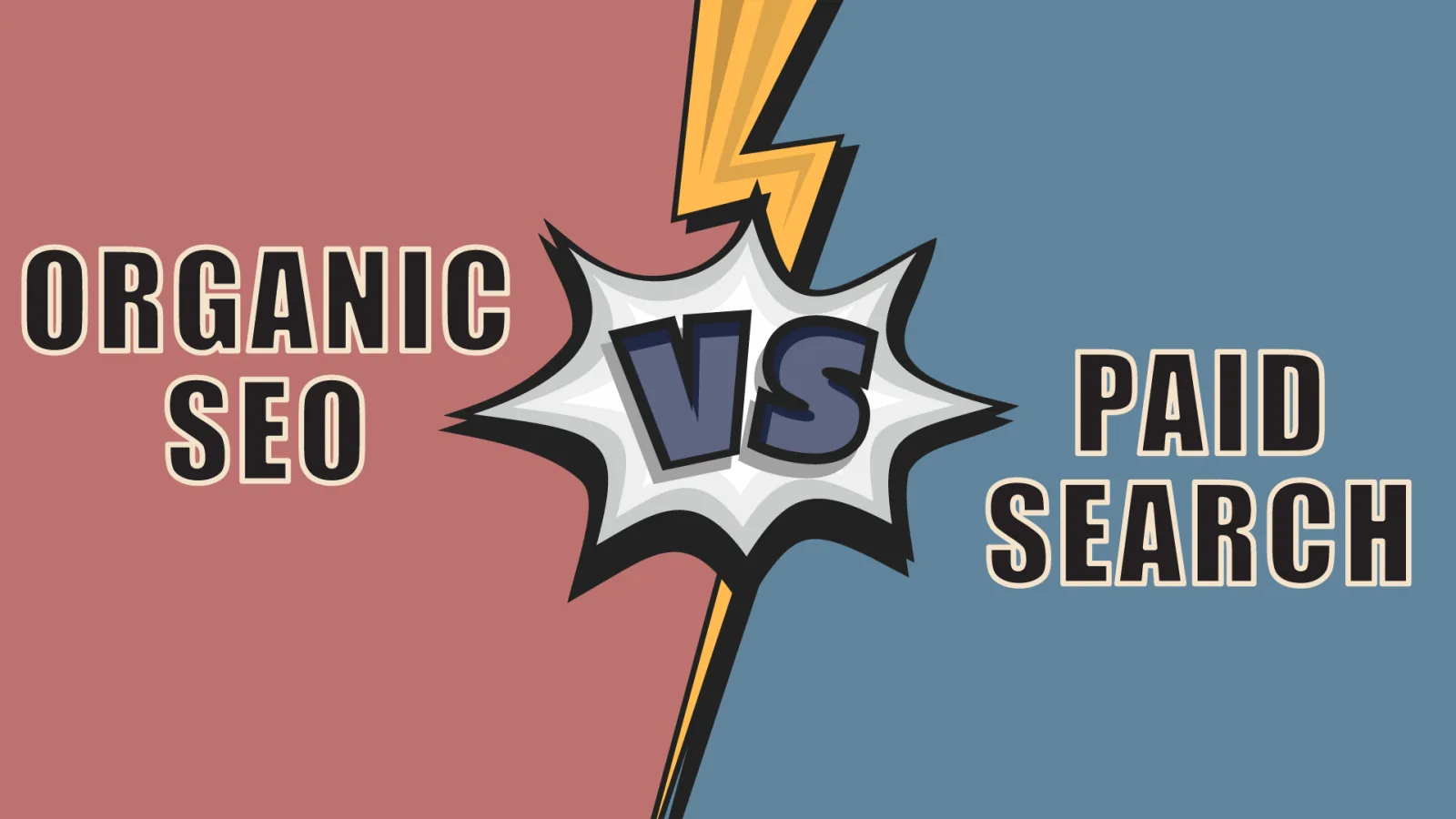
This post offers an in-depth analysis of SEO versus PPC to help growing pest control businesses in North Carolina and beyond improve lead generation and boost growth.
Written By: Hannah Kilpatrick | February 20, 2024
Hannah Kilpatrick Cube Creative DesignHannah Kilpatrick graduated from Western Carolina University in 2021 with a Bachelor of Science in Communication with a Minor in Marketing and a Concentration in Public Relations. She has been around social media since its creation. (Meaning, she was in the first grade when Facebook became available to the general public.) As our very own professional Gen-Z, Hannah is a whiz when it comes to social media creation and paid advertising.
Marketing is essential for the growth and sustainability of any pest control business. However, determining the ideal budget to allocate can be confusing. Typically, pest control companies should strive to invest, on average, around 8% of total revenue back into marketing their efforts. Of course, the exact dollar figure will vary depending on current revenue streams and growth goals.
This post examines recommended budgets for pest control marketing based on four business lifecycle stages and some key marketing activities to think about.
Written By: Chad J. Treadway | February 20, 2024
Chad is our Chief Smarketing Officer. He will help you survey your small business needs, educating you on your options before suggesting any solution. Chad is passionate about rural marketing in the United States and North Carolina. He also has several certifications through HubSpot to better assist you with your internet and inbound marketing.
Do you feel like your pest control company's traditional advertisements are falling on deaf ears? Do you cringe every time you add budget to run yet another promotional ad? Are you looking for proven marketing strategies that connect by providing real value instead? If so, you’re not alone.
Yet, in the back of your mind lingers, a frustrating stat: 86% of ads served are completely ignored by consumers.
Surveys reveal that today’s consumers ignore nearly 9 out of 10 display ads served to them daily. Display ads are often made up of images or videos that encourage the user to click through to a landing page and take some sort of action. You see them mostly on a website page's top, bottom, and sides. You also see them scattered throughout the content.
However, most consumers will do everything they can to avoid ads that poured your time and hard-earned money into crafting. Today’s consumers ignore your ads by using ad blockers, paying for ad-free digital media experiences, skipping ads, or ignoring them altogether.
So the million-dollar question is this: How do you get your brand to actually connect with potential customers?"
The answer is simple: use content marketing for your pest control business.
Content marketing presents a unique opportunity to engage potential customers when it matters most when they are actively looking for information along their buyer's journey.
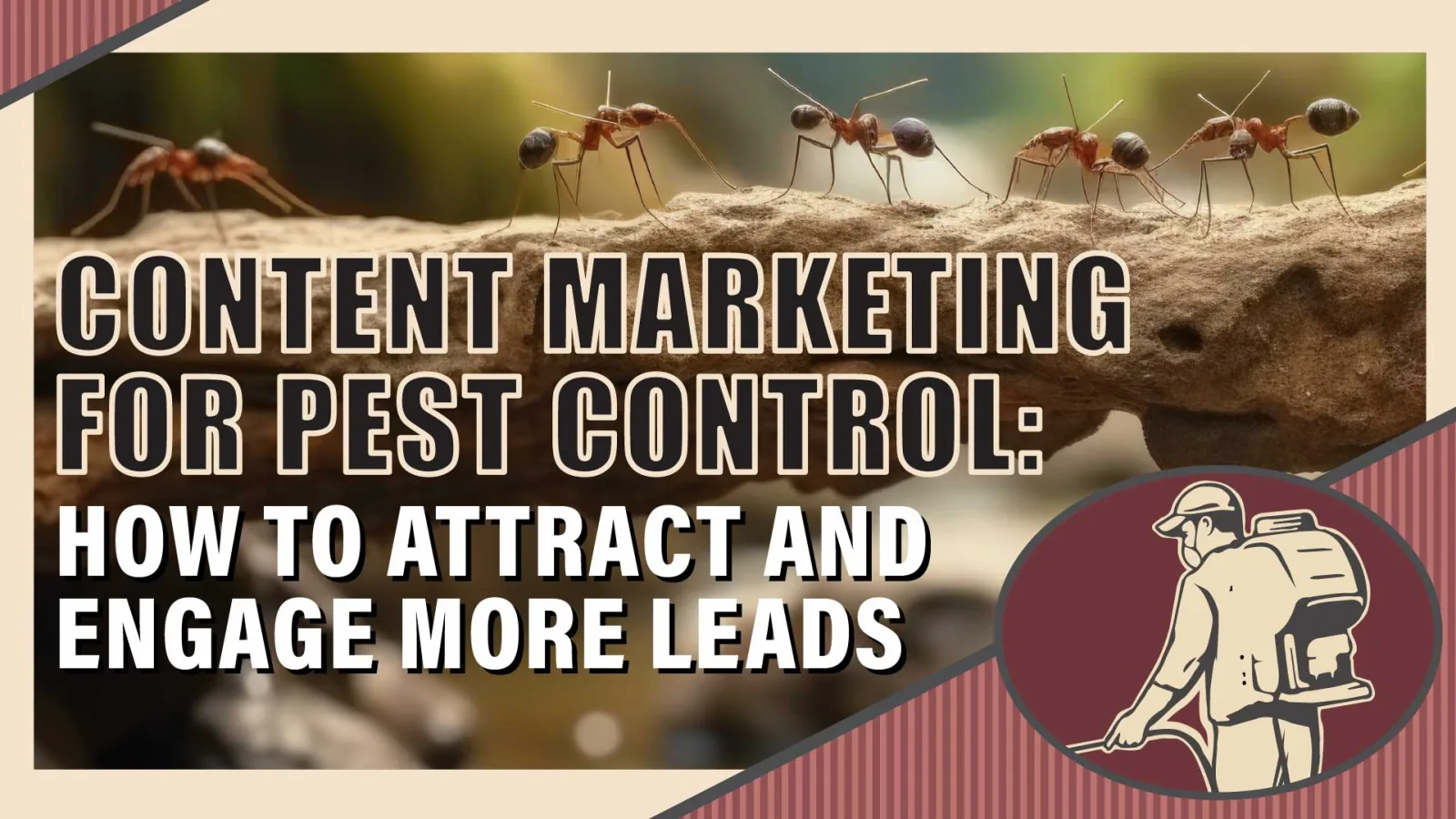
In this post, we'll explore how content marketing works to connect with consumers during their buyer's journey by providing helpful information instead of sales pitches. Through informed educational content marketing, you'll learn key strategies to establish credibility, increase loyalty, and guide pest control purchasing decisions.
Written By: Chad J. Treadway | February 20, 2024
Chad is our Chief Smarketing Officer. He will help you survey your small business needs, educating you on your options before suggesting any solution. Chad is passionate about rural marketing in the United States and North Carolina. He also has several certifications through HubSpot to better assist you with your internet and inbound marketing.
Having an optimized website is critical for pest control companies looking to attract more customers online. With the majority of people using search engines like Google to find local services, appearing at the top of the search results translates to more calls and sales.
According to a survey, 88% of potential customers use search engines when looking for pest control providers.
Unsurprisingly, a 2014 PCT Online survey found that nearly 8 out of 10 customers looking for pest control services use search engines like Google over other channels to find providers. If your company's website doesn't appear on the first page of the search engine results pages (SERPs) for relevant search queries, you will likely miss out on business.
The good news is that you can dramatically boost your rankings and website traffic with some key search engine optimization (SEO) strategies. By implementing on-page and off-page optimizations detailed in this article, you, too, can appear above competitors in search results for service requests in your area.
Written By: Chad J. Treadway | February 20, 2024
Chad is our Chief Smarketing Officer. He will help you survey your small business needs, educating you on your options before suggesting any solution. Chad is passionate about rural marketing in the United States and North Carolina. He also has several certifications through HubSpot to better assist you with your internet and inbound marketing.
Creating a search engine-optimized website is critical for any pest control company looking to grow their business online. Investing in professional SEO web design should be a top priority when building or updating your site.
Many pest control owners assume you can just build a basic site and then hire someone later to make it rank. Unfortunately, that’s not how it works. The right time to think about SEO is at the start of your website build. Top-ranking pest control sites have SEO principles built right into their foundation.
This guide takes an in-depth look at why SEO web design matters, the key principles to remember, and tips on which website optimization techniques can help improve results for your pest control business.
Written By: Chad J. Treadway | February 20, 2024
Chad is our Chief Smarketing Officer. He will help you survey your small business needs, educating you on your options before suggesting any solution. Chad is passionate about rural marketing in the United States and North Carolina. He also has several certifications through HubSpot to better assist you with your internet and inbound marketing.

When it comes to connecting with prospective families and building your school's reputation, a private school blog acts like a turbocharger for your website, boosting it forward and giving your online presence the extra momentum in an extremely competitive landscape. Blogging can accelerate your school's online growth by increasing visibility, adding value for families with questions, establishing your expertise, and fostering meaningful connections with your target parents. This guide covers the definition and benefits of blogging, how it can attract and convert prospective families, and tips for creating a successful school blog.
Written By: Adam Bennett | February 19, 2024
Adam is the president and founder of Cube Creative Design and specializes in private school marketing. Since starting the business in 2005, he has created individual relationships with clients in Western North Carolina and across the United States. He places great value on the needs, expectations, and goals of the client.

When it comes to having digital presence and online sales in today’s landscape, business listings top the list of necessities. Having an online summary of your business answering the 4 important questions of Name, Address, Phone Number, and Website, often abbreviated as NAP+W is essential to bring your business forward and have a digital presence that resonates with the digital age in which we live.
A good business listing has the potential to either make or break your business. So when it comes to managing your business listings, it is smart to steer clear of the 5 most common mistakes that happen while managing business listings.