Let's be honest; most homeowners don't think about you until something breaks. Their basement is flooding at 2 AM, their AC dies during a heatwave, or that weird smell in the kitchen finally becomes unbearable. By then, they're frantically searching for anyone who can help them right now.
How do you make sure your home service business is the one they call first? The secret lies not in flashy ads or discount coupons, but in understanding what makes your customers tick.
The human mind is predictable in its unpredictability. While psychologists have spent decades mapping its quirks and tendencies, smart home service business owners can leverage these same insights to connect with customers before emergencies strike.
From plumbing to roofing, HVAC to general contracting, these four psychological principles will give you the edge your business needs in a crowded marketplace. No manipulative tactics or sleazy sales pitches required; just smart marketing that speaks directly to how homeowners actually make decisions.
Principle 1: Anchoring - Build Trust Through Social Proof
The first time a potential customer encounters your business, they're making split-second judgments that will anchor all future perceptions. These initial impressions stick like superglue to the psyche.
What Is Anchoring and Why Should You Care?
Anchoring works because humans are fundamentally pack animals with smartphones. We look to others for signals about what's trustworthy, valuable, and worth our time.
When a potential customer sees that you have 47 five-star reviews while your competitor has three lukewarm ones, you've just anchored their perception of quality, without saying a word about your actual services.
This psychological principle has been demonstrated in fascinating research. In one study examining the power of initial impressions, researchers at EEDAR and SMU tested the anchoring effect with a video game. They divided participants into three groups before playing the game:
- Group 1 was told the game had a 91% approval rating
- Group 2 was told it had a 61% approval rating
- The control group received no rating information
After playing the identical game, the results were striking:
- Group 1 rated the game 85% on average
- Group 2 rated it only 71%
- The control group landed in the middle at 79%
(Chart Source: DualShockers)
The same principle applies to your home service business. When potential customers see high ratings before engaging with your services, they're psychologically primed to have a more positive experience.
According to Data published from the BrightLocal Local Consumer Review Survey, the vast majority of consumers read online reviews for local businesses, with only 4% saying they "never" read online business reviews. The research shows that review reading continues to be a critical part of consumer decision-making, especially for home service providers.
Anchoring in Action for Home Services
Here's how to make anchoring work for your business:
- Prioritize early reviews from satisfied customers. The first 5-10 reviews matter more than the next 50. Ask your happiest customers personally and make the review process ridiculously simple with your Google Business Profile..
- Feature specific numbers. Don't just say "fast service"; specify "most jobs completed within 24 hours" or "average response time: 37 minutes." Concrete numbers create stronger anchors than vague promises.
- Showcase your experience. "Serving Asheville since 2003" or "Over 4,500 homes serviced" creates a numerical anchor that suggests reliability and longevity.
- Use comparison anchors strategically. When presenting service options, include a premium package even if most customers choose the middle option. The high-end offering creates an anchor that makes your standard service seem like a better value.
The key is consistency. Your anchors should appear across all customer touchpoints; website, trucks, uniforms, and especially how your team communicates with customers.
Principle 2: Fear & Relief - Address Homeowner Pain Points
Nothing motivates action quite like fear, especially when it comes to someone's biggest investment: their home.
The Psychology of Homeowner Anxiety
Homeowners live in constant, low-grade fear of what might go wrong next. Leaky roofs, faulty wiring, flooded basements, mold infestations; the list of potential disasters keeps them up at night.
Understanding why fear works so effectively requires diving into basic psychological theory. Sigmund Freud famously described the human psyche as divided into three parts:
- The Id: Our primitive, instinctual self that responds to basic urges and fears. This is the part of homeowners who panic at the first sign of a water leak or electrical problem.
- The Ego: The rational mediator that helps us function in daily life. This is the part that knows they should call a professional rather than attempting DIY repairs.
- The Superego: The moral conscience that guides decisions. This might be the part that wants to choose an ethical, local business rather than a faceless corporation.
When marketing home services, you're often appealing directly to the Id, that instinctual part concerned with safety and security. By acknowledging these fears and offering solutions, you're helping customers move from the panicked Id state to the rational Ego state, where they can make good decisions.
According to HomeServe USA, 70% of homeowners experienced at least one home repair emergency in 2023, with home heating/cooling emergencies topping the list at 28%, followed by water heater troubles (19%), blocked toilets (19%), and leaking pipes (18%). The same research revealed that one in seven homeowners (14%) had no funds set aside for emergency repairs.
As a home service provider, you're not just fixing problems; you're selling peace of mind. But there's a fine line between addressing legitimate concerns and exploiting fears.
Ethical Fear-Relief Marketing for Home Services
- Identify specific pain points. Different services address different fears. HVAC companies might focus on health concerns from poor air quality, while plumbers might emphasize water damage prevention.
- Present the problem clearly, then immediately offer the solution. "Water heater failures cause an average of $4,444 in damage per incident. Our preventative maintenance plan helps identify issues before they become emergencies."
- Use the fear-relief sequence. First, acknowledge the legitimate concern (fear), then immediately provide the path to safety (relief). Never leave customers hanging in the fear stage.
- Focus on protection, not paranoia. Frame your services as sensible protection, not panic-inducing necessities. "Regular maintenance isn't just about avoiding disasters; it's about maximizing the lifespan of your home's systems."
The most effective fear-relief marketing educates customers about risks they may not have considered, then empowers them to take control through your services.
Principle 3: Make It Easy - Simplify the Customer Journey
We live in the age of Amazon Prime and instant gratification. The easier you make it for customers to work with you, the more likely they are to choose your services and pay a premium for that convenience.
The Psychology of Convenience
The human brain is wired to conserve energy. Given the choice between a complex, multi-step process and a simple one-click solution, we'll choose the latter every time.
Research published in Harvard Business Review found that companies focusing on reducing customer effort deliver significantly better customer experiences and create more loyal customers.
Convenience Strategies for Home Service Businesses
- Streamline scheduling. Offer online booking with real-time availability. Bonus points if customers can see their technician's photo and arrival time.
- Minimize decision fatigue. Most homeowners don't know the difference between the 14 types of water heaters. Create simple good-better-best packages with clear distinctions.
- Remove communication barriers. Send confirmation texts, arrival alerts, and follow-ups automatically. Make it easy to reach a real human when needed.
- Simplify payment options. Offer contactless payment, financing options, and subscription services for recurring maintenance.
- Use plain language. Explain technical issues using terms homeowners understand. Create visual aids that illustrate problems and solutions clearly.
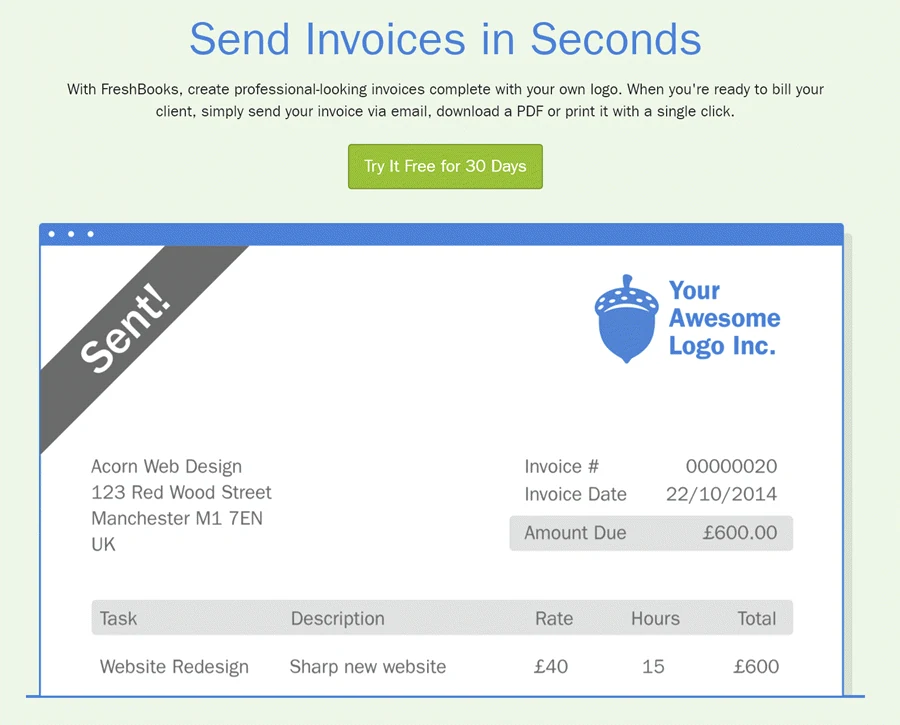
Looking at how leading service companies implement this principle can be instructive. Take FreshBooks' approach with their "Send invoices in seconds" message; a perfect example of positioning complex tasks as simple and stress-free. For home service businesses, this might translate to messaging like "Book your repair in 30 seconds flat" or "One call solves it all."
(Image Source: Cornerstone Content)
The goal isn't just to make the transaction easy; it's to make the entire relationship effortless. When a customer thinks, "That was surprisingly painless," you've won a customer for life.
Principle 4: Emotional Storytelling - Connect With Your Community
At first glance, home services might not seem like the most emotionally charged industry. You're fixing pipes and installing HVAC systems, not selling dream vacations or engagement rings.
But look closer. You're preserving family homes. Creating comfortable spaces where memories are made. Protecting health and safety. Saving treasured possessions from water damage.
These aren't just repairs; they're rescues.
The Psychology of Emotional Connection
Humans are storytelling creatures. We process information more effectively and remember it longer when it's delivered in narrative form rather than as facts and figures.
Research from Stanford University's Women's Leadership Innovation Lab claims that "stories are remembered up to 22 times more than facts alone." This powerful impact of narrative is supported by research cited in the Anecdote blog, where students who constructed stories remembered six to seven times as many words compared to those trying to memorize a random word list.
Consider the emotional impact of Wrigley's famous "Origami" commercial, where a father creates paper cranes from gum wrappers for his daughter throughout her childhood. The advertisement has nothing to do with the product's features but creates a powerful emotional connection through storytelling. By the end, viewers associate the brand with family bonds and meaningful moments, not just chewing gum.
 (Image Screenshot Source: YouTube)
Home service businesses can create similar emotional connections. A restored family home after storm damage isn't just about construction; it's about preserving the place where children will grow up and make memories.
Storytelling Strategies for Home Service Businesses
- Document transformations. Before-and-after content isn't just for weight loss programs. Show the flooded basement that became a dry, functional space again. The freezing home became cozy with a new HVAC system.
- Highlight the emotional impact. "The Johnson family can now sleep through rainstorms without worrying about basement flooding."
- Celebrate team members. Turn technicians into heroes through stories of challenging problems they've solved or extra steps they've taken to help customers.
- Become a community character. Participate in local events and charitable causes that create emotional connections beyond your services.
- Use customer-centered narratives. Make the homeowner the hero of the story, with your business playing the role of the guide who helps them overcome challenges.
The most effective home service marketing doesn't just tell people what you do; it shows them how you make their lives better through real stories with emotional resonance.
Bringing It All Together: Your Psychological Marketing Playbook
These four principles- anchoring, fear-relief, simplification, and storytelling–work best when integrated into a cohesive marketing strategy.
Let's see how they might work together in a typical customer journey:
- A homeowner sees your Google Business profile with 50+ positive reviews (anchoring)
- They visit your website, which addresses common HVAC problems and their solutions (fear-relief)
- They book an appointment with three clicks through your online scheduler (simplification)
- After service, they receive an email sharing how their improved air quality will benefit their child's asthma (storytelling)
Each touchpoint reinforces the others, creating a psychological environment where choosing your business feels like the natural, comfortable decision.
Implementation of Different Home Services
While these principles work across all home service sectors, the emphasis might shift:
- Emergency services (plumbing, electrical) should emphasize fear-relief and simplification, making it easy to get help fast when crises strike.
- Maintenance services (HVAC, lawn care) benefit most from anchoring and storytelling; building ongoing relationships through trust and emotional connection.
- Renovation services excel with storytelling and simplification, making complex projects feel manageable and meaningful.
Conclusion
The most successful home service businesses don't just fix things; they understand people. By applying these four psychological principles consistently across your marketing efforts, you'll connect with homeowners on a deeper level than your competition.
Remember: You're not just marketing services. You're marketing peace of mind, protection for valuable investments, and solutions to problems that keep people up at night.
That's far more valuable than a discount coupon or a flashy logo.
Ready to transform your home service marketing with these psychological principles? Contact me for a personalized strategy session.
Frequently Asked Questions
How Can Small Home Service Businesses Compete With Larger Companies Using These Principles?
Small businesses actually have the advantage when implementing psychological marketing principles. You can be more nimble, share more authentic local stories, and create more personalized experiences. Focus on your unique strengths; perhaps your deep community roots or specialist expertise, and amplify these through consistent psychological marketing. Remember that many homeowners prefer working with local businesses over national chains, so emphasize your local presence and personal touch in all marketing materials.
Which Psychological Principle Is Most Effective for Emergency Home Services?
For emergency services like urgent plumbing or electrical repairs, the simplification principle is your most powerful tool. When homeowners face a crisis, they don't want to compare 15 options or fill out complicated forms; they want immediate help with minimal friction. Create a ridiculously simple emergency response process, then market this convenience relentlessly: "One call. Fast response. Problem solved." The fear-relief principle works well as a secondary approach, especially in preventative maintenance marketing that helps avoid future emergencies.
How Often Should I Update My Marketing Materials To Incorporate These Principles?
Rather than complete overhauls, implement a quarterly review system to gradually enhance your marketing materials. Start with high-impact, customer-facing elements like your website homepage and Google Business profile, then work through other touchpoints systematically. Each quarter, focus on strengthening one psychological principle across all channels. This approach creates consistency while preventing marketing fatigue for your team. The psychological foundations rarely change, but the specific applications and examples should be refreshed as you gather more customer stories and data.
What's the Best Way To Measure the Effectiveness of These Psychological Marketing Techniques?
Track both quantitative metrics (conversion rates, appointment bookings, average ticket value) and qualitative feedback (customer comments about why they chose your company). Create simple A/B tests when possible; try different anchoring statements in similar ads, for example. For service businesses, the most telling metric is often the "source of business" question: "How did you hear about us?" When customers increasingly mention "I saw your great reviews" or "My neighbor recommended you," your psychological marketing is working through social proof and community storytelling.
How Can I Ethically Use Fear-Based Marketing Without Being Manipulative?
The key difference between ethical fear-appeal marketing and manipulation is education versus exaggeration. Ethical approaches present factual information about legitimate risks, immediately followed by proportionate solutions. For example, sharing statistics about water damage from leaking pipes is educational; claiming "your house could be destroyed any minute" is manipulative. Always provide context for risks, acknowledge that not all situations are emergencies, and offer multiple solution options, including preventative measures. The goal is informed customers making confident decisions, not panicked people making impulsive purchases.