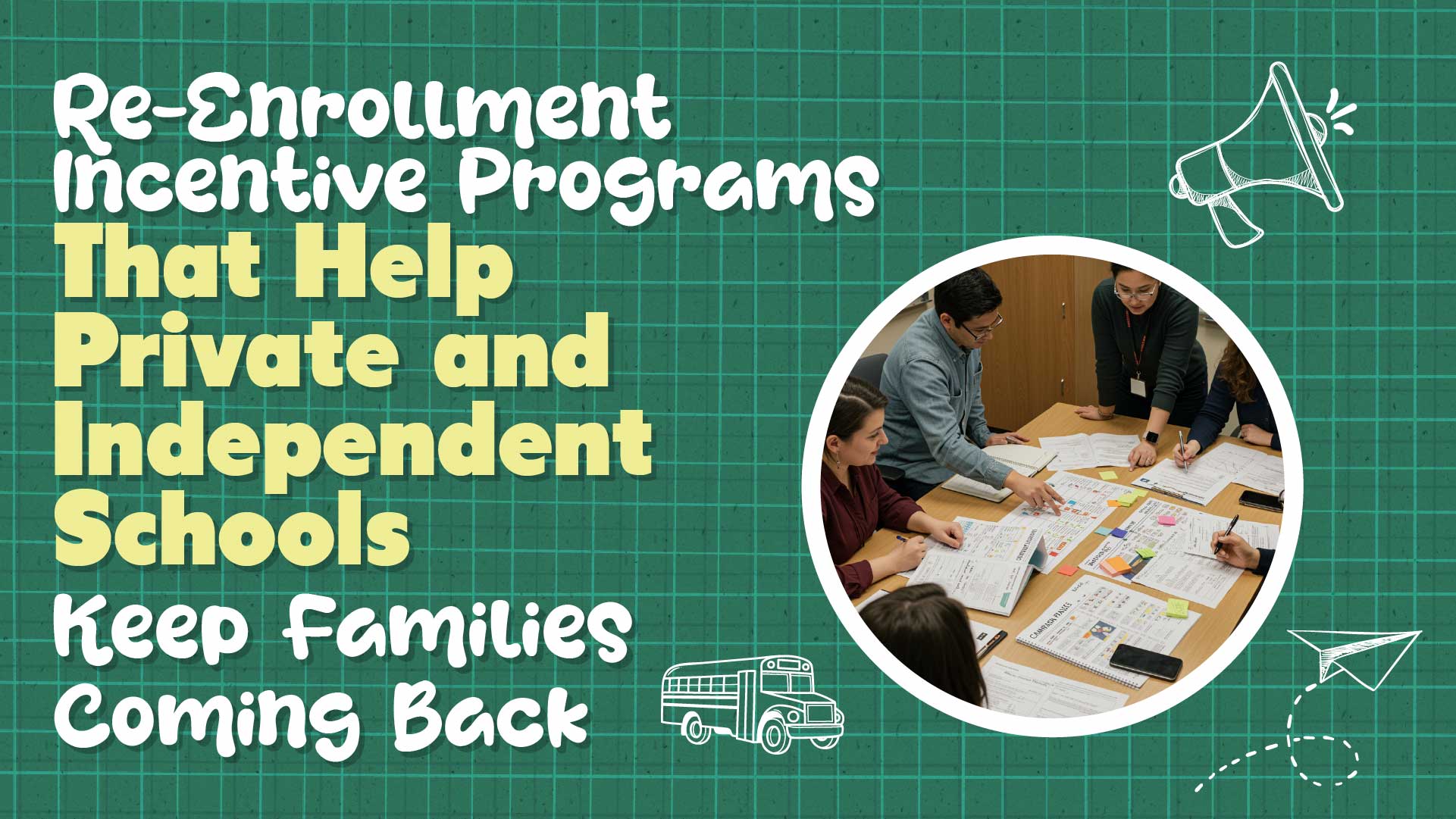
Here is a question that should keep every admissions director up at night: if 60% of U.S. parents searched for a new or different school for their child last year, how many of your current families are quietly shopping around right now? That number comes from the National School Choice Awareness Foundation's January 2025 survey, and it should reframe how private school leaders think about re-enrollment marketing.
Most schools treat re-enrollment like a formality. Contracts go out in March. Families sign by early April. Done. But the schools that consistently retain 92% or more of their families are not relying on a single mailing and a deadline. They are running year-round re-enrollment campaigns that build loyalty, address concerns early, and make the decision to stay feel like the obvious choice.
This post maps out a re-enrollment campaign strategy that starts months before the contract hits the kitchen table, segments your messaging by family type, and turns the re-enrollment process from an administrative checkbox into a retention tool.

Written By: Adam Bennett | April 10, 2026
Adam is the president and founder of Cube Creative Design and specializes in private school marketing. Since starting the business in 2005, he has created individual relationships with clients in Western North Carolina and across the United States. He places great value on the needs, expectations, and goals of the client.

Your school tracks enrollment. You know how many students you have, how many seats are open, and roughly how many families applied last spring. But here's the question most independent schools aren't asking: do you know why the families who left actually left? And more importantly, could you have seen it coming?
For too many private and independent schools, attrition is treated as a line item on a spreadsheet rather than a diagnostic opportunity. A family withdraws, the admissions team scrambles to fill the seat, and the cycle starts again in September. The problem isn't that schools lose students. Every school does. The problem is that most schools aren't using the data they already have to understand the patterns behind those losses and intervene before the next family walks out the door.
Student retention data is the difference between reacting to attrition and preventing it. And in a sector where recruiting a new family costs significantly more than keeping an existing one, the schools that figure this out first are the ones that stay financially healthy.
Written By: Adam Bennett | April 08, 2026
Adam is the president and founder of Cube Creative Design and specializes in private school marketing. Since starting the business in 2005, he has created individual relationships with clients in Western North Carolina and across the United States. He places great value on the needs, expectations, and goals of the client.
Picture this: it is the last week of April, and your inbox is overflowing with field trip permission slips, end-of-year concert logistics, and a dozen things that all feel urgent. In the middle of that chaos, you fire off a quick email to parents about summer dates and call it done. Sound familiar? For many private school administrators, the final weeks of school become a communication sprint focused entirely on logistics, and the messages that actually matter for retention get lost in the shuffle.
Here is the thing about end-of-year parent communication: it is not just about making sure everyone knows when the last day of school is. Research from Harvard's Graduate School of Education, conducted by Kraft and Dougherty, found that frequent, intentional teacher-family communication increased the odds of homework completion by 42% and reduced instances of off-task behavior by 25%. If regular communication during the school year has that kind of impact, imagine what happens when it stops cold on the last day of school. The silence between May and August is when schools lose families they did not even know were on the fence.

Written By: Chad J. Treadway | April 06, 2026
Chad is a Partner and our Chief Smarketing Officer. He will help you survey your small business needs, educating you on your options before suggesting any solution. Chad is passionate about rural marketing in the United States and North Carolina. He also has several certifications through HubSpot to better assist you with your internet and inbound marketing.
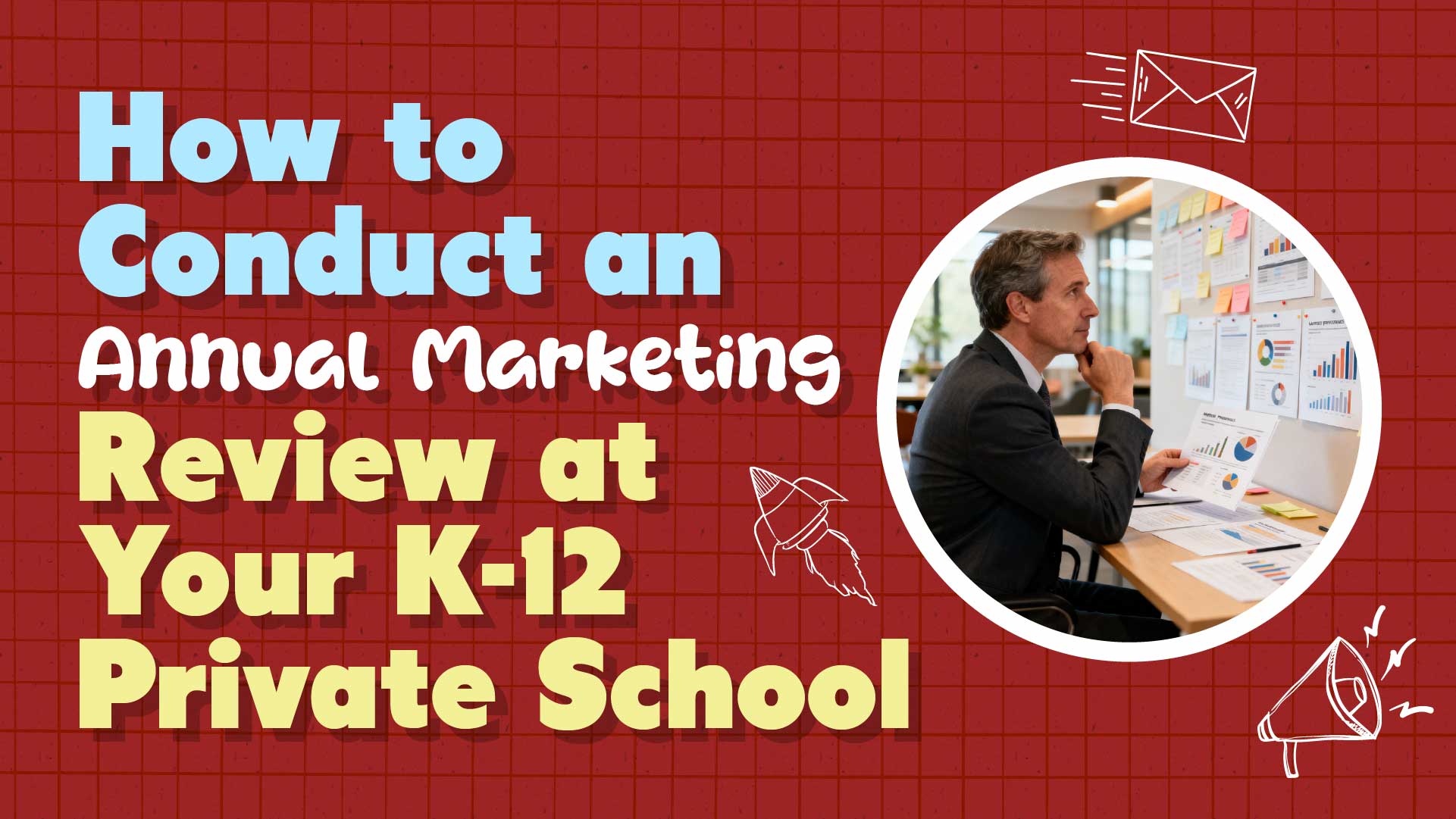
You're in April, and suddenly you're facing board questions about next year's marketing budget. Did your website drive enrollments? Which channels worked? What should you double down on, and what was just noise?
If you're like most private school administrators, you probably didn't track these answers in real time. You've got enrollment numbers, sure. But which marketing efforts actually moved the needle? That's the difference between a marketing report (here's what we did) and a marketing review (here's what worked and why).
This post walks you through how to conduct a meaningful annual marketing review—the kind that turns last year's data into next year's strategy.
Written By: Adam Bennett | April 05, 2026
Adam is the president and founder of Cube Creative Design and specializes in private school marketing. Since starting the business in 2005, he has created individual relationships with clients in Western North Carolina and across the United States. He places great value on the needs, expectations, and goals of the client.