Your website gets a hundred visits this month, but only three turn into tour requests. Your open house had great attendance, but half the families don't convert. Your admissions team is stretched thin trying to follow up with every inquiry.
If you're running a faith-based K-8 school with 165 students and a marketing budget that barely covers basics, you've probably wondered whether video marketing is even realistic for your school. The answer might surprise you: it's not just realistic—it's essential.
Emily Richardson, principal of a mid-sized Christian K-8 school, faced exactly this challenge last year. Her school was good, enrollment was steady, but acceptance rates felt flat. She had a $36,000 annual marketing budget and a team of exactly one part-time admissions coordinator. Video felt like a luxury they couldn't afford.
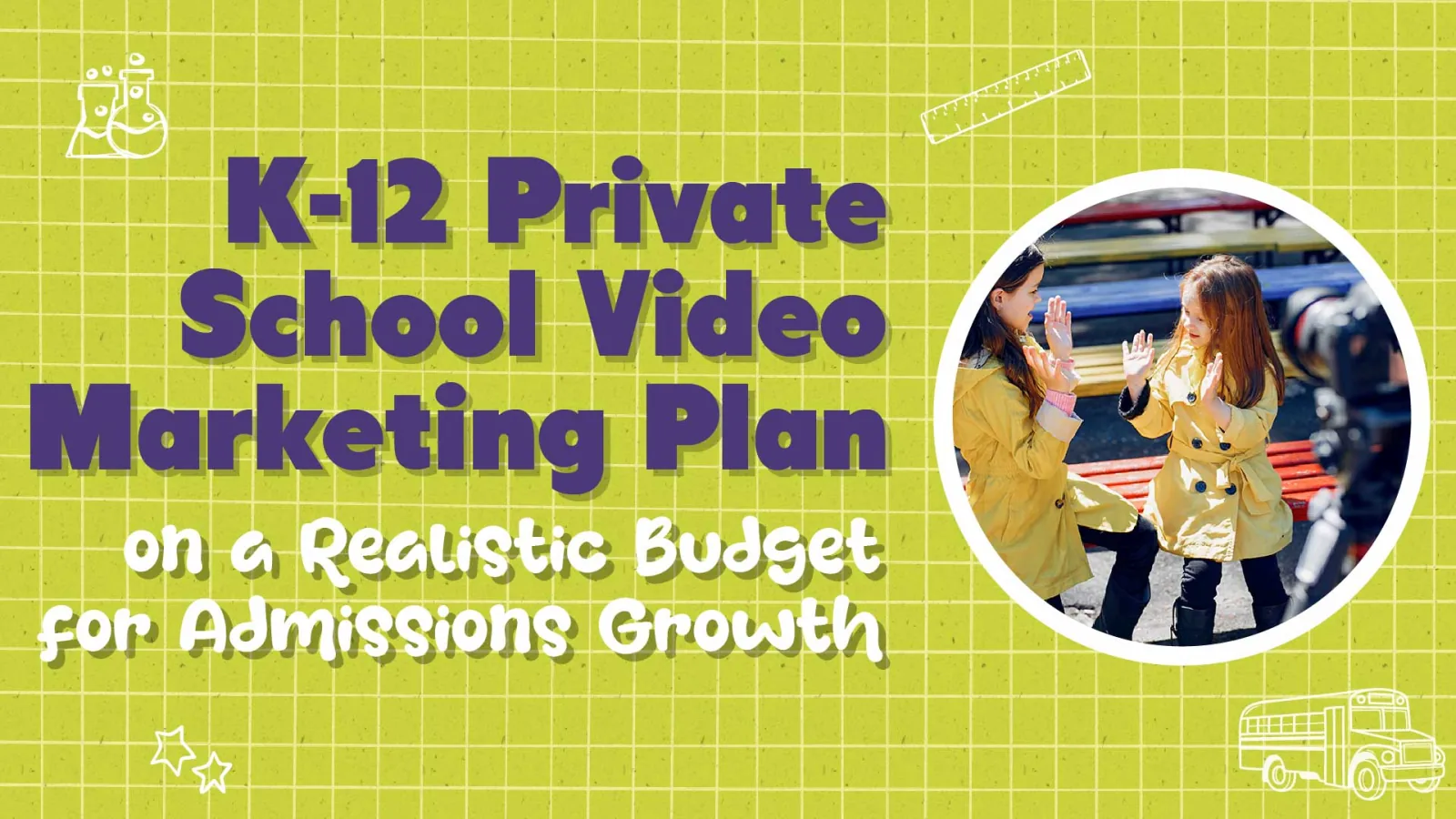
Here's the thing: private school marketing success doesn't require expensive production companies or cinematic equipment anymore. Modern families make school decisions based on emotional connection and authentic representation—something a five-minute smartphone video can deliver better than a thousand-dollar ad campaign.
In this guide, we'll show you why video matters for enrollment, what types of videos actually convert families, how to produce them without breaking the bank, and exactly how to deploy them across platforms for maximum impact. By the end, you'll have a realistic video strategy you can implement this month.
Why Does Video Marketing Matter for School Enrollment?
Video content is no longer optional in school marketing—it's become the primary decision-making tool for prospective families. WordStream found that marketers who incorporate video into their strategies achieve 49% faster revenue growth than those who don't. Wyzowl research confirms the trend, with 82% of video marketers reporting positive returns on their investment in 2026.
Consider what happens when a family starts researching schools. They visit your website. If they see a static photo of the building, some text about academics, and a "Request a Tour" button, they're experiencing a school secondhand. If they watch a two-minute video of actual students discussing why they love your school, or a principal walking them through the campus, they've already formed an emotional connection before setting foot on campus.
According to the Pew Research Center, 73% of teenagers use YouTube daily. Their parents aren't far behind—adults aged 35-54 are increasingly video-first consumers. This is your enrollment audience, and they're already conditioned to research decisions via video.
The most compelling indicator for school enrollment: prospective students increasingly rely on video throughout their decision-making process. Findings published by Sixth City Marketing indicate that 84% of college students acknowledge video as a powerful influence in their decision-making. While that research focuses on higher education, independent school families apply the same logic when evaluating K-12 options.
What Types of School Videos Actually Drive Enrollment?
Not all school videos are created equal. Families aren't interested in polished corporate videos or awkward staff testimonials. They want authenticity. Here are the five types of videos that consistently drive enrollment inquiries:
Virtual Campus Tours
A full campus tour should be 4-6 minutes and shot with a smartphone or basic camera. Start at the front gate, walk through the building, stop in key spaces (library, science lab, outdoor play areas, classrooms), and let the camera linger long enough for people to imagine their kid in that space. No script needed—just natural narration from a staff member or parent.
Don't worry about perfect production. The slight imperfection of a handheld camera actually builds trust.
Student and Parent Testimonials
Three-minute videos featuring current students and parents explaining why they chose your school. Ask them prepared questions ("What surprised you about our school?" "How has this place changed your child?"), hit record, and let them talk naturally. Families trust other families more than they trust marketing copy.
Shoot these in natural light on your smartphone. The best testimonial videos show genuine emotion, not polish.
Day-in-the-Life Content
Follow a student through their actual day—morning arrival, classroom time, lunch, specials (art, music, PE), and dismissal. Prospective families want to see what 8 hours looks like in your school, not a highlight reel.
One or two of these per year, rotating through grade levels, addresses a core question every parent asks: "What does a typical day look like?"
Event Recaps
After school events, field trips, performances, or special programs, shoot 30-90 second clips highlighting student engagement and joy. These become social content that family members share with their networks—free marketing through authentic connection.
Teacher Introductions
A two-minute video of each major teacher introducing themselves, sharing their background, and explaining what they're excited to teach this year. Families want to know who will be instructing their children, and a short personal intro from the teacher themselves builds immediate confidence.
How to Produce School Videos on a Realistic Budget
Here's the uncomfortable truth: schools spend money on fancy video production companies, get one nice promotional video, then never create another because it costs $3,000. Better to produce eight $300 videos than one $3,000 video.
Smartphone Video Basics
Modern iPhone and Android phones shoot higher-quality video than cameras from five years ago. All you need:
- A phone with a 4K camera (any recent iPhone or flagship Android)
- A basic tripod ($15-30 on Amazon) or use books and tape to prop it up
- Natural lighting (position people near windows when possible)
- Free editing software: iMovie (Mac), Google Photos (phone), CapCut (free and surprisingly powerful for social content)
Shot Structure
Keep it simple: a wide establishing shot, then move closer for medium shots, then detail shots if relevant. Every shot should last 3-5 seconds so viewers can absorb the image.
Avoid moving the camera too much. Static shots with thoughtful framing look professional; jerky pans and zooms look amateur.
Audio Approach
The most common video mistake schools make is poor audio. Fix this with one $30 investment: a lapel microphone that connects to your phone. Record audio separately if you're interviewing someone, then sync it in editing.
If you're doing voiceover narration, use a quiet room and record multiple takes. Bad audio, tanks, good video quality—this is where to spend your money.
Editing Strategy
Don't overcomplicate this. Video editing apps for phone (CapCut, InShot) are genuinely good and free. Edit on your phone if you're comfortable; use basic transitions, add text overlays sparingly, and keep the pacing brisk.
For longer content, Google Drive's free version works fine for basic editing on a computer. You don't need Adobe Creative Cloud or DaVinci Resolve until you're producing video weekly.
Timeline and Staffing
Assign one person (your admissions coordinator or a willing parent volunteer) as the "video coordinator." Their job: shoot raw footage twice a month, organize files, and work with someone to edit. At 2-3 hours per month, this is manageable.
If budget allows ($500-1,000/year), hire a freelance video editor from Fiverr or Upwork for heavy lifting. They'll turn raw footage into polished content for a fraction of agency costs.
Platform-Specific Video Strategy
Different platforms serve different purposes in your enrollment funnel. Distribute smart, not everywhere.
YouTube: Authority and Long-Form Content
YouTube works best for your full campus tour, day-in-the-life videos, and deep-dive content (5-15 minutes). YouTube's search algorithm favors education content, and many parents research schools by searching "private schools in [city]" and land on YouTube.
Goal on YouTube: Build a permanent library of evergreen content that families find months or years after upload. Post monthly minimum.
YouTube Shorts: Highest Engagement Platform
YouTube Shorts achieves a 5.91% engagement rate, the highest of all short-form platforms. Data from Metricool reveals that TikTok averages 5.75% and Instagram Reels 5.53%, with Facebook Reels trailing at 2.07%.
Repurpose clips from longer videos into 15-60 second Shorts: student testimonials, highlight reels from events, quick tips from teachers, facility tours in fast motion. Post two to three times per week.
Instagram Reels: Parent Audience
Parents aged 30-55 (your core audience) spend significant time on Instagram Reels. Post the same content as YouTube Shorts but tailor captions for parent concerns ("Small class sizes mean personalized attention" with a Reel showing classroom interaction).
Post twice weekly, use 3-4 relevant hashtags, and always include a CTA directing people to your website.
TikTok: Build Teen Awareness
Don't dismiss TikTok. Yes, it skews younger, but prospective middle school families research the school their kids will attend, and students absolutely influence decision-making. A TikTok of your middle school students doing something fun (science experiment gone awry, funny classroom moment, talent showcase) reaches families you might otherwise miss.
You don't need your principal on TikTok. Empower a teacher or older staff member who's comfortable being on camera.
Facebook: Existing Community
Your existing parent community is on Facebook. Use Facebook groups to share video content, not as a primary distribution channel for new families. Post completed videos here so parents can share with their networks—this drives word-of-mouth.
How to Measure Video Performance and ROI
Video ROI isn't just about views—it's about enrollment impact. Here's what to track:
Engagement Metrics
Track how many people watch until completion (YouTube Analytics provides this), how many click links in video descriptions, and how many comments you receive. Comments indicate genuine interest, not passive watching.
Higher engagement on YouTube Shorts and Reels suggests content resonates—double down on similar content.
Traffic to Your Website
Use Google Analytics to see if video content drives website visits. Tag video links with UTM parameters (add "?utm_source=youtube&utm_medium=video&utm_campaign=tour" to your links) so you know which videos bring traffic.
Watch for videos that drive high-quality traffic, meaning people who view multiple pages after arriving.
Tour Requests and Inquiries
This is the real metric: does video content increase tour requests? Track which families mention seeing your video when they call or fill out a contact form. Even informal tracking ("I saw your campus tour video") shows conversion.
Over three to six months, good video content should increase inquiry volume by 10-15% with no additional ad spend.
Practical Application: Emily's School Strategy
Let's apply this to Emily's actual school—a K-8 faith-based school with 165 students, a $36,000 annual marketing budget, located in a suburban area with strong school competition.
Emily allocates $1,200/month ($14,400/year) to video production and distribution. Here's her year one roadmap:
January-March (Spring Recruitment Season):
- Produce two full campus tours (one highlighting elementary, one highlighting middle school)
- Recruit 3 current families and 2 students to film short testimonials
- Film a "Meet the Teachers" series (10 teachers, 2 minutes each)
April-June:
- Shoot day-in-the-life content for 2-3 grade levels
- Film spring event recaps (science fair, field day, concerts)
- Create 20 YouTube Shorts from testimonials and event footage
July-September (Summer Break Planning):
- Dedicate time to editing and batching social content
- Prepare content calendar for fall enrollment push
- Film new parent testimonials from families who enrolled
October-December:
- Produce new middle school-focused testimonials (counter "too small" objection)
- Film STEM program highlights (if applicable) or distinctive programs
- Create holiday-season event content
- Batch 15-20 Shorts for December and January distribution
Budget Breakdown:
- $800/month: Video editor freelancer (outsourced editing)
- $300/month: Social media content scheduler and basic tool subscriptions
- $100/month: Equipment and supplies (batteries, storage, tripods, backups)
This is lean but real. Emily's part-time admissions coordinator shoots raw footage; the freelancer edits; content goes live across YouTube, Instagram, and Facebook twice weekly.
Expected Outcomes
After six months of consistent video content, Emily anticipates:
- 15-25% increase in website traffic
- 10-15% increase in tour request volume
- Improved email open rates when newsletters feature video content
- Higher conversion rate from tour to enrollment (estimated 2-3% improvement)
At $11,000 average tuition, even 2-3 additional enrollments directly attributable to video content pays for the entire year's video program and delivers 300%+ ROI.
Common Video Questions Answered
Do I need professional equipment?
No. A modern smartphone and a $30 tripod are genuinely sufficient. Audio quality matters more than camera quality—invest in a lapel mic, not a fancy camera.
How often should I post?
Aim for two YouTube uploads per month (long-form content) and 6-8 short-form videos per week across Shorts/Reels/TikTok. If that feels overwhelming, start with one YouTube video per month and 3 short-form videos per week. Consistency beats perfection.
Should I hire a production company?
Only if you have a budget beyond $25,000 annually and need broadcast-quality marketing content for advertising, enrollment-driving content, or in-house or freelance video editing will it serve you better and cost significantly less.
How do I handle students and privacy?
Get written parental permission before filming any student. Create a simple media release form that parents sign during enrollment. Some families will decline—respect that, film other students. Having some authentic student content beats heavily filtered content.
What if people hate being on camera?
Start with filmed testimonials using prepared questions. People talk naturally when they're answering a question, not when they're told to "just be yourself on camera." Keep it scripted enough that people feel confident, unscripted enough that it feels genuine.
Conclusion
Video marketing for schools doesn't require expensive production companies or massive budgets. It requires consistency, authenticity, and strategic deployment across the platforms where your enrollment audience actually makes decisions.
Emily Richardson's school will likely see enrollment benefits within 6-9 months of consistent video content. So will yours.
Start with one campus tour. Get someone comfortable on camera, shoot it on a phone, and upload it to YouTube. Track what happens. More families will find you. More will schedule tours. Some will enroll specifically because they felt a connection to your school through video content—something that never would have happened with a brochure or a static website.
Your school's story is unique. Video is the medium that lets families actually experience that story before they step foot on campus.
Ready to build a video strategy that drives enrollment? Contact me and let's map out a realistic plan for your school's budget and capabilities.
Frequently Asked Questions
How much does professional school video production cost?
Professional video agencies typically charge $2,000-$10,000 for a single promotional video. For consistent enrollment-driving content, internal or freelance production at $300-$800 per finished video is more sustainable and generates faster ROI than one expensive production.
Can I use my students' faces in video content without permission?
No. You must obtain written consent from parents before filming any student. Provide a simple media release form that clarifies where the video will be used (website, social media, etc.). Respect families who decline—there are always other students willing to participate.
What's the ideal length for a school video?
YouTube long-form: 5-15 minutes for campus tours and detailed content. YouTube Shorts/Instagram Reels/TikTok: 15-60 seconds. Testimonials: 1-3 minutes. If content doesn't match the format, you're working against the platform—reshoot or re-edit for platform requirements.
How do I get families to actually watch school videos?
Email campaigns work best—send video links to families at the beginning of their research journey, not after they've already toured. Include video content in admissions emails and link videos from every relevant webpage (tours, testimonials from the middle school page, etc.). Video discovery is typically email-driven for school content, not organic social.
Can we repurpose video content across platforms?
Absolutely. A five-minute campus tour becomes a YouTube upload, then gets cut into 10 thirty-second clips for TikTok and Instagram Reels, then gets shared on Facebook. The same raw footage should generate 15-20 pieces of content across platforms before it's done working for you.