
How does it feel when your brand communicates with your audience the way you imagined to deliver delightful experiences?
Well, this is the era of voice. Voice technology enables the creation of human-like experiences that extend beyond visuals and text.
Traditional branding was built on static content like posters, slogans, videos, and webpages. These were written in a way that spoke to the audience.
But today’s audiences expect answers while they are communicating with the voice agent. Real-time AI voice bridges content marketing, UX, and interactive design into one living, speaking layer of brand engagement.
In this article, we will discuss how real-time AI voice is transforming design experiences.
Understanding Real-Time AI Voice in Interactive Design
Real-time AI voice means live, contextual voice interactions that respond instantly to user input. It's like talking with a helpful guide rather than listening to pre-recorded audio.
Let us suppose you ask a question on the website of a brand. Immediately, you hear back an answer that fits your intent, tone, and context. Isn’t it amazing?
But this is not the same as:
- Pre-recorded audio, which is fixed and linear.
- Traditional scripted voice assistants that follow rigid, keyword-based paths.
Real-time voice design listens, interprets, and replies.
Why does this shift matter for agencies now?
- Conversational interfaces are becoming mainstream. The expectations for speed and personalization are the guiding force for these innovations.
- Users don’t want menus or FAQs; they want dialogue.
- APIs now make this scalable and cost-effective for agencies to integrate across campaigns.
This is where forward-thinking UX meets storytelling that speaks.
Where AI Voice Fits Into Modern Branding and Design Verticals
AI Voice in Brand Identity & Storytelling
These days, brand identity has shifted from visuals and taglines to voice. It is the sound of your brand.
Consider how music defines a commercial’s mood. Voice adds the same layer to interactive design: cadence, personality, and warmth. Good voice design makes a brand feel alive.
Content marketing agencies can use conversational storytelling to deliver great experiences. Stories are lengthy, and users don’t usually read that. Therefore, voice can help users by answering specific questions they have.
For example, consider a customer exploring a product launch story not by reading bullet points, but by following a guided voice narrative that adapts to their curiosity. Or a campaign journey that asks “Where would you like to begin?” and listens to your answer.
Popular formats include:
- Product launch storytelling that reacts in real-time
- Campaign dialogues that adapt to an audience's mood and preferences
- Interactive brand journeys that feel personal, not preset
AI Voice in Website & Interactive Web Design
Web pages can be overwhelming. Long texts, technical specs, and complex services demand attention.
Now imagine:
A visitor lands on a product page. Instead of scrolling, they say, “Tell me what makes this unique?”
Instantly, a voice guide responds with a concise and tailored explanation.
This is simplifying content with voice-guided exploration.
Voice helps in enhancing the experience because:
- Long-form content becomes guided conversations.
- Users with accessibility needs enjoy hands-free discovery.
- Agencies can design multi-path journeys that respond like human guides.
Even a complex services page becomes intuitive: users talk; the brand answers.
That’s brand hospitality, not just UX.
AI Voice in Experiential & Interactive Campaigns
Voice adds a participation layer to digital experiences. Instead of passive scrolling or clicking, users respond and feel heard.
Think about:
- Campaign microsites where the voice asks a question, and the story adapts
- Interactive installations at events where voice shapes the user journey
- Digital brand activations that feel immersive and conversational
Voice injects immediacy. Users become engaged. That emotional touch helps users remember your brand as you are successful in delivering a unique experience.
In experiential design, voice becomes a bridge from brand intent to human response.
AI Voice in UX/UI & Human-Centred Design
Quality design removes friction. Voice interaction eliminates clicks, taps, and cognitive load.
Real-time voice interactions ask:
- What does the user need right now?
- How can voice guide through the customer journey?
- How do we design voice responses that feel intuitive, not forced?
At this stage, one powerful tool agencies can explore is an AI voice agent that understands context and delivers smooth responses.
Voice platforms make intentional voice design practical at scale. Some of the top-ranking tools support ultra-low latency (around 80ms), consistent performance across geographies, and native fluency in 35+ languages. Such systems ensure conversations feel natural rather than delayed or scripted.
Similarly, these platforms offer warm handover capabilities that seamlessly transfer users to human agents when needed. This preserves conversation context and ensures continuity in complex interactions. Direct integration with existing technology stacks through API-first design is another notable feature. It enables agencies to embed voice experiences into CRMs, marketing automation tools, and custom applications without rebuilding infrastructure.
How Real-Time AI Voice Enhances Brand Engagement Metrics
So far, we have understood how voice AI helps. Let’s talk about the practical implementation.
Conversational interactions keep users engaged longer. When someone asks a question and gets a compelling voice response, the time they spend on your website increases. People stick around because they're talking to someone, not just merely reading the text.
Voice also deepens emotional connection. Hearing a brand’s personality through voice increases the memorability of the brand. This provides a clear advantage in the competitive market.
Agencies should frame value not just in subjective “cool” factors, but in metrics that matter:
- Engagement - time spent, conversation depth
- Experience quality - repeat visits, task completion
- Brand memorability - recall and preference
Design Considerations for Integrating AI Voice Responsibly
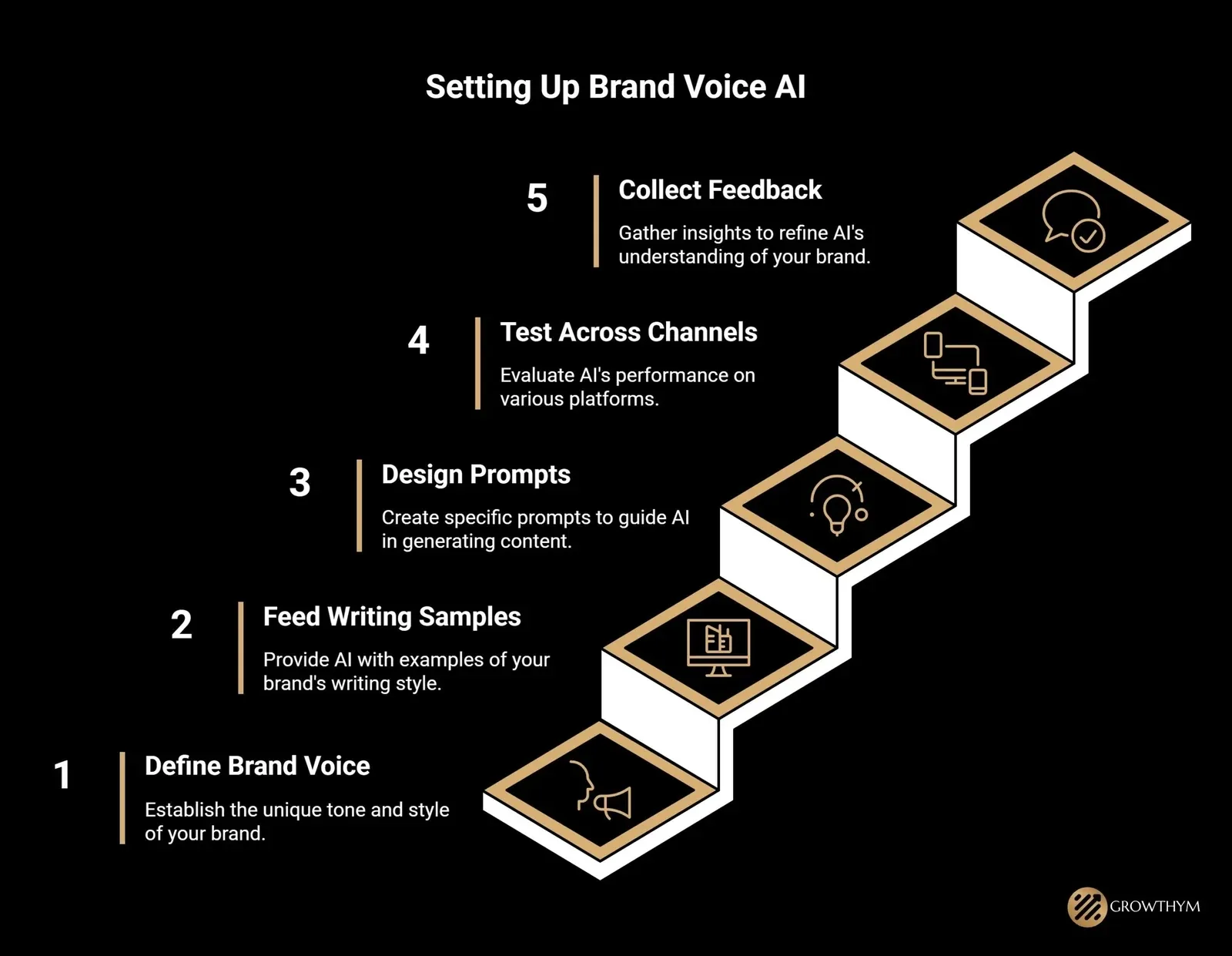
With great voice power comes great design responsibility.
Consistency matters. Your brand’s visual language should align with its auditory personality. Let us say a brand has a playful character, but if the voice is stiff and robotic, then it won’t deliver the expected results.
Don’t over-automate. Users crave authenticity. Too much automation without thought feels soulless.
Human-centered design principles still rule:
- User consent
- Clear privacy communication
- Respectful prompting
- User control over voice interaction
Agencies should set boundaries like where voice enhances, where it interrupts, and where it should step aside.
Use Cases Relevant to Creative & Branding Agencies
Here’s where the theory meets real creative execution:
Brand Websites With Voice-Led Storytelling Experiences
Voice transforms brand websites from static narratives into guided journeys. Visitors can explore a brand’s story by asking questions and following instructions. This approach helps agencies design deeper emotional connections without overwhelming users with text.
Campaign Microsites Using Conversational Brand Personas
Conversational personas give life to campaigns. It lets users interact with a brand character in real-time. Audiences can engage in dialogues with the character that adapts to their interests and responses. This creates memorable campaign experiences.
Interactive Case Studies or Portfolios Powered By Voice
Voice-enabled portfolios allow prospects to navigate work based on their curiosity. Agencies can turn static case studies into guided conversations that highlight relevant projects on demand. This makes storytelling more dynamic while showcasing strategic thinking in action.
Voice-Enabled Product Explainers for Complex Offerings
For technical or other complex products, voice helps in simplifying things for users. It delivers explanations in simple words when users need them. Likewise, visitors can ask follow-up questions and receive clear, contextual answers instead of scanning huge texts.
The Future of Interactive Branding With AI Voice
Voice as a Core Layer of Digital Experiences
Voice will be a foundational part of design. It won’t be an add-on feature. It will shape the way users explore, ask questions, and interact with a brand. Brands that design voice systems will create more intuitive experiences.
Convergence With Motion and Interactive Design
Voice will sync with motion graphics, animations, video, and micro-interactions. As users speak, interfaces will respond visually in real-time. This will create multi-sensory and cohesive experiences. This convergence will elevate engagement beyond static screens.
More Adaptive and Personalized Brand Journeys
Future voice experiences will adapt based on user intent, behavior, and context. Instead of delivering the same message to everyone, brands will respond with contextually relevant answers in real-time. This personalization will strengthen emotional connection and recall.
Voice as a Natural Interface for Complex Experiences
As digital experiences grow more complex, voice will simplify navigation and understanding. Users won’t need to learn new interfaces. They can easily navigate through complex interfaces using voice. This will make advanced products, services, and stories more accessible.
Design the Next Chapter of Brand Experiences
Real-time AI voice is a creative medium that reshapes how brands communicate, guide, and connect.
When aligned with content strategy, UX, and interactive design, voice turns passive audiences into active participants and brand touchpoints into meaningful experiences.
The idea isn’t to replace what already works, but to evolve it thoughtfully.
If you’re ready to explore how interactive content, storytelling, and emerging interfaces can work together for your brand, connect with us.
Let’s build digital content marketing experiences that stay memorable.