No beating around the bush—here it goes. Figuratively speaking, short-form content is a sprint, whereas long-form content is a marathon. The former wins people’s hearts before they can count to one (well, okay, to 30 in videos). The latter requires patience. Yet, once you cross that much-awaited finish line, the loyal crowd applauds and takes you up into the air.
But when should you schedule sprints, and what’s the golden hour for marathons in your content calendar? That is, which format is better: short-form vs. long-form content?
Let’s break it down and then explore the most suitable content marketing strategies for each separately. As a bonus, we’ll drop several winning tactics for both. Prepare for a far-off reading trip in this article, but it’ll be worth it in the long run (and we’ll make it pun-tastic).
Short-Form Content Compared to Long-Form Content
So, what is micro- vs. macro-content (short vs. long)?
Micro-content is a small tidbit of textual, audial, or visual data. When it comes to a short-form video or audio file, it typically doesn’t span above 20-30 seconds.
On the contrary, macro-content implies larger information doses. It takes people several minutes to hours to consume it. In video marketing or podcasting, the duration of long-form content can extend to two or more hours.
Let’s move on to examples for better understanding.
Short-Form Content Examples
- Brief blog posts (no longer than 1,000 words)
- Emails (no longer than two scrolls)
- Contests and giveaways
- Pictures
- Tiny animations or GIFs
- Video clips (Instagram reels, TikTok videos)
For example:
World of Tanks fuels (pun again!) social media user engagement with short-form videos and memes.

Long-Form Content Examples
- Comprehensive blog guides (1,000+ words)
- Newsletters that require two or more scrolls
- Webinars
- Live-stream sessions (YouTube Live or Kick Streaming)
- Interviews
- PDFs
For example:
Educational PDF copies about buying/selling houses are commonplace macro-content pieces in property marketing.

When to Use Long-Form vs. Short-Form Content
Here’s when it’s best to be a content marathoner (begin stretching out for longer forms) or, alternatively, get ready to become a sprinter and bolt like Usain Bolt (catch this pun for shorter forms).
What Do You Need Macro-Content For?
- Telling stories (text-only narratives or visual stories via Instagram carousels or YouTube videos)
- Educating your audience (via newsletters or courses)
- Showing your proficiency in cracking dilemmas (troubleshooting tutorials or problem-solving guides)
- Deeply engaging and converting leads into customers (btw, TikTok long-form content is trending now because of that)
- Targeting professionals looking for in-depth insights
What Should Your Leverage Micro-Content For?
- Making quick announcements (new products/features, sales, corporate updates)
- Sharing teasers to long-form content
- Engaging impatient social media users
- Advertising (Facebook Ads or LinkedIn Ads)
- Summarizing macro-content pieces into a checklist or “X tips/steps” post
- Going viral (a snappy TikTok video or tweet is usually the best trend-catcher and frontrunner in shareability)
- Targeting busy audiences
3 Best Strategies for Using Long-Form Content
Produce long-form lead magnets.
Nothing is more meaningful in customer relationship building than a reciprocity or mutual exchange principle. “It’s always a two-way street. If you expect something from customers, make it a win-win swap. To add even more value at the very first stage of the customer journey, offer a relevant, top-shelf lead magnet with macro-content in exchange for their email addresses.“
Consider the following lead magnets with lengthy, insightful content:
- Industry report
- Case study
- Whitepaper
- Flyer or brochure
- FAQ sheet
- Bundle of resources or tools
For instance, the company’s resource page contains downloadable whitepapers, flyers, and case studies on streamlining payroll in different industries.

Write “evergreens” for your blog.
Haven’t you ever created evergreen content for your blog’s strategy (if any)?
Let’s fix that!
In blogging specifically, it’s like that old (yet super comfy!) sweatshirt you wear year-to-year for running. It will never let you down in your endurance races for long-form content marketing.
Here’s why.
“The brilliance of evergreen content is that it eternally remains topical and handy, no matter the latest craze or hype. And when it has lengthier forms, like how-to tutorials, it generates traffic and converts leads continuously. The key advantage of long-form vs. short-form content here is that you can nourish it with evergreen, ‘how to’ keywords,” remarks Samuel Charmetant, Founder at ArtMajeur by YourArt.
Insert visual breaks and dividers in your long forms.
Whether you’re drafting a story for Facebook (a superb place for storytelling, btw) or another lengthy article for your blog—
—Break—
—It—
—Into—
—Blocks—
Well, not like that.
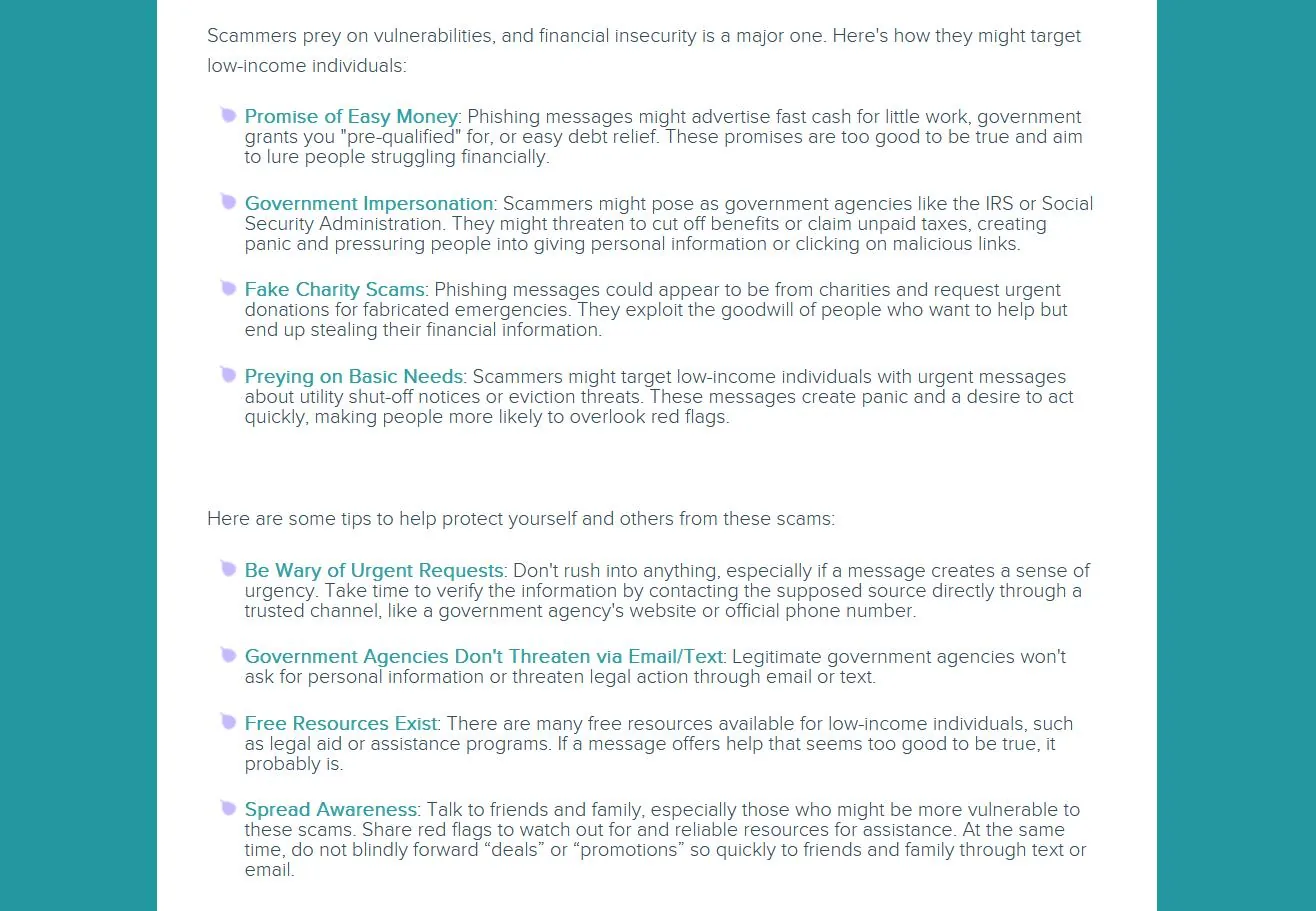
Better take it from Jeffrey Zhou, CEO and Founder of Fig Loans, whose team applies this strategy to the company’s financial blog. “Rather than creating text walls, we try to add more bullet lists and other visual dividers, images, or screenshots to our guides on finance management and financial security. However, this is not only about improving the post’s readability and user engagement. It’s crucial for SEO, too.”
For example:
Look at this post on how to avoid phishing scams and protect personal finances from Fig Loans.
Speaking in numbers
Indeed, Semrush found that articles with one list per 500-word text boost traffic by 70%. Moreover, the same study proves that posts with complex structures (H2s, H3s, or even H4s) perform better in terms of both traffic and engagement.
3 Little-Known Hacks for Short-Form Content Marketing
Hook your audience with the first word(s).
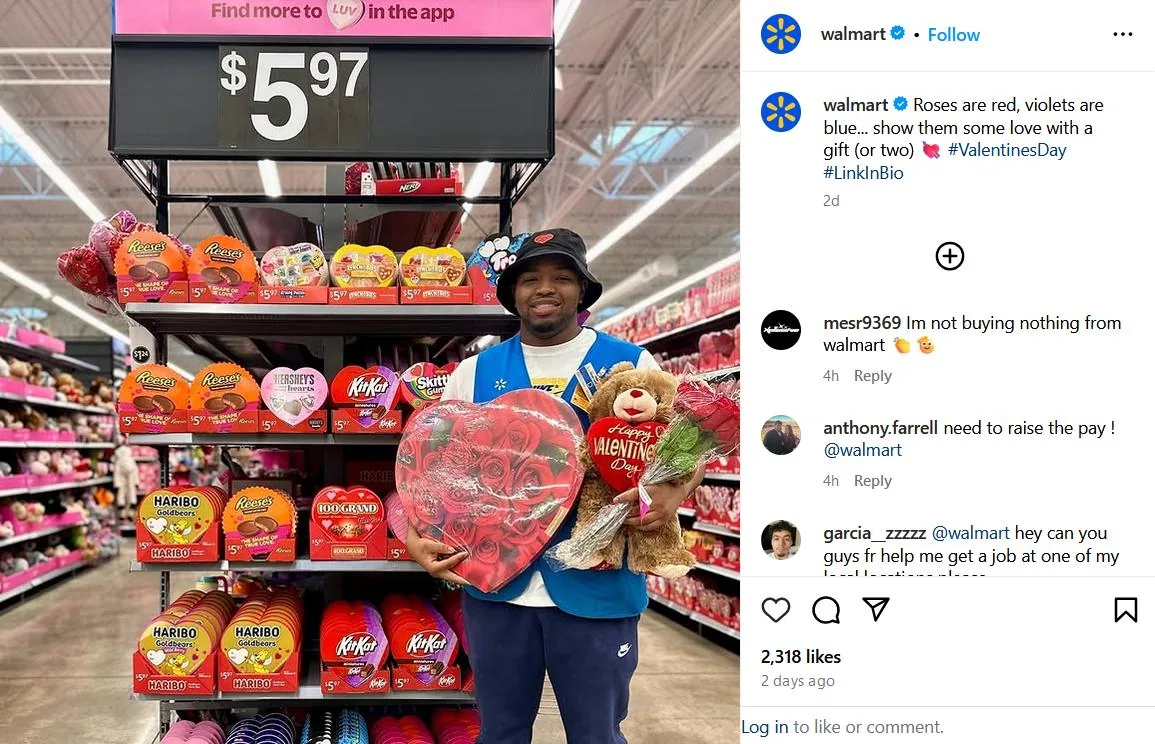
What pops up in your mind after you hear or read: “Roses are red”?
Naturally: “Violets are blue.”
This first line intrigues and makes you anticipate what comes next. It’s a kind of hypnotic marketing with a rhyme. And Walmart successfully used this hack to urge Instagram users to buy presents for Valentine’s Day.
Consider other compelling hooks for short-form content creation:
- Fact
- Statistic
- Question
- Mini-story
- Quote
- Emotional interjection (“Ho-ho-ho!” for Christmas or “Boo!” for Halloween)
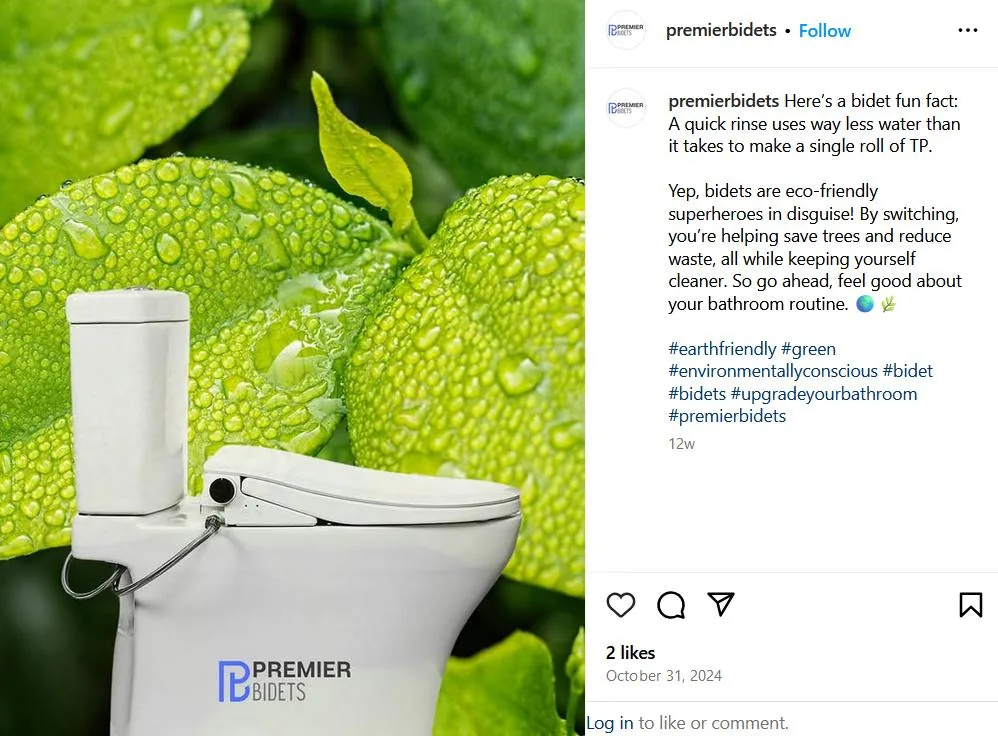
However, John Grant, Founder & CEO of Premier Bidets, argues, “A hook in micro-content will be much stronger if it triggers not surface-level emotions but profound beliefs or moral principles. Depending on your niche and target audience, they can range widely from personal health and wellness to philanthropy. In our case, these are cleanliness and environmental ethics.”
For example:
On Instagram, the brand shared an interesting fact about water consumption with a bidet in contrast to toilet paper to target eco-friendly buyers.
Pack your micro-content into NFTs.
Did you know you can promote and sell short-form content as non-fungible tokens (NFTs)?
NFTs are digital content assets (artwork, music, video, meme, etc.) tokenized through blockchain technology.
Gary Hemming, Owner & Finance Director at ABC Finance, explains their advantage for brands: “Although users can interact with NFT pieces only in virtual environments and need crypto wallets with cryptocurrency to purchase those, they are becoming immensely popular these days. Virtual shoppers hunt for unique NFTs, which makes it a brilliant opportunity for businesses to monetize short-form content and generate revenue from it.”
Brands like Nike, Coca-Cola, Samsung, and McDonald’s have already tapped into such monetization and NFT marketing.
For example:
In 2021, McDonald’s released a limited collection of McRib NFTs.

Don’t overlook nano-content (and brand it!).
Imagine you’re preparing to gallop and win, but you don’t notice that your sneakers’ laces are a bit loose. As a result, you trip and fall right after the “Go!” command.
Similarly, this mistake may cost you a follower or customer. You may fail if you disregard nano-content or ultra-small pieces like these:
- Social profile bio (Pinterest, TikTok, or Instagram bio)
- Web page headline
- CTA button (Even the color matters: The red button has 34% higher conversions than the green one.)
- Web push notification
- Cookie consent message
For example:
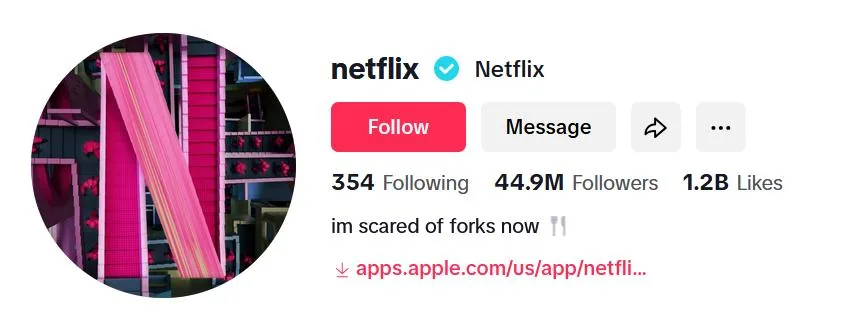
Netflix has developed a masterful nano-content strategy for the bio text on TikTok. It’s always in sync with the platform’s streaming content. The most recent bio is “I’m scared of forks now,” as the Squid Game series is trending today.
Shawn Plummer, CEO at The Annuity Expert, strongly believes in branding potential, especially when it comes to the tiniest nuances like the above. He recommends, “You should brand your way through nano-content. Think of a branded icon for bulleted lists, a branded emoji for email subject lines, or a branded hashtag for social media posts.”
Now, can you guess what the branding element is for Ninja Patches?
Sure thing—ninja!
Killer Tactics for Both Short- and Long-Form Content
Augmented, virtual, and mixed realities (AR, VR, and MR)
In the words of Kathryn MacDonell, CEO at Trilby Misso Lawyers, immersive realities, such as AR and VR or their combinations, “hijack” the user’s perception system with multi-sensory digital experiences: visual, auditory, and kinesthetic. “Every immersive content interaction is incredibly realistic and memorable. It creates a state of flow and fully absorbs users so that they lose track of time.”
For example:
Here’s how else you can implement AR and VR (or even the Metaverse) in your overall content strategy:
AR
- AR gamification, like treasure hunts
- AR filters on social platforms (Snapchat Lenses or Instagram Stories AR Filter)
- AR before-after visualizations
VR
- VR storytelling
- VR tours or product demos
- Metaverse games
UGC and IGC
In fact, the majority of people (69%) trust other users and influencers more than ads or marketing messages from brands. So, two more abbreviations, UGC and IGC, can revolutionize your content marketing strategy.
For Peter Čuček, Owner at Tuuli, either of those is a “Philosopher’s Stone for marketing” because it transforms it into pure gold in no second. He shares, “The proven tactics we adhere to are rewarding users for UGC and collaborating with niche influencers, mostly gamers and Twitch streamers, for IGC.”
See how the brand leverages it for short-form vs. long-form content.
User-Generated Content
GEEKOM showcases the best UGC examples, including short-form images and videos, on its website.

Influencer-Generated Content
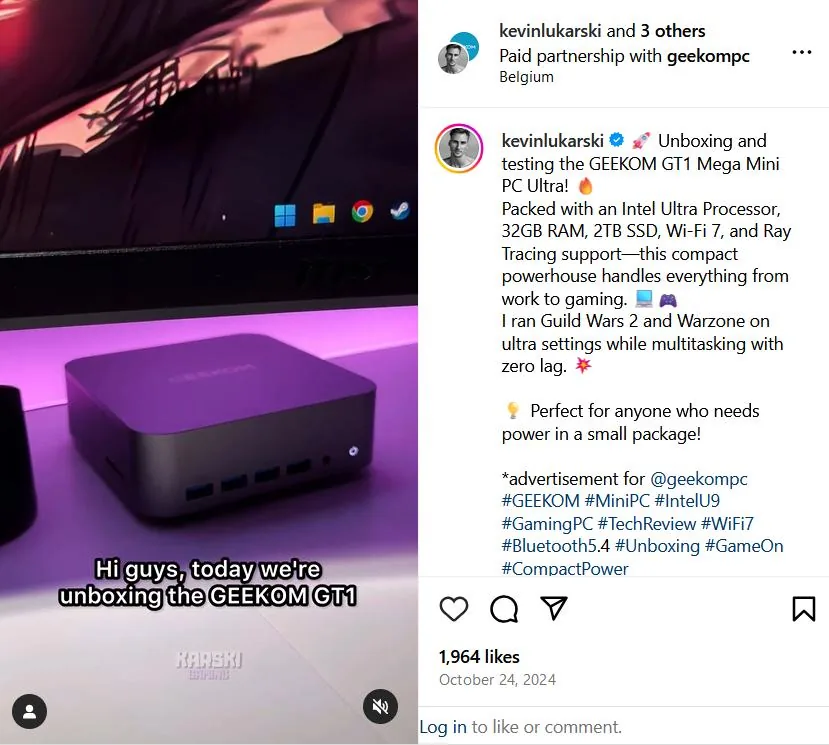
Now, look at this IGC example: a long-form video of unboxing and testing a GEEKOM Mini PC from an influencer in the gaming industry.
Choosing between micro-content and long-form isn’t about picking a favorite—it’s about knowing your audience, platform, and purpose. Both formats have unique strengths, and the most effective strategy often blends the two to guide users from quick engagement to deeper connection. Use each intentionally, and your content will do more than just fill space—it'll convert.