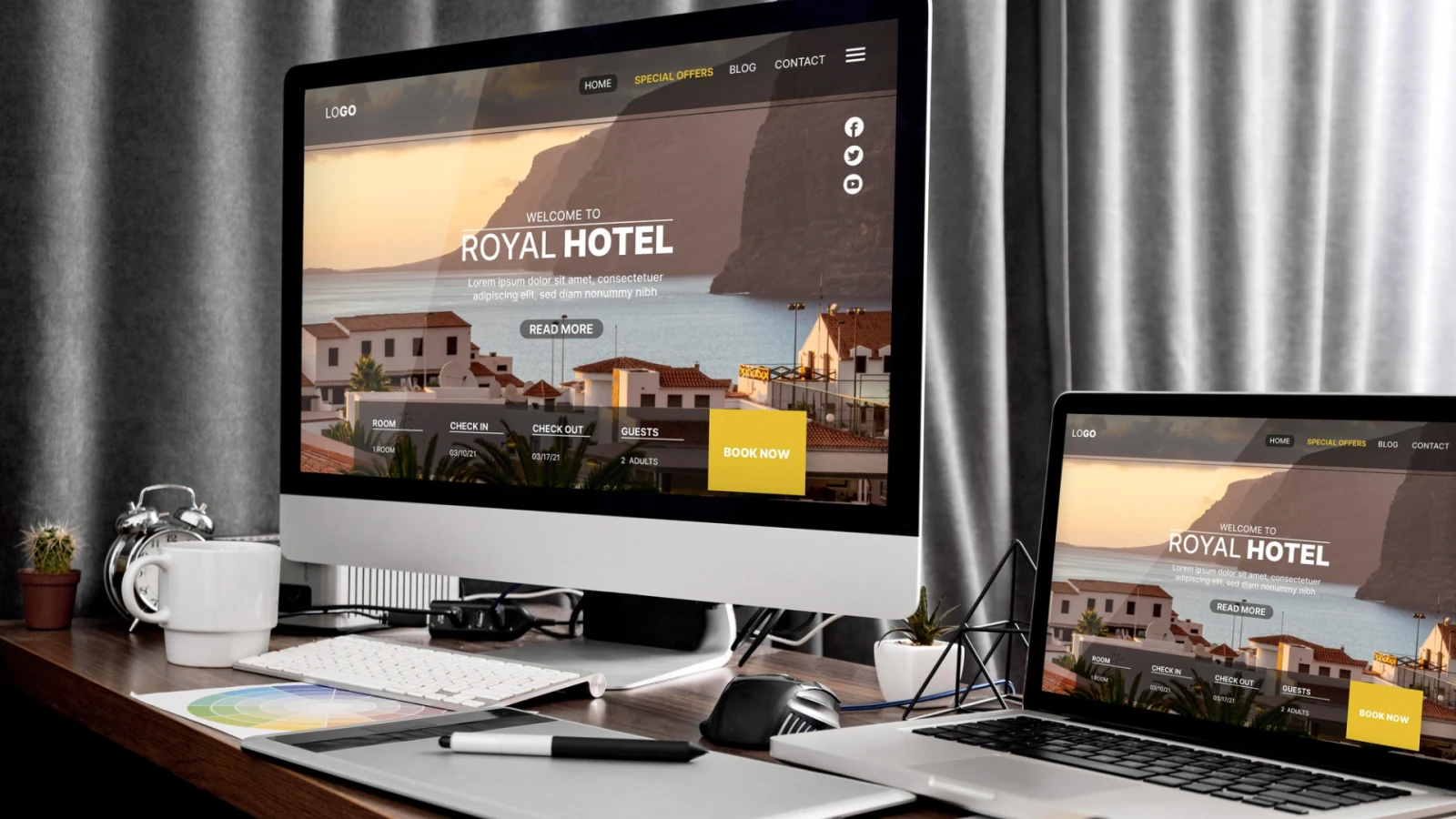
The user visits the small business website, looks around for a few seconds, and either decides to stay or leave. The choice is made quicker than most entrepreneurs think, and it happens without any words from the copy being read. This is the hidden and humble place where contemporary web design services win a lead or miss an opportunity.
Small firms have been thinking about their websites as digital pamphlets for decades - something to own and not something to work for them. This is an extremely old-fashioned method and does not apply to our times anymore. A properly built website is a salesman who would never get sick, never miss a call back, and would always greet all guests in the same manner.
Why First Impressions Still Decide Whether a Visitor Stays or Leaves
One tough truth is that individuals form an opinion regarding a business based on its home page alone. Studies by Lindgaard et al. found that people can form an initial impression of a web page's visual appeal in as little as 50 milliseconds, which means that they do it without comprehending any information on it.
Design plays a critical role in the case of smaller businesses trying to compete with larger companies. Cluttered design, outdated fonts, and slow-loading images all convey the message that a company is amateurish, even if it offers a wonderful product.
What Is Modern Web Design, and Why Does It Matter for a Lead Generation Website?
Web design today isn't just about following fashion or creating an animated homepage. In essence, it is all about constructing your website in accordance with the way people actually browse the web: quickly, often on mobile devices, and with limited patience.
It requires efficient loading time, user-friendly navigation, responsive web design for mobile-friendly websites, and call-to-action buttons that are instantly visible. Modern web design also involves content that answers your visitors' questions before they even have to look for them. When all these elements come together, browsing transforms into inquisitiveness, which can lead to potential customers.
In comparison, an outdated website created from a template several years ago "will do what it is supposed to do: load." However, if a website takes several seconds to load on a phone or if the contact page is located three clicks down, it won't be effective, as most users are unwilling to spend that much time. Professional web design helps eliminate just this kind of inconvenience.
How Does Custom Website Development Turn Visitors Into Leads?
The process of custom web design allows a company to tailor its website to the needs of its real customers rather than forcing them into the mold created by templates. There are several aspects that illustrate this feature.
Page speed is one such aspect. Google has claimed that the odds of a mobile user bouncing from the site increase by 32% when loading times grow from one second to three seconds. The custom-designed website will allow optimization on an image-by-image and script-by-script basis.
Trust signals are another. Reviews, certifications, and clear contact information, placed where people actually look, do more to move someone toward a phone call than most business owners expect. Likewise, calls to action carry weight beyond what calls to action, despite their small size on the screen, carrying significant weight. Despite their small size on the screen, calls to action carry significant weight. The call to action of "Get a Free Quote" is not going to have the same effect whether it appears at the top of the screen above the fold or down towards the bottom in the middle of a lot of scrolling.
None of this is flashy. It's closer to plumbing than art. But plumbing is precisely what keeps leads from leaking off the side of a website – that side of a website nobody thought to fix.
A Small Business Example: What Changed When the Website Did
The case of a local plumbing firm that had an outdated and inefficient website. The majority of their traffic visited their website using their mobile devices; however, filling out the contact form was not easy while using mobile phones, and customers had to scroll through different pages just to be able to locate the firm’s contact numbers.
With the redesign of the website through the use of responsive web design, improved navigation, and a concise contact form, more people were able to contact the company without difficulty. From here, one can conclude that good design does not mean good sales. It is even quite possible that bad web design prevents sales opportunities from becoming successful.
Why Choose Professional Web Design Services Over DIY Builders?
Do-it-yourself site builders have their uses, particularly for extremely early-stage companies looking to test out an idea. Yet, they do have certain downsides – including stock templates, slower loading times due to bulky code, and limited design capabilities that cause a company to look like several others using the same template.
Professional web design services, in contrast, create sites based on a particular brand, particular client, and particular objective. This approach significantly impacts a business once it transitions from merely establishing an online presence to needing its website to generate revenue. Furthermore, the professional design will typically include certain elements of technical search engine optimization, such as code and heading hierarchy, that are usually not included in DIY sites.
Common Mistakes That Quietly Cost Small Businesses Leads
A few patterns show up again and again on underperforming small business websites:
- Contact forms that ask for too much information upfront discourage completion.
- Heavy loading time of images that have not been compressed.
- Complicated navigation menus with options, based on research regarding cognitive load, are known to overload users rather than assist them.
- There is no clear next move on the home page, causing the visitor to be confused about where to click.
In some cases, resolving these issues does not mean an entirely new site design. At other times, particularly when dealing with sites that are older than five years, a custom rebuild is really the quicker route to take.
How Can a Small Business Tell If Its Website Is Actually Working?
Any business owner would be able to give you the answer to that without any software. Just check how many visitors submit a contact form, call the telephone number provided, or make a purchase relative to your overall traffic. This will give you the website conversion rate, which, according to data collected by WordStream, falls within 2 to 5 percent on average. If your website falls considerably below that benchmark, then it definitely has a known problem rather than a mystery problem.
Google Analytics and Google Search Console are two free services available online that will help you identify the exact point where visitors bounce from your site, the pages they leave, and the time they spend browsing. Just being truthful with yourself when reading the data they provide is probably the quickest solution to know whether the problem lies in traffic or elsewhere.
Conclusion
Large companies with big marketing budgets don't have a monopoly on modern web design services. For small businesses, the website often serves as the very first, and sometimes only, opportunity to make a case for themselves before a competitor's site does it better. Professional website development and web design work together to close that gap, turning a passive online presence into something that actively brings in leads, one visitor at a time.
Businesses that view their website as an integral, dynamic component of their sales process, rather than a one-time task, are more likely to continue generating leads from it years later.