Think about your team for a moment. Are new hires taking too long to settle in? Do compliance tasks always feel last-minute? Or maybe your employees are eager to grow but don't have the right resources to build new skills.
These are not small issues. Left unchecked, they chip away at productivity, morale, and even customer satisfaction. The good news is that most of these challenges have the same root cause and the same solution: the way your organization trains its people.
A modern employee training system is more than a place to upload courses. It is a structured way to build skills, close gaps, and give employees the confidence to perform better every day. This guide walks you through these systems, the types available, and how to choose one that actually fits your organization.
What Is an Employee Training System?
An employee training system is your company’s digital classroom. It gives employees a single place to build skills, refresh knowledge, and track progress.
Unlike old PowerPoint decks or bulky manuals, modern employee training tools are interactive and practical. They use videos, quizzes, simulations, and real-world scenarios to make learning stick.
The real advantage? Flexibility. A corporate training system runs 24/7, so employees in any time zone can train when it suits them, no wasted time on scheduling or expensive in-person sessions.
Why Your Organization Needs a Modern Employee Training System
Training isn’t just about keeping employees satisfied; it directly impacts performance, retention, and growth. A modern employee training system makes a difference by offering:
But the real benefits of a modern employee training system go far beyond satisfaction:
1. Better Employee Performance
Well-structured training keeps employees engaged, productive, and better prepared to deliver quality work. For example, a pest control company can train seasonal field staff on safety procedures before they step on-site, reducing mistakes and risks.
2. Reduced Turnover
When employees see clear opportunities to grow, they are less likely to leave. Training shows your team you're committed to their development. A private school can use ongoing digital training to help teachers build new classroom management skills, increasing job satisfaction and retention.
3. Compliance Made Simple
Industries like healthcare, finance, and food service require strict compliance. Modern employee training tools, such as those offered by medical simulation companies, can automate compliance courses and track certifications, with no last-minute audit stress. A small HVAC business, for instance, can keep technicians up to date on safety standards without piles of paperwork.
4. Cost Savings
A modern system streamlines learning and minimizes the need for expensive in-person sessions by supporting continuous, on-the-job development.
5. Scalability
As you expand, your corporate training system scales too. Onboard new hires faster and deliver consistent training across locations.
Understanding 4 Different Types of Employee Training Systems
Not all employee training tools are the same. Here are the main types and what they bring to the table:
1. Learning Management System (LMS)
An LMS is the core of any corporate training system. It delivers courses, tracks progress, manages users, and generates detailed reports, all in one place. Most companies start with an LMS because it’s straightforward to implement and gives you everything you need to build a solid employee training system without unnecessary complexity.
2. Learning Content Management System (LCMS)
An LCMS goes a step further. While an LMS delivers content, an LCMS helps you create and manage it. If your subject matter experts regularly update training materials, this system lets them design professional courses in-house, saving money on external instructional designers.
3. Knowledge Management System (KMS)
A A knowledge management system KMS) organizes company knowledge, processes, and best practices in a searchable format. Instead of structured courses, it acts like a smart filing cabinet. This is especially useful for fast-changing industries where teams need quick access to information, like customer service handling unique queries or sales reps needing the latest product details.
4. Learning Experience Platform (LXP)
An LXP is all about personalization. It uses AI to recommend content based on role, skills, and career goals. LXPs also encourage continuous learning beyond compliance by adding social features like peer collaboration, discussion forums, and shared learning paths.
Top 4 Employee Training Systems for Growing Organizations
Here are four leading employee training systems that support performance management and growth:
1. ProProfs Training Maker
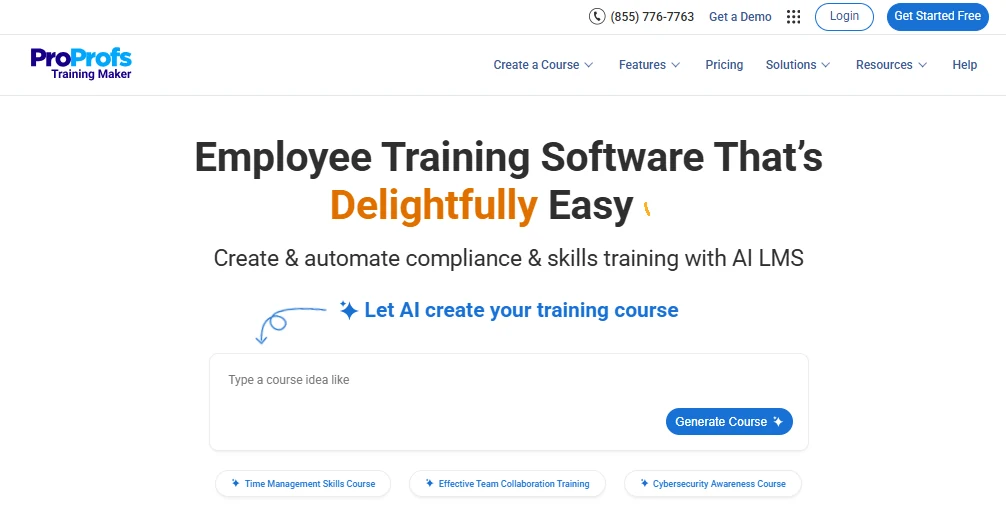
ProProfs Training Maker is an employee training system designed to make learning simple and measurable. It offers an AI-powered course builder that helps HR teams create programs quickly, along with a library of 500+ prebuilt courses covering compliance, safety, customer service, sales, and workplace skills. The platform includes interactive assessments, quizzes, and knowledge checks to keep employees engaged throughout training.
What sets ProProfs apart as a corporate training system is its reporting and analytics. Managers can track employee performance, spot skills gaps, and measure improvement over time. This data-driven approach helps organizations move beyond training as a compliance task and use it as a tool for real performance management.
2. TalentLMS
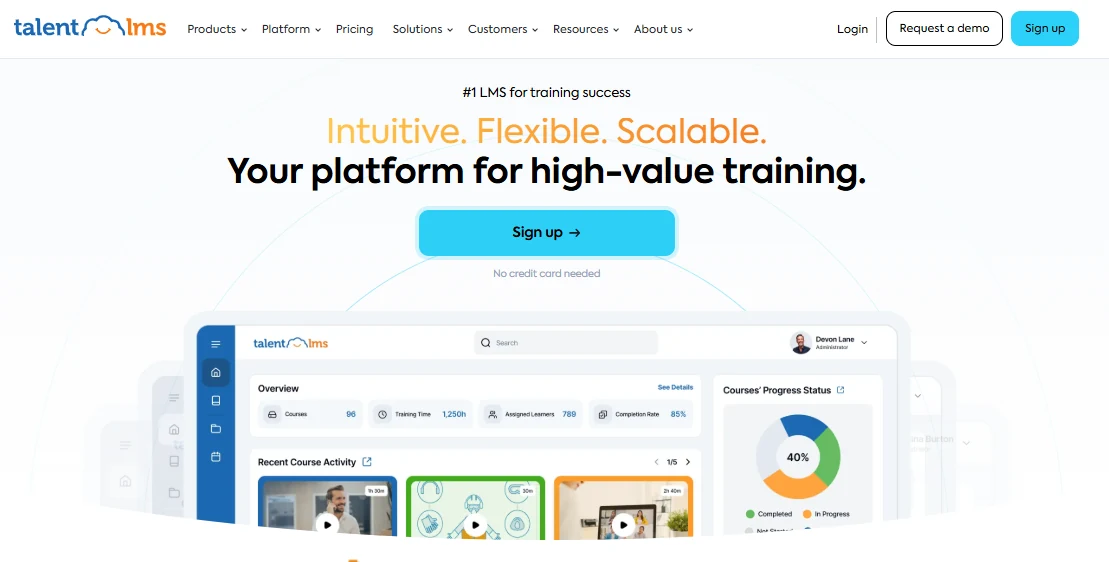
TalentLMS is one of the most accessible employee training tools on the market. Known for its simplicity, it allows organizations to create and deliver training programs with minimal setup. Companies can start small and scale as they grow, with flexible pricing that fits different team sizes.
The platform balances ease of use with practical features like automation, assessments, and reporting. TalentLMS is particularly useful for growing businesses that need an employee training system to quickly onboard new hires while also supporting ongoing skill development.
3. Docebo Learn
Docebo Learn is a cloud-based corporate training system that combines scalability with personalization. It supports organizations of all sizes, handling thousands of users without slowing down. The platform integrates with business tools like Salesforce, Zoom, and Microsoft Teams, making it easier to connect training with daily workflows.
Docebo also emphasizes engagement by including social learning and AI-driven recommendations. This helps employees find content that is relevant to their role and career goals, encouraging continuous learning beyond mandatory programs. For companies looking to modernize training at scale, Docebo is a strong option.
4. iSpring Learn
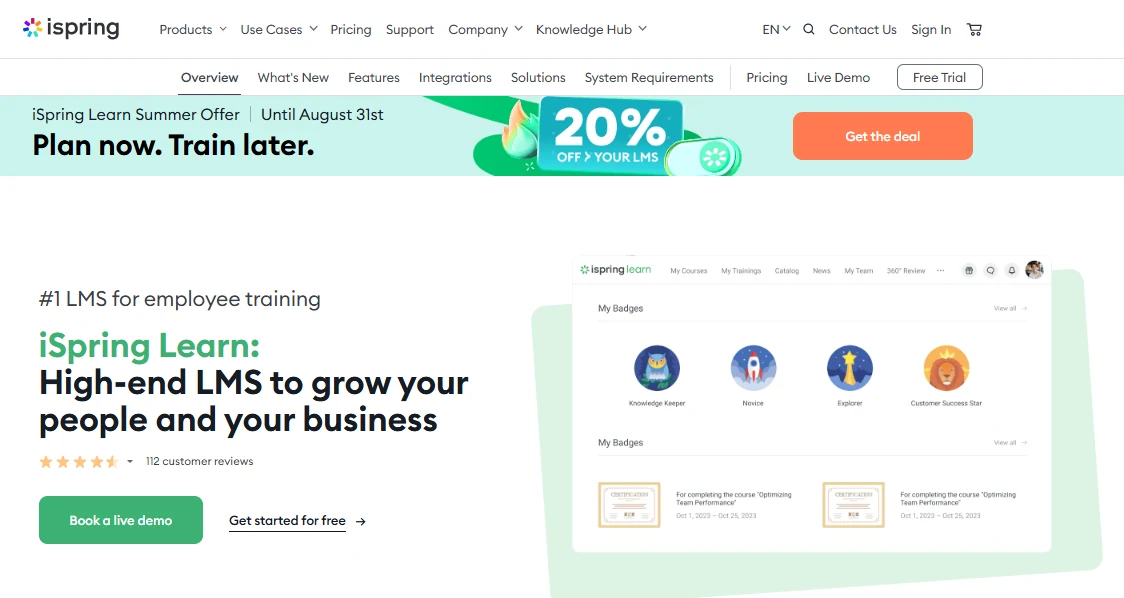
iSpring Learn is a learning management system that combines ready-to-use features with powerful content creation tools. Organizations can manage training, track analytics, and build custom courses with the iSpring Suite authoring toolkit. The interface is straightforward, making it easy for HR teams and subject matter experts to create programs without technical expertise.
This corporate training system is particularly effective for businesses that need a mix of structured courses and custom content. By supporting quick deployment and detailed reporting, iSpring Learn helps organizations train employees consistently while adapting to specific industry needs.
Making the Right Choice: 5 Key Factors to Consider
Selecting an employee training system is not just about comparing features. The best choice is the one that aligns with your organization’s needs and long-term goals. Here are the most important factors to weigh:
1. Budget Reality Check
Look beyond subscription costs. Consider implementation time, content creation, and ongoing maintenance. A good corporate training system should support formats like microlearning to keep employees engaged and reduce wasted time.
2. Technical Requirements
Your training platform should connect seamlessly with existing HR software, payroll systems, or communication tools. Integration reduces manual work and prevents critical data from being lost or duplicated.
3. User Experience
If an employee training tool is hard to use, adoption will suffer. Look for intuitive design, simple navigation, and mobile access so employees can learn wherever and whenever it suits them.
4. Content Flexibility
Check whether the system allows you to upload existing resources or if you need to build new ones. Some corporate training systems are strong at course creation, while others focus on delivery and organization.
5. Reporting Capabilities
You need visibility into results. To show real ROI, choose an employee training system that provides clear metrics on completion rates, assessment performance, and skill growth over time.
The Future is Here: Embrace Digital Training
Employee training systems are no longer optional. They move organizations beyond basic skill building and into measurable performance improvement. The growth of corporate training systems worldwide shows that companies investing in structured digital training see stronger results than those relying on outdated methods.
Whether it is an employee training tool focused on simplicity, a scalable platform designed for growing teams, or a system built for enterprise needs, the important step is making the move. Waiting only widens skill gaps and slows organizational growth.
For small businesses, investing in the right employee training system today prevents bigger challenges tomorrow. It helps you onboard faster, meet compliance with less stress, and give employees the skills they need to keep your business competitive. The question facing your organization is simple: which employee training system will you choose to drive growth?