Machine learning has changed many industries, from finance to healthcare and transportation to online search. When machine learning algorithms advance, they need careful use and reliable data to work at their best. That’s where web design and digital marketing take machine learning projects to the next level. By making websites easy to use and bringing in users, web designers and marketers give people the chance to work with quality data and applications. We get improved simulations, stronger products, and companies that are smart about taking care of customers.
In this guide, we will explore key ways web design and marketing complement machine learning initiatives. We’ll uncover how these disciplines work synergistically to enhance machine learning projects through:
- User-centric design principles
- Traffic, engagement, and data collection
- Explainability and trust building
- Accessibility and inclusion
- Education and managing expectations
Along the journey, we’ll highlight relevant statistics, examples from industry leaders, and actionable recommendations for organizations exploring how web design and marketing can maximize their machine learning investments. Let’s get started
Crafting Intuitive Interfaces with User-Centric Design
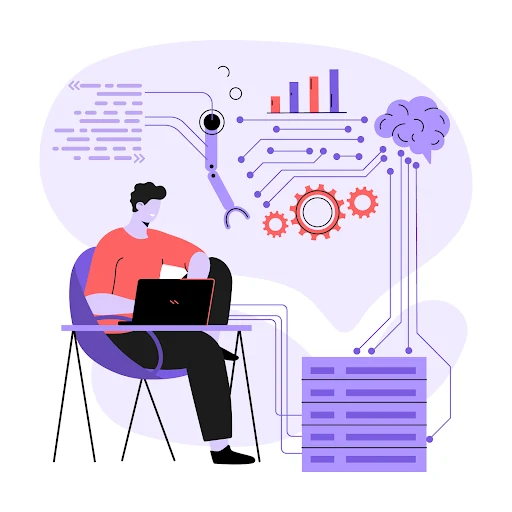
A model is only as accurate as the data used to train it. For many machine learning in healthcare projects, much of this vital data comes from users interacting with web and mobile applications. Thoughtfully designed interfaces that embrace user-centric principles are essential for collecting quality data.
What exactly is user-centric design? The approach is to deeply understand target users and their goals, behaviors, needs, and limitations before designing an interface. As a result, this empathetic orientation results in intuitive digital experiences that seem easy. Useful data is generated when users can easily provide input to the interface, whether browsing content, entering data, rating, or providing feedback.
Let’s look at some user-centric design strategies that elevate the data collection of machine learning:
Simplifying Complex Tasks
The more variables we are dealing with, the better machine learning is at solving complex problems. Humidity, temperature, wind patterns, and others need to be forecasted over locations and time for weather forecasting. This means that document classification must interpret tone, writing style, keywords, and semantics. Breaking down these complex tasks into simpler steps for the users is what user-centric design does. Do users want to label training documents? One last thing to do is design clear categories and provide annotation guidelines. Want to train users to train an image classifier? Help them trace out important areas and objects. User-centered design allows people to build on top of complex machine learning tasks.
Prioritizing Relevant Information
Not all user inputs are created equal. User-centric design research identifies the most useful data needed to solve a problem. This data is then prominently featured in the interface design. For example, an e-commerce site relying on machine learning for product recommendations must understand user preferences. The information architecture explicitly asks users about favorite brands, categories, and prices while allowing seamless browsing and purchasing. Over time, these relevant inputs strengthen recommendations.
Designing for Accessibility
Ensuring accessibility broadens the user pool and generates more diverse training data. User-centric design is about how people with auditory, visual, motor, and cognitive disabilities will interact with an interface. Best practices include writing alt text for images, having good color contrast around form fields, labeling form fields correctly, and allowing navigation via keyboard or voice. By designing for accessibility right from the beginning, we ensure that more users get to make use of an interface and give input.
Overall, embracing user-centric design means machine learning systems are trained on higher quality, more relevant data from a wider population of users. But crafting an intuitive interface is only the first step. We still need users themselves. This is where digital marketing enters the picture.
Driving Users and Data Collection with Digital Marketing
A thoughtfully designed web or mobile application means little without users to visit and engage with it. This is where digital marketing and machine learning intersect. Just as quality design facilitates quality data, robust digital marketing drives user traffic and participation to generate more training data.
Let’s explore some key marketing strategies to engage users with machine learning products:
Leveraging Organic and Paid Search
Nearly 51% of website traffic comes from organic search, and another 10% arrives via paid search ads, according to recent statistics. Optimizing your online presence is crucial for any ML project that depends on user interaction. Machine learning teams must collaborate with digital marketers to optimize search performance. This means conducting keyword research to understand user intent around key tasks and capabilities. It also entails honing on-page SEO through metadata, URL structures, headings and body content. Finally, expanded reach via paid search ads exposes new user segments to an interface and machine learning system.
Engaging on Social Platforms
Today, over 70% of Americans are involved with social media. Places like Facebook, Instagram, Twitter, YouTube, TikTok and so on are great places to show off machine learning capabilities to reel in users. Marketers can make interesting social posts that educate the users about a product’s functions or incite fun interactions like polls and contests. They start a discussion and are social shares that lead new visitors to an interface. Their participation then trains machine learning models once there.
Building an Email List
Email marketing enjoys impressive metrics like a 4300% ROI and $43 in revenue from every $1 spent. Collecting user emails via signup forms allows ongoing communication about product updates, new features, and special offers. These email campaigns nurture engagement over time. The email campaigns also distribute links that drive traffic to web interfaces, allowing for the continual collection of new data.
Optimizing the On-Site Experience
Secondly, marketers take advantage of actual interface experiences to convert visitors into engaged users. Prominently advertising our unique machine learning capabilities, customizing messaging to user segments, and making calls to action easy to understand and intuitive navigation are best practices. On-site experience fine-tuning means more visitors do what you want them to do, whether that is signing up, rating products, filling out surveys, or sharing data.
With marketing and design working hand-in-hand, useful inputs get routed from broad audiences into machine learning systems. But maximizing the promise of machine learning requires more than quality data points. Users themselves must trust model outputs. This makes explainability a crucial priority.
Building Trust with Explainable AI
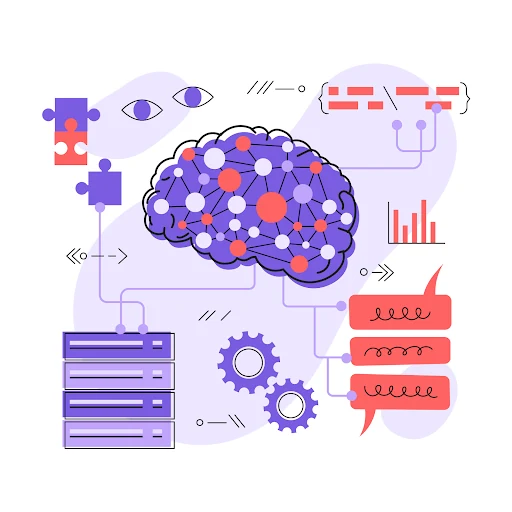
Capable of incredible things, machine learning models are. Yet, it’s difficult to fully understand their inner workings from a day-to-day user’s perspective. When users don’t understand how a model gets to outputs such as predictions, recommendations or insights, they are less likely to trust what they are being presented.
Lack of trust means users disengage from machine learning products and may even actively avoid them. One study by executive development firm Fuel50 found over 80% of HR professionals distrusted AI systems for recruitment and hiring. Explainable AI tackles this problem by clarifying the reasoning behind outputs so users can better comprehend machine learning systems.
Let’s explore the pillars of explainable AI that build trust:
Explanations in Context
General explanations about how a model works, its objectives, and the development process build a starting foundation. But dynamic explanations attached to individual outputs in context are more impactful. For example, an AI assistant that schedules meetings should justify why it suggests a particular date and time, given events already in the user’s calendar. These personalized explanations establish trust in specific model behaviors.
Localization
There is a big range of trust across user segments. Explanations need to be localized to be relevant for target users — to build on their backgrounds, values, concerns, and priorities. For instance, for example, machine learning in medicine should provide explanations targeted at system evaluators (such as healthcare administrators) rather than those making recommendations to clinicians while treating their patients (doctors). More relevant trust-building is localized explainability.
Interactive Experimentation
Enabling users to experiment and alter inputs to see how outputs change builds intuitions for how complex models work. Such interactivity helps users ask “what if?” questions to explore dynamics. For example, a machine learning lending model could allow adjusting income, savings, or credit score to showcase how predicted loan options change. Such exploration builds mental models of relationships.
Multimodal Explanations
Humans learn things in many ways, such as visually, textually, interactively, and aurally. The harnessing of multimedia into machine learning explainability should further improve the understanding of various user needs and preferences. To expand explanatory power, tools such as visual overlays that highlight patterns in images, interactive video demonstrations, and conversational explanations are introduced.
Generally speaking, purposeful design and marketing explain to users what machine learning systems are capable of doing first. Now, explainable AI will explain how and why outputs are the way they are. At this point, we have education and trust and arrive at the final milestone: adoption and impact.
Managing Expectations Around Machine Learning Maturity
We’ve covered how thoughtful design, marketing, explainability, and accessibility fuel machine learning success. But even the most advanced systems have limitations today. Managers must ground stakeholder expectations in reality around current progress.
Many machine learning applications are narrow, niche, and struggle with unpredictability, explains computer scientist Melanie Mitchell. For example, shopping algorithms grow very proficient at recommending products but can’t adapt easily to new or rare user needs. And language processing models like ChatGPT demonstrate impressive but inconsistent performance.
Managers should always set reasonable goals, as making overly positive statements about abilities could result in disillusionment, according to MIT professors Alex Pentland and Daniela Rus. They should focus on when machine learning can be used in practice, compared to areas where new studies are necessary.
Teaching people about AI/ML methodologies is part of managing expectations: what AI/ML can achieve. Supervised versus unsupervised learning, overfitting, technical debt, model degradation, and hybrid intelligence are used as concepts to determine what goals might work. Instead of totally depending on outside advisors, managers can train their team in AI/ML.
Combining knowledge from web design, marketing, engineering and management gives stakeholders the right understanding of how progress is made. Strong analogies are useful as well. For instance, today’s machine learning is like aviation was in the 1930s. Even though we’ve advanced a lot, there is still a lot more work to be done before AI reaches its maximum potential.
Conclusion and Key Recommendations
We’ve explored how web design, marketing, explainability, accessibility, and education intersect to elevate machine learning. While models promise incredible capabilities, thoughtfully designed user experiences, public engagement, and trust-building are crucial to maximize societal impact.
As key takeaways, here are high-level recommendations for technology leaders:
- When you’re launching ML products, make user-centric design a priority from the get-go instead of an afterthought. Be inclusive, too.
- Utilize digital marketing (search, social media, email, and optimization) to drive traffic and collect data over time from a number of user segments.
- Adopt methods like putting explanations and interactive visuals in place to help people trust and understand the ML systems.
- Connect with groups in your community and make use of new programs that help disadvantaged groups join in.
- Inform everyone involved about ML approaches and manage their expectations of what is possible now and what could come in the future for a shared strategy.
By architecting transformational machine learning products, we can serve broad populations with a balanced, multidisciplinary approach. Thank you for reading! Please reach out with any other questions.