Your website gets 500 visits from a Google Ads campaign targeting "termite inspection near me." Two weeks later, your analytics show: 487 bounces. Nine form submissions. Four booked jobs. That gap between traffic and conversions? That's your landing page problem.
Spring is when pest control search intent reaches its peak. Homeowners panic about termite swarms, carpenter ant invasions, and mosquito breeding programs. They search desperately for solutions. And they're willing to book services immediately when they find a provider they trust. The research document that informed this post revealed something stark: the average consumer will call only 1.3 businesses before making a decision. That means your landing page is often the deciding factor — not your technicians, not your reviews, not your brochure. It's whether your page answers the question they asked in under three seconds and makes them confident enough to fill out your form.
For companies like yours that are growing regionally and tracking marketing ROI carefully, landing page quality isn't a vanity metric. It's the difference between a 2% conversion rate on paid traffic and a 4% conversion rate. On a $100,000 spring ad budget, that's the difference between 100 qualified leads and 200 qualified leads.
If you're evaluating marketing strategies for pest control companies, this guide walks through the proven CRO principles that work specifically for spring campaigns.

Written By: Chad J. Treadway | March 05, 2026
Chad is a Partner and our Chief Smarketing Officer. He will help you survey your small business needs, educating you on your options before suggesting any solution. Chad is passionate about rural marketing in the United States and North Carolina. He also has several certifications through HubSpot to better assist you with your internet and inbound marketing.

You wouldn't show up to a service call in a beat-up van with no logo, a cracked windshield, and a handwritten phone number on the door. But that's basically what a lot of home service businesses are doing online. Their website is the digital equivalent of that van, and homeowners are making a judgment call before they ever pick up the phone.
Here's the thing: your professional website home service business depends on isn't just a digital business card. It's the front door to your company. It's the first impression, the trust builder, and often the deciding factor between you and the other plumber, HVAC tech, or roofer who shows up in the same Google search. And in 2026, the bar for what "professional" looks like has gone up.
If you're running a small service area business with a handful of employees and a website you set up on a Saturday afternoon three years ago, this post is for you. Let's talk about what a professional website actually looks like for an SAB, why it matters more than ever, and what you need to have on yours to turn visitors into booked jobs.
Written By: Chad J. Treadway | March 05, 2026
Chad is a Partner and our Chief Smarketing Officer. He will help you survey your small business needs, educating you on your options before suggesting any solution. Chad is passionate about rural marketing in the United States and North Carolina. He also has several certifications through HubSpot to better assist you with your internet and inbound marketing.
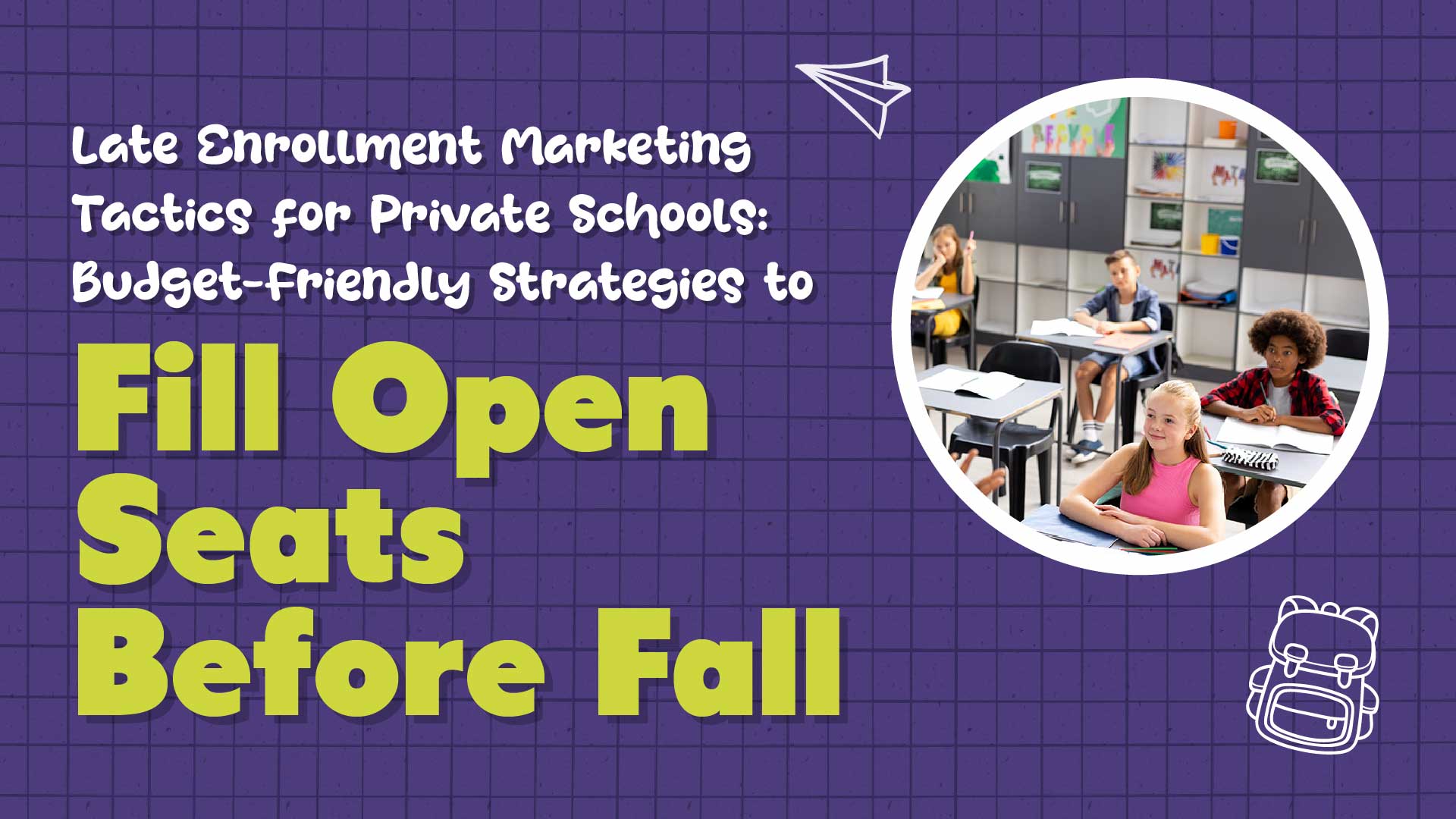
Here's something that school leaders at smaller schools already know but rarely say out loud: you can't afford empty seats. When tuition runs $3,000-$5,000 per student, and your marketing budget is $5,000-$15,000 for the entire year, every unfilled seat isn't just a number on a spreadsheet. It's a teacher you can't hire, a program you can't run, or a repair you can't make.
And yet, most school admissions teams treat the late application window (March through May) like it's already over. Applications are closed. The website still shows last January's deadline. The admissions director has moved on to re-enrollment paperwork.
Meanwhile, families who would have applied are searching "private schools near me" and finding a school down the road that still has its doors open. According to NAIS research, 40% of private schools grew enrollment in 2024-25 while 32% declined. That gap isn't random. It's the difference between schools that kept recruiting and schools that stopped.
Late enrollment marketing isn't desperate. It's strategic. Here's how to do it on a budget that matches your reality.

Written By: Adam Bennett | March 04, 2026
Adam is the president and founder of Cube Creative Design and specializes in private school marketing. Since starting the business in 2005, he has created individual relationships with clients in Western North Carolina and across the United States. He places great value on the needs, expectations, and goals of the client.
Let's face it: your customers don't sit at a desk and Google "pest control near me." They discover termites in a crawlspace at 9 PM, grab their phone, and scroll through results while standing in their attic. That moment — when panic meets urgency — is when pest control gets won or lost. And it's almost always on a 6-inch screen.
If your website isn't optimized for that frantic mobile search, you're not just missing a few leads. You're actively handing your revenue to a competitor with a faster-loading site and a clickable phone button. This isn't theoretical. Pest control companies that ignore mobile optimization lose approximately $47,000 per year in potential revenue — based on average job value and missed lead volume.
The numbers back this up, and they're shocking. Here's what you need to know to keep those leads coming in.
Written By: Adam Bennett | March 04, 2026
Adam is the president and founder of Cube Creative Design and specializes in private school marketing. Since starting the business in 2005, he has created individual relationships with clients in Western North Carolina and across the United States. He places great value on the needs, expectations, and goals of the client.